

Patient Basics: Graves’ Eye Disease (Thyroid Eye Disease)
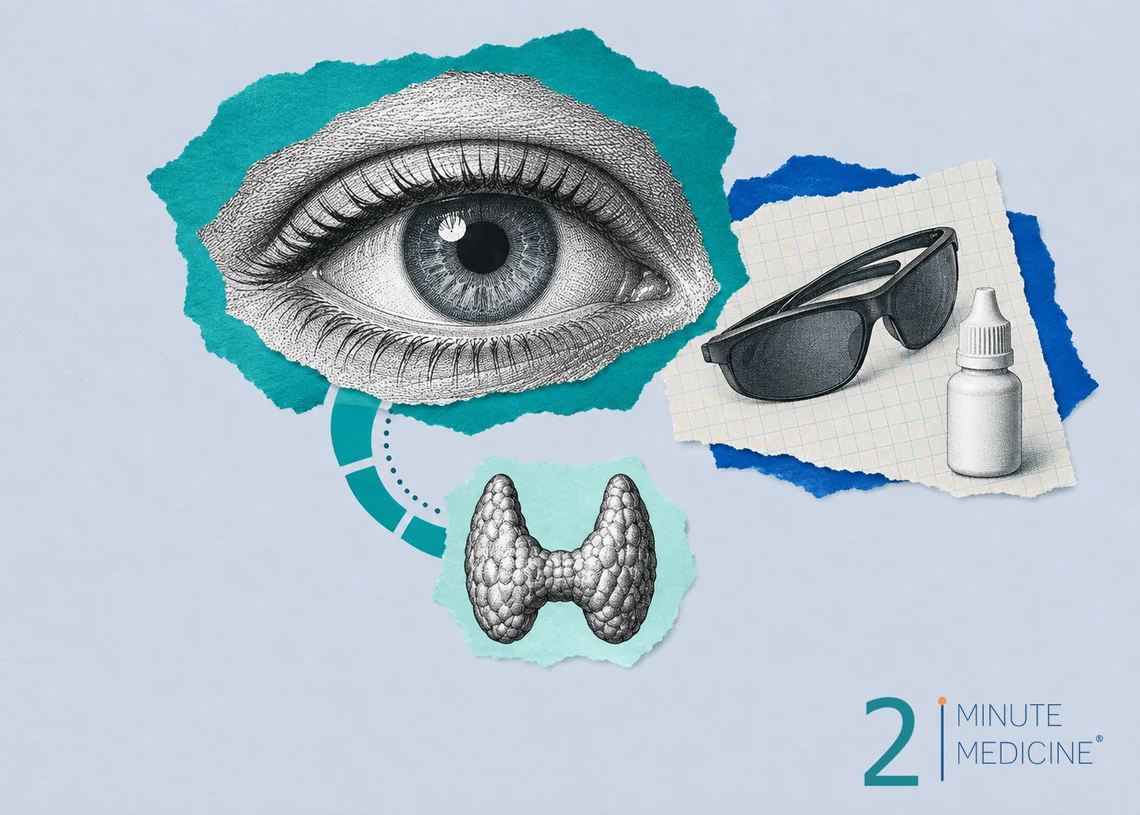
Graves’ eye disease, also called thyroid eye disease or Graves’ ophthalmopathy, happens when the immune system attacks the muscles and fat around the eyes. The tissue swells, which can push the eyes forward, make them red and gritty, and cause double vision. It usually affects people with Graves’ disease, a cause of an overactive thyroid. Quitting smoking is the single most helpful step you can take, because smoking makes it more likely, more severe and harder to treat.
Key points
- About 1 in 4 people with Graves’ disease have noticeable eye changes. Most cases are mild.
- The disease has an active phase of swelling that lasts from several months to about 2 years, then settles.
- Eye drops, sunglasses and keeping thyroid levels steady help mild cases. Medicines that calm the immune system treat moderate to severe cases.
- Surgery to fix bulging, double vision or eyelid changes is usually done after the disease has calmed down.
- Get emergency care for loss of vision or colors that look faded. Swelling can press on the nerve to the eye.
What causes Graves’ ophthalmopathy
In Graves’ disease, the body makes antibodies that switch on the thyroid gland. The extra thyroid hormone causes symptoms such as weight loss, a fast heartbeat, shaky hands, trouble sleeping and feeling hot. These antibodies also act on cells behind the eyes. The cells make more fat and a gel-like substance, and the eye muscles swell. The eye socket is a bony space with little room to spare, so the swelling pushes the eyeball forward and makes the muscles stiff.
Eye disease can start before, at the same time as, or after the thyroid problem. A few people get it with a normal or underactive thyroid.
Things that raise the risk or make it worse:
- Smoking, including secondhand smoke
- Thyroid levels that swing too high or too low
- Radioactive iodine treatment for the thyroid, especially in smokers or people who already have active eye disease
- Older age. Women get Graves’ disease more often, but men tend to have more severe eye disease.
Symptoms of Graves’ ophthalmopathy
Signs of Graves’ disease in the eyes include:
- Dry, gritty, burning or watery eyes
- Red eyes and puffy eyelids
- Sensitivity to light
- Eyes that bulge forward (proptosis, also called exophthalmos) or a wide-eyed stare from pulled-back eyelids
- Pressure or ache behind the eyes, or pain when looking up, down or sideways
- Double vision, often worse when looking up or to the side, or when tired
- Trouble closing the eyes fully, especially during sleep
- Blurred vision or colors that look dull (a warning sign of pressure on the optic nerve)
One eye can be more affected than the other.
How it’s diagnosed
An eye doctor (ophthalmologist) checks your vision, color vision, eye pressure and eye movements. A small ruler-like tool measures how far each eye sticks out. Blood tests check thyroid levels and the antibodies of Graves’ disease. A CT or MRI scan of the eye sockets shows the swollen muscles and helps plan treatment. Care usually involves both an eye doctor and a hormone specialist (endocrinologist).
How Graves’ eye disease is treated
Treatment depends on whether the disease is active and how severe it is.
For everyone
- Stop smoking and avoid secondhand smoke.
- Keep thyroid levels stable. Take your thyroid medicine as prescribed and keep up with blood tests.
- Protect the eyes. Use lubricating drops during the day and a thicker gel or ointment at night. Wear wraparound sunglasses outdoors.
- Raise the head of your bed to ease morning puffiness.
- Tape your eyelids closed at night or use a sleep mask if your eyes don’t close fully.
For mild active disease, doctors sometimes suggest a selenium supplement for about 6 months. Ask first, since too much selenium can be harmful.
Moderate to severe active disease
- Steroids through a vein (IV), such as methylprednisolone, given weekly for about 3 months
- Teprotumumab (Tepezza), an IV medicine given every 3 weeks for 8 doses that can reduce bulging and double vision. Side effects can include muscle cramps, high blood sugar and hearing changes, so your hearing is checked.
- Other immune medicines, such as mycophenolate, tocilizumab or rituximab
- Low-dose radiation to the eye sockets in some cases
Glasses with prisms can help with double vision while the disease is active.
Surgery
Once the disease has been quiet for about 6 months or more, surgery can repair lasting changes. It is usually done in this order:
- Orbital decompression, which removes some bone or fat to make room so the eyes sit back
- Eye muscle surgery to correct double vision
- Eyelid surgery to fix pulled-back or puffy lids
If swelling is pressing on the optic nerve, high-dose IV steroids or decompression surgery are done right away to save vision.
Living with it
Most people have mild disease that improves over time, though some bulging may remain. Changes in how your eyes look can be upsetting. Talk with your care team if it affects your mood, and ask about support groups.
When to see a doctor
- You have Graves’ disease and notice any eye changes
- Eye symptoms are getting worse
- New double vision
Get emergency care for vision loss, blurred vision that doesn’t clear with blinking, colors that look faded, or a painful eye that won’t close.
Common questions about Graves’ eye disease
What does active Graves’ ophthalmopathy mean?
Active means the swelling behind the eyes is still going on, so the eyes tend to be red, puffy and sore and may keep changing. This phase lasts months to about 2 years. Medicines that calm the immune system work best now, while surgery waits until the disease is inactive.
Does treating my thyroid fix my eyes?
Not directly. The eye disease follows its own course, and it can start or flare even when thyroid levels are normal. Keeping thyroid levels steady still helps, because swings too high or too low can make the eyes worse.
Will my eyes go back to normal?
Many people with mild disease see their eyes improve on their own over a year or two. Some bulging or eyelid changes may stay. Once the disease is quiet, surgery can move the eyes back, fix double vision and repair the eyelids.
Questions to ask your doctor
- Is my eye disease active or inactive?
- Is it mild, moderate or severe?
- Will radioactive iodine affect my eyes?
- Which treatment do you recommend, and what are the side effects?
- When could I be a candidate for surgery?
Learn more
- Graves’ eye disease (National Eye Institute)
- Graves’ disease (National Institute of Diabetes and Digestive and Kidney Diseases)
This guide is general information and doesn’t replace advice from your own doctor. Last updated October 2026.






 Get the app