

Patient Basics: Hypothyroidism
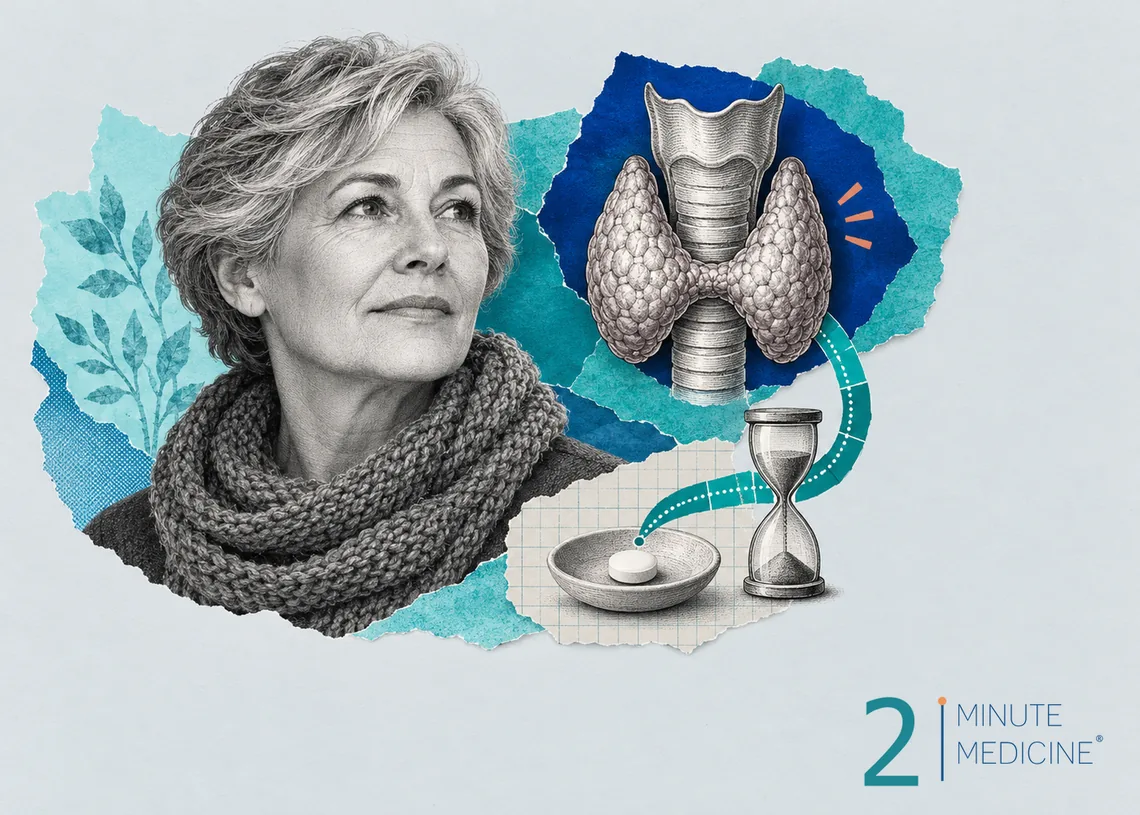
Hypothyroidism (an underactive or low thyroid) means the thyroid gland doesn’t make enough thyroid hormone. This hormone sets the pace for much of the body, so too little of it can leave you tired, cold and slowed down. A simple blood test finds it, and a daily pill treats it well.
Key points
- The most common cause in the US is Hashimoto’s disease, in which the immune system attacks the thyroid.
- Symptoms come on slowly and are easy to blame on stress or aging.
- A blood test for thyroid-stimulating hormone (TSH) is the main test.
- Treatment is a daily pill of levothyroxine, a copy of the hormone your body makes.
- Women, people over 60 and people with a family history are more likely to get it.
What the thyroid does
The thyroid is a butterfly-shaped gland at the front of the neck, below the voice box. It makes hormones called T4 and T3, which control how fast your body uses energy. They affect your heart rate, body temperature, digestion, weight, mood and more.
A gland in the brain called the pituitary watches thyroid hormone levels. When levels drop, the pituitary sends out more TSH to push the thyroid to work harder. That is why a high TSH usually means an underactive thyroid.
What causes hypothyroidism
- Hashimoto’s disease (chronic autoimmune thyroiditis). The immune system slowly damages the thyroid. It often runs in families and is more common in women.
- Thyroid surgery. Removing all or part of the thyroid lowers hormone levels.
- Radioactive iodine. This treatment for an overactive thyroid often leaves it underactive.
- Radiation to the head or neck for cancer.
- Medicines such as amiodarone (a heart rhythm drug), lithium and some cancer immunotherapy drugs.
- Thyroiditis. Swelling of the thyroid after a virus or after pregnancy can cause a short spell of low hormone (transient hypothyroidism), which often gets better.
- Too little or too much iodine. Lack of iodine is rare in the US because table salt has iodine added.
- Pituitary problems. Rarely, the pituitary doesn’t send enough TSH. This is called secondary or central hypothyroidism.
- Born with it. About 1 in 2,000 to 4,000 babies is born with an underactive thyroid. Every US newborn is tested for it.
Symptoms
- Tiredness and needing more sleep
- Feeling cold when others don’t
- Mild weight gain
- Constipation
- Dry skin, brittle nails, and thinning or coarse hair
- Muscle aches, cramps or stiffness
- Low mood, slow thinking or poor memory
- Heavy or irregular periods, or trouble getting pregnant
- A slow heart rate
- A puffy face or hoarse voice
- A swollen thyroid gland (goiter)
Many people have only a few mild symptoms, or none. Older adults may simply seem slower or more forgetful.
How hypothyroidism is diagnosed
- TSH test. A high TSH points to an underactive thyroid.
- Free T4 test. A low free T4 confirms that hormone levels are low.
- Thyroid antibodies (anti-TPO). These show whether Hashimoto’s is the cause.
When TSH is a bit high but free T4 is normal, doctors call it subclinical hypothyroidism. Many people with this don’t need treatment and just get their blood rechecked. Treatment is more likely if TSH is well above normal, you have symptoms, or you are pregnant or trying to get pregnant.
Biotin, a supplement in many hair, skin and nail products, can throw off thyroid test results. Stop it a few days before your blood test.
Treatment
Levothyroxine is a pill that replaces the missing T4 hormone. Most people take it for life.
- Finding the right dose. Your doctor will check your TSH about 6 to 8 weeks after you start and after each dose change. Once the dose is steady, a yearly test is usually enough.
- When you take it. Take it at the same time every day on an empty stomach, with water, 30 to 60 minutes before breakfast. Some people take it at bedtime instead, at least 3 hours after their last meal.
- Things that block it. Calcium, iron, antacids, some cholesterol medicines, soy and high-fiber foods can keep levothyroxine from being absorbed. Take these at least 4 hours apart.
- Brand or generic. Both work. Try to stay on the same product, because switching can change your levels. If your pharmacy switches it, ask for a TSH check after 6 weeks.
Thyroid medicine side effects
At the right dose, levothyroxine rarely causes side effects, because it matches a hormone your body already makes. Most problems come from a dose that is too high. That can cause a racing heart, shakiness, sweating, trouble sleeping and, over time, bone loss and heart rhythm problems, which is why regular blood tests matter. Too low a dose leaves your symptoms in place.
Most people feel better within a few weeks, though it can take a few months to feel fully normal. A small number still have symptoms even with normal blood tests. Some doctors may then try adding liothyronine (T3). Desiccated thyroid extract, made from pig thyroid and sold under names such as Armour Thyroid and NP Thyroid, isn’t usually recommended because its hormone content is harder to control.
Avoid “thyroid support” supplements sold online. Some contain real thyroid hormone in unknown amounts.
Hypothyroidism in children
Babies born with an underactive thyroid are found through newborn screening. They start levothyroxine within the first weeks of life, which protects growth and brain development. Older children and teens most often get Hashimoto’s disease. Signs include slow growth, delayed puberty, tiredness, weight gain, constipation and slipping grades. Children take the same medicine as adults, with the dose adjusted as they grow.
Pregnancy
A baby depends on the mother’s thyroid hormone early in pregnancy. If you take levothyroxine, tell your doctor as soon as you know you’re pregnant. Most women need a higher dose right away, with blood tests every 4 weeks or so in the first half of pregnancy.
When to see a doctor
- You feel tired, cold and slowed down for weeks
- You notice a lump or swelling in your neck
- You’ve had thyroid surgery, radioactive iodine or neck radiation and haven’t had your thyroid checked
- You take amiodarone or lithium
- You’re planning a pregnancy and have a thyroid condition
Call 911 for extreme drowsiness, confusion, a very low body temperature or slow breathing in someone with untreated hypothyroidism. This can be a rare emergency called myxedema coma.
Common questions about hypothyroidism
Can hypothyroidism cause weight gain?
Yes, but usually only a modest amount, often 5 to 10 pounds, much of it from salt and water. Treatment often takes off some of that weight. If you’ve gained much more, other causes are likely involved, and a higher levothyroxine dose won’t help.
Does hypothyroidism cause hair loss?
It can. Low thyroid hormone can make hair dry, coarse and thin, including the outer part of the eyebrows. Hair usually grows back within a few months of treatment, though some people notice extra shedding in the first months of levothyroxine before it improves.
Is hypothyroidism hereditary?
It often runs in families. Hashimoto’s disease is more common in people whose relatives have thyroid disease or other autoimmune conditions, such as type 1 diabetes or celiac disease. A family history doesn’t mean you’ll get it, but it’s a reason to mention symptoms to your doctor early.
Can hypothyroidism be cured?
Most cases can’t be cured, but a daily pill controls them fully. Hypothyroidism from thyroiditis after pregnancy or a virus often gets better on its own within months. If a medicine caused yours, it may improve after that medicine is stopped.
Questions to ask your doctor
- What is causing my underactive thyroid?
- How soon should I feel better?
- Do any of my other medicines or supplements affect levothyroxine?
- How often should my blood be checked?
- What should I do if I miss a dose?
Learn more
- Hypothyroidism (underactive thyroid) (National Institute of Diabetes and Digestive and Kidney Diseases)
This guide is general information and doesn’t replace advice from your own doctor. Last updated October 2026.
RelatedReports






 Get the app