• About
  • Masthead
  • License Content
  • Advertise
  • Press Releases
  • Newsroom
  • RSS/Email List
  • 2MM Podcast
  • Write for us
  • Contact Us
2 Minute Medicine
No Result
View All Result

No products in the cart.

Sign in
SUBSCRIBE
  • About
  • Specialties
    • All Specialties, All Recent Reports
    • Cardiology
    • Chronic Disease
    • Dermatology
    • Emergency
    • Endocrinology
    • Gastroenterology
    • Imaging and Intervention
    • Infectious Disease
    • Nephrology
    • Neurology
    • Obstetrics
    • Oncology
    • Ophthalmology
    • Pediatrics
    • Pharma
    • Preclinical
    • Psychiatry
    • Public Health
    • Pulmonology
    • Rheumatology
    • Surgery
    • Rewinds
    • The Scan
  • EvidencePulse™
  • HypeCheck™
  • AI News
  • Classics™
    • 2MM+ Online Access
    • Paperback and Ebook
  • Tools
    • NPI Registry Lookup
    • RVU Search
    • ICD-10 Code Lookup
    • Medical School Rankings
    • FDA Drug Approvals
    • Drug Safety for Breastfeeding/Pregnancy
    • Clinical Guidelines
    • Medical Calculators
  • Partners
    • License Content
    • Advertise with Us
2 Minute Medicine
  • About
  • Specialties
    • All Specialties, All Recent Reports
    • Cardiology
    • Chronic Disease
    • Dermatology
    • Emergency
    • Endocrinology
    • Gastroenterology
    • Imaging and Intervention
    • Infectious Disease
    • Nephrology
    • Neurology
    • Obstetrics
    • Oncology
    • Ophthalmology
    • Pediatrics
    • Pharma
    • Preclinical
    • Psychiatry
    • Public Health
    • Pulmonology
    • Rheumatology
    • Surgery
    • Rewinds
    • The Scan
  • EvidencePulse™
  • HypeCheck™
  • AI News
  • Classics™
    • 2MM+ Online Access
    • Paperback and Ebook
  • Tools
    • NPI Registry Lookup
    • RVU Search
    • ICD-10 Code Lookup
    • Medical School Rankings
    • FDA Drug Approvals
    • Drug Safety for Breastfeeding/Pregnancy
    • Clinical Guidelines
    • Medical Calculators
  • Partners
    • License Content
    • Advertise with Us
Sign in
SUBSCRIBE
2 Minute Medicine
Sign in
Subscribe
2 Minute MedicineFree on Google PlayGet
✦EvidencePulse™by 2 Minute Medicine3 reportsYou askedtop stroke trials 2026Synthesizing medical evidence...Top 2026 stroke trial results:OCEANIC — ischemic stroke: 6.2% vs 8.4%OPTION* — mRS 0–1: 43.6% vs 34.2%ORIENTAL* — mRS 0–2: 58.6% vs 46.6%*Higher sICH in intervention armsParticipants randomizedNOCEANIC12,327OPTION570ORIENTAL564Ask about guidelines or landmark trials...↑Try EvidencePulse™Ask the evidence. Get the signal.Try it now →
Home Health A to Z

Patient Basics: Human Papillomavirus (HPV)
by2 Minute Medicine
October 30, 2026
in Health A to Z, Uncategorized
Reading Time: 6 mins read
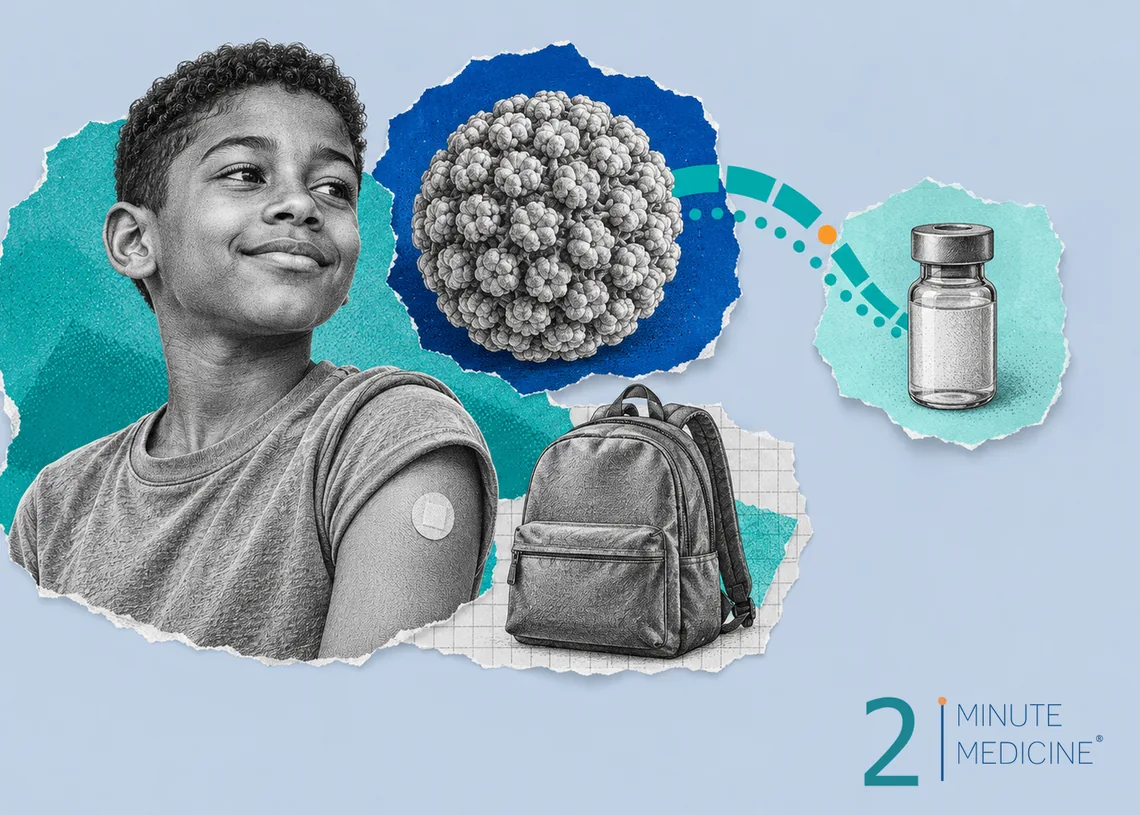
Collage for HPV: a preteen boy with a small bandage on his arm, a virus particle, a vaccine vial and a school backpack
Share on FacebookShare on TwitterShare on LinkedIn

Human papillomavirus (HPV) is the most common sexually transmitted infection. Nearly everyone who has ever been sexually active will catch it at some point, usually without knowing. Most infections clear up by themselves, but some types can cause genital warts, and others can lead to cancer years later. A vaccine prevents most of the harmful types, and screening finds early cell changes before they turn into cancer.

Key points

  • HPV spreads through skin-to-skin contact during sex, including oral sex, even when there are no symptoms.
  • About 9 in 10 infections go away on their own within 2 years.
  • Infections that last can cause cancers of the cervix, throat, anus, penis, vagina and vulva.
  • The HPV vaccine works best when given at age 11 or 12, before any sexual contact. It can be started as early as 9.
  • Regular cervical screening with an HPV test, a Pap test or both catches problems early.

HPV types and how it spreads

There are more than 200 types of HPV. Some cause common warts on the hands and feet, and these aren’t spread by sex. About 40 types infect the genital area, mouth and throat.

  • Low-risk types, mainly types 6 and 11, cause most genital warts. They rarely lead to cancer.
  • High-risk types, especially types 16 and 18, can cause cell changes that may slowly turn into cancer if the infection lasts for years.

HPV passes through close skin contact, most often during vaginal or anal sex, and also through oral sex. Condoms lower the risk but don’t cover all the skin that can carry the virus. The virus can stay quiet in the body for years, so a new diagnosis doesn’t tell you when or from whom you got it.

HPV symptoms

Most people with HPV never have symptoms. When problems do show up, they can include:

  • Genital and anal warts. Small, skin-colored or gray bumps around the genitals or anus. They may be flat or raised, single or in clusters, and are usually painless but can itch.
  • Precancer. Abnormal cells on the cervix cause no symptoms. They are found only by screening.
  • Cancer. Signs depend on where it grows, for example bleeding after sex or between periods for cervical cancer, or a lasting sore throat, ear pain or a lump in the neck for throat cancer.

In the US, HPV-related throat cancer is now more common than cervical cancer, and it mostly affects men.

HPV on the skin

Other HPV types, such as types 1, 2 and 4, cause common warts on the hands, plantar warts on the soles and flat warts on the face. They spread through touch or shared surfaces such as pool decks, not through sex. Most go away on their own within a year or two, especially in children.

RELATED REPORTS

Human papillomavirus vaccination may allow longer cervical cancer screening intervals

Human papillomavirus infection is associated with increased risk of developing Parkinson’s disease in men

  • Salicylic acid from the drugstore, used daily for several weeks after soaking and filing the wart, works about as well as most other treatments.
  • Freezing with liquid nitrogen in a clinic is colder than home freezing kits. It usually takes a few sessions, 2 to 3 weeks apart.
  • Stubborn warts may need prescription creams, laser or other office treatments.

Testing

Cervical screening

For people with a cervix, regular screening is the best way to find HPV-related changes early.

  • Ages 21 to 29: a Pap test every 3 years
  • Ages 30 to 65: an HPV test every 5 years, an HPV test plus Pap test every 5 years, or a Pap test every 3 years

Some clinics now let you collect your own vaginal sample for HPV testing. Your clinician may suggest a different schedule if you have had abnormal results, HIV or a weak immune system.

Other testing

There is no approved routine HPV test for men, or for the mouth and throat. Genital warts are diagnosed by looking at them. People with HIV and some others at high risk may be offered screening for anal cancer.

Treatment

No medicine removes the virus itself. Treatment targets the problems it causes.

  • Genital warts can be treated with creams or solutions you apply at home, such as imiquimod or podofilox, or by a clinician with freezing, an acid solution, laser or minor surgery. Warts may come back, because the virus can stay in the skin. Don’t use over-the-counter wart removers meant for hands and feet on the genitals.
  • Abnormal cervical cells are watched with repeat testing or removed. A common method is LEEP, which uses a thin wire loop with an electric current to take off the affected area. Freezing and cone biopsy are other options.
  • HPV-related cancers are treated with surgery, radiation, chemotherapy or a mix of these. Throat cancers caused by HPV tend to respond well to treatment.

The HPV vaccine

  • It protects against the nine HPV types that cause most HPV-related cancers and genital warts.
  • It is recommended for all children at age 11 or 12, and can be given from age 9. Anyone through age 26 who missed it should get it.
  • Adults aged 27 to 45 may benefit and can talk with a doctor about it.
  • The number of doses depends on your age at the first shot and your immune health.
  • It is very safe. A sore arm is the most common side effect. Some young people feel faint after a shot, so sitting for 15 minutes afterward is advised.
  • It prevents new infections but doesn’t treat an infection you already have.

In the US, infections with the types covered by the vaccine have dropped sharply among young people since it came into use. Vaccinated people with a cervix still need screening, since the vaccine doesn’t cover every high-risk type.

Lowering your risk

  • Get vaccinated, and vaccinate your children at 11 or 12.
  • Use condoms or dental dams.
  • Keep up with cervical screening.
  • Don’t smoke. Smoking makes it harder for the body to clear HPV and raises cancer risk.

HPV and relationships

Finding out you have HPV can be upsetting, but it is extremely common and says little about your past. Partners who have been together for a while usually share the virus already. There is no need to test a partner, but people with a cervix should keep up with their own screening.

When to see a doctor

  • You notice bumps or growths around the genitals or anus
  • You have bleeding after sex, between periods or after menopause
  • You have a sore throat, hoarseness or ear pain that lasts more than a few weeks, or a lump in your neck
  • You or your child are due for the vaccine
  • You are due for cervical screening

Common questions about HPV

What is HPV 2?

HPV 2 is one of the low-risk types that cause common warts, usually on the fingers, hands and knees. It spreads by skin contact, not sex, and isn’t linked to cancer. Children and people who often have wet or damaged skin on their hands get these warts most.

Can you get rid of a wart in 24 hours?

No treatment removes a wart that fast. After freezing, the wart usually blisters and falls off over 1 to 3 weeks, and many need repeat sessions. Cutting, burning or picking at a wart at home can cause infection and scars, and it can spread the virus.

Do home remedies work for warts?

Most have little proof behind them. Covering a wart with duct tape helps some people, but studies disagree. Apple cider vinegar and garlic can burn the skin around the wart. Drugstore salicylic acid is the best-tested home option, but never use it on genital warts or on your face.

Questions to ask your doctor

  • Which type of HPV do I have, and is it high risk?
  • What do my screening results mean, and when do I need my next test?
  • Is it too late for me to get the vaccine?
  • How should my warts be treated?
  • What should I tell my partner?

Learn more

  • About HPV (Centers for Disease Control and Prevention)
  • HPV and cancer (National Cancer Institute)

This guide is general information and doesn’t replace advice from your own doctor. Last updated October 2026.

Tags: Human Papilloma Virus (HPV)
Previous Post

Patient Basics: Hip Fracture (Broken Hip)

Next Post

Patient Basics: Hernia

RelatedReports

American College of Physicians releases principles to guide patient partnership in health care
Oncology

Human papillomavirus vaccination may allow longer cervical cancer screening intervals

February 2, 2026
2 Minute Medicine Rewind August 19, 2019
Chronic Disease

Human papillomavirus infection is associated with increased risk of developing Parkinson’s disease in men

January 13, 2026
Compliance-linked incentives increase infant immunizations rates in rural India
Chronic Disease

HPV vaccination is safe and effective at 10-year follow-up

September 11, 2023
Medical vaccine exemptions increase after elimination of nonmedical exemptions
Chronic Disease

Provider-based interventions may increase human papillomavirus vaccination rates

April 14, 2023
Next Post
Collage of a belly muscle wall with a small hernia bulge circled, a square of surgical mesh and a cardboard box

Patient Basics: Hernia

Collage of a wooden chair with a round cushion for hemorrhoids, a basin of warm water, a sprig of witch hazel and bread

Patient Basics: Hemorrhoids

Collage for a heart murmur: a calm young girl, an engraved heart with a swirling teal ribbon and a stethoscope

Patient Basics: Heart Murmur

✦ EvidencePulse™ by 2 Minute Medicine 3 reports You asked top stroke trials 2026 Synthesizing medical evidence... Top 2026 stroke trial results: OCEANIC — ischemic stroke: 6.2% vs 8.4% OPTION* — mRS 0–1: 43.6% vs 34.2% ORIENTAL* — mRS 0–2: 58.6% vs 46.6% *Higher sICH in intervention arms Participants randomizedN OCEANIC 12,327 OPTION 570 ORIENTAL 564 Ask about guidelines or landmark trials... Try EvidencePulse™ Get the signal. Try it now → Physician-trained medical AI by 2 Minute Medicine

2MM+ All Access

Full details →
$4.99 /month

3-day free trial · cancel anytime

  • ✓100+ physician-written reports
  • ✓EvidencePulse™ + HypeCheck™
  • ✓Ad-free reading + newsletters
Start 3-day free trial

Then $4.99/month. Manage renewal in your account.

NPI Lookup · Free

Look up any US clinician

Search by name or NPI number, live from the CMS NPI Registry.

  • OIG exclusion check
  • Licenses and specialties
  • No account needed
Open NPI Lookup →

2 Minute Medicine® is an award winning, physician-run, expert medical media company. Our content is curated, written and edited by practicing health professionals who have clinical and scientific expertise in their field of reporting. Our editorial management team is comprised of highly-trained MD physicians. Join numerous brands, companies, and hospitals who trust our licensed content.

Recent Reports

  • A concentrated exposure therapy intervention may be more effective than digital cognitive behavioural therapy in obsessive-compulsive disorder
  • Routine CT scans show steeper fat loss years before pancreatic cancer diagnosis
  • Post-hoc CHARM analysis linked CIRARA with better functional outcomes in selected patients with severe stroke
License Content
Terms of Use | Disclaimer
Cookie Policy

Get the app

Read 2 Minute Medicine on iPhone, iPad and Android.

Download on the App StoreGet it on Google Play
QR code for www.2minutemedicine.com/app
On a computer? Scan this with your phone’s camera.
2MM+ All Access Full details →

The medical literature, distilled daily.

Monthly plan selected: $4.99 /month.

$4.99/month

3-day free trial · cancel anytime

Start 3-day free trial

Then $4.99/month. Manage renewal in your account.

Yearly plan selected: $49.90 /year.

$49.90/year

2 months free

Start 3-day free trial

Then $49.90/year.

Membership benefits

  • ✓100+ physician-written reports
  • ✓AI EvidencePulse™ + HypeCheck™
  • ✓Ad-free reading + newsletters
  • ✓NPI watchlist + bulk NPI verification

Already a member? Sign in

  • Get the app
  • About
  • Specialties
    • All Specialties, All Recent Reports
    • Cardiology
    • Chronic Disease
    • Dermatology
    • Emergency
    • Endocrinology
    • Gastroenterology
    • Imaging and Intervention
    • Infectious Disease
    • Nephrology
    • Neurology
    • Obstetrics
    • Oncology
    • Ophthalmology
    • Pediatrics
    • Pharma
    • Preclinical
    • Psychiatry
    • Public Health
    • Pulmonology
    • Rheumatology
    • Surgery
    • Rewinds
    • The Scan
  • EvidencePulse™
  • HypeCheck™
  • AI News
  • Classics™
    • 2MM+ Online Access
    • Paperback and Ebook
  • Tools
    • NPI Registry Lookup
    • RVU Search
    • ICD-10 Code Lookup
    • Medical School Rankings
    • FDA Drug Approvals
    • Drug Safety for Breastfeeding/Pregnancy
    • Clinical Guidelines
    • Medical Calculators
  • Partners
    • License Content
    • Advertise with Us
No Result
View All Result

© 2026 2 Minute Medicine, Inc. - Physician-written medical news.