
• About
  • Masthead
  • License Content
  • Advertise
  • Press Releases
  • Newsroom
  • RSS/Email List
  • 2MM Podcast
  • Write for us
  • Contact Us
2 Minute Medicine
No Result
View All Result

No products in the cart.

Sign in
SUBSCRIBE
  • About
  • Specialties
    • All Specialties, All Recent Reports
    • Cardiology
    • Chronic Disease
    • Dermatology
    • Emergency
    • Endocrinology
    • Gastroenterology
    • Imaging and Intervention
    • Infectious Disease
    • Nephrology
    • Neurology
    • Obstetrics
    • Oncology
    • Ophthalmology
    • Pediatrics
    • Pharma
    • Preclinical
    • Psychiatry
    • Public Health
    • Pulmonology
    • Rheumatology
    • Surgery
    • Rewinds
    • The Scan
  • EvidencePulse™
  • HypeCheck™
  • AI News
  • Classics™
    • 2MM+ Online Access
    • Paperback and Ebook
  • Tools
    • NPI Registry Lookup
    • RVU Search
    • ICD-10 Code Lookup
    • Medical School Rankings
    • FDA Drug Approvals
    • Drug Safety for Breastfeeding/Pregnancy
    • Clinical Guidelines
    • Medical Calculators
    • ECG Reference
      • QTc Calculator
      • Sgarbossa Criteria
      • ECG Axis Calculator
      • AV Block Helper
  • Partners
    • License Content
    • Advertise with Us
2 Minute Medicine
  • About
  • Specialties
    • All Specialties, All Recent Reports
    • Cardiology
    • Chronic Disease
    • Dermatology
    • Emergency
    • Endocrinology
    • Gastroenterology
    • Imaging and Intervention
    • Infectious Disease
    • Nephrology
    • Neurology
    • Obstetrics
    • Oncology
    • Ophthalmology
    • Pediatrics
    • Pharma
    • Preclinical
    • Psychiatry
    • Public Health
    • Pulmonology
    • Rheumatology
    • Surgery
    • Rewinds
    • The Scan
  • EvidencePulse™
  • HypeCheck™
  • AI News
  • Classics™
    • 2MM+ Online Access
    • Paperback and Ebook
  • Tools
    • NPI Registry Lookup
    • RVU Search
    • ICD-10 Code Lookup
    • Medical School Rankings
    • FDA Drug Approvals
    • Drug Safety for Breastfeeding/Pregnancy
    • Clinical Guidelines
    • Medical Calculators
    • ECG Reference
      • QTc Calculator
      • Sgarbossa Criteria
      • ECG Axis Calculator
      • AV Block Helper
  • Partners
    • License Content
    • Advertise with Us
Sign in
SUBSCRIBE
2 Minute Medicine
Sign in
Subscribe
2 Minute MedicineFree on Google PlayGet
✦EvidencePulse™by 2 Minute Medicine3 reportsYou askedtop stroke trials 2026Synthesizing medical evidence...Top 2026 stroke trial results:OCEANIC — ischemic stroke: 6.2% vs 8.4%OPTION* — mRS 0–1: 43.6% vs 34.2%ORIENTAL* — mRS 0–2: 58.6% vs 46.6%*Higher sICH in intervention armsParticipants randomizedNOCEANIC12,327OPTION570ORIENTAL564Ask about guidelines or landmark trials...↑Try EvidencePulse™Ask the evidence. Get the signal.Try it now →
Home Health A to Z

Patient Basics: Plague (Yersinia Pestis)
by2 Minute Medicine
October 30, 2026
in Health A to Z
Reading Time: 5 mins read
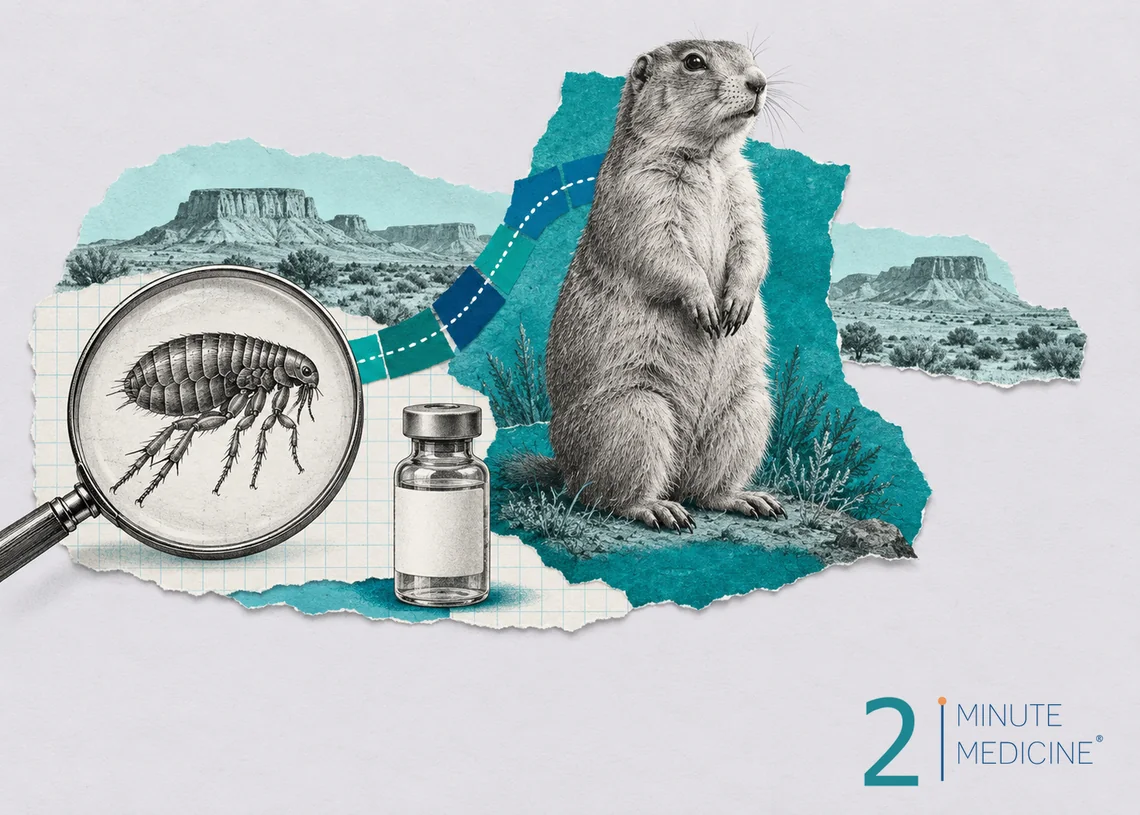
Plague collage of an engraved prairie dog, a flea under a magnifying glass, a desert mesa and a small medicine vial
Share on FacebookShare on TwitterShare on LinkedIn

Plague is a rare but serious infection caused by the bacteria Yersinia pestis. People usually catch it from the bite of a flea that has fed on an infected rodent, such as a prairie dog or ground squirrel. Plague still occurs in the rural western United States and in parts of Africa, Asia and the Andes region of South America. It can be cured with antibiotics, but only if treatment starts quickly, so sudden fever with a very painful swollen gland after possible exposure needs emergency care.

Key points

  • In the United States, about seven people a year get plague, mostly in New Mexico, Arizona, Colorado and California.
  • Bubonic plague, the most common form, causes fever and one or more swollen, very painful lymph nodes.
  • Plague in the lungs (pneumonic plague) can spread from person to person and is the most dangerous form.
  • Antibiotics work well when started early. Without them, plague is often fatal.
  • Avoiding sick or dead rodents and keeping fleas off pets are the best ways to prevent it.

How plague spreads

Plague bacteria live in wild rodents and their fleas. When many rodents in an area die off, hungry fleas look for new hosts, including people and pets. You can get plague by:

  • Being bitten by an infected flea
  • Handling an infected animal, alive or dead, such as a rodent, rabbit or cat, so the bacteria enter through a cut
  • Breathing in droplets from a person or animal, often a cat, that has plague in the lungs

Hikers, campers, hunters, people who live in rural areas with lots of rodents, and veterinarians in those areas have the highest risk.

Types of plague and their symptoms

Symptoms usually start 2 to 8 days after exposure, or within 1 to 4 days if the bacteria were breathed in. All forms begin suddenly with fever, chills, headache and weakness.

Bubonic plague

The bacteria travel to the nearest lymph node, which swells into a tender lump called a bubo. It usually forms in the groin, armpit or neck, near the flea bite, and is often very painful to touch. It can grow to the size of an egg. If not treated, the infection can spread to the blood or lungs.

Septicemic plague

Here the bacteria multiply in the blood. It may start this way or follow bubonic plague. Symptoms include fever, extreme weakness, belly pain, vomiting, diarrhea, shock, and bleeding under the skin. Fingers, toes or the nose can turn black as tissue dies.

RELATED REPORTS

#VisualAbstract: Ciprofloxacin is Noninferior to Aminoglycoside–Ciprofloxacin for Treatment of Bubonic Plague

Pneumonic plague

This is a lung infection. It causes fever, a fast-worsening cough, chest pain, shortness of breath, and watery or bloody mucus. It can be fatal within a day or two without treatment, and it can pass to others through coughing.

How plague is diagnosed

Tell the doctor where you’ve been and whether you’ve had contact with rodents, fleas or sick pets. Plague is rare, so doctors may not think of it otherwise. Samples of blood, fluid from a swollen lymph node, or mucus from the lungs are tested in a lab. Doctors start antibiotics before results come back, because waiting is dangerous. Health departments are notified about every case.

How plague is treated

Treatment happens in the hospital with antibiotics. Common choices include gentamicin, streptomycin, doxycycline and fluoroquinolones such as levofloxacin or ciprofloxacin. Treatment usually lasts 10 to 14 days. People with pneumonic plague stay in a room on their own, and care staff wear masks until the person has had antibiotics for at least two days. Some people also need oxygen, IV fluids or intensive care.

Anyone who spent time near a person or pet with pneumonic plague is given a short course of preventive antibiotics.

Preventing plague

  • Clear brush, rock piles, junk and stacked firewood near your home, where rodents nest.
  • Store pet food and trash where rodents can’t reach them.
  • Never touch sick or dead animals. Wear gloves if you must handle an animal, such as when hunting or skinning.
  • When hiking or camping in plague areas, use insect repellent with DEET, wear long pants tucked into socks, and treat clothing with permethrin.
  • Keep fleas off your pets with flea control products, and don’t let pets roam or hunt.
  • Don’t let pets sleep in your bed if you live where plague occurs.
  • Report sudden die-offs of prairie dogs or squirrels to your local health department.

No plague vaccine is offered to the public in the U.S.

Common questions about plague

Does plague still exist?

Yes. Plague still occurs in parts of Africa, Asia and the Americas, including rural areas of the western United States, where a handful of people get it each year. It spreads among wild rodents and their fleas. With modern antibiotics, it is far less deadly than it was in past centuries.

Is plague contagious?

Bubonic plague, the most common form, doesn’t spread from person to person. Pneumonic plague, which infects the lungs, can spread through droplets when a sick person coughs. That’s why patients are isolated until they’ve had antibiotics for a couple of days, and close contacts are given preventive antibiotics.

Can plague be cured?

Yes, when it’s treated early. Antibiotics cure most people if they start within the first day or so of symptoms. Pneumonic and septicemic plague can be fatal within days without fast treatment, which is why a sudden fever after possible exposure needs emergency care, not a wait-and-see approach.

Can pets give you plague?

Yes, especially cats. Cats that hunt rodents can catch plague and pass it to people through bites, scratches or coughing. Dogs get sick less often but can carry infected fleas home. Use flea control, keep pets from hunting, and take a sick pet to a vet promptly if you live in a plague area.

When to see a doctor

Get emergency care if you develop a sudden fever with a swollen, painful lymph node, or a fever with cough, chest pain or trouble breathing, within a week of being in a plague area, handling a wild animal or being around a sick pet. Tell the staff about the possible exposure right away. If someone near you has been diagnosed with pneumonic plague, call your doctor or health department about preventive antibiotics.

Questions to ask your doctor

  • Which form of plague do I have?
  • How long will I need antibiotics, and will I stay in the hospital?
  • Do my family members or pets need treatment?
  • When will I no longer be able to spread it?
  • How can I lower the risk at my home?

Learn more

  • About plague (CDC)
  • Plague (MedlinePlus, U.S. National Library of Medicine)

This guide is general information and doesn’t replace advice from your own doctor. Last updated October 2026.

Tags: Plague
Previous Post

Patient Basics: Yaws

Next Post

Patient Basics: Vulvar Cancer

RelatedReports

#VisualAbstract: Ciprofloxacin is Noninferior to Aminoglycoside–Ciprofloxacin for Treatment of Bubonic Plague
StudyGraphics

#VisualAbstract: Ciprofloxacin is Noninferior to Aminoglycoside–Ciprofloxacin for Treatment of Bubonic Plague

August 21, 2025
Next Post
Collage on vulvar cancer: a closed exam-room door, a tulip in a vase, a folded blanket and reading glasses on a folder

Patient Basics: Vulvar Cancer

Wegener's granulomatosis collage: lungs, a kidney and a branching blood vessel joined by a teal ribbon

Patient Basics: Granulomatosis with Polyangiitis (Wegener's)

Traveler's diarrhea collage: a small suitcase, a sealed water bottle, a peeled orange and an engraved coil of intestine

Patient Basics: Traveler's Diarrhea

✦ EvidencePulse™ by 2 Minute Medicine 3 reports You asked top stroke trials 2026 Synthesizing medical evidence... Top 2026 stroke trial results: OCEANIC — ischemic stroke: 6.2% vs 8.4% OPTION* — mRS 0–1: 43.6% vs 34.2% ORIENTAL* — mRS 0–2: 58.6% vs 46.6% *Higher sICH in intervention arms Participants randomizedN OCEANIC 12,327 OPTION 570 ORIENTAL 564 Ask about guidelines or landmark trials... Try EvidencePulse™ Get the signal. Try it now → Physician-trained medical AI by 2 Minute Medicine

2MM+ All Access

Full details →
$4.99 /month

3-day free trial · cancel anytime

  • ✓100+ physician-written reports
  • ✓EvidencePulse™ + HypeCheck™
  • ✓Ad-free reading + newsletters
Start 3-day free trial

Then $4.99/month. Manage renewal in your account.

NPI Lookup · Free

Look up any US clinician

Search by name or NPI number, live from the CMS NPI Registry.

  • OIG exclusion check
  • Licenses and specialties
  • No account needed
Open NPI Lookup →

2 Minute Medicine® is an award winning, physician-run, expert medical media company. Our content is curated, written and edited by practicing health professionals who have clinical and scientific expertise in their field of reporting. Our editorial management team is comprised of highly-trained MD physicians. Join numerous brands, companies, and hospitals who trust our licensed content.

Recent Reports

  • Early mitral valve surgery may improve long-term survival in asymptomatic severe mitral regurgitation
  • CDC reports increasing early-season influenza activity and at least 900 deaths nationwide
  • A concentrated exposure therapy intervention may be more effective than digital cognitive behavioural therapy in obsessive-compulsive disorder
License Content
Terms of Use | Disclaimer
Cookie Policy

Get the app

Read 2 Minute Medicine on iPhone, iPad and Android.

Download on the App StoreGet it on Google Play
QR code for www.2minutemedicine.com/app
On a computer? Scan this with your phone’s camera.
2MM+ All Access Full details →

The medical literature, distilled daily.

Monthly plan selected: $4.99 /month.

$4.99/month

3-day free trial · cancel anytime

Start 3-day free trial

Then $4.99/month. Manage renewal in your account.

Yearly plan selected: $49.90 /year.

$49.90/year

2 months free

Start 3-day free trial

Then $49.90/year.

Membership benefits

  • ✓100+ physician-written reports
  • ✓AI EvidencePulse™ + HypeCheck™
  • ✓Ad-free reading + newsletters
  • ✓NPI watchlist + bulk NPI verification

Already a member? Sign in

  • Get the app
  • About
  • Specialties
    • All Specialties, All Recent Reports
    • Cardiology
    • Chronic Disease
    • Dermatology
    • Emergency
    • Endocrinology
    • Gastroenterology
    • Imaging and Intervention
    • Infectious Disease
    • Nephrology
    • Neurology
    • Obstetrics
    • Oncology
    • Ophthalmology
    • Pediatrics
    • Pharma
    • Preclinical
    • Psychiatry
    • Public Health
    • Pulmonology
    • Rheumatology
    • Surgery
    • Rewinds
    • The Scan
  • EvidencePulse™
  • HypeCheck™
  • AI News
  • Classics™
    • 2MM+ Online Access
    • Paperback and Ebook
  • Tools
    • NPI Registry Lookup
    • RVU Search
    • ICD-10 Code Lookup
    • Medical School Rankings
    • FDA Drug Approvals
    • Drug Safety for Breastfeeding/Pregnancy
    • Clinical Guidelines
    • Medical Calculators
    • ECG Reference
      • QTc Calculator
      • Sgarbossa Criteria
      • ECG Axis Calculator
      • AV Block Helper
  • Partners
    • License Content
    • Advertise with Us
No Result
View All Result

© 2026 2 Minute Medicine, Inc. - Physician-written medical news.


