
• About
  • Masthead
  • License Content
  • Advertise
  • Press Releases
  • Newsroom
  • RSS/Email List
  • 2MM Podcast
  • Write for us
  • Contact Us
2 Minute Medicine
No Result
View All Result

No products in the cart.

Sign in
SUBSCRIBE
  • About
  • Specialties
    • All Specialties, All Recent Reports
    • Cardiology
    • Chronic Disease
    • Dermatology
    • Emergency
    • Endocrinology
    • Gastroenterology
    • Imaging and Intervention
    • Infectious Disease
    • Nephrology
    • Neurology
    • Obstetrics
    • Oncology
    • Ophthalmology
    • Pediatrics
    • Pharma
    • Preclinical
    • Psychiatry
    • Public Health
    • Pulmonology
    • Rheumatology
    • Surgery
    • Rewinds
    • The Scan
  • EvidencePulse™
  • HypeCheck™
  • AI News
  • Classics™
    • 2MM+ Online Access
    • Paperback and Ebook
  • Tools
    • NPI Registry Lookup
    • RVU Search
    • Physician Pay by Specialty
    • ICD-10 Code Lookup
    • FDA Drug Approvals
    • Drug Safety for Breastfeeding/Pregnancy
    • Clinical Guidelines
    • Medical Calculators
    • ECG Reference
      • QTc Calculator
      • Sgarbossa Criteria
      • ECG Axis Calculator
      • AV Block Helper
  • Rankings
    • Medical School Rankings
    • Residency Rankings
  • Partners
    • License Content
    • Advertise with Us
2 Minute Medicine
  • About
  • Specialties
    • All Specialties, All Recent Reports
    • Cardiology
    • Chronic Disease
    • Dermatology
    • Emergency
    • Endocrinology
    • Gastroenterology
    • Imaging and Intervention
    • Infectious Disease
    • Nephrology
    • Neurology
    • Obstetrics
    • Oncology
    • Ophthalmology
    • Pediatrics
    • Pharma
    • Preclinical
    • Psychiatry
    • Public Health
    • Pulmonology
    • Rheumatology
    • Surgery
    • Rewinds
    • The Scan
  • EvidencePulse™
  • HypeCheck™
  • AI News
  • Classics™
    • 2MM+ Online Access
    • Paperback and Ebook
  • Tools
    • NPI Registry Lookup
    • RVU Search
    • Physician Pay by Specialty
    • ICD-10 Code Lookup
    • FDA Drug Approvals
    • Drug Safety for Breastfeeding/Pregnancy
    • Clinical Guidelines
    • Medical Calculators
    • ECG Reference
      • QTc Calculator
      • Sgarbossa Criteria
      • ECG Axis Calculator
      • AV Block Helper
  • Rankings
    • Medical School Rankings
    • Residency Rankings
  • Partners
    • License Content
    • Advertise with Us
Sign in
SUBSCRIBE
2 Minute Medicine
Sign in
Subscribe
2 Minute MedicineFree on Google PlayGet
✦EvidencePulse™by 2 Minute Medicine3 reportsYou askedtop stroke trials 2026Synthesizing medical evidence...Top 2026 stroke trial results:OCEANIC — ischemic stroke: 6.2% vs 8.4%OPTION* — mRS 0–1: 43.6% vs 34.2%ORIENTAL* — mRS 0–2: 58.6% vs 46.6%*Higher sICH in intervention armsParticipants randomizedNOCEANIC12,327OPTION570ORIENTAL564Ask about guidelines or landmark trials...↑Try EvidencePulse™Ask the evidence. Get the signal.Try it now →
Home Health A to Z

Patient Basics: Prediabetes (Pre-Diabetes)
by2 Minute Medicine
October 30, 2026
in Health A to Z
Reading Time: 5 mins read
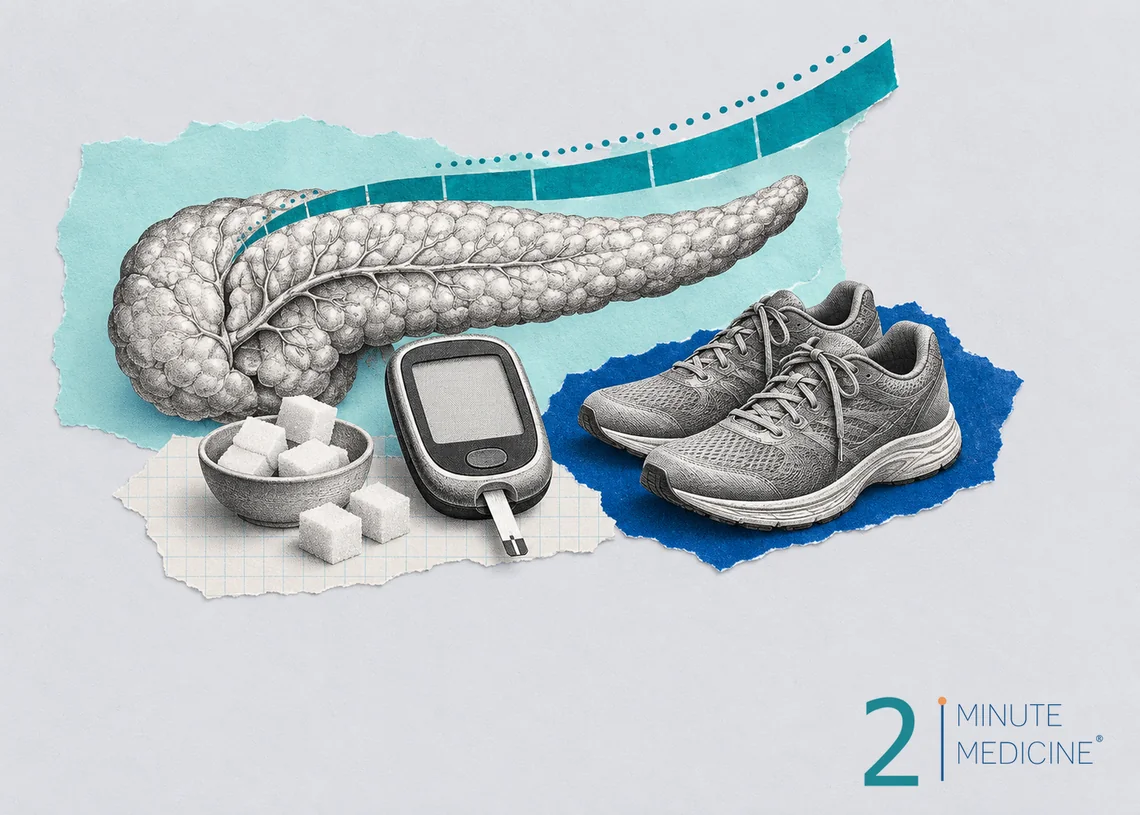
Prediabetes collage: a blank blood sugar meter, sugar cubes, walking shoes and a pancreas drawing on teal paper
Share on FacebookShare on TwitterShare on LinkedIn

Prediabetes means your blood sugar is higher than normal but not yet high enough to be type 2 diabetes. Most people with it feel fine, so a blood test is the only way to know. It can often be turned around. Losing a modest amount of weight and moving more can cut the chance of getting diabetes by more than half.

Key points

  • More than 1 in 3 adults in the US have prediabetes, and most of them don’t know it.
  • A blood test finds it. An A1C of 5.7% to 6.4%, or a fasting blood sugar of 100 to 125 mg/dL, is in the prediabetes range.
  • Losing 5% to 7% of your body weight and being active 150 minutes a week can delay or prevent type 2 diabetes.
  • Prediabetes also raises the risk of heart attack and stroke.
  • Ask for a test if you are 35 or older, or younger with extra weight and other risk factors.

What causes prediabetes

A hormone called insulin, made by the pancreas, lets sugar move out of your blood and into your cells for energy. In prediabetes, the muscles, liver and fat stop responding well to insulin. Doctors call this insulin resistance. The pancreas makes extra insulin to keep up, but over time it falls behind, and blood sugar creeps up.

You are more likely to have prediabetes if you:

  • Carry extra weight, especially around the waist
  • Are 35 or older
  • Have a parent, brother or sister with type 2 diabetes
  • Are active fewer than 3 days a week
  • Had diabetes during pregnancy (gestational diabetes)
  • Have polycystic ovary syndrome (PCOS), sleep apnea or high blood pressure
  • Smoke
  • Take steroid pills such as prednisone, or some medicines for mental health conditions

Rates are higher in Black, Hispanic, American Indian, Alaska Native, Asian American and Pacific Islander adults. Genes play a part, and so do unequal access to healthy food, safe places to exercise and regular health care.

Signs to look for

Prediabetes rarely causes symptoms. A few people notice dark, velvety skin on the back of the neck, in the armpits or in the groin (acanthosis nigricans), which is a sign of insulin resistance. Small skin tags are also more common.

Thirst, peeing a lot, blurry vision, tingling feet or losing weight without trying are signs that blood sugar may already be in the diabetes range. See a doctor soon if you have them.

RELATED REPORTS

No Content Available

How prediabetes is diagnosed

One of three blood tests is used. The ranges below come from the American Diabetes Association.

  • A1C. This shows your average blood sugar over the past 2 to 3 months, and you don’t need to fast. Below 5.7% is normal. Prediabetes is 5.7% to 6.4%. Diabetes is 6.5% or higher.
  • Fasting blood sugar. Blood is drawn after at least 8 hours without food. Below 100 mg/dL is normal. Prediabetes is 100 to 125. Diabetes is 126 or higher.
  • Glucose tolerance test. You drink a sweet liquid, and your blood is checked 2 hours later. Prediabetes is 140 to 199. Diabetes is 200 or higher.

A result in the diabetes range is usually repeated before a diagnosis is made. Home finger-stick meters are good for tracking but are not used to diagnose prediabetes.

Most adults should start testing at 35. Testing starts earlier for people with extra weight plus another risk factor, and for children with extra weight and risk factors from about age 10. If your result is normal, repeat it at least every 3 years. With prediabetes, check every year.

Treating prediabetes

Lifestyle change is the main treatment. In the large Diabetes Prevention Program study, people who lost about 7% of their weight and exercised 150 minutes a week lowered their risk of type 2 diabetes by 58% over about 3 years.

Lose a little weight

You don’t need to reach an ideal weight. For a person who weighs 200 pounds, losing 10 to 14 pounds makes a real difference.

Move more

Aim for 150 minutes a week of activity that makes you breathe harder, such as brisk walking, biking or dancing. That works out to 30 minutes on 5 days. Add muscle work, such as weights or bands, twice a week. Getting up every half hour during long periods of sitting also helps your body use sugar.

Eat for steady blood sugar

  • Fill half your plate with vegetables.
  • Choose whole grains, beans, lentils, nuts, fish and fruit.
  • Drink water instead of soda, sweet tea and juice.
  • Cut back on white bread, sweets, chips and processed meat.

There is no single prediabetes diet. A Mediterranean-style or a lower-carbohydrate way of eating can both help, so pick one you can keep up.

Join a lifestyle program

The National Diabetes Prevention Program, recognized by the CDC, runs year-long group classes in person and online. A coach helps with food, activity and staying on track. Medicare and many health plans cover it.

Medicine

Your doctor may suggest metformin, a diabetes pill, if your risk is high. It is used most often in people under 60 with severe obesity and in women who had diabetes during pregnancy. Weight-loss medicines such as semaglutide and tirzepatide also lower blood sugar, and may be an option if you have obesity.

Protect your heart

Quit smoking, sleep 7 or more hours a night, and keep blood pressure and cholesterol in check. These steps lower the heart risk that comes with prediabetes.

When to see a doctor

  • You are 35 or older and have never had your blood sugar checked
  • You have risk factors, even if you feel well
  • You have thirst, frequent peeing, blurry vision, slow-healing sores or tingling feet
  • You have prediabetes and it has been a year since your last test

Common questions about prediabetes

Can prediabetes be reversed?

Yes, often. Many people bring their blood sugar back to the normal range by losing some weight, getting regular exercise and cutting back on sugary drinks and refined carbs. Even if the numbers don’t drop all the way, these changes can delay type 2 diabetes for years.

Is a blood sugar of 126 diabetes?

A fasting blood sugar of 126 mg/dL or higher is in the diabetes range. One reading isn’t enough, so doctors repeat the test or check an A1C to confirm. A reading of 126 taken soon after eating can be normal, because blood sugar rises after meals.

Does prediabetes always turn into diabetes?

No. Some people’s blood sugar stays steady or goes back to normal, especially after lifestyle changes. Without changes, though, many people with prediabetes develop type 2 diabetes within a few years. A yearly test shows which way your numbers are heading.

How long does it take to lower your A1C?

A1C reflects about 3 months of blood sugar, so changes show up on a test after 3 months or so. Many people see a drop within 3 to 6 months of steady changes to food and activity. Your doctor will usually recheck it in that window.

Questions to ask your doctor

  • What are my A1C and fasting blood sugar numbers?
  • How much weight should I aim to lose?
  • Is there a diabetes prevention program near me or online?
  • Would metformin or another medicine help me?
  • How often should I be tested?

Learn more

  • Insulin resistance and prediabetes (National Institute of Diabetes and Digestive and Kidney Diseases)
  • Prediabetes (MedlinePlus, U.S. National Library of Medicine)

This guide is general information and doesn’t replace advice from your own doctor. Last updated October 2026.

Tags: Pre-Diabetes
Previous Post

Patient Basics: Achalasia

Next Post

Patient Basics: Pertussis (Whooping Cough)

RelatedReports

No Content Available
Next Post
Whooping cough collage: engraved airways with tiny bacteria under a lens, a vaccine vial and a baby's rattle

Patient Basics: Pertussis (Whooping Cough)

Aging collage: a smiling older man beside an hourglass, folded reading glasses and a pair of walking shoes

Patient Basics: Aging Overview

Non-small cell lung cancer collage: a middle-aged woman, an engraved pair of lungs, a bronchoscope and a radon test kit

Patient Basics: Non-Small Cell Lung Cancer

✦ EvidencePulse™ by 2 Minute Medicine 3 reports You asked top stroke trials 2026 Synthesizing medical evidence... Top 2026 stroke trial results: OCEANIC — ischemic stroke: 6.2% vs 8.4% OPTION* — mRS 0–1: 43.6% vs 34.2% ORIENTAL* — mRS 0–2: 58.6% vs 46.6% *Higher sICH in intervention arms Participants randomizedN OCEANIC 12,327 OPTION 570 ORIENTAL 564 Ask about guidelines or landmark trials... Try EvidencePulse™ Get the signal. Try it now → Physician-trained medical AI by 2 Minute Medicine

2MM+ All Access

Full details →
$4.99 /month

3-day free trial · cancel anytime

  • ✓100+ physician-written reports
  • ✓EvidencePulse™ + HypeCheck™
  • ✓Ad-free reading + newsletters
Start 3-day free trial

Then $4.99/month. Manage renewal in your account.

NPI Lookup · Free

Look up any US clinician

Search by name or NPI number, live from the CMS NPI Registry.

  • OIG exclusion check
  • Licenses and specialties
  • No account needed
Open NPI Lookup →

2 Minute Medicine® is an award winning, physician-run, expert medical media company. Our content is curated, written and edited by practicing health professionals who have clinical and scientific expertise in their field of reporting. Our editorial management team is comprised of highly-trained MD physicians. Join numerous brands, companies, and hospitals who trust our licensed content.

Recent Reports

  • Non-inpatient care settings may offer alternatives to inpatient beds for select patients
  • Pirtobrutinib improves progression-free survival versus bendamustine plus rituximab in previously untreated CLL/SLL
  • Angiography-derived vessel fractional flow reserve (vFFR) was noninferior to pressure wire–based fractional flow reserve (FFR) for guiding revascularization in intermediate coronary stenoses
License Content
Terms of Use | Disclaimer
Cookie Policy

Get the app

Read 2 Minute Medicine on iPhone, iPad and Android.

Download on the App StoreGet it on Google Play
QR code for www.2minutemedicine.com/app
On a computer? Scan this with your phone’s camera.
2MM+ All Access Full details →

The medical literature, distilled daily.

Monthly plan selected: $4.99 /month.

$4.99/month

3-day free trial · cancel anytime

Start 3-day free trial

Then $4.99/month. Manage renewal in your account.

Yearly plan selected: $49.90 /year.

$49.90/year

2 months free

Start 3-day free trial

Then $49.90/year.

Membership benefits

  • ✓100+ physician-written reports
  • ✓AI EvidencePulse™ + HypeCheck™
  • ✓Ad-free reading + newsletters
  • ✓FDA drug approvals + clinical calculators

Already a member? Sign in

  • Get the app
  • About
  • Specialties
    • All Specialties, All Recent Reports
    • Cardiology
    • Chronic Disease
    • Dermatology
    • Emergency
    • Endocrinology
    • Gastroenterology
    • Imaging and Intervention
    • Infectious Disease
    • Nephrology
    • Neurology
    • Obstetrics
    • Oncology
    • Ophthalmology
    • Pediatrics
    • Pharma
    • Preclinical
    • Psychiatry
    • Public Health
    • Pulmonology
    • Rheumatology
    • Surgery
    • Rewinds
    • The Scan
  • EvidencePulse™
  • HypeCheck™
  • AI News
  • Classics™
    • 2MM+ Online Access
    • Paperback and Ebook
  • Tools
    • NPI Registry Lookup
    • RVU Search
    • Physician Pay by Specialty
    • ICD-10 Code Lookup
    • FDA Drug Approvals
    • Drug Safety for Breastfeeding/Pregnancy
    • Clinical Guidelines
    • Medical Calculators
    • ECG Reference
      • QTc Calculator
      • Sgarbossa Criteria
      • ECG Axis Calculator
      • AV Block Helper
  • Rankings
    • Medical School Rankings
    • Residency Rankings
  • Partners
    • License Content
    • Advertise with Us
No Result
View All Result

© 2026 2 Minute Medicine, Inc. - Physician-written medical news.


