• About
  • Masthead
  • License Content
  • Advertise
  • Press Releases
  • Newsroom
  • RSS/Email List
  • 2MM Podcast
  • Write for us
  • Contact Us
2 Minute Medicine
No Result
View All Result

No products in the cart.

Sign in
SUBSCRIBE
  • About
  • Specialties
    • All Specialties, All Recent Reports
    • Cardiology
    • Chronic Disease
    • Dermatology
    • Emergency
    • Endocrinology
    • Gastroenterology
    • Imaging and Intervention
    • Infectious Disease
    • Nephrology
    • Neurology
    • Obstetrics
    • Oncology
    • Ophthalmology
    • Pediatrics
    • Pharma
    • Preclinical
    • Psychiatry
    • Public Health
    • Pulmonology
    • Rheumatology
    • Surgery
    • Rewinds
    • The Scan
  • EvidencePulse™
  • HypeCheck™
  • AI News
  • Classics™
    • 2MM+ Online Access
    • Paperback and Ebook
  • Tools
    • NPI Registry Lookup
    • RVU Search
    • Physician Pay by Specialty
    • ICD-10 Code Lookup
    • FDA Drug Approvals
    • Drug Safety for Breastfeeding/Pregnancy
    • Clinical Guidelines
    • Medical Calculators
    • ECG Reference
      • QTc Calculator
      • Sgarbossa Criteria
      • ECG Axis Calculator
      • AV Block Helper
  • Rankings
    • Medical School Rankings
    • Residency Rankings
  • Partners
    • License Content
    • Advertise with Us
2 Minute Medicine
  • About
  • Specialties
    • All Specialties, All Recent Reports
    • Cardiology
    • Chronic Disease
    • Dermatology
    • Emergency
    • Endocrinology
    • Gastroenterology
    • Imaging and Intervention
    • Infectious Disease
    • Nephrology
    • Neurology
    • Obstetrics
    • Oncology
    • Ophthalmology
    • Pediatrics
    • Pharma
    • Preclinical
    • Psychiatry
    • Public Health
    • Pulmonology
    • Rheumatology
    • Surgery
    • Rewinds
    • The Scan
  • EvidencePulse™
  • HypeCheck™
  • AI News
  • Classics™
    • 2MM+ Online Access
    • Paperback and Ebook
  • Tools
    • NPI Registry Lookup
    • RVU Search
    • Physician Pay by Specialty
    • ICD-10 Code Lookup
    • FDA Drug Approvals
    • Drug Safety for Breastfeeding/Pregnancy
    • Clinical Guidelines
    • Medical Calculators
    • ECG Reference
      • QTc Calculator
      • Sgarbossa Criteria
      • ECG Axis Calculator
      • AV Block Helper
  • Rankings
    • Medical School Rankings
    • Residency Rankings
  • Partners
    • License Content
    • Advertise with Us
Sign in
SUBSCRIBE
2 Minute Medicine
Sign in
Subscribe
2 Minute MedicineFree on Google PlayGet
✦EvidencePulse™by 2 Minute Medicine3 reportsYou askedtop stroke trials 2026Synthesizing medical evidence...Top 2026 stroke trial results:OCEANIC — ischemic stroke: 6.2% vs 8.4%OPTION* — mRS 0–1: 43.6% vs 34.2%ORIENTAL* — mRS 0–2: 58.6% vs 46.6%*Higher sICH in intervention armsParticipants randomizedNOCEANIC12,327OPTION570ORIENTAL564Ask about guidelines or landmark trials...↑Try EvidencePulse™Ask the evidence. Get the signal.Try it now →
Home Health A to Z

Patient Basics: Schizophrenia
by2 Minute Medicine
October 30, 2026
in Health A to Z
Reading Time: 5 mins read
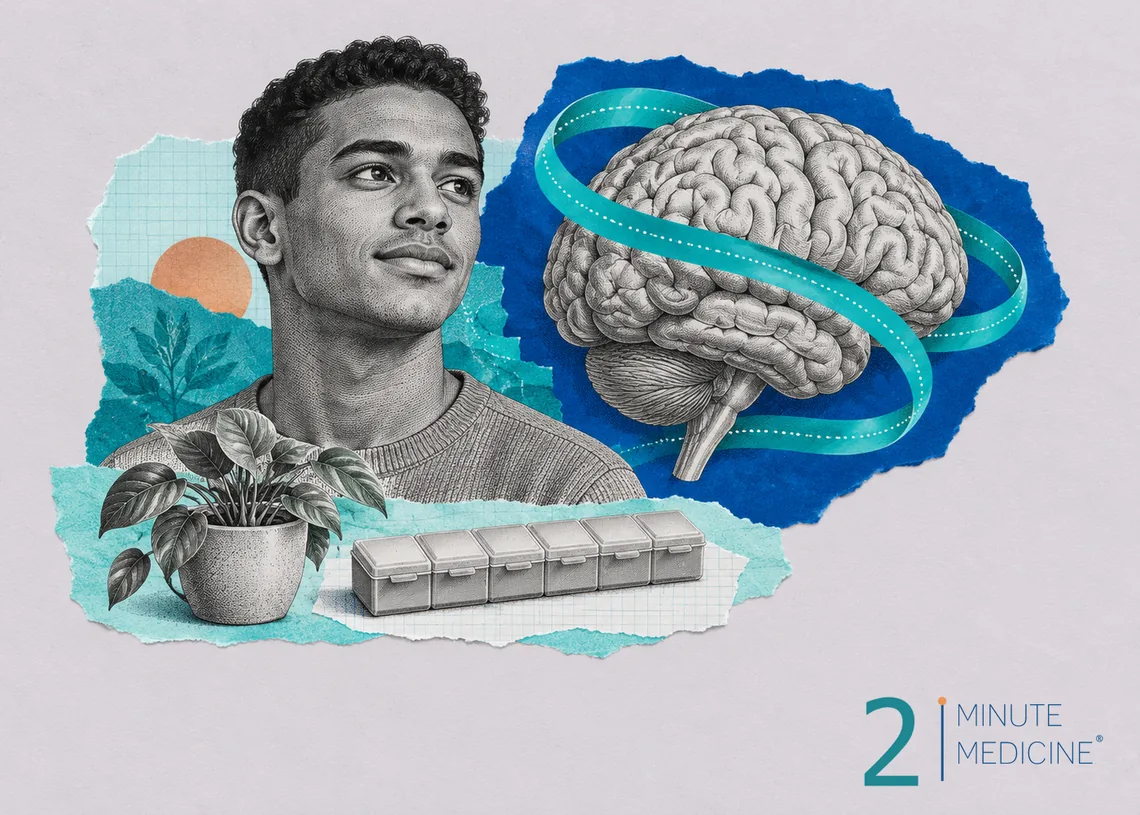
Schizophrenia collage: a calm young man, a side-view drawing of the brain, a weekly pill organizer and a potted plant
Share on FacebookShare on TwitterShare on LinkedIn

Schizophrenia is a long-term brain condition that changes how a person thinks, feels and makes sense of the world. Its best-known feature is psychosis, a state of losing touch with what is real, such as hearing voices or holding fixed false beliefs. It usually begins in the late teens or twenties. With early treatment and steady support, many people with schizophrenia do well, work or study, and keep close relationships.

Key points

  • Psychosis is a symptom with many causes. Schizophrenia is one of them.
  • Symptoms include hallucinations, delusions and confused thinking, plus quieter changes such as low motivation and pulling away from others.
  • Genes, brain development and heavy cannabis use in the teen years all play a part. Parenting doesn’t cause it.
  • Antipsychotic medicine, therapy, family support and help with work or school work best together.
  • Getting help soon after a first episode of psychosis leads to better long-term results.

What psychosis is

Psychosis means the mind has trouble telling what is real from what isn’t. The main signs are:

  • Hallucinations: hearing, seeing, feeling or smelling things others don’t. Hearing voices is the most common.
  • Delusions: strong beliefs that aren’t true and don’t change with evidence, such as believing you are being followed or that the TV is sending you messages.
  • Disorganized thinking: jumping between unrelated ideas, or speech that is hard to follow.

Psychosis can come from schizophrenia, but also from bipolar disorder, severe depression, the weeks after childbirth, drugs such as methamphetamine, cocaine, cannabis or hallucinogens, alcohol withdrawal, very little sleep, some medicines such as high-dose steroids, and medical problems such as infections, brain tumors, epilepsy or dementia. That is why a first episode needs a full medical check.

Other symptoms of schizophrenia

  • Negative symptoms. These are things that fade or go missing: less motivation, less pleasure in activities, a flat voice or face, speaking less, and withdrawing from friends and family. They are often the hardest part of daily life.
  • Thinking problems. Trouble paying attention, remembering and planning.

Before the first episode, families often notice months of slow change. A young person may drop out of activities, fall behind at school or work, sleep poorly, become suspicious, or talk about odd ideas.

What causes schizophrenia

No single cause has been found. It likely results from many factors working together:

  • Genes. It runs in families. Having a parent or sibling with schizophrenia raises the risk, though most people with a close relative never develop it.
  • Brain development. Problems during pregnancy or birth, and differences in how brain circuits mature during the teen years.
  • Brain chemistry. Signals carried by dopamine and glutamate work differently.
  • Cannabis. Frequent use of strong, high-THC cannabis, especially in the teens, raises the risk and can bring on psychosis sooner.
  • Stress and hardship in childhood can add to the risk.

How it’s diagnosed

No blood test or scan can diagnose schizophrenia. A psychiatrist or other mental health professional talks with the person and, with permission, the family. They look at symptoms over time. Schizophrenia is diagnosed when psychosis and other symptoms last at least 6 months and affect daily life. Blood tests, a drug screen and sometimes a brain MRI help rule out other causes.

RELATED REPORTS

WHO launches 2026 global initiative to bridge the schizophrenia mortality gap

The Scan by 2 Minute Medicine®: TikTok “Fibermaxxing” trend targets gut microbiome diversity, Jennifer Aniston’s “Strength for 50+” ritual spotlights photobiomodulation, American Lung Association issues respiratory warning over viral “mouth taping” fad, and Psychiatric Times highlights initiative to close the schizophrenia mortality gap

How schizophrenia is treated

Medicine

Antipsychotic medicines ease hallucinations and delusions and lower the chance of relapse. Common ones include aripiprazole, risperidone, paliperidone, olanzapine, quetiapine, lurasidone and haloperidol. Many come as long-acting shots given every few weeks or months, so there are no daily pills to remember. A newer medicine, xanomeline with trospium, works in a different way from the others.

Finding the right medicine can take time. Side effects vary and can include weight gain, higher blood sugar and cholesterol, sleepiness, restlessness, stiffness, and, after long use, involuntary movements (tardive dyskinesia). Your doctor should check your weight, blood sugar and movements regularly. Clozapine helps many people when other medicines haven’t worked, and it needs regular blood tests. Don’t stop any of these medicines suddenly or on your own, since this often leads to relapse.

Therapy and support

  • Coordinated specialty care. For a first episode of psychosis, team-based programs combine medicine, therapy, family support and help with school or work.
  • Cognitive behavioral therapy for psychosis (CBTp) helps people cope with voices and distressing beliefs.
  • Family education and therapy lowers stress at home and helps families spot early warning signs.
  • Supported employment and education help people get and keep jobs or stay in school.
  • Community treatment teams bring care to people who have trouble getting to appointments.
  • Treatment for substance use, which is common and makes symptoms worse.

Living with schizophrenia

A regular routine, enough sleep, and avoiding cannabis and other drugs help prevent relapse. Learn your own early warning signs, such as poor sleep or growing suspicion, and share a plan with someone you trust. People with schizophrenia have higher rates of heart disease, diabetes and smoking, so regular checkups and quitting smoking matter as much as mental health care.

If you are supporting someone, stay calm and patient, avoid arguing about delusions, and look after your own health. Family groups, such as those run by the National Alliance on Mental Illness (NAMI), can help.

When to get help

  • You or someone close to you hears voices, has strange beliefs, or seems confused or withdrawn
  • Symptoms come back or get worse
  • Medicine side effects are hard to live with

Get help right away if someone talks about suicide or harming others, can’t care for themselves, or is in danger. Call or text 988 (Suicide & Crisis Lifeline), or call 911. For help with drug or alcohol use, call the SAMHSA helpline at 1-800-662-4357.

Common questions about schizophrenia

What is the difference between psychosis and schizophrenia?

Psychosis is a symptom: a break with reality, such as hallucinations or delusions. Schizophrenia is one long-term illness that causes repeated or ongoing psychosis along with other symptoms. Many people have one episode of psychosis from drugs, a mood disorder or a medical problem and never develop schizophrenia.

Is schizophrenia the same as a split personality?

No. Schizophrenia doesn’t mean having two or more personalities. That is a different, rare condition called dissociative identity disorder. And despite movie stereotypes, most people with schizophrenia are not violent. They are more likely to be harmed by others than to harm anyone.

Can schizophrenia be cured?

There is no cure yet, but it can be treated, and many people improve a great deal. Some have few or no symptoms for long stretches. Others have ongoing symptoms that steady treatment keeps manageable. Starting care early and sticking with it gives the best chance of a full life.

Can smoking weed cause schizophrenia?

Heavy cannabis use, especially strong products used often in the teen years, raises the risk of schizophrenia and can make it start earlier. It doesn’t cause schizophrenia in most people who use it. For people who already have the illness, cannabis makes relapse more likely.

Questions to ask your doctor

  • Could anything other than schizophrenia be causing these symptoms?
  • Which medicine do you suggest, and what side effects should I watch for?
  • Is a long-acting injection a good option for me?
  • Is there a first-episode psychosis program near me?
  • How can my family be involved in my care?

Learn more

  • Schizophrenia (National Institute of Mental Health)
  • Schizophrenia (MedlinePlus, U.S. National Library of Medicine)

This guide is general information and doesn’t replace advice from your own doctor. Last updated October 2026.

FDA approvedFor schizophrenia: Bysanti (milsaperidone), Feb 20, 2026→
Tags: schizophrenia
Previous Post

Patient Basics: Scarlet Fever

Next Post

Patient Basics: Schizotypal Personality Disorder

RelatedReports

Jessica Lau
Psychiatry

WHO launches 2026 global initiative to bridge the schizophrenia mortality gap

September 4, 2026
The Scan by 2 Minute Medicine®:  Ultra-Trail du Mont-Blanc, Taylor Swift, NBA rookie Chet Holmgren and Magic Mushrooms!
Chronic Disease

The Scan by 2 Minute Medicine®: TikTok “Fibermaxxing” trend targets gut microbiome diversity, Jennifer Aniston’s “Strength for 50+” ritual spotlights photobiomodulation, American Lung Association issues respiratory warning over viral “mouth taping” fad, and Psychiatric Times highlights initiative to close the schizophrenia mortality gap

April 22, 2026
Cannabis and mental health collage: a thoughtful young man with curly hair, a flat cannabis leaf and three blank shopfronts
Psychiatry

Higher tetrahydrocannabinol exposure may be associated with unfavorable mental health outcomes

August 27, 2025
Cannabis and mental health collage: a thoughtful young man with curly hair, a flat cannabis leaf and three blank shopfronts
Chronic Disease

Schizophrenia incidence sharply increased following cannabis legalization

May 19, 2025
Next Post
Rocky Mountain spotted fever collage: an enlarged dog tick, fine-tipped tweezers, a hiking boot and blades of grass

Patient Basics: Rocky Mountain Spotted Fever

Sarcoidosis collage: a calm woman, a magnified cluster of round immune cells, a small engraved eye and a teal ribbon

Patient Basics: Sarcoidosis

Retrobulbar neuritis collage: an engraved eye with the optic nerve behind it, a teal ribbon, faded color discs and glasses

Patient Basics: Retrobulbar Neuritis (Optic Neuritis)

✦ EvidencePulse™ by 2 Minute Medicine 3 reports You asked top stroke trials 2026 Synthesizing medical evidence... Top 2026 stroke trial results: OCEANIC — ischemic stroke: 6.2% vs 8.4% OPTION* — mRS 0–1: 43.6% vs 34.2% ORIENTAL* — mRS 0–2: 58.6% vs 46.6% *Higher sICH in intervention arms Participants randomizedN OCEANIC 12,327 OPTION 570 ORIENTAL 564 Ask about guidelines or landmark trials... Try EvidencePulse™ Get the signal. Try it now → Physician-trained medical AI by 2 Minute Medicine

2MM+ All Access

Full details →
$4.99 /month

3-day free trial · cancel anytime

  • ✓100+ physician-written reports
  • ✓EvidencePulse™ + HypeCheck™
  • ✓Ad-free reading + newsletters
Start 3-day free trial

Then $4.99/month. Manage renewal in your account.

2 Minute Medicine® is an award winning, physician-run, expert medical media company. Our content is curated, written and edited by practicing health professionals who have clinical and scientific expertise in their field of reporting. Our editorial management team is comprised of highly-trained MD physicians. Join numerous brands, companies, and hospitals who trust our licensed content.

Recent Reports

  • ARO-DIMER-PA can Significantly Lower LDL-C and Triglycerides in Patients with Mixed Hyperlipidemia
  • CCTA-guided PCI noninferior to IVUS-guided PCI for target-vessel failure
  • Lower resident board pass rates in private-equity backed emergency physician groups
License Content
Terms of Use | Disclaimer
Cookie Policy

Get the app

Read 2 Minute Medicine on iPhone, iPad and Android.

Download on the App StoreGet it on Google Play
QR code for www.2minutemedicine.com/app
On a computer? Scan this with your phone’s camera.
2MM+ All Access Full details →

The medical literature, distilled daily.

Monthly plan selected: $4.99 /month.

$4.99/month

3-day free trial · cancel anytime

Start 3-day free trial

Then $4.99/month. Manage renewal in your account.

Yearly plan selected: $49.90 /year.

$49.90/year

2 months free

Start 3-day free trial

Then $49.90/year.

Membership benefits

  • ✓100+ new physician-written study summaries monthly, 12,000+ searchable
  • ✓AI EvidencePulse™ + HypeCheck™
  • ✓Ad-free reading + newsletters
  • ✓FDA drug approvals + clinical calculators

Already a member? Sign in

  • Get the app
  • About
  • Specialties
    • All Specialties, All Recent Reports
    • Cardiology
    • Chronic Disease
    • Dermatology
    • Emergency
    • Endocrinology
    • Gastroenterology
    • Imaging and Intervention
    • Infectious Disease
    • Nephrology
    • Neurology
    • Obstetrics
    • Oncology
    • Ophthalmology
    • Pediatrics
    • Pharma
    • Preclinical
    • Psychiatry
    • Public Health
    • Pulmonology
    • Rheumatology
    • Surgery
    • Rewinds
    • The Scan
  • EvidencePulse™
  • HypeCheck™
  • AI News
  • Classics™
    • 2MM+ Online Access
    • Paperback and Ebook
  • Tools
    • NPI Registry Lookup
    • RVU Search
    • Physician Pay by Specialty
    • ICD-10 Code Lookup
    • FDA Drug Approvals
    • Drug Safety for Breastfeeding/Pregnancy
    • Clinical Guidelines
    • Medical Calculators
    • ECG Reference
      • QTc Calculator
      • Sgarbossa Criteria
      • ECG Axis Calculator
      • AV Block Helper
  • Rankings
    • Medical School Rankings
    • Residency Rankings
  • Partners
    • License Content
    • Advertise with Us
No Result
View All Result

© 2026 2 Minute Medicine, Inc. - Physician-written medical news.