

Patient Basics: Sebaceous Cysts
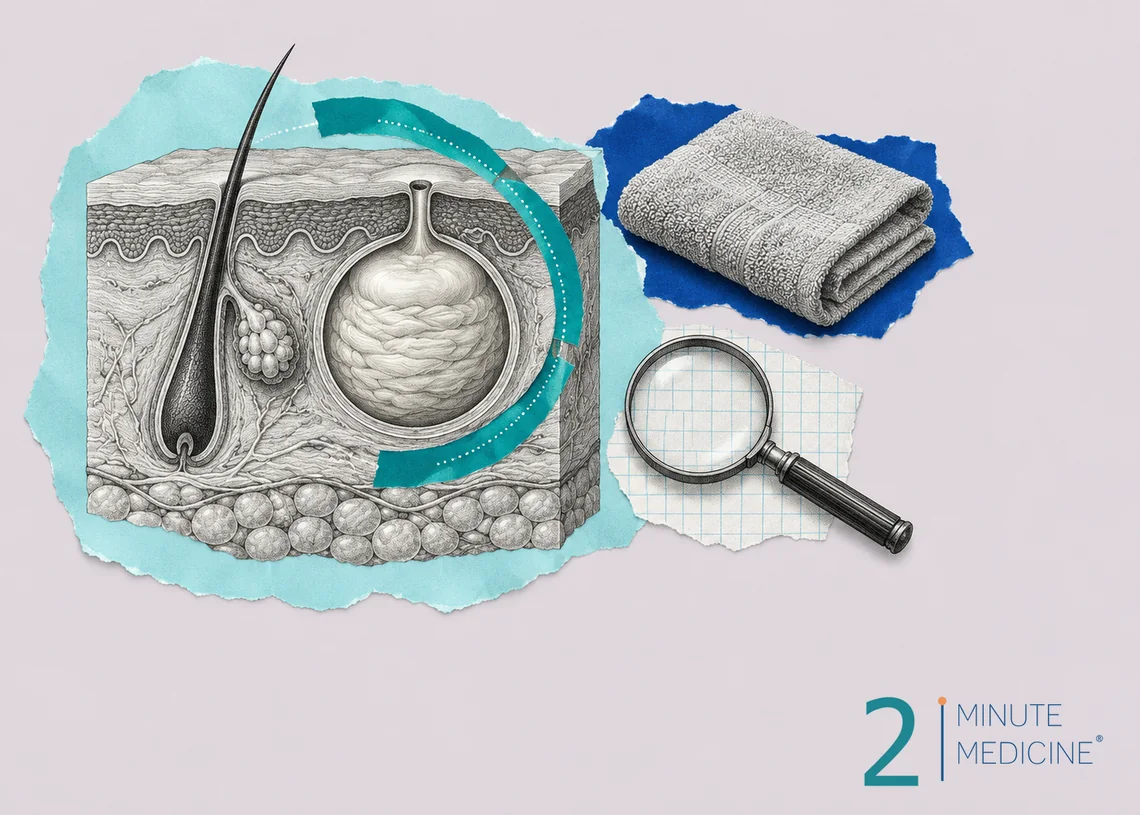
A sebaceous cyst is a small, round lump under the skin filled with a soft, cheesy material. Most lumps called sebaceous cysts are really epidermoid cysts, which grow from skin cells, or pilar cysts, which form on the scalp. They are almost always harmless. You can leave one alone unless it hurts, swells, keeps coming back or bothers you.
Key points
- These cysts are common on the face, neck, chest, upper back, behind the ears and on the scalp.
- Many have a tiny dark dot (a pore) in the middle.
- Don’t squeeze one. That can burst the sac under the skin and make it red, swollen and painful.
- A swollen cyst may need a shot of steroid medicine or draining. Removing the whole sac with minor surgery is the only way to stop a cyst from coming back.
- Have a lump checked if it grows fast, feels hard, doesn’t move, or bleeds.
What these cysts are
A cyst is a closed pocket under the skin. In these cysts, the pocket has a thin wall made of skin cells. The wall keeps shedding keratin, the same tough protein found in the top layer of skin, hair and nails. The keratin builds up inside and looks like soft, white or yellow cheese. It can have a strong smell.
- Epidermoid cysts are the most common type. They usually grow from the opening of a hair follicle on the face, neck, chest or back.
- Pilar cysts form on the scalp. They feel smooth and firm, often run in families, and usually have no dark dot.
- True sebaceous cysts (steatocystomas) grow from oil glands and contain oily fluid. They are rare and can appear in large numbers in some families.
What causes sebaceous cysts
Most form when the opening of a hair follicle gets blocked or damaged, so skin cells collect underneath instead of shedding. Acne, a cut or other skin injury, and sun damage can play a part. They are more common in adults than in children. Rarely, many cysts showing up at a young age are part of an inherited condition, such as Gardner syndrome, which also affects the colon.
What they look and feel like
- A smooth, dome-shaped lump under the skin, from the size of a pea to a few inches across
- Skin-colored, white or yellowish
- It moves a little when you push it
- Usually painless
- Sometimes a small dark pore on top, which may leak a little cheesy material when pressed
A cyst can suddenly become red, warm, swollen and sore. People often call this infected, but most of the time the sac has leaked and the body is reacting to its contents. True bacterial infection is less common.
How it’s diagnosed
A doctor can usually tell what it is by looking at and feeling the lump. If it isn’t clear, an ultrasound can show whether it’s a fluid-filled cyst, a fatty lump (lipoma), a swollen lymph node or something else. When a cyst is removed, it may be sent to a lab to confirm what it is.
Sebaceous cyst treatment
Leave it alone
A small cyst that doesn’t bother you doesn’t need treatment. Some shrink on their own, but most stay about the same size or grow slowly.
Care for a sore, swollen cyst
- Hold a warm, damp washcloth on it for 10 to 15 minutes a few times a day. This can ease pain and help it settle or drain.
- Keep the area clean and cover it with a bandage if it drains.
- Don’t squeeze, pop or cut it yourself. That can push the contents deeper, cause infection and leave a bigger scar.
Treatment from a doctor
- Steroid shot. An injection of steroid medicine into a swollen cyst can calm it within a few days.
- Drainage. For a large, painful swelling, a doctor numbs the skin, makes a small cut and lets the contents out. This brings fast relief, but the sac stays behind, so the cyst often comes back.
- Antibiotics are only needed if there are signs of true infection, such as spreading redness or fever.
- Removal. To stop a cyst from coming back, the whole sac must come out. A doctor numbs the area, makes a small cut, removes the cyst and closes the skin with stitches. This is best done when the cyst is calm, not swollen. For small cysts, some doctors use a tiny round punch tool that leaves a smaller scar.
Recovery after removal
The area may be sore for a few days. Stitches usually come out after about a week on the face and up to two weeks on the back or other areas. Keep the wound clean and follow your doctor’s care instructions. A thin scar is normal. A cyst can come back if a piece of the wall was left behind.
When to see a doctor
- The cyst is painful, red, swollen or draining
- You have fever, or red streaks spreading from the lump
- The lump grows quickly, feels hard, is stuck in place or bleeds
- A cyst comes back after it was drained or removed
- The cyst sits where clothing rubs it, or you don’t like how it looks
- A child or teen has many cysts
- Any new lump in the breast, armpit, groin or genital area
Common questions about sebaceous cysts
Is a sebaceous cyst on the chest serious?
Usually not. The chest and upper back have many hair follicles, so cysts are common there. Cysts on the chest tend to flare up and can leave wider scars after removal, so it’s best to remove one while it’s calm. See a doctor if the lump is hard, stuck in place, growing fast, or in the breast.
Can a sebaceous cyst be cancer?
Almost never. These cysts are benign, and cancer starting in one is very rare. A few skin cancers and other growths can look like a cyst, though, so have a lump checked if it grows quickly, feels hard, is stuck in place, bleeds or turns into an open sore.
Can I pop a sebaceous cyst at home?
No. Squeezing or cutting a cyst can tear the sac under the skin, which often leads to painful swelling, infection and a bigger scar. Even if the contents come out, the sac stays behind and the cyst usually fills up again. A doctor can drain or remove it safely with numbing medicine.
Questions to ask your doctor
- Is this a cyst, or could it be something else?
- Should I leave it alone or have it removed?
- How big a scar will removal leave?
- What should I do if it gets red and sore?
- Is it likely to come back?
Learn more
- Epidermoid cyst (DermNet)
- Skin cyst (NHS)
This guide is general information and doesn’t replace advice from your own doctor. Last updated October 2026.






 Get the app