

Patient Basics: Type 1 Diabetes

With type 1 diabetes, the pancreas makes little or no insulin for the rest of a person’s life. Insulin is the hormone that lets sugar (glucose) move from the blood into the body’s cells, and it stops being made because the immune system destroys the cells that produce it. Everyone with type 1 needs insulin every day, and with today’s insulin, glucose sensors and pumps, most people live long, full lives.
Key points
- Type 1 diabetes is an autoimmune disease. It isn’t caused by eating sugar or by weight.
- It often starts in childhood or the teen years, but adults can get it too.
- Warning signs are thirst, peeing a lot, weight loss without trying, tiredness and blurry vision.
- Insulin is given by shots or a pump. Continuous glucose monitors make tracking much easier.
- Diabetic ketoacidosis (DKA) is an emergency. Vomiting, belly pain, fast breathing or drowsiness need care right away.
What causes type 1 diabetes
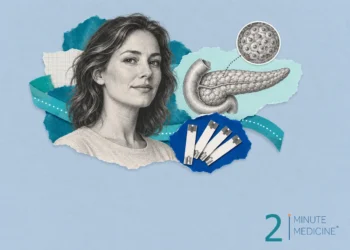
Insulin comes from beta cells, which sit in small clusters inside the pancreas. With type 1, the immune system attacks and destroys these cells over months or years. Once most of them are gone, blood sugar rises. The full medical name is type 1 diabetes mellitus.
Genes raise the risk, and having a parent, brother or sister with type 1 makes it more likely. Something in the environment, possibly a virus, seems to start the attack in people who are at risk. Nothing a person or parent did causes it.
Blood tests for certain antibodies can find type 1 diabetes in its early stages, before symptoms start. Relatives of people with type 1 can ask about this screening. For some people with early-stage disease, a medicine called teplizumab can delay the need for insulin.
Symptoms
Symptoms often come on over a few weeks:
- Being very thirsty and peeing often, including bedwetting in a child who was dry at night
- Losing weight without trying, even while eating more
- Feeling very tired or weak
- Blurry vision
- Yeast infections or slow-healing cuts
Without insulin, the body burns fat for fuel and makes acids called ketones. A buildup of ketones causes DKA, with nausea, vomiting, belly pain, fruity-smelling breath, deep fast breathing and confusion. For some people, DKA is the first sign of type 1 diabetes.
How it’s diagnosed
- Blood sugar tests, including a random glucose check and an A1C test, which shows your average blood sugar over about 3 months
- Ketone tests on blood or urine
- Antibody tests that show the immune attack and help tell type 1 apart from type 2
Treatment
Insulin
Most people use two kinds of insulin. Long-acting insulin works in the background all day. Rapid-acting insulin is taken before meals and to bring down high readings. You can take insulin with pens or syringes, or with a pump, a small device that sends insulin under the skin through a thin tube or a patch.
Automated insulin delivery systems link a pump to a glucose sensor. The system raises or lowers insulin on its own every few minutes, which cuts down on highs and lows. You still need to tell it when you eat.
Checking glucose
A continuous glucose monitor (CGM) is a small sensor worn on the arm or belly. It reads glucose every few minutes and sends the numbers to a phone or reader, with alarms for highs and lows. Finger-stick meters are a backup. Many adults aim for an A1C under 7% and for glucose to be in range (70 to 180 mg/dL) more than 70% of the time. Your own targets may differ.
Food and activity
No foods are off limits, but you’ll learn to count carbohydrates (carbs) and match your insulin to what you eat. A dietitian can help. Exercise is healthy and safe. It can lower blood sugar for hours afterward, so check glucose and keep a snack handy.
Handling lows
A low (hypoglycemia) can cause shaking, sweating, hunger, a pounding heart and confusion. Eat or drink fast-acting sugar, such as glucose tablets or juice, then recheck in 15 minutes. Keep glucagon on hand for a severe low, and teach family, friends and coworkers how to use it. It comes as a nasal spray or a ready-to-use pen.
Sick days
Illness can raise blood sugar even if you aren’t eating. Never stop your long-acting insulin. Check glucose and ketones more often, drink fluids, and call your care team if ketones are rising.
Living with type 1 diabetes
- See your diabetes team every 3 to 6 months.
- Get a dilated eye exam, kidney tests and a foot check at least once a year.
- Keep blood pressure and cholesterol in a healthy range and don’t smoke. This protects your heart, kidneys and eyes.
- Ask about checks for thyroid disease and celiac disease, which are more common with type 1.
- Check your glucose before driving.
- Wear a medical ID.
- Children need a written diabetes care plan at school.
Managing diabetes every day is tiring. If you feel worn out or low, tell your team. Support groups and counseling help.
When to see a doctor
- Thirst, frequent peeing and weight loss in you or your child
- Frequent lows, or lows you don’t feel coming on
- Glucose that stays high despite your usual insulin
- New numbness or sores on your feet, or changes in your vision
Get emergency care if
- You are vomiting and can’t keep fluids down
- Ketones are moderate or high
- You have deep or fast breathing, fruity breath, belly pain, confusion or are very drowsy
- Someone with a severe low passes out or has a seizure. Give glucagon and call 911.
Common questions about type 1 diabetes
What is the difference between type 1 and type 2 diabetes?
In type 1, the immune system destroys the cells that make insulin, so insulin is needed from the start. In type 2, the body still makes insulin but doesn’t respond to it well, and it is often linked to weight, age and family history. Type 2 is often treated first with lifestyle changes and pills.
Can type 1 diabetes be cured or reversed?
Not yet. Diet and exercise can’t bring back the cells that make insulin, so insulin is always needed. Researchers are testing cell transplants and other treatments, and donor islet cells (insulin-making cells) already help a small number of adults with severe lows that are hard to control.
Can adults get type 1 diabetes?
Yes. Type 1 can start at any age, and many people are diagnosed as adults. In adults it may come on slowly over months or years, so it is sometimes mistaken for type 2 at first. Antibody tests can show which type you have.
What is the honeymoon phase?
Soon after diagnosis, some people need much less insulin for a while. This happens because the remaining insulin-making cells recover a little once blood sugar comes down. The phase can last weeks to a year or more, and insulin needs rise again as it ends.
Questions to ask your doctor
- What should my glucose and A1C targets be?
- Would a pump or an automated insulin system work for me?
- How do I adjust insulin for exercise, illness or alcohol?
- When should I check for ketones?
- Should my children, brothers or sisters be screened?
Learn more
- Type 1 diabetes (National Institute of Diabetes and Digestive and Kidney Diseases)
- Type 1 diabetes (MedlinePlus, U.S. National Library of Medicine)
This guide is general information and doesn’t replace advice from your own doctor. Last updated October 2026.
RelatedReports






 Get the app