• About
  • Masthead
  • License Content
  • Advertise
  • Submit Press Release
  • RSS/Email List
  • 2MM Podcast
  • Write for us
  • Contact Us
2 Minute Medicine
No Result
View All Result

No products in the cart.

Sign in
SUBSCRIBE
  • About
  • Specialties
    • All Specialties, All Recent Reports
    • Cardiology
    • Chronic Disease
    • Dermatology
    • Emergency
    • Endocrinology
    • Gastroenterology
    • Imaging and Intervention
    • Infectious Disease
    • Nephrology
    • Neurology
    • Obstetrics
    • Oncology
    • Ophthalmology
    • Pediatrics
    • Pharma
    • Preclinical
    • Psychiatry
    • Public Health
    • Pulmonology
    • Rheumatology
    • Surgery
  • Tools+
    • EvidencePulse™
    • HypeCheck™
    • NPI Registry Lookup
    • RVU Search
  • Pharma
  • AI Roundup
  • The Scan+
  • Classics™+
    • 2MM+ Online Access
    • Paperback and Ebook
  • Rewinds
  • Partners
    • License Content
    • Advertise with Us
2 Minute Medicine
  • About
  • Specialties
    • All Specialties, All Recent Reports
    • Cardiology
    • Chronic Disease
    • Dermatology
    • Emergency
    • Endocrinology
    • Gastroenterology
    • Imaging and Intervention
    • Infectious Disease
    • Nephrology
    • Neurology
    • Obstetrics
    • Oncology
    • Ophthalmology
    • Pediatrics
    • Pharma
    • Preclinical
    • Psychiatry
    • Public Health
    • Pulmonology
    • Rheumatology
    • Surgery
  • Tools+
    • EvidencePulse™
    • HypeCheck™
    • NPI Registry Lookup
    • RVU Search
  • Pharma
  • AI Roundup
  • The Scan+
  • Classics™+
    • 2MM+ Online Access
    • Paperback and Ebook
  • Rewinds
  • Partners
    • License Content
    • Advertise with Us
Sign in
SUBSCRIBE
2 Minute Medicine
Sign in
Subscribe
EvidencePulse™ by 2 Minute Medicine 2026 evidence scan 3 reports You asked top stroke trials 2026 Synthesizing medical evidence... Top 2026 stroke trial results: OCEANIC — ischemic stroke: 6.2% vs 8.4% OPTION* — mRS 0–1: 43.6% vs 34.2% ORIENTAL* — mRS 0–2: 58.6% vs 46.6% *Higher sICH in intervention arms Participants randomizedN OCEANIC 12,327 OPTION 570 ORIENTAL 564 Ask about guidelines or landmark trials... ↑ Try EvidencePulse™ Ask the evidence.
Get the signal.
Try it now → Physician-trained medical AI by 2 Minute Medicine
Home All Specialties Chronic Disease

PD-1 blocker pembrolizumab may be a promising therapy for advanced Merkel-cell carcinoma
byNeil D'SouzaandShaidah Deghan, MSc. MD
July 9, 2016
in Chronic Disease
Reading Time: 3 mins read
PD-1 blocker pembrolizumab may be a promising therapy for advanced Merkel-cell carcinoma
Share on FacebookShare on Twitter

1. Using immune checkpoint blockade, this phase 2 study showed favourable complete and partial response rates, and increased progression free survival at 6 months, when using programmed cell death-1 (PD-1) blocker pembrolizumab as a first-line therapy for advanced Merkel-cell carcinoma.

2. Responses to pembrolizumab were seen in both positive and negative Merkel-cell polyomavirus (MCPyV) tumours, and while significant pembrolizumab associated toxicity was observed in a small proportion of patients, these subsided when the drug was discontinued and glucocorticoid was given.

Evidence Rating Level: 2 (Good)       

Study Rundown: Merkel-cell carcinoma is a rare and highly aggressive skin cancer, and in advanced cases, standard chemotherapy only offers a 3-month progression-free survival. Merkel-cell carcinoma is often associated with MCPyV, which produces MCPyV T-antigen specific T-cells that increase as the cancer progress and simultaneously decreases effectiveness of therapy. Merkel-cell carcinomas also express PD-1 on tumour infiltrating lymphocytes, and its ligand (PD-L1) is expressed on tumour cells and macrophages which have an immunosuppressive effect when binding to its receptor. The use of immune checkpoint blockade using PD-1 blockers has shown promising therapeutic results in non-small cell, melanoma and renal cell cancers. This phase 2, multicenter trial assessed the efficacy of PD-1 blocker pembrolizumab in patients with advance Merkel-cell carcinoma who had not had prior systemic therapy, as well as to assess treatment outcomes according to MCPyV status. There was an overall favourable partial and complete response rate, and improved progression-free survival at 6 months. There was a response to pembrolizumab regardless of MCPyV status, and the toxicity profile did not appear to be overly burdensome. The major strengths of this study include presentation of an initial positive therapeutic finding using PD-1 blocker pembrolizumab to treat advanced Merkel-cell carcinoma, which provides patient with a potential treatment option. The associated toxicity profile seems to be relatively minimal and manageable. However, small sample size, lack of long-term data and lack of direct comparison to standard therapy via a randomized controlled trial, limits the generalizability of this study.

Click to read the study, published today in NEJM

Relevant Reading: The blockade of immune checkpoints in cancer immunotherapy.

RELATED REPORTS

Enfortumab vedotin plus pembrolizumab associated with improved survival in bladder cancer

Enfortumab vedotin plus pembrolizumab is more effective than platinum-based chemotherapy in metastatic urothelial carcinoma

Atezolizumab may improve disease-free survival in mismatch repair deficiency locally advanced colon cancer

In-Depth [prospective cohort]: This multicenter phase 2 study was aimed at patients with advanced Merkel-cell carcinoma, who did not receive any prior systemic therapy, to be treated with pembrolizumab (PD-1 blocker) using a dose of 2 mg per kilogram body weight. The primary endpoint was objective response rate, as measured by the Response Evaluation Criteria in Solid Tumours (v 1.1).

There were a total of 26 patients with stage IIIB or IV Merkel-cell carcinoma enrolled in the study from January 2015 to December 2015, who received at least a single dose of pembrolizumab. In total, 25 patients had at least one tumour assessment during treatment. Of those 25 patients, 14 had a confirmed response; 4 with a complete response and 10 with a partial response, representing an objective response rate of 56% (95%CI 35-76). One patient continued to receive treatment whose response was not known. One patient out of 25 (4%) had stable disease, while 9/25 (36%) patients had progressive disease. The median follow-up time was 33 weeks (range 7-35), and median duration of treatment for all 26 patients was 27 weeks (range 3 – 57). In terms of MCPyV status, of those who were positive, 62% (10/16) had an objective response, and of those who were negative, 44% (4/9) had an objective response. The rate of progression-free survival at 6 months was 67% (95%CI 49-86). There were 9 patients who had progressive disease, among whom 4 where progression occurred in pre-existing target lesions, 2 who had new metastatic sites, and 3 who had both. Pembrolizumab-associated adverse events of any nature occurred in 77% of the patients, where the most common were fatigue and laboratory abnormalities. There was grade 3 or 4 toxicity seen in 4/26 (15%) of the patients, which were adequately managed with cessation of pembrolizumab, and initiation of glucocorticoids.

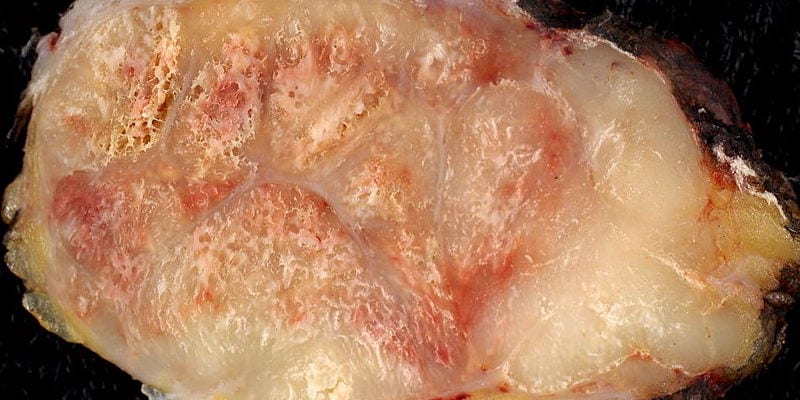
Image: CC/Wiki

©2016 2 Minute Medicine, Inc. All rights reserved. No works may be reproduced without expressed written consent from 2 Minute Medicine, Inc. Inquire about licensing here. No article should be construed as medical advice and is not intended as such by the authors or by 2 Minute Medicine, Inc.

Tags: immunotherapyMerkel Cell CarcinomaPembrolizumab
Previous Post

Escitalopram not linked to improved outcomes in heart failure patients with depression

Next Post

2 Minute Medicine Rewind June 27, 2016

RelatedReports

Niraparib may lengthen progression-free survival for patients with recurrent ovarian cancer
Oncology

Enfortumab vedotin plus pembrolizumab associated with improved survival in bladder cancer

August 27, 2026
Chronic Disease

Enfortumab vedotin plus pembrolizumab is more effective than platinum-based chemotherapy in metastatic urothelial carcinoma

July 9, 2026
Quick Take: Diagnostic Yield of One-Time Colonoscopy vs One-Time Flexible Sigmoidoscopy vs Multiple Rounds of Mailed Fecal Immunohistochemical Tests in Colorectal Cancer Screening
Oncology

Atezolizumab may improve disease-free survival in mismatch repair deficiency locally advanced colon cancer

April 8, 2026
Preoperative bilateral breast imaging may reduce contralateral cancer recurrence
Oncology

Sacituzumab govitecan plus pembrolizumab improves survival in advanced triple-negative breast cancer

January 28, 2026
Next Post
Amyloidogenic genetic variant not associated with increased mortality in blacks

2 Minute Medicine Rewind June 27, 2016

Nanoparticle delivery of aurora kinase inhibitor may improve tumor treatment [PreClinical]

Two vaccines protect against Zika virus infection in mice [PreClinical]

Adjuvant radiotherapy reduces recurrence of ductal carcinoma; no effect on long-term prognosis

Bifunctional drug could treat tumors resistant to current mTOR inhibitors [PreClinical]

EvidencePulse™ by 2 Minute Medicine 2026 evidence scan 3 reports You asked top stroke trials 2026 Synthesizing medical evidence... Top 2026 stroke trial results: OCEANIC — ischemic stroke: 6.2% vs 8.4% OPTION* — mRS 0–1: 43.6% vs 34.2% ORIENTAL* — mRS 0–2: 58.6% vs 46.6% *Higher sICH in intervention arms Participants randomizedN OCEANIC 12,327 OPTION 570 ORIENTAL 564 Ask about guidelines or landmark trials... ↑ Try EvidencePulse™ Get the signal. Try it now → Physician-trained medical AI by 2 Minute Medicine

2MM+ All Access

Full details →
$4.99 /month

3-day free trial · cancel anytime

  • ✓100+ physician-written reports
  • ✓EvidencePulse™ + HypeCheck™
  • ✓Ad-free reading + newsletters
Start 3-day free trial

Then $4.99/month. Manage renewal in your account.

2 Minute Medicine® is an award winning, physician-run, expert medical media company. Our content is curated, written and edited by practicing health professionals who have clinical and scientific expertise in their field of reporting. Our editorial management team is comprised of highly-trained MD physicians. Join numerous brands, companies, and hospitals who trust our licensed content.

Recent Reports

  • The rate of urethrocutaneous fistula formation may be similar between caudal and penile blocks
  • 2 Minute Medicine Rewind October 12, 2026
  • Gepotidacin (Blujepa) is safe and effective in women with uncomplicated urinary tract infections
License Content
Terms of Use | Disclaimer
Cookie Policy
Cleantalk Pixel
2MM+ All Access Full details →

The medical literature, distilled daily.

Monthly plan selected: $4.99 /month.

$4.99/month

3-day free trial · cancel anytime

Start 3-day free trial

Then $4.99/month. Manage renewal in your account.

Yearly plan selected: $49.90 /year.

$49.90/year

2 months free

Start 3-day free trial

Then $49.90/year.

Membership benefits

  • ✓100+ physician-written reports
  • ✓AI EvidencePulse™ + HypeCheck™
  • ✓Ad-free reading + newsletters

Already a member? Sign in

  • About
  • Specialties
    • All Specialties, All Recent Reports
    • Cardiology
    • Chronic Disease
    • Dermatology
    • Emergency
    • Endocrinology
    • Gastroenterology
    • Imaging and Intervention
    • Infectious Disease
    • Nephrology
    • Neurology
    • Obstetrics
    • Oncology
    • Ophthalmology
    • Pediatrics
    • Pharma
    • Preclinical
    • Psychiatry
    • Public Health
    • Pulmonology
    • Rheumatology
    • Surgery
  • Tools
    • EvidencePulse™
    • HypeCheck™
    • NPI Registry Lookup
    • RVU Search
  • Pharma
  • AI Roundup
  • The Scan
  • Classics™
    • 2MM+ Online Access
    • Paperback and Ebook
  • Rewinds
  • Partners
    • License Content
    • Advertise with Us
No Result
View All Result

© 2026 2 Minute Medicine, Inc. - Physician-written medical news.