• About
  • Masthead
  • License Content
  • Advertise
  • Press Releases
  • Newsroom
  • RSS/Email List
  • 2MM Podcast
  • Write for us
  • Contact Us
2 Minute Medicine
No Result
View All Result

No products in the cart.

Sign in
SUBSCRIBE
  • About
  • Specialties
    • All Specialties, All Recent Reports
    • Cardiology
    • Chronic Disease
    • Dermatology
    • Emergency
    • Endocrinology
    • Gastroenterology
    • Imaging and Intervention
    • Infectious Disease
    • Nephrology
    • Neurology
    • Obstetrics
    • Oncology
    • Ophthalmology
    • Pediatrics
    • Pharma
    • Preclinical
    • Psychiatry
    • Public Health
    • Pulmonology
    • Rheumatology
    • Surgery
    • Rewinds
    • The Scan
  • EvidencePulse™
  • HypeCheck™
  • AI News
  • Classics™
    • 2MM+ Online Access
    • Paperback and Ebook
  • Tools
    • NPI Registry Lookup
    • RVU Search
    • Physician Pay by Specialty
    • ICD-10 Code Lookup
    • FDA Drug Approvals
    • Drug Safety for Breastfeeding/Pregnancy
    • Clinical Guidelines
    • Medical Calculators
    • ECG Reference
      • QTc Calculator
      • Sgarbossa Criteria
      • ECG Axis Calculator
      • AV Block Helper
  • Rankings
    • Medical School Rankings
    • Residency Rankings
  • Partners
    • License Content
    • Advertise with Us
2 Minute Medicine
  • About
  • Specialties
    • All Specialties, All Recent Reports
    • Cardiology
    • Chronic Disease
    • Dermatology
    • Emergency
    • Endocrinology
    • Gastroenterology
    • Imaging and Intervention
    • Infectious Disease
    • Nephrology
    • Neurology
    • Obstetrics
    • Oncology
    • Ophthalmology
    • Pediatrics
    • Pharma
    • Preclinical
    • Psychiatry
    • Public Health
    • Pulmonology
    • Rheumatology
    • Surgery
    • Rewinds
    • The Scan
  • EvidencePulse™
  • HypeCheck™
  • AI News
  • Classics™
    • 2MM+ Online Access
    • Paperback and Ebook
  • Tools
    • NPI Registry Lookup
    • RVU Search
    • Physician Pay by Specialty
    • ICD-10 Code Lookup
    • FDA Drug Approvals
    • Drug Safety for Breastfeeding/Pregnancy
    • Clinical Guidelines
    • Medical Calculators
    • ECG Reference
      • QTc Calculator
      • Sgarbossa Criteria
      • ECG Axis Calculator
      • AV Block Helper
  • Rankings
    • Medical School Rankings
    • Residency Rankings
  • Partners
    • License Content
    • Advertise with Us
Sign in
SUBSCRIBE
2 Minute Medicine
Sign in
Subscribe
2 Minute MedicineFree on Google PlayGet
✦EvidencePulse™by 2 Minute Medicine3 reportsYou askedtop stroke trials 2026Synthesizing medical evidence...Top 2026 stroke trial results:OCEANIC — ischemic stroke: 6.2% vs 8.4%OPTION* — mRS 0–1: 43.6% vs 34.2%ORIENTAL* — mRS 0–2: 58.6% vs 46.6%*Higher sICH in intervention armsParticipants randomizedNOCEANIC12,327OPTION570ORIENTAL564Ask about guidelines or landmark trials...↑Try EvidencePulse™Ask the evidence. Get the signal.Try it now →
Home All Specialties Chronic Disease

Prematurity plays significant role in mortality of premature neonates born with birth defects
byMolly MunsellandAlex Gipsman, MD
October 21, 2022
in Chronic Disease, Pediatrics, Public Health, Surgery
Reading Time: 2 mins read
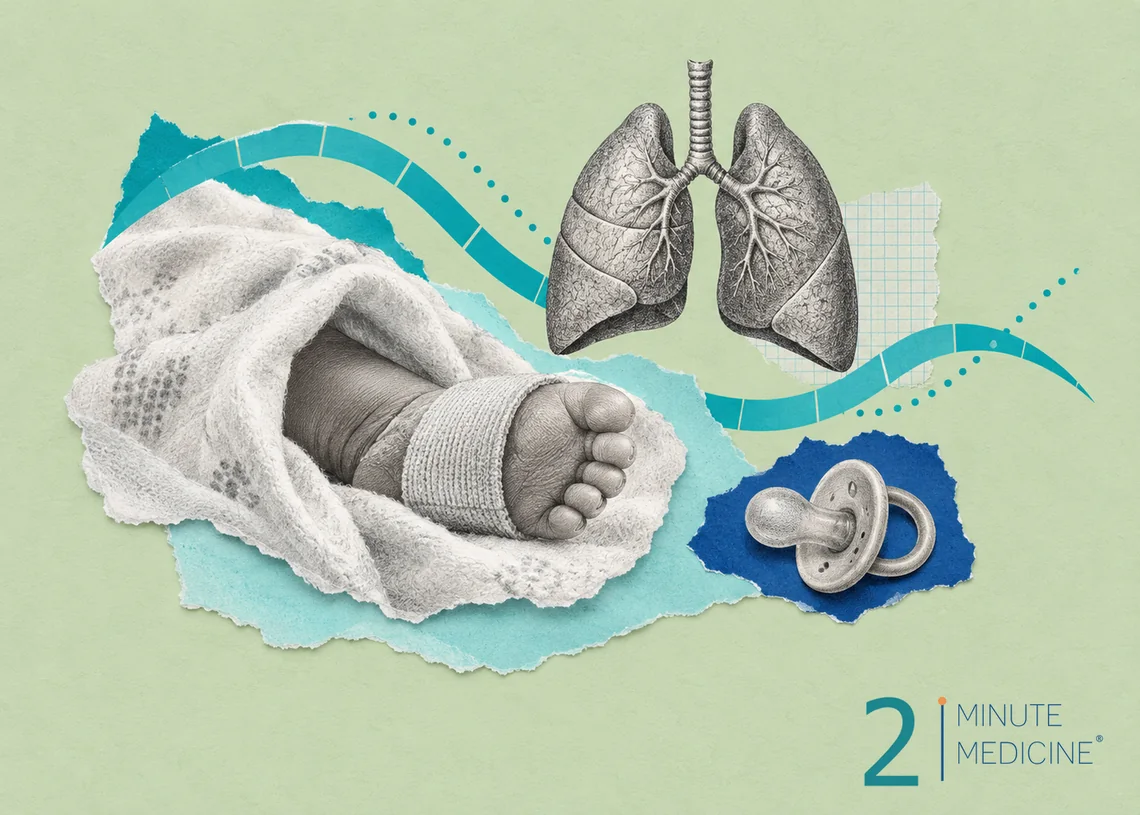
Preterm infant care collage: a tiny foot with a soft sensor wrap peeking from a blanket, a drawing of lungs and a pacifier
Share on FacebookShare on TwitterShare on LinkedIn

1. In a large cohort of infants with birth defects, the population attributable fraction (PAF) of preterm birth for risk of neonatal death was 51.7%.

2. PAF varied substantially by specific birth defect, from 26.1% for hypoplastic left heart syndrome to 76.2% for anotia/microtia.

Evidence Rating Level: 2 (Good)

Study Rundown: Birth defects are associated with an increased risk of neonatal mortality, defined as death within 28 days of birth. The population attributable fraction (PAF) is a useful metric that assesses the role a specific exposure plays in the development of a particular outcome. In this study, the PAF of prematurity was calculated for neonatal mortality in a large cohort of about 169,000 infants with birth defects. 24.2% of these infants were born preterm. The PAF of preterm birth for neonatal mortality was 51.7% overall in infants with birth defects, indicating that about half of mortality risk was attributable to prematurity. The PAF for individual birth defects ranged from 26.1% for hypoplastic left heart syndrome to 76.1% for hypospadias and 76.2% for anotia or microtia. In general, more severe birth defects associated with higher overall mortality risk, including critical heart defects, were associated with a lower PAF of prematurity, while for less critical defects, mortality risk was more attributable to prematurity. This relationship is intuitive but had not been previously reported. Though the overall benefit of preventing preterm delivery is widely known, this study further supports efforts to avoid preterm delivery in infants with birth defects to decrease the risk of neonatal mortality.

Click to read the study in the Journal of Pediatrics

Relevant Reading: Etiology and clinical presentation of birth defects: Population based study

RELATED REPORTS

Higher parental vitamin B12 associated with fewer birth defects

Drying prior to plastic wrapping may not provide thermoregulatory benefits in infants admitted to the neonatal intensive care unit

In-Depth [retrospective cohort]: Infants born alive at 24 weeks or more gestation between 1999 and 2014 who were part of the Texas Birth Defects Registry were included. Infants with anencephaly, chromosomal abnormalities, or diagnosed syndromes were excluded. Multiple birth defects were present in 30.6% of preterm infants compared to 24.1% of term. Congenital heart defects were also more prevalent in preterm infants at 46.7% versus 34.1%. PAF was calculated using prevalence of neonatal death in the relevant group as well as the risk ratio for mortality between preterm and term infants. The 95% confidence interval (CI) for the PAF in birth defects overall was 49.4-54.0%. PAF was 19.2% for all infants born at 24-28 weeks gestation, 13.9% for 28-32 weeks, and 18.7% for 32-37 weeks.

Image: PD

©2022 2 Minute Medicine, Inc. All rights reserved. No works may be reproduced without expressed written consent from 2 Minute Medicine, Inc. Inquire about licensing here. No article should be construed as medical advice and is not intended as such by the authors or by 2 Minute Medicine, Inc.

Tags: birth defectscongenital heart diseaseinfant mortalityneonatal intensive care unit (NICU)neonatologyprematurity
Previous Post

Auricular acupressure may improve sleep quality in elderly populations

Next Post

Obesity prevalence is heterogenous among subgroups of Asian American adults in the United States

RelatedReports

Paternal factors associated with short interpregnancy interval
Obstetrics

Higher parental vitamin B12 associated with fewer birth defects

August 31, 2026
Newborn intensive care collage: an open infant warming bed with an overhead heater, a striped flannel blanket and a pacifier
Emergency

Drying prior to plastic wrapping may not provide thermoregulatory benefits in infants admitted to the neonatal intensive care unit

April 10, 2026
Newborn intensive care collage: an open infant warming bed with an overhead heater, a striped flannel blanket and a pacifier
Weekly Rewinds

2 Minute Medicine Rewind April 6, 2026

April 6, 2026
Paternal factors associated with short interpregnancy interval
2 Minute Medicine

Artificial intelligence (AI) may reduce cognitive load for sonographers in fetal ultrasound scans without affecting diagnostic performance

October 22, 2025
Next Post
High blood pressure collage: a smiling older man before a branching blue artery tree, with a pulse wave below

Obesity prevalence is heterogenous among subgroups of Asian American adults in the United States

#VisualAbstract: Percutaneous Coronary Intervention in severe ischemic left ventricular dysfunction does not improve outcomes compared to optimal medical therapy alone

#VisualAbstract: Percutaneous Coronary Intervention in severe ischemic left ventricular dysfunction does not improve outcomes compared to optimal medical therapy alone

Ruxolitinib results in improved repigmentation as compared to vehicle-control in nonsegmental vitiligo

✦ EvidencePulse™ by 2 Minute Medicine 3 reports You asked top stroke trials 2026 Synthesizing medical evidence... Top 2026 stroke trial results: OCEANIC — ischemic stroke: 6.2% vs 8.4% OPTION* — mRS 0–1: 43.6% vs 34.2% ORIENTAL* — mRS 0–2: 58.6% vs 46.6% *Higher sICH in intervention arms Participants randomizedN OCEANIC 12,327 OPTION 570 ORIENTAL 564 Ask about guidelines or landmark trials... Try EvidencePulse™ Get the signal. Try it now → Physician-trained medical AI by 2 Minute Medicine

2MM+ All Access

Full details →
$4.99 /month

3-day free trial · cancel anytime

  • ✓100+ physician-written reports
  • ✓EvidencePulse™ + HypeCheck™
  • ✓Ad-free reading + newsletters
Start 3-day free trial

Then $4.99/month. Manage renewal in your account.

2 Minute Medicine® is an award winning, physician-run, expert medical media company. Our content is curated, written and edited by practicing health professionals who have clinical and scientific expertise in their field of reporting. Our editorial management team is comprised of highly-trained MD physicians. Join numerous brands, companies, and hospitals who trust our licensed content.

Recent Reports

  • Pelacarsen lowers lipoprotein(a) but does not reduce major cardiovascular events in patients with established cardiovascular disease
  • Durvalumab plus enfortumab vedotin was approved for perioperative treatment of muscle-invasive bladder cancer
  • CDC reports 5,412 confirmed measles cases in the United States in 2026
License Content
Terms of Use | Disclaimer
Cookie Policy

Get the app

Read 2 Minute Medicine on iPhone, iPad and Android.

Download on the App StoreGet it on Google Play
QR code for www.2minutemedicine.com/app
On a computer? Scan this with your phone’s camera.
2MM+ All Access Full details →

The medical literature, distilled daily.

Monthly plan selected: $4.99 /month.

$4.99/month

3-day free trial · cancel anytime

Start 3-day free trial

Then $4.99/month. Manage renewal in your account.

Yearly plan selected: $49.90 /year.

$49.90/year

2 months free

Start 3-day free trial

Then $49.90/year.

Membership benefits

  • ✓100+ new physician-written study summaries monthly, 12,000+ searchable
  • ✓AI EvidencePulse™ + HypeCheck™
  • ✓Ad-free reading + newsletters
  • ✓FDA drug approvals + clinical calculators

Already a member? Sign in

  • Get the app
  • About
  • Specialties
    • All Specialties, All Recent Reports
    • Cardiology
    • Chronic Disease
    • Dermatology
    • Emergency
    • Endocrinology
    • Gastroenterology
    • Imaging and Intervention
    • Infectious Disease
    • Nephrology
    • Neurology
    • Obstetrics
    • Oncology
    • Ophthalmology
    • Pediatrics
    • Pharma
    • Preclinical
    • Psychiatry
    • Public Health
    • Pulmonology
    • Rheumatology
    • Surgery
    • Rewinds
    • The Scan
  • EvidencePulse™
  • HypeCheck™
  • AI News
  • Classics™
    • 2MM+ Online Access
    • Paperback and Ebook
  • Tools
    • NPI Registry Lookup
    • RVU Search
    • Physician Pay by Specialty
    • ICD-10 Code Lookup
    • FDA Drug Approvals
    • Drug Safety for Breastfeeding/Pregnancy
    • Clinical Guidelines
    • Medical Calculators
    • ECG Reference
      • QTc Calculator
      • Sgarbossa Criteria
      • ECG Axis Calculator
      • AV Block Helper
  • Rankings
    • Medical School Rankings
    • Residency Rankings
  • Partners
    • License Content
    • Advertise with Us
No Result
View All Result

© 2026 2 Minute Medicine, Inc. - Physician-written medical news.