
• About
  • Masthead
  • License Content
  • Advertise
  • Submit Press Release
  • RSS/Email List
  • 2MM Podcast
  • Write for us
  • Contact Us
2 Minute Medicine
No Result
View All Result

No products in the cart.

SUBSCRIBE
  • Specialties
    • All Specialties, All Recent Reports
    • Cardiology
    • Chronic Disease
    • Dermatology
    • Emergency
    • Endocrinology
    • Gastroenterology
    • Imaging and Intervention
    • Infectious Disease
    • Nephrology
    • Neurology
    • Obstetrics
    • Oncology
    • Ophthalmology
    • Pediatrics
    • Pharma
    • Preclinical
    • Psychiatry
    • Public Health
    • Pulmonology
    • Rheumatology
    • Surgery
  • Tools
    • EvidencePulse™
    • RVU Search
    • NPI Registry Lookup
  • Pharma
  • AI News
  • The Scan+
  • Classics™+
    • 2MM+ Online Access
    • Paperback and Ebook
  • Rewinds
  • Partners
    • License Content
    • Submit Press Release
    • Advertise with Us
  • Account
    • Subscribe
    • Sign-in
    • My account
2 Minute Medicine
  • Specialties
    • All Specialties, All Recent Reports
    • Cardiology
    • Chronic Disease
    • Dermatology
    • Emergency
    • Endocrinology
    • Gastroenterology
    • Imaging and Intervention
    • Infectious Disease
    • Nephrology
    • Neurology
    • Obstetrics
    • Oncology
    • Ophthalmology
    • Pediatrics
    • Pharma
    • Preclinical
    • Psychiatry
    • Public Health
    • Pulmonology
    • Rheumatology
    • Surgery
  • Tools
    • EvidencePulse™
    • RVU Search
    • NPI Registry Lookup
  • Pharma
  • AI News
  • The Scan+
  • Classics™+
    • 2MM+ Online Access
    • Paperback and Ebook
  • Rewinds
  • Partners
    • License Content
    • Submit Press Release
    • Advertise with Us
  • Account
    • Subscribe
    • Sign-in
    • My account
SUBSCRIBE
2 Minute Medicine
Subscribe
Home All Specialties Chronic Disease

Proton radiotherapy may be effective for refractory pituitary adenomas
byKhang DinhandDavid Wang
September 6, 2014
in Chronic Disease, Endocrinology, Oncology
Reading Time: 3 mins read
0
Share on FacebookShare on Twitter

1. Treatment of refractory functional pituitary adenomas with stereotactic proton beam therapy was associated with a high rate of local tumor control.

2. The primary adverse effects included hypopituitarism, which is similar to conventional photon-based radiation therapy.

Evidence Rating Level: 2 (Good)

Study Rundown: Functional pituitary adenomas (FPAs) are benign tumors of the central nervous system that become symptomatic as a result of excess pituitary hormone production. FPAs can cause classical conditions such as galactorrhea, acromegaly, and Cushing’s disease, depending on the particular adenoma subtype. FPAs are treated medically with dopamine receptor agonists and surgically with a trans-sphenoidal approach. However, these methods result in only a 60-80% cure rate. Patients who either fail treatment or were poor surgical candidates are treated with stereotactic radiosurgery. This is traditionally performed using a photon-based radiotherapy delivered to a conformal target volume.

In this study, the authors retrospectively reviewed the outcomes of 144 refractory FPA patients treated with proton-based radiotherapy at a single, high volume institution. Proton-based radiotherapy has the advantage of delivering high radiation doses to tumor volumes without significant exit doses, thereby significantly reducing toxicity to normal tissues. After a median follow-up of 52 months, 98% of patients achieved local control of disease (imaging showed no or stable residual anatomical disease). Furthermore,  59% of patients achieved a complete biochemical response and required no further medical management at 5 years. The major adverse event associated with proton therapy was hypopituitarism, which occurred in 62% of patients at 5-years. These results demonstrate that proton-based therapy is comparable to photon therapy for refractory FPA. However, the small sample size and relatively short follow-up may not capture the late effects of radiation on normal brain tissue or the true incidence of rare, but devastating adverse events such as seizures and cranial nerve palsies. Finally, no direct comparisons to photon-based treatment outcomes were made.

Click to read the study in the International Journal of Radiation Oncology

RELATED REPORTS

Two scores for risk stratification of adults presenting with syncope may be effective at identifying those with low risk

Use of procalcitonin in neonatal late-onset sepsis may reduce the duration of antibiotic therapy without increase in mortality

A novel therapy targeting γ-aminobutyric acid is safe and may be effective in major depressive disorder

Relevant Reading: Radiation Therapy in the Management of Pituitary Adenomas

In-Depth [retrospective cohort]: This was a retrospective cohort study that included 165 patients with refractory FPA treated with proton therapy from 1992 to 2012. The proportion of patients with Cushing’s disease, acromegaly, and prolactinoma were 48%, 37%, and 7%, respectively. The rates complete biochemical response and hypopituitarism were estimated using the Kaplan-Meier method. In this group, 144 patients had adequate information to determine complete response rates (CR), and were followed up to a median of 52 months (range 6-247). Overall, the CR at five-years was 59% (95% CI: 50-69%) with a median time to CR of 47 months (95% CI: 36-59 months). Of the patients who did not achieve CR, 67% had biochemical control, but continuing medical management was necessary. Of the 127 patients who were considered at risk for new hypopituitarism, 62% developed new hormone deficiencies requiring replacement at 5-years follow up. The median time to clinically diagnosed hypopituitarism was 40 months post-proton beam therapy. Serious adverse events included four patients who experienced temporal lobe seizures and one patient suffering from transient right cranial nerve palsy.

More from this author: Erlotinib does not demonstrate increased survival in ovarian epithelial carcinomas, Afatinib shows increased progression-free survival in non-small-cell lung cancer, New method may predict response to chemotherapy for lung cancer, Escalated-dose radiotherapy did not increase survival in prostate cancer, Stereotactic radiosurgery promising for patients with multiple brain metastases

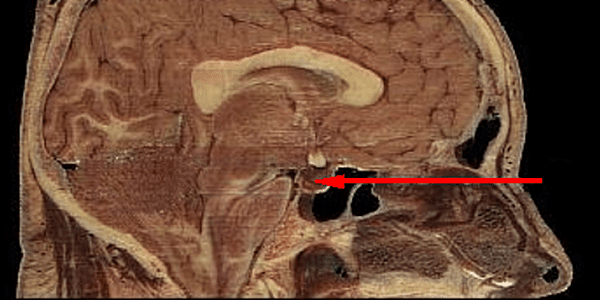
Image: CC/Wiki

©2012-2014 2minutemedicine.com. All rights reserved. No works may be reproduced without expressed written consent from 2minutemedicine.com. Disclaimer: We present factual information directly from peer reviewed medical journals. No post should be construed as medical advice and is not intended as such by the authors, editors, staff or by 2minutemedicine.com. PLEASE SEE A HEALTHCARE PROVIDER IN YOUR AREA IF YOU SEEK MEDICAL ADVICE OF ANY SORT.

Previous Post

Smoking exposure may decrease risk of developing inner eye growths (pterygium)

Next Post

Deep brain stimulation linked to declining brain function in Parkinson’s patients

RelatedReports

Computed tomography improves diagnostic certainty in the emergency department
Cardiology

Two scores for risk stratification of adults presenting with syncope may be effective at identifying those with low risk

May 29, 2026
Obstetric scoring systems overestimate cases of severe sepsis
Emergency

Use of procalcitonin in neonatal late-onset sepsis may reduce the duration of antibiotic therapy without increase in mortality

May 28, 2026
Parents often unaware of adolescents’ suicidal thoughts
Chronic Disease

A novel therapy targeting γ-aminobutyric acid is safe and may be effective in major depressive disorder

May 27, 2026
No obesity paradox found between BMI, stroke, and death
Neurology

Intra-arterial alteplase after thrombectomy improves three-month functional recovery in large vessel stroke

May 26, 2026
Next Post
Levodopa for Parkinson’s disease more effective than newer generation therapies

Deep brain stimulation linked to declining brain function in Parkinson’s patients

No association between bra wearing and breast cancer

Single-site robotic cholecystectomy is safe, but technically challenging

Post-operative pain similar in robotic and conventional laparoscopy for gynecologic procedures

2 Minute Medicine® is an award winning, physician-run, expert medical media company. Our content is curated, written and edited by practicing health professionals who have clinical and scientific expertise in their field of reporting. Our editorial management team is comprised of highly-trained MD physicians. Join numerous brands, companies, and hospitals who trust our licensed content.

Recent Reports

  • Two scores for risk stratification of adults presenting with syncope may be effective at identifying those with low risk
  • Use of procalcitonin in neonatal late-onset sepsis may reduce the duration of antibiotic therapy without increase in mortality
  • A novel therapy targeting γ-aminobutyric acid is safe and may be effective in major depressive disorder
License Content
Terms of Use | Disclaimer
Cookie Policy
Privacy Statement (EU)
Disclaimer
  • Specialties
    • All Specialties, All Recent Reports
    • Cardiology
    • Chronic Disease
    • Dermatology
    • Emergency
    • Endocrinology
    • Gastroenterology
    • Imaging and Intervention
    • Infectious Disease
    • Nephrology
    • Neurology
    • Obstetrics
    • Oncology
    • Ophthalmology
    • Pediatrics
    • Pharma
    • Preclinical
    • Psychiatry
    • Public Health
    • Pulmonology
    • Rheumatology
    • Surgery
  • Tools
    • EvidencePulse™
    • RVU Search
    • NPI Registry Lookup
  • Pharma
  • AI News
  • The Scan
  • Classics™
    • 2MM+ Online Access
    • Paperback and Ebook
  • Rewinds
  • Partners
    • License Content
    • Submit Press Release
    • Advertise with Us
  • Account
    • Subscribe
    • Sign-in
    • My account
No Result
View All Result

© 2026 2 Minute Medicine, Inc. - Physician-written medical news.