



• About
  • Masthead
  • License Content
  • Advertise
  • Submit Press Release
  • RSS/Email List
  • 2MM Podcast
  • Write for us
  • Contact Us
2 Minute Medicine
No Result
View All Result

No products in the cart.

SUBSCRIBE
  • Specialties
    • All Specialties, All Recent Reports
    • Cardiology
    • Chronic Disease
    • Dermatology
    • Emergency
    • Endocrinology
    • Gastroenterology
    • Imaging and Intervention
    • Infectious Disease
    • Nephrology
    • Neurology
    • Obstetrics
    • Oncology
    • Ophthalmology
    • Pediatrics
    • Pharma
    • Preclinical
    • Psychiatry
    • Public Health
    • Pulmonology
    • Rheumatology
    • Surgery
  • Tools
    • EvidencePulse™
    • RVU Search
    • NPI Registry Lookup
  • Pharma
  • AI News
  • The Scan+
  • Classics™+
    • 2MM+ Online Access
    • Paperback and Ebook
  • Rewinds
  • Partners
    • License Content
    • Submit Press Release
    • Advertise with Us
  • Account
    • Subscribe
    • Sign-in
    • My account
2 Minute Medicine
  • Specialties
    • All Specialties, All Recent Reports
    • Cardiology
    • Chronic Disease
    • Dermatology
    • Emergency
    • Endocrinology
    • Gastroenterology
    • Imaging and Intervention
    • Infectious Disease
    • Nephrology
    • Neurology
    • Obstetrics
    • Oncology
    • Ophthalmology
    • Pediatrics
    • Pharma
    • Preclinical
    • Psychiatry
    • Public Health
    • Pulmonology
    • Rheumatology
    • Surgery
  • Tools
    • EvidencePulse™
    • RVU Search
    • NPI Registry Lookup
  • Pharma
  • AI News
  • The Scan+
  • Classics™+
    • 2MM+ Online Access
    • Paperback and Ebook
  • Rewinds
  • Partners
    • License Content
    • Submit Press Release
    • Advertise with Us
  • Account
    • Subscribe
    • Sign-in
    • My account
SUBSCRIBE
2 Minute Medicine
Subscribe
Home All Specialties Cardiology

Remote ischemic preconditioning reduced myocardial injury in CABG patients

byAndrew Bishara
August 23, 2013
in Cardiology, Chronic Disease, Surgery
Reading Time: 3 mins read
0
Share on FacebookShare on Twitter

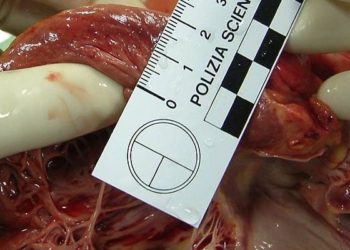
Image: PD 

1. Remote ischemic preconditioning in CABG patients decreased myocardial injury in the first 72 hours after surgery.

2. All-cause mortality and rates of major adverse cardiac and cerebrovascular outcomes were significantly lower in patients that underwent remote ischemic preconditioning compared to those that did not. 

Evidence Rating Level:  2 (Good)

Study Rundown: This single-center study of patients undergoing CABG evaluated the safety and efficacy of remote ischemic preconditioning. Remote ischemic preconditioning, induced by alternating ischemia and reperfusion of the left arm, was found to reduce perioperative cardiac troponin I (cTnI) levels. Additionally, after a mean follow-up period of 1.54 years, all-cause mortality was lower in patients who underwent remote ischemic preconditioning than the control group.

While prior studies have shown that ischemic preconditioning improves cardiac biomarker profiles, the authors’ finding of reduced mortality is particularly exciting given its clinical relevance. Because this was a study to evaluate safety and efficacy, exclusion criteria prohibited many high-risk patients from entering the study. Therefore, the results cannot be generalized to all patients undergoing CABG. Further, the small size of the study and the relatively short duration of follow-up reduces its power in detecting rare but important outcomes, including mortality. In order to better evaluate these infrequent outcomes, a larger study with a longer follow-up period will be necessary.

RELATED REPORTS

Analysis of arrhythmia and its risk factors in patients with COVID-19

Prehospital Postintubation Hypotension and Survival in Severe Traumatic Brain Injury

Association between baseline BMI and in-hospital mortality in critically ill cardiac surgery patients: a retrospective cohort study

Click to read the study in The Lancet

Click to read an accompanying comment in The Lancet

Relevant Reading: Cardioprotection: chances and challenges of its translation to the clinic 

Author Comments: According to Professor Heusch, “The results of our study are very encouraging that remote ischaemic preconditioning not only reduces heart muscle injury but also improves long-term health outcomes for heart bypass patients, and we hope that these benefits will be confirmed in larger prospective studies which are currently taking place.”

“The beauty of remote ischaemic preconditioning is that it is non-invasive, simple, cheap, and safe,” adds Dr Thielmann.  “This procedure could be a promising and simple strategy to protect patients’ heart muscle during surgery and hopefully improve health outcomes after surgery.”

In-Depth [double-blind prospective randomized controlled trial]: This study randomized 329 patients undergoing elective first-time CABG surgery under cardiopulmonary bypass to receive remote ischemic preconditioning or no ischemic preconditioning. Exclusion criteria included renal insufficiency and acute coronary syndrome within the previous 4 weeks. Patients with diabetes were initially excluded; after inclusion criteria were extended, 61 patients with diabetes entered the study. The patients assigned to the intervention group underwent three cycles of 5 minutes of ischemia, induced by inflation of a blood pressure cuff on the left arm to 200 mm Hg, followed by 5 minutes of reperfusion. The patients assigned to the control group had a cuff placed around their arm but not inflated.

The primary endpoint was myocardial injury as represented by geometric mean area under the curve (AUC) of cTnI. The mean geometric AUC was reduced in the remote ischemic precondititioning group compared to the control group (266 ng/mL, 95% CI 237-298 vs. 321 ng/mL, 95% CI 287-360 ng/mL). All-cause mortality, assessed over a mean follow-up period of 1.54 (SD 1.22) years, was lower in the group who received ischemic preconditioning (1.9% vs. 6.9%) with a hazard ratio of 0.27 (95% CI 0.08–0.98). Major adverse cardiac and cerebrovascular events were also lower in the treatment group during this time period (13.9% vs. 18.9%) with a hazard ratio of 0.32 (95% CI 0.14-0.71).

By Hayley Walker and Mimmie Kwong

© 2013 2minutemedicine.com. All rights reserved. No works may be reproduced without expressed written consent from 2minutemedicine.com. Disclaimer: We present factual information directly from peer reviewed medical journals. No post should be construed as medical advice and is not intended as such by the authors, editors, staff or by 2minutemedicine.com. PLEASE SEE A HEALTHCARE PROVIDER IN YOUR AREA IF YOU SEEK MEDICAL ADVICE OF ANY SORT.  

Tags: biomarkersbypassCABGCardiac surgerycardiologyischemic preconditioningmortalitymyocardial injury
Previous Post

Diabetic patients report improved vision after ranibizumab treatment

Next Post

Fruit consumption linked to lower risk of abdominal aortic aneurysms

RelatedReports

Novel coronavirus identified from patients with pneumonia in Wuhan, China
Cardiology

Analysis of arrhythmia and its risk factors in patients with COVID-19

December 3, 2025
Brain lesions on MRI linked with subsequent increased stroke risk
Emergency

Prehospital Postintubation Hypotension and Survival in Severe Traumatic Brain Injury

November 25, 2025
Survival greater in cervical cancer patients undergoing abdominal hysterectomy compared to minimally invasive techniques: the LACC trial
Cardiology

Association between baseline BMI and in-hospital mortality in critically ill cardiac surgery patients: a retrospective cohort study

November 17, 2025
Lariat device for left atrial appendage exclusion associated with adverse events
Weekly Rewinds

2 Minute Medicine Rewind November 17, 2025

November 17, 2025
Next Post
Fruit consumption linked to lower risk of abdominal aortic aneurysms

Fruit consumption linked to lower risk of abdominal aortic aneurysms

Mixed picture for pazopanib versus sunitinib in metastatic renal-cell carcinoma

Mixed picture for pazopanib versus sunitinib in metastatic renal-cell carcinoma

Surgical learning curve: factors in minimally invasive mitral valve surgery

Prompt surgery may yield better outcomes for adhesive small bowel obstruction

2 Minute Medicine® is an award winning, physician-run, expert medical media company. Our content is curated, written and edited by practicing health professionals who have clinical and scientific expertise in their field of reporting. Our editorial management team is comprised of highly-trained MD physicians. Join numerous brands, companies, and hospitals who trust our licensed content.

Recent Reports

  • Impact of late ventricular fibrillation on postdischarge 1-year mortality of patients presenting with acute myocardial infarction: a nationwide retrospective study
  • Clinical validation of a frailty management mHealth tool in a cohort of community-dwelling older adults: the Geras Fit-Frailty App
  • 2 Minute Medicine Rewind January 5, 2026
License Content
Terms of Use | Disclaimer
Cookie Policy
Privacy Statement (EU)
Disclaimer

© 2025 2 Minute Medicine, Inc. - Physician-written medical news.

  • Specialties
    • All Specialties, All Recent Reports
    • Cardiology
    • Chronic Disease
    • Dermatology
    • Emergency
    • Endocrinology
    • Gastroenterology
    • Imaging and Intervention
    • Infectious Disease
    • Nephrology
    • Neurology
    • Obstetrics
    • Oncology
    • Ophthalmology
    • Pediatrics
    • Pharma
    • Preclinical
    • Psychiatry
    • Public Health
    • Pulmonology
    • Rheumatology
    • Surgery
  • Tools
    • EvidencePulse™
    • RVU Search
    • NPI Registry Lookup
  • Pharma
  • AI News
  • The Scan
  • Classics™
    • 2MM+ Online Access
    • Paperback and Ebook
  • Rewinds
  • Partners
    • License Content
    • Submit Press Release
    • Advertise with Us
  • Account
    • Subscribe
    • Sign-in
    • My account
No Result
View All Result

© 2025 2 Minute Medicine, Inc. - Physician-written medical news.
