• About
  • Masthead
  • License Content
  • Advertise
  • Submit Press Release
  • RSS/Email List
  • 2MM Podcast
  • Write for us
  • Contact Us
2 Minute Medicine
No Result
View All Result

No products in the cart.

SUBSCRIBE
  • Specialties
    • All Specialties, All Recent Reports
    • Cardiology
    • Chronic Disease
    • Dermatology
    • Emergency
    • Endocrinology
    • Gastroenterology
    • Imaging and Intervention
    • Infectious Disease
    • Nephrology
    • Neurology
    • Obstetrics
    • Oncology
    • Ophthalmology
    • Pediatrics
    • Pharma
    • Preclinical
    • Psychiatry
    • Public Health
    • Pulmonology
    • Rheumatology
    • Surgery
  • Tools
    • EvidencePulse™
    • RVU Search
    • NPI Registry Lookup
  • Pharma
  • AI News
  • The Scan+
  • Classics™+
    • 2MM+ Online Access
    • Paperback and Ebook
  • Rewinds
  • Partners
    • License Content
    • Submit Press Release
    • Advertise with Us
  • Account
    • Subscribe
    • Sign-in
    • My account
2 Minute Medicine
  • Specialties
    • All Specialties, All Recent Reports
    • Cardiology
    • Chronic Disease
    • Dermatology
    • Emergency
    • Endocrinology
    • Gastroenterology
    • Imaging and Intervention
    • Infectious Disease
    • Nephrology
    • Neurology
    • Obstetrics
    • Oncology
    • Ophthalmology
    • Pediatrics
    • Pharma
    • Preclinical
    • Psychiatry
    • Public Health
    • Pulmonology
    • Rheumatology
    • Surgery
  • Tools
    • EvidencePulse™
    • RVU Search
    • NPI Registry Lookup
  • Pharma
  • AI News
  • The Scan+
  • Classics™+
    • 2MM+ Online Access
    • Paperback and Ebook
  • Rewinds
  • Partners
    • License Content
    • Submit Press Release
    • Advertise with Us
  • Account
    • Subscribe
    • Sign-in
    • My account
SUBSCRIBE
2 Minute Medicine
Subscribe
Home All Specialties Pediatrics

Resident competency lacking in neonatal intubation

byLeah Carr, MD
April 6, 2015
in Pediatrics
Reading Time: 3 mins read
0
Share on FacebookShare on Twitter

1. Only 23% of pediatric and medicine-pediatric residents studied achieved competency in neonatal intubation during their residency years.

2. Using Bayesian statistics, competency was defined as 75% likelihood of achieving successful intubation on next attempt, and translated into 4 previous cumulative successful intubations.

Evidence Rating Level: 1 (Excellent)    

Study Rundown: Neonatal intubation is a vital skill for pediatricians whose careers require delivery room presence. Given changing work hour limitations and an increase in non-physician providers (ex: nurse practitioners) in neonatal care, residents are now less frequently exposed to neonatal intubation. In light of the growing use of competency-based framework in trainee assessment, this study evaluated the trajectory towards resident competency in neonatal intubation. Utilizing Bayesian statistics, researchers found that the significant majority of residents do not achieve competency, defined as 4 cumulative prior successes, in neonatal intubation by the end of residency. Residents with greater trial opportunities and those with success in earlier attempts were more likely to achieve competence. This study is limited by its inability to define the time duration between trial attempts, postulating that residents with greater opportunities in a shorter timeframe may have been more likely to achieve competence. Nevertheless, it suggests Bayesian statistics as a modality to help define competence and highlights an important gap in trainee skills.

Click to read the study, published today in Pediatrics

Relevant Reading: The lost art of intubation: assessing opportunities for residents to perform neonatal intubation

RELATED REPORTS

Etomidate is associated with higher in-hospital mortality compared with ketamine in rapid sequence intubation for severely ill patients

Prehospital postintubation hypotension following traumatic brain injury is associated with increased mortality

Use of etomidate and ketamine is associated with similar rates of peri-intubation hypotension and mortality

Study Author, Dr. Stephen D. DeMeo, DO, talks to 2 Minute Medicine: Division of Neonatology, Duke University Medical Center, Durham, North Carolina.

“In a graduate medical education environment moving towards competency based education, we need to start building better definitions of what competency means for our trainees, whether that be in cognitive, affective, or in this case, procedural outcomes. Without having a proper definition of competency for neonatal intubation, it remains difficult to assess novel educational interventions to improve procedural training in residency programs. We hope this study can play a small part in forming that foundation.”

In-Depth [retrospective observational study]: This study involved the analysis of neonatal intubation attempts by 105 pediatric and medicine-pediatrics residents as each resident completed 3 full academic years of pediatric residency. Bayesian statistics were applied, allowing for likelihood of future successful intubations to be predicted based upon previous distributions. Successful intubation was defined as appropriate endotracheal tube placement confirmed via chest radiograph; appropriate placement in any of multiple attempts during one event was included as a successful intubation. Competency was defined as the 75% likelihood that the resident would achieve successful intubation on his or her next attempt; this translated into a Bayesian score of 80, or 4 prior cumulative successful attempts. Only 24 of 105 residents (23%) achieved competence by end of residency; these residents had a median 7 opportunities, while the overall cohort had a median 3 opportunities. As such, the overall cohort had a lower median number of opportunities (3) than even the number of successful attempts (4) required to define competency. Residents with success during their first 2 attempts were more likely to achieve competency during residency.

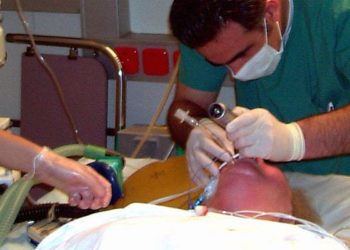
Image: PD

©2015 2 Minute Medicine, Inc. All rights reserved. No works may be reproduced without expressed written consent from 2 Minute Medicine, Inc. Inquire about licensing here. No article should be construed as medical advice and is not intended as such by the authors or by 2 Minute Medicine, Inc.

Tags: graduate medical educationintubationneonatology
Previous Post

Potential contamination of purchased human milk via internet

Next Post

Similar outcomes between physical therapy and surgery for lumbar spinal stenosis

RelatedReports

Emergency

Etomidate is associated with higher in-hospital mortality compared with ketamine in rapid sequence intubation for severely ill patients

January 13, 2026
Brain lesions on MRI linked with subsequent increased stroke risk
Emergency

Prehospital postintubation hypotension following traumatic brain injury is associated with increased mortality

January 13, 2026
Postextubation administration of high-flow oxygen leads to reduced reintubation and respiratory failure
Emergency

Use of etomidate and ketamine is associated with similar rates of peri-intubation hypotension and mortality

January 13, 2026
Postextubation administration of high-flow oxygen leads to reduced reintubation and respiratory failure
Weekly Rewinds

2 Minute Medicine Rewind September 29, 2025

September 29, 2025
Next Post
Similar outcomes between physical therapy and surgery for lumbar spinal stenosis

Similar outcomes between physical therapy and surgery for lumbar spinal stenosis

2 Minute Medicine Rewind November 23 – November 30, 2014

2 Minute Medicine Rewind March 28 – April 5, 2015

Overall US diet quality improved from 1999 to 2010

Specific commercial weight loss programs linked with greater weight loss than education or behavioral counseling

2 Minute Medicine® is an award winning, physician-run, expert medical media company. Our content is curated, written and edited by practicing health professionals who have clinical and scientific expertise in their field of reporting. Our editorial management team is comprised of highly-trained MD physicians. Join numerous brands, companies, and hospitals who trust our licensed content.

Recent Reports

  • Apolipoprotein E mimetic peptide CN-105 may be safe and feasible for delirium prevention in older surgical patients
  • Emergency department screening tool predicts firearm violence risk
  • The risk of thiazide-associated hyponatremia may be greatest in older women
License Content
Terms of Use | Disclaimer
Cookie Policy
Privacy Statement (EU)
Disclaimer

The Classics in Medicine Paperback Released!

Over the past 30 years, the transition from print to digital media has contributed to an exponential increase in medical literature. In response, 2 Minute Medicine presents 160+ authoritative, physician-written summaries of the most cited landmark trials in medicine.

amazon-logo_blackGet-it-on-iBooks-badge

Click anywhere to close this announcement

  • Specialties
    • All Specialties, All Recent Reports
    • Cardiology
    • Chronic Disease
    • Dermatology
    • Emergency
    • Endocrinology
    • Gastroenterology
    • Imaging and Intervention
    • Infectious Disease
    • Nephrology
    • Neurology
    • Obstetrics
    • Oncology
    • Ophthalmology
    • Pediatrics
    • Pharma
    • Preclinical
    • Psychiatry
    • Public Health
    • Pulmonology
    • Rheumatology
    • Surgery
  • Tools
    • EvidencePulse™
    • RVU Search
    • NPI Registry Lookup
  • Pharma
  • AI News
  • The Scan
  • Classics™
    • 2MM+ Online Access
    • Paperback and Ebook
  • Rewinds
  • Partners
    • License Content
    • Submit Press Release
    • Advertise with Us
  • Account
    • Subscribe
    • Sign-in
    • My account
No Result
View All Result

© 2026 2 Minute Medicine, Inc. - Physician-written medical news.