• About
  • Masthead
  • License Content
  • Advertise
  • Submit Press Release
  • RSS/Email List
  • 2MM Podcast
  • Write for us
  • Contact Us
2 Minute Medicine
No Result
View All Result

No products in the cart.

SUBSCRIBE
  • Specialties
    • All Specialties, All Recent Reports
    • Cardiology
    • Chronic Disease
    • Dermatology
    • Emergency
    • Endocrinology
    • Gastroenterology
    • Imaging and Intervention
    • Infectious Disease
    • Nephrology
    • Neurology
    • Obstetrics
    • Oncology
    • Ophthalmology
    • Pediatrics
    • Pharma
    • Preclinical
    • Psychiatry
    • Public Health
    • Pulmonology
    • Rheumatology
    • Surgery
  • Tools
    • EvidencePulse™
    • RVU Search
    • NPI Registry Lookup
  • Pharma
  • AI News
  • The Scan+
  • Classics™+
    • 2MM+ Online Access
    • Paperback and Ebook
  • Rewinds
  • Partners
    • License Content
    • Submit Press Release
    • Advertise with Us
  • Account
    • Subscribe
    • Sign-in
    • My account
2 Minute Medicine
  • Specialties
    • All Specialties, All Recent Reports
    • Cardiology
    • Chronic Disease
    • Dermatology
    • Emergency
    • Endocrinology
    • Gastroenterology
    • Imaging and Intervention
    • Infectious Disease
    • Nephrology
    • Neurology
    • Obstetrics
    • Oncology
    • Ophthalmology
    • Pediatrics
    • Pharma
    • Preclinical
    • Psychiatry
    • Public Health
    • Pulmonology
    • Rheumatology
    • Surgery
  • Tools
    • EvidencePulse™
    • RVU Search
    • NPI Registry Lookup
  • Pharma
  • AI News
  • The Scan+
  • Classics™+
    • 2MM+ Online Access
    • Paperback and Ebook
  • Rewinds
  • Partners
    • License Content
    • Submit Press Release
    • Advertise with Us
  • Account
    • Subscribe
    • Sign-in
    • My account
SUBSCRIBE
2 Minute Medicine
Subscribe
Home All Specialties Emergency

Use of etomidate and ketamine is associated with similar rates of peri-intubation hypotension and mortality
byAlex XiangandSimon Pan
January 13, 2026
in Emergency, Imaging and Intervention
Reading Time: 2 mins read
0
Share on FacebookShare on Twitter

1. There was no significant difference in peri-intubation hypotension (PIH) and 28-day mortality between etomidate and ketamine as a single induction agent in elderly patients.

Evidence Rating Level: 2 (Good)

Peri-intubation hypotension (PIH) is a common complication of tracheal intubation with greater risk in elderly patients given the reductive effects of age-related physiological changes and comorbidities on their cardiovascular reserve. Etomidate and ketamine are preferred agents due to their relatively minimal hemodynamic disturbance although data on their use in elderly agents is limited. This study therefore sought to compare the effects of etomidate and ketamine on PIH and 28-day mortality in elderly patients. This prospective, observational cohort study included418 emergency department patients aged 65 years and older requiring tracheal intubation who received either etomidate or ketamine as a single induction agent. PIH was defined as a decrease in systolic blood pressure (SBP) by more than 20% from baseline without treatment, SBP less than 100 mmHg without treatment, or the initiation of vasopressors. The study found no difference in PIH incidence within 30 minutes of medication administration across the two groups (risk difference 9.1 %, 95 % confidence interval [CI] −4.1 to 22.1, p = 0.179) or in 28-day mortality (hazard ratio [HR] 0.66, 95 % CI 0.41–1.07, p = 0.095). However, ketamine was associated with a lower risk of 28-day mortality (adjusted HR 0.59, 95 % CI 0.36–0.97, p = 0.034) in patients who developed PIH and required vasopressors. Furthermore, in patients with a shock index ≥ 0.9, dosage was positively correlated with the probability of PIH in both groups. This study contributes to the existing literature of induction agent selection in tracheal intubation and may support the use of etomidate in certain sub-populations.

Click here to read this study in The American Journal of Emergency Medicine

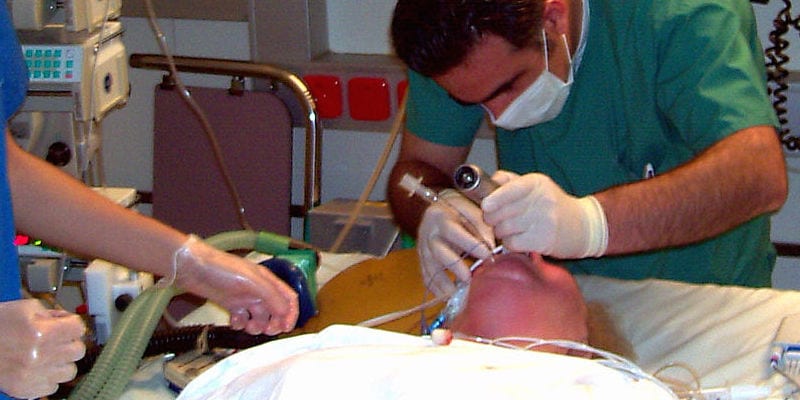
Image: PD

©2025 2 Minute Medicine, Inc. All rights reserved. No works may be reproduced without expressed written consent from 2 Minute Medicine, Inc. Inquire about licensing here. No article should be construed as medical advice and is not intended as such by the authors or by 2 Minute Medicine, Inc.

RELATED REPORTS

Computed tomography angiography of the head and neck may inform emergency management in patients with suspected stroke

Higher sleep apnea-specific hypoxic burden may predict postoperative cardiovascular complications and mortality in obstructive sleep apnea

Status epilepticus cause may predict likelihood of neurologic recovery but not short-term mortality

Tags: 30-day mortalityelderlyemergencyetomidateintubationketamine
Previous Post

Punjab launches AI screening program this week

Next Post

Lilly unveils TuneLab AI platform for biotechs

RelatedReports

Quick Take: Functional Outcome of Intravenous Thrombolysis in Patients With Lacunar Infarcts in the WAKE-UP Trial
Emergency

Computed tomography angiography of the head and neck may inform emergency management in patients with suspected stroke

March 9, 2026
Admission may not be needed following sleep apnea surgery
Cardiology

Higher sleep apnea-specific hypoxic burden may predict postoperative cardiovascular complications and mortality in obstructive sleep apnea

March 4, 2026
Brain lesions on MRI linked with subsequent increased stroke risk
Emergency

Status epilepticus cause may predict likelihood of neurologic recovery but not short-term mortality

February 10, 2026
Reduced venous recanalization after acute deep vein thrombosis associated with post-thrombotic syndrome
Chronic Disease

Effect of high elevation on deep vein thrombosis: a multicenter cohort study

January 22, 2026
Next Post
Record-based algorithm may improve lung cancer screening follow-up

Lilly unveils TuneLab AI platform for biotechs

Rivaroxaban likely reduces risk of recurrent stroke in specific subgroup of patients with embolic stroke of undetermined source

Left atrial appendage closure is safe and effective in atrial fibrillation

A collection of symbolic items such as a microscope

CASPer Exam: Transforming Medical School Admissions

2 Minute Medicine® is an award winning, physician-run, expert medical media company. Our content is curated, written and edited by practicing health professionals who have clinical and scientific expertise in their field of reporting. Our editorial management team is comprised of highly-trained MD physicians. Join numerous brands, companies, and hospitals who trust our licensed content.

Recent Reports

  • Maternal prothrombin time may be an effective marker for neonatal sepsis risk stratification
  • Susie Wiles’ breast cancer diagnosis drives national screening surge
  • Finerenone improves albuminuria in adults with type 1 diabetes and chronic kidney disease
License Content
Terms of Use | Disclaimer
Cookie Policy
Privacy Statement (EU)
Disclaimer

© 2025 2 Minute Medicine, Inc. - Physician-written medical news.

  • Specialties
    • All Specialties, All Recent Reports
    • Cardiology
    • Chronic Disease
    • Dermatology
    • Emergency
    • Endocrinology
    • Gastroenterology
    • Imaging and Intervention
    • Infectious Disease
    • Nephrology
    • Neurology
    • Obstetrics
    • Oncology
    • Ophthalmology
    • Pediatrics
    • Pharma
    • Preclinical
    • Psychiatry
    • Public Health
    • Pulmonology
    • Rheumatology
    • Surgery
  • Tools
    • EvidencePulse™
    • RVU Search
    • NPI Registry Lookup
  • Pharma
  • AI News
  • The Scan
  • Classics™
    • 2MM+ Online Access
    • Paperback and Ebook
  • Rewinds
  • Partners
    • License Content
    • Submit Press Release
    • Advertise with Us
  • Account
    • Subscribe
    • Sign-in
    • My account
No Result
View All Result

© 2025 2 Minute Medicine, Inc. - Physician-written medical news.