• About
  • Masthead
  • License Content
  • Advertise
  • Press Releases
  • Newsroom
  • RSS/Email List
  • 2MM Podcast
  • Write for us
  • Contact Us
2 Minute Medicine
No Result
View All Result

No products in the cart.

Sign in
SUBSCRIBE
  • About
  • Specialties
    • All Specialties, All Recent Reports
    • Cardiology
    • Chronic Disease
    • Dermatology
    • Emergency
    • Endocrinology
    • Gastroenterology
    • Imaging and Intervention
    • Infectious Disease
    • Nephrology
    • Neurology
    • Obstetrics
    • Oncology
    • Ophthalmology
    • Pediatrics
    • Pharma
    • Preclinical
    • Psychiatry
    • Public Health
    • Pulmonology
    • Rheumatology
    • Surgery
    • Rewinds
    • The Scan
  • EvidencePulse™
  • HypeCheck™
  • AI News
  • Classics™
    • 2MM+ Online Access
    • Paperback and Ebook
  • Tools
    • NPI Registry Lookup
    • RVU Search
  • Partners
    • License Content
    • Advertise with Us
2 Minute Medicine
  • About
  • Specialties
    • All Specialties, All Recent Reports
    • Cardiology
    • Chronic Disease
    • Dermatology
    • Emergency
    • Endocrinology
    • Gastroenterology
    • Imaging and Intervention
    • Infectious Disease
    • Nephrology
    • Neurology
    • Obstetrics
    • Oncology
    • Ophthalmology
    • Pediatrics
    • Pharma
    • Preclinical
    • Psychiatry
    • Public Health
    • Pulmonology
    • Rheumatology
    • Surgery
    • Rewinds
    • The Scan
  • EvidencePulse™
  • HypeCheck™
  • AI News
  • Classics™
    • 2MM+ Online Access
    • Paperback and Ebook
  • Tools
    • NPI Registry Lookup
    • RVU Search
  • Partners
    • License Content
    • Advertise with Us
Sign in
SUBSCRIBE
2 Minute Medicine
Sign in
Subscribe
2 Minute MedicineFree on Google PlayGet
✦ EvidencePulse™ by 2 Minute Medicine 2026 evidence scan 3 reports You asked top stroke trials 2026 Synthesizing medical evidence... Top 2026 stroke trial results: OCEANIC — ischemic stroke: 6.2% vs 8.4% OPTION* — mRS 0–1: 43.6% vs 34.2% ORIENTAL* — mRS 0–2: 58.6% vs 46.6% *Higher sICH in intervention arms Participants randomizedN OCEANIC 12,327 OPTION 570 ORIENTAL 564 Ask about guidelines or landmark trials... ↑ Try EvidencePulse™ Ask the evidence.
Get the signal.
Try it now → Physician-trained medical AI by 2 Minute Medicine
Home All Specialties Oncology

Selpercatinib in Advanced RET-Mutant Medullary Thyroid Cancer
byDaniel GoldshteinandSze Wah Samuel Chan
November 20, 2023
in Chronic Disease, Oncology
Reading Time: 3 mins read
Patient Basics: Hypothyroidism
Share on FacebookShare on TwitterShare on LinkedIn

1. Progression-free survival was not reached in the selpercatinib group and was 16.8 months in the control group, with an HR of 0.28.

2. Adverse events grade ≥3 occurred in 52.8% in the selpercatinib group vs 76.3% in the control group.

Evidence Rating Level: 1 (Excellent)

Study Rundown: Medullary thyroid cancer is primarily caused by mutations in the RET, leading to constitutive activation of the RET kinase. Vandetanib and cabozantinib, multikinase inhibitors, are approved for treatment, but they have suboptimal RET inhibition and toxic effects. Selpercatinib, a selective and potent RET kinase inhibitor, demonstrated efficacy in nonrandomized studies. This phase 3 trial compared selpercatinib with vandetanib or cabozantinib in patients with progressive RET-mutant medullary thyroid cancer who hadn’t received kinase inhibitor treatment. The primary endpoint was progression-free survival (PFS) and secondary endpoints included treatment failure–free survival (TFFS), overall response rate (ORR), overall survival (OS), and safety. Median PFS was not reached in the selpercatinib group and was 16.8 months in the control group, with an HR of 0.28 (p<0.001). At 12 months, PFS was 86.8% in the selpercatinib group vs 65.7% in the control group. Similarly, median TFFS was not reached in the selpercatinib group and was 13.9 months in the control group, with an HR of 0.25 (p<0.001). ORR was 69.4% in the selpercatinib group vs 38.8%, with 11.9% vs 4.1% having a complete response, respectively. There was no OS data but estimates at 18 months were 95.5% in the selpercatinib group vs 92.8% in the control group. With regards to safety, adverse events grade ≥3 occurred in 52.8% in the selpercatinib group (hypertension 18.7%, increase in ALT 10.4%, increase in AST 4.7%, QT prolongation 4.7%) vs 76.3% in the control group (hypertension 17.5%, mucosal inflammation 13.4%, and palmar-plantar erythrodysesthesia syndrome 9.3%). The strengths of this study were the methodology and the limitations included the small sample size, and immature data.  Overall, this study found that selpercatinib showed improved outcomes in advanced RET-mutant medullary thyroid cancer than cabozantinib or vandetanib.

Click to read the study in NEJM

Relevant Reading: Efficacy of Selpercatinib in RET Fusion–Positive Non–Small-Cell Lung Cancer

RELATED REPORTS

An electronic health record tool for exercise prescription may reduce fall rate among older adults

Optogenetic therapy may partially restore vision in retinitis pigmentosa

In-Depth [randomized controlled trial]: This open-label phase 3 trial enrolled patients (>12 years) with pathologically confirmed, unresectable, locally advanced or metastatic medullary thyroid cancer with a RET mutation and prior use of kinase inhibitors and randomized (2:1) into selpercatinib (193 patients) vs physicians choice of cabozantinib (73) or vandetanib (25). Median PFS was not reached in the selpercatinib group and was 16.8 months (95%CI, 12.2-25.1) in the control group, with an HR of 0.28 (95%CI, 0.16-0.48, p<0.001). At 12 months, PFS was 86.8% (95%CI, 79.8-91.6) in the selpercatinib group vs 65.7% (95%CI, 51.9-76.4) in the control group. Similarly, median TFFS was not reached in the selpercatinib group and was 13.9 months (95%CI, 11.3-25.1) in the control group, with an HR 0.25 (95%CI, 0.15-0.42, p<0.001). ORR was 69.4% (95%CI, 62.4-75.8) in the selpercatinib group vs 38.8% (95%CI, 29.1-49.2), with 11.9% vs 4.1% having a complete response, respectively. There was no OS data but estimates at 18 months were 95.5% (95%CI, 90.1-98.0) in the selpercatinib group vs 92.8% (95%CI, 83.0-97.1) in the control group. With regards to safety, adverse events grade ≥3 occurred in 52.8% in the selpercatinib group (hypertension 18.7%, increase in ALT 10.4%, increase in AST 4.7%, QT prolongation 4.7%) vs 76.3% in the control group (hypertension 17.5%, mucosal inflammation 13.4%, and palmar–plantar erythrodysesthesia syndrome 9.3%). Overall, this study found that selpercatinib showed improved outcomes in advanced RET-mutant medullary thyroid cancer than cabozantinib or vandetanib.

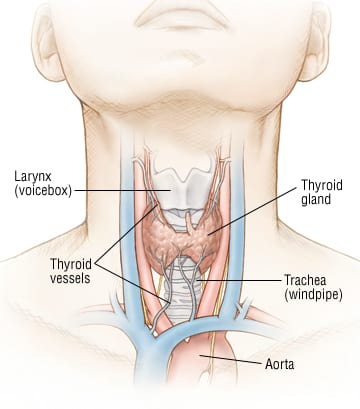
Image: PD

©2023 2 Minute Medicine, Inc. All rights reserved. No works may be reproduced without expressed written consent from 2 Minute Medicine, Inc. Inquire about licensing here. No article should be construed as medical advice and is not intended as such by the authors or by 2 Minute Medicine, Inc.

Previous Post

#VisualAbstract: Apixaban for Stroke Prevention in Subclinical Atrial Fibrillation

Next Post

Pomegranate peel extract improved the metabolic profile of patients with non-alcoholic fatty liver disease

RelatedReports

An older woman looks thoughtfully to the side, with dumbbells, running shoes, and a bottle of supplements nearby, suggesting themes of exercise and health in geriatrics.
Chronic Disease

An electronic health record tool for exercise prescription may reduce fall rate among older adults

October 24, 2026
A woman using a red light therapy device while seated, surrounded by workout equipment and papers, suggesting engagement in wellness practices.
Chronic Disease

Optogenetic therapy may partially restore vision in retinitis pigmentosa

October 23, 2026
A calendar, a specimen jar, and a brush are depicted alongside a microscopic view of cervical cells, indicating cervical cancer screening.
All Specialties

An artificial intelligence system for human papillomavirus-positive dual stain cervical cancer screening reads p16-Ki67 slides

October 23, 2026
A man walking along a path surrounded by healthy food options, sporting shoes, a heart illustration, and urban scenery, indicating lifestyle changes for cardiovascular health.
Cardiology

Elevated low-density lipoprotein cholesterol is a risk factor for atherosclerotic disease irrespective of familial hypercholesterolemia status

October 22, 2026
Next Post
Obeticholic acid for the treatment of non-alcoholic steatohepatitis

Pomegranate peel extract improved the metabolic profile of patients with non-alcoholic fatty liver disease

Variation in NICU antibiotic use not linked to outcomes

Ceftobiprole non-inferior to daptomycin in treating Staphylococcus aureus bacteremia

Reduced gestational weight gain with lifestyle intervention

Combined aerobic and strength training most effective for improving diabetes outcomes

✦ EvidencePulse™ by 2 Minute Medicine 2026 evidence scan 3 reports You asked top stroke trials 2026 Synthesizing medical evidence... Top 2026 stroke trial results: OCEANIC — ischemic stroke: 6.2% vs 8.4% OPTION* — mRS 0–1: 43.6% vs 34.2% ORIENTAL* — mRS 0–2: 58.6% vs 46.6% *Higher sICH in intervention arms Participants randomizedN OCEANIC 12,327 OPTION 570 ORIENTAL 564 Ask about guidelines or landmark trials... Try EvidencePulse™ Get the signal. Try it now → Physician-trained medical AI by 2 Minute Medicine

2MM+ All Access

Full details →
$4.99 /month

3-day free trial · cancel anytime

  • ✓100+ physician-written reports
  • ✓EvidencePulse™ + HypeCheck™
  • ✓Ad-free reading + newsletters
Start 3-day free trial

Then $4.99/month. Manage renewal in your account.

NPI Lookup · Free

Look up any US clinician

Search by name or NPI number, live from the CMS NPI Registry.

  • OIG exclusion check
  • Licenses and specialties
  • No account needed
Open NPI Lookup →

2 Minute Medicine® is an award winning, physician-run, expert medical media company. Our content is curated, written and edited by practicing health professionals who have clinical and scientific expertise in their field of reporting. Our editorial management team is comprised of highly-trained MD physicians. Join numerous brands, companies, and hospitals who trust our licensed content.

Recent Reports

  • An electronic health record tool for exercise prescription may reduce fall rate among older adults
  • Optogenetic therapy may partially restore vision in retinitis pigmentosa
  • An artificial intelligence system for human papillomavirus-positive dual stain cervical cancer screening reads p16-Ki67 slides
License Content
Terms of Use | Disclaimer
Cookie Policy

Get the app

Read 2 Minute Medicine on iPhone, iPad and Android.

Download on the App StoreGet it on Google Play
QR code for www.2minutemedicine.com/app
On a computer? Scan this with your phone’s camera.
2MM+ All Access Full details →

The medical literature, distilled daily.

Monthly plan selected: $4.99 /month.

$4.99/month

3-day free trial · cancel anytime

Start 3-day free trial

Then $4.99/month. Manage renewal in your account.

Yearly plan selected: $49.90 /year.

$49.90/year

2 months free

Start 3-day free trial

Then $49.90/year.

Membership benefits

  • ✓100+ physician-written reports
  • ✓AI EvidencePulse™ + HypeCheck™
  • ✓Ad-free reading + newsletters
  • ✓NPI watchlist + bulk NPI verification

Already a member? Sign in

  • Get the app
  • About
  • Specialties
    • All Specialties, All Recent Reports
    • Cardiology
    • Chronic Disease
    • Dermatology
    • Emergency
    • Endocrinology
    • Gastroenterology
    • Imaging and Intervention
    • Infectious Disease
    • Nephrology
    • Neurology
    • Obstetrics
    • Oncology
    • Ophthalmology
    • Pediatrics
    • Pharma
    • Preclinical
    • Psychiatry
    • Public Health
    • Pulmonology
    • Rheumatology
    • Surgery
    • Rewinds
    • The Scan
  • EvidencePulse™
  • HypeCheck™
  • AI News
  • Classics™
    • 2MM+ Online Access
    • Paperback and Ebook
  • Tools
    • NPI Registry Lookup
    • RVU Search
  • Partners
    • License Content
    • Advertise with Us
No Result
View All Result

© 2026 2 Minute Medicine, Inc. - Physician-written medical news.