• About
  • Masthead
  • License Content
  • Advertise
  • Submit Press Release
  • RSS/Email List
  • 2MM Podcast
  • Write for us
  • Contact Us
2 Minute Medicine
No Result
View All Result

No products in the cart.

SUBSCRIBE
  • Specialties
    • All Specialties, All Recent Reports
    • Cardiology
    • Chronic Disease
    • Dermatology
    • Emergency
    • Endocrinology
    • Gastroenterology
    • Imaging and Intervention
    • Infectious Disease
    • Nephrology
    • Neurology
    • Obstetrics
    • Oncology
    • Ophthalmology
    • Pediatrics
    • Pharma
    • Preclinical
    • Psychiatry
    • Public Health
    • Pulmonology
    • Rheumatology
    • Surgery
  • Tools
    • EvidencePulse™
    • RVU Search
    • NPI Registry Lookup
  • Pharma
  • AI News
  • The Scan+
  • Classics™+
    • 2MM+ Online Access
    • Paperback and Ebook
  • Rewinds
  • Partners
    • License Content
    • Submit Press Release
    • Advertise with Us
  • Account
    • Subscribe
    • Sign-in
    • My account
2 Minute Medicine
  • Specialties
    • All Specialties, All Recent Reports
    • Cardiology
    • Chronic Disease
    • Dermatology
    • Emergency
    • Endocrinology
    • Gastroenterology
    • Imaging and Intervention
    • Infectious Disease
    • Nephrology
    • Neurology
    • Obstetrics
    • Oncology
    • Ophthalmology
    • Pediatrics
    • Pharma
    • Preclinical
    • Psychiatry
    • Public Health
    • Pulmonology
    • Rheumatology
    • Surgery
  • Tools
    • EvidencePulse™
    • RVU Search
    • NPI Registry Lookup
  • Pharma
  • AI News
  • The Scan+
  • Classics™+
    • 2MM+ Online Access
    • Paperback and Ebook
  • Rewinds
  • Partners
    • License Content
    • Submit Press Release
    • Advertise with Us
  • Account
    • Subscribe
    • Sign-in
    • My account
SUBSCRIBE
2 Minute Medicine
Subscribe
Home All Specialties Imaging and Intervention

Subarachnoid hemorrhage patients receive significant radiation exposure
bys25qthea
September 14, 2013
in Imaging and Intervention, Neurology, Surgery
Reading Time: 3 mins read
0
Share on FacebookShare on Twitter

Image: PD

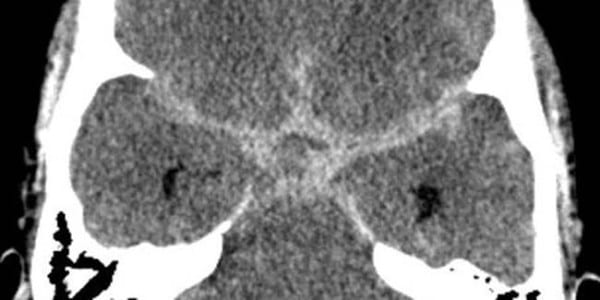
1. Mean cumulative radiation dose during hospitalization for SAH was 2.76 Gy per patient, with the top quartile of patients receiving an average of 14 scans.  

2. 1 in 3 repeat non-contrast head CTs (NCHCT) did not show any change, and almost 1 in 5 were performed prior to morning rounds. 

Evidence Rating Level: 2 (Good) 

Study Rundown: A confluence of more readily available imaging technology combined with more aggressive imaging protocols for treating SAH has caused a significant increase in the imaging-related exposure to radiation in patients with SAH. With previous studies finding that even low dose radiation (1.5 Gy) to the head can increase risk for neural tumors (8-fold), this studies results of mean radiation exposure of 2.67 Gy per each patient, and up to a scan every other day in the top quartile of patients with SAH should prompt consideration and evaluation of current imaging protocols. Findings of increased frequency of scans in the morning and high rates of repeat scans with no change suggest that imaging is being utilized for surveillance purposes rather than tracking clinical change. Finally, provider understanding of radiation exposure tied to repeat imaging is severely lacking, and this is a clear avenue to address increased radiation exposure as a result of over-utilization. The main limitations of this study are its retrospective nature, and a lack of long-term data to truly evaluate the morbidity associated with increased radiation exposure.

Click to read the study in Journal of Neurosurgery

RELATED REPORTS

Postoperative radioiodine ablation does not reduce cancer recurrence following thyroidectomy

Liberal transfusion strategy not beneficial in treating aneurysmal subarachnoid hemorrhage

Humanetics Corporation: BIO 300 Synthetic Genistein Nanosuspension May Protect Against Negative Effects Of Radiation Therapy In Lung Cancer Patients

Relevant Reading: Tumors of the brain and nervous system after radiotherapy in childhood 

Study Co-Author, Dr. Judith Wong, M.D., talks to 2 Minute Medicine: Department of Neurosurgery, Brigham and Women’s Hospital and Harvard Medical School. 

 “The goal of our study is to evaluate if there is an opportunity for reduction in imaging-related radiation dose without a change in the quality of treatment for patients with subarachnoid hemorrhage. The mean cumulative doses experienced by the patients in our study, especially those in the upper quartile, were high.

Given that a large percentage of scans seem to be taken for routine surveillance purposes, and most physicians surveyed seemed to lack knowledge about the potential impact of imaging-related radiation exposure, this study highlights the importance of accurate assessment of radiation exposure as a quality improvement target.”

In-Depth [retrospective review]: The study analyzed imaging and radiation dosing data for 77 patients with SAH treated at a single institution from 2009-2010. The mean cumulative radiation dose per hospitalization per patient was 2.76 Gy. Subgroup analysis of the top quartile of patients in terms of total radiation dose revealed a mean cumulative radiation dose of 4.78 Gy, and mean number of CT/CTA scans of 14. This averages out to a scan every other day for the top quartile of patients. 17% of NCHCTs were performed in the early morning hours, presumably right before morning rounds, and 34% repeat NCHCTs demonstrated no significant change when compared to prior. The majority of neurosurgeons surveyed incorrectly estimated the amount of radiation delivered per study, and 65% did not believe radiation exposure was an important factor to consider when ordering imaging.  

By Allen Ho

© 2013 2minutemedicine.com. All rights reserved. No works may be reproduced without written consent from 2minutemedicine.com. Disclaimer: We present factual information directly from peer reviewed medical journals. No post should be construed as medical advice and is not intended as such by the authors or by 2minutemedicine.com. PLEASE SEE A HEALTHCARE PROVIDER IN YOUR AREA IF YOU SEEK MEDICAL ADVICE OF ANY SORT. Content is produced in accordance with fair use copyrights solely and strictly for the purpose of teaching, news and criticism. No benefit, monetary or otherwise, is realized by any participants or the owner of this domain. 
 

Tags: radiationSAHSubarachnoid hemorrhage
Previous Post

Genetic mutations may protect infants born to drug-using mothers

Next Post

Aggressive resuscitation may increase morbidity in blunt trauma patients

RelatedReports

Selpercatinib may provide an effective response against RET-mutated thyroid cancer
Chronic Disease

Postoperative radioiodine ablation does not reduce cancer recurrence following thyroidectomy

July 31, 2025
Combined MRI and NIH stroke scores may predict stroke prognosis
Emergency

Liberal transfusion strategy not beneficial in treating aneurysmal subarachnoid hemorrhage

March 18, 2025
Lessons from real-world implementation of lung cancer screening
Pharma

Humanetics Corporation: BIO 300 Synthetic Genistein Nanosuspension May Protect Against Negative Effects Of Radiation Therapy In Lung Cancer Patients

May 19, 2024
Variability in interpretation of breast biopsy slides associated with low verification of atypia and ductal carcinoma in situ
Dermatology

Radiation treatment for breast cancer may increase incidence of nonkeratinocyte skin cancer

March 13, 2024
Next Post
Aggressive resuscitation may increase morbidity in blunt trauma patients

Aggressive resuscitation may increase morbidity in blunt trauma patients

Reducing surgical complications may increase costs

Patient satisfaction a poor surgical quality indicator

Azithromycin is not associated with increased cardiovascular death in low-risk groups

Azithromycin is not associated with increased cardiovascular death in low-risk groups

2 Minute Medicine® is an award winning, physician-run, expert medical media company. Our content is curated, written and edited by practicing health professionals who have clinical and scientific expertise in their field of reporting. Our editorial management team is comprised of highly-trained MD physicians. Join numerous brands, companies, and hospitals who trust our licensed content.

Recent Reports

  • α-synuclein pathology is associated with faster tau accumulation in women
  • Higher ultra-processed food intake in young children is associated with adverse early behavioural outcomes
  • Lower preoperative serum calcium is associated with increased risk of postoperative complications in patients undergoing orthopedic surgery
License Content
Terms of Use | Disclaimer
Cookie Policy
Privacy Statement (EU)
Disclaimer

© 2025 2 Minute Medicine, Inc. - Physician-written medical news.

  • Specialties
    • All Specialties, All Recent Reports
    • Cardiology
    • Chronic Disease
    • Dermatology
    • Emergency
    • Endocrinology
    • Gastroenterology
    • Imaging and Intervention
    • Infectious Disease
    • Nephrology
    • Neurology
    • Obstetrics
    • Oncology
    • Ophthalmology
    • Pediatrics
    • Pharma
    • Preclinical
    • Psychiatry
    • Public Health
    • Pulmonology
    • Rheumatology
    • Surgery
  • Tools
    • EvidencePulse™
    • RVU Search
    • NPI Registry Lookup
  • Pharma
  • AI News
  • The Scan
  • Classics™
    • 2MM+ Online Access
    • Paperback and Ebook
  • Rewinds
  • Partners
    • License Content
    • Submit Press Release
    • Advertise with Us
  • Account
    • Subscribe
    • Sign-in
    • My account
No Result
View All Result

© 2025 2 Minute Medicine, Inc. - Physician-written medical news.