• About
  • Masthead
  • License Content
  • Advertise
  • Submit Press Release
  • RSS/Email List
  • 2MM Podcast
  • Write for us
  • Contact Us
2 Minute Medicine
No Result
View All Result

No products in the cart.

SUBSCRIBE
  • Specialties
    • All Specialties, All Recent Reports
    • Cardiology
    • Chronic Disease
    • Dermatology
    • Emergency
    • Endocrinology
    • Gastroenterology
    • Imaging and Intervention
    • Infectious Disease
    • Nephrology
    • Neurology
    • Obstetrics
    • Oncology
    • Ophthalmology
    • Pediatrics
    • Pharma
    • Preclinical
    • Psychiatry
    • Public Health
    • Pulmonology
    • Rheumatology
    • Surgery
  • Tools
    • EvidencePulse™
    • RVU Search
    • NPI Registry Lookup
  • Pharma
  • AI News
  • The Scan+
  • Classics™+
    • 2MM+ Online Access
    • Paperback and Ebook
  • Rewinds
  • Partners
    • License Content
    • Submit Press Release
    • Advertise with Us
  • Account
    • Subscribe
    • Sign-in
    • My account
2 Minute Medicine
  • Specialties
    • All Specialties, All Recent Reports
    • Cardiology
    • Chronic Disease
    • Dermatology
    • Emergency
    • Endocrinology
    • Gastroenterology
    • Imaging and Intervention
    • Infectious Disease
    • Nephrology
    • Neurology
    • Obstetrics
    • Oncology
    • Ophthalmology
    • Pediatrics
    • Pharma
    • Preclinical
    • Psychiatry
    • Public Health
    • Pulmonology
    • Rheumatology
    • Surgery
  • Tools
    • EvidencePulse™
    • RVU Search
    • NPI Registry Lookup
  • Pharma
  • AI News
  • The Scan+
  • Classics™+
    • 2MM+ Online Access
    • Paperback and Ebook
  • Rewinds
  • Partners
    • License Content
    • Submit Press Release
    • Advertise with Us
  • Account
    • Subscribe
    • Sign-in
    • My account
SUBSCRIBE
2 Minute Medicine
Subscribe
Home All Specialties Chronic Disease

Postoperative radioiodine ablation does not reduce cancer recurrence following thyroidectomy
byNeel MistryandTeddy Guo
July 31, 2025
in Chronic Disease, Endocrinology, Surgery
Reading Time: 2 mins read
0
Share on FacebookShare on Twitter

1. The 5-year recurrence-free survival was comparable with ablation and without ablation.

2. Adverse events were comparable in both groups, with no treatment-related deaths.

Evidence Rating Level: 1 (Excellent)

Study Rundown: Differentiated thyroid cancer is often treated with radioiodine ablation after total thyroidectomy, but its benefit in low-risk cases remains unclear. Avoiding ablation could reduce side effects and costs without harming outcomes. This randomized controlled trial aimed to determine if omitting radioiodine ablation is non-inferior to ablation in low-risk patients. The primary outcome of this study was 5-year recurrence-free survival, while key secondary outcome was safety. According to study results, recurrence-free survival was similar in both groups, demonstrating non-inferiority. Although this study was well done, it was limited by low recurrence rates and few higher-risk patients, reducing subgroup analysis power.

Click to read the study in The Lancet

Relevant Reading: Thyroidectomy without Radioiodine in Patients with Low-Risk Thyroid Cancer

RELATED REPORTS

A robotic approach for ventral hernia repair may improve postoperative outcomes

2 Minute Medicine Rewind May 4, 2026

Prednisone may have bone and cardiovascular benefits compared to hydrocortisone therapy in adrenal insufficiency

In-depth [randomized controlled trial]: Between Jun 26, 2012, and Mar 18, 2020, 504 patients were assessed for eligibility across 33 UK centers. Included were patients. Included were patients with low-risk differentiated thyroid cancer who had complete resection after total thyroidectomy and pathologic stage pT1–pT3 or pT3a disease. Altogether, 480 patients (249 without ablation and 231 with ablation) were included in the final analysis. The primary outcome of 5-year recurrence-free survival showed non-inferiority for omitting ablation (97.9% without ablation vs. 96.3% with ablation, p for non-inferiority < 0.05). The secondary outcome of safety showed similar adverse event rates between groups, with fatigue, lethargy, and dry mouth being most common. Findings from this study suggest that low-risk patients can safely forgo postoperative radioiodine, reducing hospitalization, side effects, and costs.

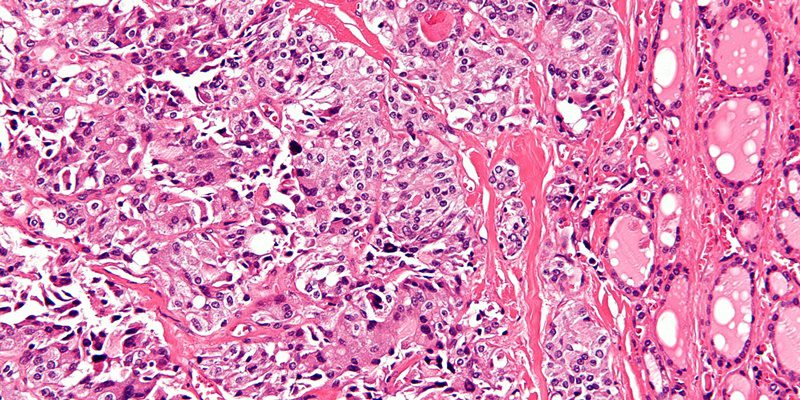
Image: PD

©2025 2 Minute Medicine, Inc. All rights reserved. No works may be reproduced without expressed written consent from 2 Minute Medicine, Inc. Inquire about licensing here. No article should be construed as medical advice and is not intended as such by the authors or by 2 Minute Medicine, Inc.

Tags: endocrinologyradiationradioiodine ablationradiotherapySurgerythyroid cancerthyroid malignancyThyroidectomy
Previous Post

Retinal scans powered by AI predict stroke risk over a decade

Next Post

Mitapivat improves clinical outcomes in patients with non-transfusion dependent thalassemia

RelatedReports

Single-site robotic cholecystectomy is safe, but technically challenging
Gastroenterology

A robotic approach for ventral hernia repair may improve postoperative outcomes

May 4, 2026
Systematic review examines benefits and adverse effects of cannabinoid therapy
Weekly Rewinds

2 Minute Medicine Rewind May 4, 2026

May 4, 2026
Implementation of pneumococcal vaccine programs linked to decreased antibiotic prescription
Chronic Disease

Prednisone may have bone and cardiovascular benefits compared to hydrocortisone therapy in adrenal insufficiency

April 3, 2026
Sleep duration inversely related to childhood type 2 diabetes risk makers
Cardiology

Lilly’s retatrutide achieves significant weight loss and A1C reduction in Phase 3 trial

April 3, 2026
Next Post
Ticagrelor reversal agent provides immediate and sustained effect

Mitapivat improves clinical outcomes in patients with non-transfusion dependent thalassemia

Large proportion of late preterm infants and older admitted to the NICU

Preterm infants have increased risk of psychological and physical health comorbidities at adulthood

Microsoft’s MAI‑DxO outperforms doctors on complex case sets

2 Minute Medicine® is an award winning, physician-run, expert medical media company. Our content is curated, written and edited by practicing health professionals who have clinical and scientific expertise in their field of reporting. Our editorial management team is comprised of highly-trained MD physicians. Join numerous brands, companies, and hospitals who trust our licensed content.

Recent Reports

  • Delayed initiation of antibiotic therapy is associated with worse outcomes in skin and soft tissue infections
  • Caloric restriction and intermittent fasting show mixed human longevity data
  • Selective serotonin reuptake inhibitors may reduce risk of total joint arthroplasty in osteoarthritis
License Content
Terms of Use | Disclaimer
Cookie Policy
Privacy Statement (EU)
Disclaimer
  • Specialties
    • All Specialties, All Recent Reports
    • Cardiology
    • Chronic Disease
    • Dermatology
    • Emergency
    • Endocrinology
    • Gastroenterology
    • Imaging and Intervention
    • Infectious Disease
    • Nephrology
    • Neurology
    • Obstetrics
    • Oncology
    • Ophthalmology
    • Pediatrics
    • Pharma
    • Preclinical
    • Psychiatry
    • Public Health
    • Pulmonology
    • Rheumatology
    • Surgery
  • Tools
    • EvidencePulse™
    • RVU Search
    • NPI Registry Lookup
  • Pharma
  • AI News
  • The Scan
  • Classics™
    • 2MM+ Online Access
    • Paperback and Ebook
  • Rewinds
  • Partners
    • License Content
    • Submit Press Release
    • Advertise with Us
  • Account
    • Subscribe
    • Sign-in
    • My account
No Result
View All Result

© 2026 2 Minute Medicine, Inc. - Physician-written medical news.