



• About
  • Masthead
  • License Content
  • Advertise
  • Submit Press Release
  • RSS/Email List
  • 2MM Podcast
  • Write for us
  • Contact Us
2 Minute Medicine
No Result
View All Result

No products in the cart.

SUBSCRIBE
  • Specialties
    • All Specialties, All Recent Reports
    • Cardiology
    • Chronic Disease
    • Dermatology
    • Emergency
    • Endocrinology
    • Gastroenterology
    • Imaging and Intervention
    • Infectious Disease
    • Nephrology
    • Neurology
    • Obstetrics
    • Oncology
    • Ophthalmology
    • Pediatrics
    • Pharma
    • Preclinical
    • Psychiatry
    • Public Health
    • Pulmonology
    • Rheumatology
    • Surgery
  • Tools
    • EvidencePulse™
    • RVU Search
    • NPI Registry Lookup
  • Pharma
  • AI News
  • The Scan+
  • Classics™+
    • 2MM+ Online Access
    • Paperback and Ebook
  • Rewinds
  • Partners
    • License Content
    • Submit Press Release
    • Advertise with Us
  • Account
    • Subscribe
    • Sign-in
    • My account
2 Minute Medicine
  • Specialties
    • All Specialties, All Recent Reports
    • Cardiology
    • Chronic Disease
    • Dermatology
    • Emergency
    • Endocrinology
    • Gastroenterology
    • Imaging and Intervention
    • Infectious Disease
    • Nephrology
    • Neurology
    • Obstetrics
    • Oncology
    • Ophthalmology
    • Pediatrics
    • Pharma
    • Preclinical
    • Psychiatry
    • Public Health
    • Pulmonology
    • Rheumatology
    • Surgery
  • Tools
    • EvidencePulse™
    • RVU Search
    • NPI Registry Lookup
  • Pharma
  • AI News
  • The Scan+
  • Classics™+
    • 2MM+ Online Access
    • Paperback and Ebook
  • Rewinds
  • Partners
    • License Content
    • Submit Press Release
    • Advertise with Us
  • Account
    • Subscribe
    • Sign-in
    • My account
SUBSCRIBE
2 Minute Medicine
Subscribe
Home All Specialties Chronic Disease

Transdermal estrogen shows similar cardiovascular safety profile to traditional luteinizing hormone therapy in patients with prostate cancer

byMichael PratteandTeddy Guo
February 25, 2021
in Chronic Disease, Oncology
Reading Time: 3 mins read
0
Share on FacebookShare on Twitter

1. The use of long-term transdermal estrogen for castration therapy for prostate cancer showed no difference in cardiovascular events versus current standard of care.

2. Gynecomastia was significantly more common in the transdermal estrogen group than standard of care group.

Evidence Rating Level: 1 (Excellent)

Study Rundown: Prostate cancer, an ongoing major cause of morbidity and mortality worldwide, is usually treated with a combination of androgen suppression and radiotherapy in metastatic disease. Traditionally, androgen suppression was achieved with luteinizing hormone-releasing hormone agonists (LHRHAs), as exogenous estrogen administration was found to cause an increase in cardiovascular thromboembolic events. Exogenous estrogen administration, however, has many benefits, including avoiding the deleterious effects of estrogen depletion cause by LHRHA therapy. It is thought that a transdermal application of exogenous estrogen would bypass hepatic first-pass metabolism, thereby avoiding the increased risk of thromboembolic events. This phase 2/3, randomized trial, an offshoot of the PATCH trial, sought to compare the effects of long-term transdermal estradiol versus LHRHA therapy on cardiovascular events in individuals with locally advanced or metastatic prostate cancer. Overall, after a follow-up of 36 months, no major differences in cardiovascular events were seen between the LHRHA and estrogen groups. Time to first cardiovascular event between groups also did not differ significantly, and cardiovascular events over time remained stable in both groups. Finally, no evidence was found that increasing levels of estradiol patch use were associated with an increased risk for cardiovascular event. Gynecomastia was more common in the transdermal estrogen group, while hot flushes were more common among those receiving LHRHA. A notable strength of this study is its relatively lengthy follow-up time. It is important to point out, however, that this study was not blinded; additionally, one could argue that their median follow-up time of 3.9 years might not be sufficient to detect long-term thromboembolic events. The authors, however, intend to continue follow-up as their PATCH trial continues.

Click to read the study in The Lancet

Relevant Reading: Cardiovascular outcomes in patients with locally advanced and metastatic prostate cancer treated with luteinising-hormone-releasing-hormone agonists or transdermal oestrogen: the randomised, phase 2 MRC PATCH trial (PR09)

RELATED REPORTS

Adults with attention-deficit/hyperactivity disorder are at higher risk of poor long-term adherence to antihypertensive therapy

150 minutes of moderate-to-vigorous physical activity per week may reduce cardiovascular risk in overweight or obese adults

New model enhances prediction of prostate cancer-specific mortality

In-Depth [randomized controlled trial]: This phase 2/3, randomized, multicenter trial took place at 52 sites in the United Kingdom and recruited a total of 1694 patients with locally advanced or metastatic prostate cancer. Patients were randomized to either receive exogenous transdermal estradiol or LHRHA therapy (n1=904, n2=790, respectively). The primary outcome was to determine the proportion of patients experienced cardiovascular events or sudden/unexpected deaths. By three months, both groups had comparable levels of testosterone levels below the desired value of 1.7nmol/L: 93% amongst LHRHA and 93% amongst estradiol groups. A total of 157 eligible cardiovascular events occurred. No baseline factors besides current or former smoking status was related to cardiovascular events. Rates of cardiovascular events were similar between groups (7% of patients in LHRHA vs 8% in estradiol groups experienced a cardiovascular endpoint event, including sudden death with no post-mortem explanation). At 36 months, the cardiovascular event rate in the LHRHA group was 7.2% (95% CI = 5.4-9.6) and in the estradiol group 8.0% (95% CI 6.2-10.4), with an absolute difference between rates of 0.8%. Rates of cardiovascular events also remained constant; at 12 months, rates were 2.8% (95% CI= 1.8-4.2) for LHRHA vs. 2.8% for estradiol (95% CI = 1.9-4.2%).

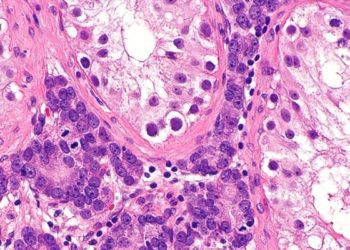
Image: PD

©2020 2 Minute Medicine, Inc. All rights reserved. No works may be reproduced without expressed written consent from 2 Minute Medicine, Inc. Inquire about licensing here. No article should be construed as medical advice and is not intended as such by the authors or by 2 Minute Medicine, Inc.

Tags: cardiovascular eventscardiovascular riskestrogengynecomastialuteinizing hormone-releasing hormone (LHRH)luteinizing hormone-releasing hormone agonistmetastatic prostate cancerprostateprostate cancertransdermal estrogen
Previous Post

#VisualAbstract: Female sex may be associated with better overall and disease-specific survival in Merkel cell carcinoma

Next Post

#VisualAbstract Asciminib is shown to be safe and efficacious in clinical practice for treating patients with chronic myeloid leukemia

RelatedReports

Primary care physicians play substantial role in pediatric mental health
Cardiology

Adults with attention-deficit/hyperactivity disorder are at higher risk of poor long-term adherence to antihypertensive therapy

February 27, 2026
Many new pediatric asthma cases attributable to obesity
Cardiology

150 minutes of moderate-to-vigorous physical activity per week may reduce cardiovascular risk in overweight or obese adults

February 26, 2026
Testosterone replacement in male cancer survivors helps improve body composition
Oncology

New model enhances prediction of prostate cancer-specific mortality

January 12, 2026
Prevalence of hypertension among adolescents varies by race and BMI
Cardiology

Intensive systolic blood pressure management may reduce hypertension-mediated retinal microvascular damage in patients with high cardiovascular risk

January 13, 2026
Next Post
#VisualAbstract Asciminib is shown to be safe and efficacious in clinical practice for treating patients with chronic myeloid leukemia

#VisualAbstract Asciminib is shown to be safe and efficacious in clinical practice for treating patients with chronic myeloid leukemia

Adding daratumumab increases progression free survival in multiple myeloma

Idecabtagene vicleucel showed a response in pre-treated multiple myeloma

Parents often unaware of adolescents’ suicidal thoughts

Xanomeline-trospium treatment showed improvement in patients with schizophrenia

2 Minute Medicine® is an award winning, physician-run, expert medical media company. Our content is curated, written and edited by practicing health professionals who have clinical and scientific expertise in their field of reporting. Our editorial management team is comprised of highly-trained MD physicians. Join numerous brands, companies, and hospitals who trust our licensed content.

Recent Reports

  • Sivelestat may reduce the risk of acute respiratory distress syndrome in adults undergoing cardiac surgery
  • Delivery of evidence-based interventions for alcohol misuse in the emergency department is low
  • New guidelines limit hypertension treatment in adults over 65
License Content
Terms of Use | Disclaimer
Cookie Policy
Privacy Statement (EU)
Disclaimer

© 2025 2 Minute Medicine, Inc. - Physician-written medical news.

  • Specialties
    • All Specialties, All Recent Reports
    • Cardiology
    • Chronic Disease
    • Dermatology
    • Emergency
    • Endocrinology
    • Gastroenterology
    • Imaging and Intervention
    • Infectious Disease
    • Nephrology
    • Neurology
    • Obstetrics
    • Oncology
    • Ophthalmology
    • Pediatrics
    • Pharma
    • Preclinical
    • Psychiatry
    • Public Health
    • Pulmonology
    • Rheumatology
    • Surgery
  • Tools
    • EvidencePulse™
    • RVU Search
    • NPI Registry Lookup
  • Pharma
  • AI News
  • The Scan
  • Classics™
    • 2MM+ Online Access
    • Paperback and Ebook
  • Rewinds
  • Partners
    • License Content
    • Submit Press Release
    • Advertise with Us
  • Account
    • Subscribe
    • Sign-in
    • My account
No Result
View All Result

© 2025 2 Minute Medicine, Inc. - Physician-written medical news.