Upacicalcet reduced parathyroid hormone in hemodialysis patients with secondary hyperparathyroidism in PATH-1 and PATH-2

1. Upacicalcet increased the proportion of hemodialysis patients achieving ≥30% reductions in intact parathyroid hormone (iPTH) versus placebo in both trials.
2. Serious and gastrointestinal adverse event rates were similar between groups, while asymptomatic hypocalcemia was more frequent with upacicalcet.
Evidence Rating Level: 2 (Good)
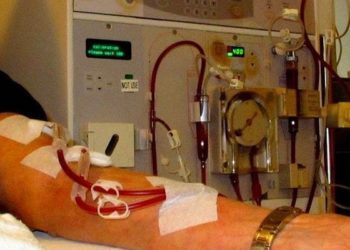
2MM Brief: Secondary hyperparathyroidism is a complication evaluated in patients with end-stage kidney disease receiving hemodialysis. Pathalys Pharma reported results from PATH-1 and PATH-2, two identical randomized, double-blind, placebo-controlled phase 3 trials that were simultaneously published in the Journal of the American Society of Nephrology and presented at American Society of Nephrology (ASN) Kidney Week 2026. The studies enrolled 359 and 409 participants, respectively, who were randomized in a 2:1 ratio to intravenous upacicalcet or placebo following each hemodialysis session for 27 weeks. Upacicalcet dosing was titrated during the first 19 weeks, and Weeks 22-27 constituted the efficacy assessment period. The primary endpoint was the proportion of participants achieving ≥30% reductions in iPTH from mean baseline. In PATH-1, this endpoint was reached by 42.1% (101/239) of participants receiving upacicalcet versus 16.8% (20/120) receiving placebo; in PATH-2, the corresponding proportions were 43.5% (118/271) and 17.4% (24/138). Prespecified secondary endpoints also favored upacicalcet: ≥50% reductions in iPTH occurred in 27.2% (65/239) versus 7.5% (9/120) in PATH-1 and 25.1% (68/271) versus 4.3% (6/138) in PATH-2; mean iPTH of 150-300 pg/mL occurred in 18.8% (45/239) versus 8.3% (10/120) and 17.3% (47/271) versus 4.3% (6/138), respectively. Serious and gastrointestinal adverse event rates were similar between treatment groups. Asymptomatic hypocalcemia occurred in 23% versus 8% in PATH-1 and 19% versus 11% in PATH-2, while symptomatic hypocalcemia occurred in 0.8% (2/239) and 2% (6/271) with upacicalcet versus 0.0% with placebo in both trials. Additional analyses suggested reductions in fibroblast growth factor 23 (FGF23) and bone-turnover markers. Interpretation is limited to the 27-week double-blind period and the reported analyses; upacicalcet remains investigational and has not been approved by the U.S. Food and Drug Administration. These two randomized trials support further evaluation of upacicalcet for iPTH reduction in hemodialysis patients with secondary hyperparathyroidism.
© 2026 2 Minute Medicine, Inc. All rights reserved. No part of this article may be reproduced, distributed or transmitted in any form or by any means without the prior written permission of 2 Minute Medicine, Inc. To license this content, contact 2 Minute Medicine, Inc. This article is for informational and educational purposes only; it is not medical advice and does not replace the judgment of a qualified healthcare professional.
Image: © 2 Minute Medicine
RelatedReports





 Get the app