

An intradialytic exercise intervention did not improve dialysis adequacy
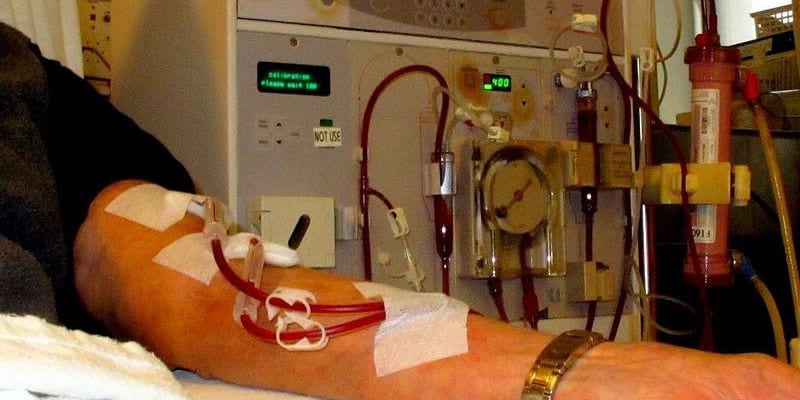
1. A 4-week intradialytic pedalling exercise program was safe and well-tolerated but did not significantly improve dialysis adequacy measures.
Evidence Rating Level: 1 (Excellent)
This randomized controlled trial evaluated whether intradialytic pedaling exercise improves dialysis adequacy in adults with chronic kidney disease undergoing maintenance hemodialysis. Eighty-four patients from dialysis centers were randomized to either an intervention group performing supervised stationary pedaling during dialysis sessions or a control group receiving standard hemodialysis care. The intervention consisted of light-intensity cycling performed for 30 minutes during 4-hour dialysis sessions, three times weekly for four weeks. Dialysis adequacy was assessed using Kt/V, blood urea nitrogen (BUN), and weight changes before and after dialysis. After withdrawals, 79 participants completed the study. Although both groups demonstrated significant reductions in body weight and BUN over time, there were no statistically significant differences between the intervention and control groups in Kt/V, blood urea levels, or weight reduction. Post-intervention mean Kt/V values were 1.163 in the exercise group and 1.115 in controls (p=0.11). No adverse events related to exercise were reported, indicating that intradialytic cycling was feasible and safe in this patient population. The authors concluded that a short-term, low-intensity intradialytic pedaling program did not significantly improve dialysis adequacy. They suggested that longer-duration and higher-intensity exercise interventions may be required to produce clinically meaningful improvements in solute clearance and patient outcomes.
Click here to read this study in PLOS One
Image: PD
©2026 2 Minute Medicine, Inc. All rights reserved. No works may be reproduced without expressed written consent from 2 Minute Medicine, Inc. Inquire about licensing here. No article should be construed as medical advice and is not intended as such by the authors or by 2 Minute Medicine, Inc.




![Metformin treats Fragile X syndrome symptoms in mice [PreClinical]](https://www.2minutemedicine.com/wp-content/uploads/2017/07/Metformin_500mg_Tablets-75x75.jpg)


