

Patient Basics: Chemical Injury to the Eye
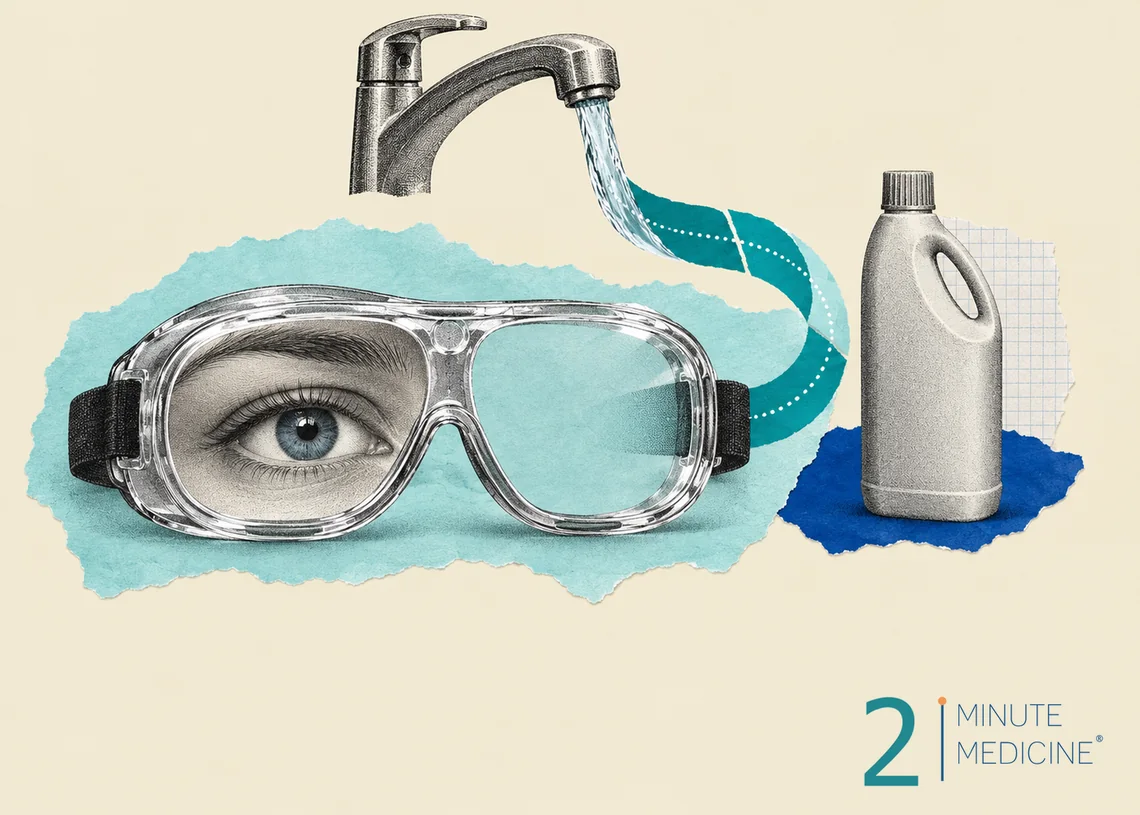
A chemical eye injury happens when a liquid, powder or spray, such as bleach, a drain opener or cement, gets into the eye. It is an emergency. The most important thing is to start rinsing the eye with lots of clean water right away and keep going for at least 15 to 20 minutes, then get emergency care. The first few minutes make the biggest difference to how well the eye recovers.
Key points
- Rinse the eye with water the moment it happens. Don’t wait to find special eyewash or to call for help first.
- Alkalis, such as lye, drain and oven cleaners, ammonia, lime, cement and plaster, usually cause the worst damage.
- After rinsing, call 911 or go to an emergency department. Bring the product or its label.
- For advice about the chemical, call Poison Help at 1-800-222-1222.
- Wearing safety glasses or goggles prevents most of these injuries.
What causes a chemical eye injury
Chemical eye injuries happen at home, at work and outdoors. Products fall into a few groups:
- Alkalis (bases): drain cleaners, oven cleaners, lye, ammonia, some dishwasher detergents, lime, cement, mortar, plaster and the powder released by car airbags. They soak quickly into the eye and keep damaging tissue until washed out.
- Acids: car battery acid, toilet bowl cleaners, some pool chemicals and rust removers. They often cause less deep damage, but strong acids can still harm vision.
- Irritants: pepper spray, hand sanitizer, soap, shampoo and many household sprays. They sting and cause redness but usually don’t cause lasting harm.
Young children are at risk from laundry and dishwasher detergent pods, which can burst and squirt into the eyes. Workers in construction, cleaning, manufacturing and labs are also at higher risk.
Symptoms
- Pain, burning or stinging
- Redness and watering
- Blurry vision or loss of vision
- Trouble keeping the eye open, and sensitivity to light
- Swelling of the eyelids
- A white or cloudy look to the eye in severe injuries
An eye that looks white rather than red after a chemical splash can be a sign of a severe injury.
First aid for bleach and other chemicals in the eye
- Rinse at once. Use clean, lukewarm tap water. Put your face under a gentle faucet or shower, or slowly empty a glass or water bottle over the eye. If you’re at work, use the emergency eyewash station.
- Hold the eye open. Use your fingers to keep the lids apart, and roll the eye up, down and side to side so water reaches all of it. Tilt your head so the water runs away from the other eye.
- Keep rinsing for at least 15 to 20 minutes. Rinse longer for strong alkalis like drain cleaner, lye or cement. Use a timer, because it will feel much longer than it is.
- Take out contact lenses after you start rinsing, if they don’t wash out on their own. Then keep rinsing.
- Brush off powders first. For dry lime or cement, gently brush any powder off the face and lids, then rinse.
- Get help. Have someone call 911 or Poison Help at 1-800-222-1222 while you keep rinsing. Then go to an emergency department. Keep rinsing on the way if you can.
If the chemical also got on your skin, take off soaked clothing and rinse the skin with plenty of water too.
Don’t rub the eye. Don’t put anything but water or sterile saline in the eye. Vinegar, milk and other home remedies can make the injury worse. Don’t put a patch over the eye before a doctor sees it.
Treatment at the hospital
- More rinsing. The team will give numbing eye drops and keep flushing with sterile fluid, sometimes through a special contact lens attached to tubing.
- Checking the pH. A small paper strip touched to the eye shows whether any acid or alkali is left. Rinsing continues until it is back to normal.
- Removing particles trapped under the eyelids
- A full eye exam, using a special microscope and a yellow dye to show damage to the clear front of the eye (cornea)
- Medicines, such as antibiotic drops to prevent infection, steroid drops to calm inflammation, drops to ease pain and spasm, lubricating drops, and sometimes vitamin C or the antibiotic doxycycline to support healing
Severe injuries need care from an eye specialist. Treatment may include a layer of special tissue (amniotic membrane) placed over the eye to help it heal, or later surgery such as a cornea transplant or a stem cell graft to rebuild the eye’s surface.
Recovery after a chemical eye injury
Mild injuries usually heal within a few days to a week with drops. More serious burns can cause scarring of the cornea, dry eye, high pressure in the eye (glaucoma), cataracts, eyelid scarring or permanent vision loss. You’ll need follow-up visits, sometimes for months, to watch for these problems.
Preventing chemical eye injuries
- Wear safety glasses or goggles when using strong cleaners, mixing cement or plaster, working on a car battery, or doing yard work with chemicals.
- Read labels and point spray nozzles away from your face.
- Never mix cleaning products. Bleach mixed with ammonia or acids releases toxic gases.
- Keep chemicals and detergent pods in their original containers, locked or up high, out of children’s reach.
- Know where the eyewash station is at work.
When to get help
After any chemical splash to the eye, rinse first, then call 911 or go to an emergency department. This is especially urgent for alkalis, any change in vision, or pain that doesn’t ease after rinsing.
For a mild irritant like soap or shampoo, rinse well. See a doctor if pain, redness, blurry vision or light sensitivity lasts more than an hour or so, or if you’re not sure what the product was.
Common questions about chemical eye injuries
What should I do if I get bleach in my eye?
Rinse it right away with lukewarm tap water for at least 15 to 20 minutes, holding the lids open, then call Poison Help at 1-800-222-1222. Household bleach often causes stinging and redness, but it can burn the surface of the eye. Get emergency care if pain, redness or blurry vision doesn’t ease after rinsing.
What are the symptoms of pesticide in the eye?
Pesticides can cause stinging, redness, watering and blurry vision. Some insecticides can also be absorbed into the body and cause tiny pupils, sweating, drooling, vomiting, muscle twitching or trouble breathing. Rinse the eye for 15 to 20 minutes, call Poison Help, and call 911 for any breathing trouble.
Can a chemical burn permanently change my eye?
Most mild and moderate burns heal without changing how the eye looks. Severe alkali burns, such as from strong ammonia or lye, can scar the cornea and eyelids, and very rarely the eye shrinks after a devastating injury. Fast rinsing and regular follow-up with an eye specialist lower these risks.
Questions to ask your doctor
- How badly was my eye damaged?
- Which drops should I use, and for how long?
- Will my vision fully recover?
- What warning signs should make me come back right away?
- How often will I need follow-up visits?
Learn more
- Eye emergencies (MedlinePlus, U.S. National Library of Medicine)
- Chemical burn or reaction (MedlinePlus, U.S. National Library of Medicine)
This guide is general information and doesn’t replace advice from your own doctor. Last updated October 2026.






 Get the app