

Patient Basics: Glaucoma
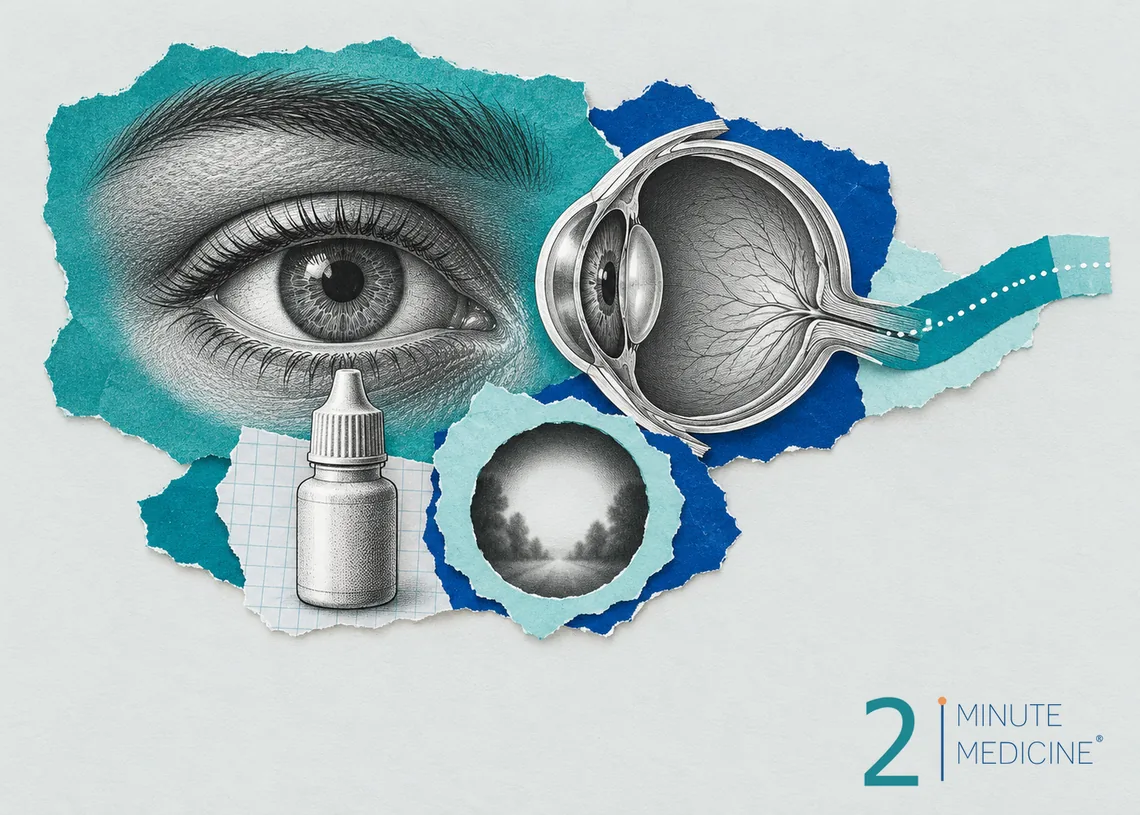
Glaucoma is a group of eye diseases that damage the optic nerve, the cable that carries signals from the eye to the brain. It is often linked to high pressure inside the eye. The most common type has no symptoms until side vision is already lost, and that loss can’t be reversed. Regular eye exams can find glaucoma early, and treatment can stop or slow the damage.
Key points
- Open-angle glaucoma, the most common type, is painless and slow. Many people with it don’t know they have it.
- Acute angle-closure glaucoma comes on suddenly with eye pain, blurred vision and headache. It is an emergency.
- Your risk is higher if you are over 60, have a family history, or are Black or Hispanic.
- A full eye exam with dilating drops is the only way to find glaucoma early.
- Daily eye drops, laser treatment or surgery lower eye pressure and protect the vision you have.
What happens in glaucoma
The front of the eye is filled with a clear fluid that is always being made and drained. It drains through a spongy mesh in the angle where the iris (the colored part) meets the clear front window of the eye (the cornea). When fluid can’t drain well, pressure builds up. Over time, the pressure damages the nerve fibers of the optic nerve. Some people get nerve damage even with normal eye pressure, possibly because of poor blood flow to the nerve or a nerve that is more easily hurt.
Vision loss usually starts at the edges and creeps inward. The brain fills in the gaps, so people often don’t notice until a lot of vision is gone.
Types of glaucoma
Open-angle glaucoma
The drainage angle stays open, but the mesh drains fluid too slowly. Pressure rises gradually over years. There is no pain, redness or early change in vision. It usually affects both eyes, often one more than the other.
Angle-closure glaucoma (closed-angle glaucoma)
The iris bulges forward and blocks the drainage angle. If the angle closes all at once, pressure shoots up within hours. Symptoms of an attack include sudden severe eye pain, a red eye, blurred vision, rainbow halos around lights, headache, and nausea or vomiting. Without fast treatment, it can cause blindness in that eye within days. Angle closure can also develop slowly with no symptoms. It is more common in people of East Asian descent, in women and in people who are farsighted.
Other types
- Normal-tension glaucoma. The optic nerve is damaged even though eye pressure is in the normal range.
- Secondary glaucoma. Another problem raises eye pressure, such as an eye injury, inflammation inside the eye (uveitis), long-term steroid use, diabetes that affects the eye, or flaky material that clogs the drain (pseudoexfoliation).
- Childhood glaucoma. Rare. Signs in a baby include large, cloudy eyes, watering and sensitivity to light.
Who is at risk of glaucoma
- People over 60, or over 40 for Black adults
- People who are Black or Hispanic, who have a higher risk of open-angle glaucoma
- Anyone with a parent, brother or sister who has glaucoma
- People with high eye pressure or a thin cornea
- People who are very nearsighted (open-angle) or farsighted (angle-closure)
- People with diabetes, a past eye injury, or long-term use of steroid medicines, including steroid eye drops and inhalers
How glaucoma is diagnosed
An eye doctor (ophthalmologist or optometrist) does a comprehensive eye exam. It may include:
- Eye pressure test (tonometry). After numbing drops, a small probe or a puff of air measures the pressure.
- Dilated eye exam. Drops widen the pupils so the doctor can look at the optic nerve.
- Visual field test. You look straight ahead and press a button when you see small lights at the edges of your vision.
- OCT scan. A quick, painless light scan measures the thickness of the nerve fiber layer.
- Gonioscopy. A special lens on the eye lets the doctor see whether the drainage angle is open or narrow.
- Corneal thickness (pachymetry), which affects how pressure readings are read.
Glaucoma usually can’t be found with a simple vision check or a test for glasses.
Glaucoma treatment
Treatment lowers eye pressure to protect the optic nerve. It can’t bring back vision that is already lost.
- Eye drops. These are the most common treatment. Types include latanoprost and similar drops, timolol, brimonidine, dorzolamide and netarsudil. Side effects can include red or stinging eyes, longer eyelashes and darkening of the iris. Timolol can slow the heart or worsen asthma, so tell your eye doctor about heart and lung problems.
- Laser treatment. Selective laser trabeculoplasty (SLT) helps the drain work better. It is a quick office procedure and is often offered as a first treatment instead of drops. For angle closure, a laser makes a tiny opening in the iris (laser iridotomy) so fluid can flow around the blockage.
- Medicine implants. A tiny implant placed in the eye can slowly release pressure-lowering medicine for months.
- Surgery. Options include making a new drainage path (trabeculectomy), placing a small tube, or minimally invasive glaucoma surgery (MIGS), often done during cataract surgery. Removing the natural lens can also open a narrow angle.
An acute angle-closure attack is treated right away with drops, pills or IV medicine to bring the pressure down, followed by laser treatment.
Living with glaucoma
- Use your drops every day, even when your eyes feel fine. Set a phone reminder.
- After each drop, close your eye and press gently on the inner corner for a minute or two. This keeps more medicine in the eye.
- Wait about 5 minutes between different drops.
- Keep every follow-up visit, since pressure and nerve checks guide changes.
- Tell all your doctors you have glaucoma. Some medicines for colds, allergies, bladder problems or seizures can trigger angle closure in eyes with narrow angles.
When to see a doctor
Get a full eye exam by age 40, then as often as your eye doctor advises. People at higher risk need checks more often. See an eye doctor sooner if your side vision seems narrower or you bump into things more.
Get emergency care for sudden eye pain with blurred vision, halos around lights, headache, or nausea and vomiting.
Common questions about glaucoma
What does it mean to be a glaucoma suspect?
A glaucoma suspect has signs that raise the risk of glaucoma, such as high eye pressure, an optic nerve that looks suspicious, or narrow drainage angles, but no damage yet. This is sometimes called preglaucoma. There are no symptoms. You’ll have regular tests, and some people start treatment to lower their risk.
Can glaucoma be cured?
No, but it can be controlled. Treatment can’t restore lost vision, but lowering eye pressure stops or slows further damage in most people. Glaucoma is lifelong, so treatment and checkups continue for good. Finding it early gives you the best chance of keeping your sight.
Will glaucoma make me go blind?
Most people with treated glaucoma keep useful vision for life. Blindness is more likely when glaucoma is found late, when treatment is skipped, or with an untreated angle-closure attack. Using your drops and keeping your appointments protect your vision.
Is glaucoma inherited?
It often runs in families. Having a parent, brother or sister with open-angle glaucoma raises your risk several times over. If glaucoma runs in your family, tell your eye doctor and get checked earlier and more often, even if your vision seems normal.
Questions to ask your doctor
- What type of glaucoma do I have, and how advanced is it?
- What is my target eye pressure?
- Would laser treatment be a good option instead of drops?
- Are any of my other medicines a problem for my eyes?
- Should my family members be checked?
Learn more
This guide is general information and doesn’t replace advice from your own doctor. Last updated October 2026.
RelatedReports






 Get the app