

Patient Basics: Gastroesophageal Reflux Disease (GERD)
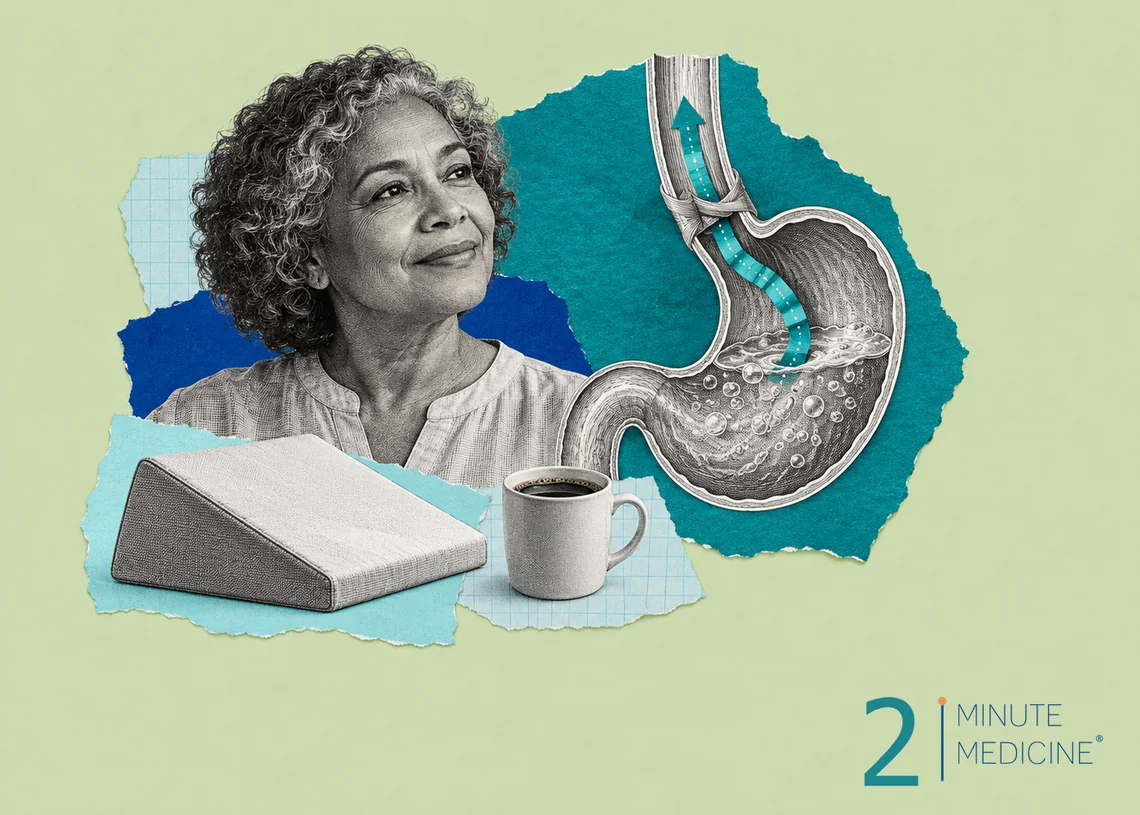
Gastroesophageal reflux disease (GERD) means stomach acid often washes back up into the esophagus (food pipe). The most common symptom is heartburn, a burning feeling behind the breastbone, often after meals or when lying down. Changes in daily habits and medicine control GERD for most people. Trouble swallowing, weight loss or black stools need a prompt visit to your doctor.
Key points
- Almost everyone gets heartburn now and then. Doctors call it GERD when it happens twice a week or more, or when acid has damaged the esophagus.
- Losing extra weight, raising the head of your bed and not eating late at night all help.
- Medicines called proton pump inhibitors (PPIs), such as omeprazole, are the strongest acid reducers.
- Years of GERD can change the cells inside the food pipe (Barrett’s esophagus), which then needs regular checks.
- Chest pain can come from the heart. Call 911 if you’re not sure.
What causes GERD
A ring of muscle at the bottom of the esophagus (the lower esophageal sphincter) works like a one-way valve. It opens to let food into the stomach, then closes. In GERD, this valve is weak or relaxes at the wrong times, so acid and stomach contents flow back up.
Things that make reflux more likely include:
- Extra weight, especially around the belly
- A hiatal hernia, where the top of the stomach pushes up through the diaphragm into the chest
- Pregnancy
- Smoking and alcohol
- Large or fatty meals, and lying down soon after eating
- Foods that bother some people, such as chocolate, peppermint, coffee, citrus, tomatoes and spicy food
- Some medicines, including certain blood pressure drugs, sleeping pills and some asthma medicines
Pain relievers such as ibuprofen and naproxen don’t cause reflux, but they can irritate the esophagus and stomach and make symptoms worse.
GERD symptoms
- Heartburn
- Sour or bitter liquid or food coming up into your throat or mouth (regurgitation)
- Chest pain
- Trouble swallowing, or a feeling of a lump in the throat
- A long-lasting cough, hoarse voice, sore throat or frequent throat clearing
- Asthma that gets worse, especially at night
- Burping, bloating or nausea
Symptoms are often worse at night and can disturb sleep. In healthy babies, spitting up is normal and usually stops by about age 1. A baby who isn’t gaining weight, vomits forcefully or seems in pain during feeds should see a doctor.
How GERD is diagnosed
Doctors can often diagnose GERD from your symptoms. A common first step is to try a PPI for 4 to 8 weeks and see if you feel better. You may need tests if you have warning signs, if medicine doesn’t help, or if surgery is being considered:
- Upper endoscopy. A thin, lighted tube is passed through the mouth to look at the esophagus and stomach and take tiny tissue samples. You get medicine to make you sleepy.
- pH monitoring. A tiny capsule clipped to the wall of the esophagus, or a thin tube through the nose, measures acid for 1 to 4 days while you go about your life.
- Esophageal manometry. This measures how well the muscles of the esophagus squeeze. It’s usually done before surgery.
- Barium swallow. You drink a chalky liquid, and X-rays show its path down the esophagus.
GERD treatment
Daily habits
- If you’re overweight, losing even some weight can greatly reduce symptoms.
- Raise the head of your bed by 6 to 8 inches with blocks under the legs or a foam wedge under the mattress. Extra pillows don’t work as well.
- Finish eating at least 2 to 3 hours before you lie down.
- Eat smaller meals, and notice which foods set off your symptoms.
- Stop smoking and cut back on alcohol.
- Some people find that lying on their left side helps at night.
Heartburn and GERD medicines
- Antacids such as calcium carbonate (Tums) ease heartburn within minutes, but the relief is short.
- Alginate products form a foam layer on top of the stomach contents that helps keep them down.
- H2 blockers such as famotidine (Pepcid) lower acid for several hours. They work well taken before a meal that usually causes trouble.
- PPIs, such as omeprazole, esomeprazole, lansoprazole and pantoprazole, block acid most strongly and help the esophagus heal. Take them 30 to 60 minutes before breakfast. After symptoms are under control, your doctor may lower the dose or try stopping.
- Vonoprazan is a newer type of acid blocker. It’s an option for some adults.
PPIs and H2 blockers are also used for gastritis (an irritated stomach lining) and ulcers. Pantoprazole and other PPIs usually cause only mild side effects, such as headache, diarrhea or nausea. PPIs are safe for most people, but long-term use has been linked to a few problems, such as low magnesium or vitamin B12 and some gut infections. Don’t stop a PPI on your own after long use. Heartburn can bounce back for a few weeks, and your doctor can help you taper off.
Surgery and procedures
Surgery may help people whose symptoms continue despite medicine, who have a large hiatal hernia, or who don’t want to take medicine for life. The most common operation, fundoplication, wraps the top of the stomach around the lower esophagus to strengthen the valve. It’s usually done through small cuts. Another option places a small ring of magnetic beads around the lower esophagus. Some centers offer procedures done through the mouth with an endoscope. For people with severe obesity, gastric bypass surgery often helps reflux.
Possible complications
- Esophagitis: swelling, sores and sometimes bleeding in the esophagus
- Narrowing (stricture) from scar tissue, which makes food stick
- Barrett’s esophagus: acid slowly changes the cells lining the food pipe, which makes cancer there slightly more likely. People with Barrett’s take a PPI and have endoscopy checks every few years. If early precancer changes appear, the abnormal lining can be removed or burned away through an endoscope.
- Damage to tooth enamel, ongoing cough and hoarseness
When to see a doctor
- Heartburn twice a week or more
- You’ve needed over-the-counter medicine for more than two weeks
- Symptoms keep coming back even with medicine
- Trouble or pain with swallowing, or food that sticks
- Weight loss you can’t explain, or vomiting that won’t stop
- Vomit that looks like blood or coffee grounds, or black, tarry stools
Call 911 for chest pain with shortness of breath, sweating, or pain spreading to the arm, back or jaw. A heart attack can feel like heartburn.
Common questions about GERD
How can I get rid of acid reflux fast?
An antacid such as calcium carbonate neutralizes stomach acid within minutes, and an alginate product can help keep acid down. Sip water, stay upright and loosen a tight waistband. At night, raise your head and lie on your left side. If you need quick fixes more than twice a week, see your doctor.
Can GERD cause chest pain?
Yes. Reflux can cause burning or squeezing pain in the center of the chest, between the breasts, that is often worse when lying down or after a meal. Heart pain can feel the same, especially in women. Call 911 for chest pain with shortness of breath, sweating, or pain in the arm, back or jaw.
Can GERD be cured?
For most people, GERD is controlled rather than cured. Weight loss and changes in eating habits clear symptoms for some, while others need medicine for years. Surgery such as fundoplication can stop reflux for a long time, though some people need medicine again later. Your doctor can help you find the lowest treatment that works.
Questions to ask your doctor
- Are my symptoms from GERD, or could something else be causing them?
- Do I need an endoscopy?
- Which medicine should I take, and for how long?
- Can I lower my dose or stop my PPI, and how should I do it?
- Would surgery or another procedure be a good choice for me?
Learn more
- Acid reflux (GER and GERD) in adults (National Institute of Diabetes and Digestive and Kidney Diseases)
- GERD (MedlinePlus, U.S. National Library of Medicine)
This guide is general information and doesn’t replace advice from your own doctor. Last updated October 2026.






 Get the app