
• About
  • Masthead
  • License Content
  • Advertise
  • RSS/Email List
  • 2MM Podcast
  • Write for us
  • Contact Us
2 Minute Medicine
No Result
View All Result

No products in the cart.

Sign in
SUBSCRIBE
  • About
  • Specialties
    • All Specialties, All Recent Reports
    • Cardiology
    • Chronic Disease
    • Dermatology
    • Emergency
    • Endocrinology
    • Gastroenterology
    • Imaging and Intervention
    • Infectious Disease
    • Nephrology
    • Neurology
    • Obstetrics
    • Oncology
    • Ophthalmology
    • Pediatrics
    • Pharma
    • Preclinical
    • Psychiatry
    • Public Health
    • Pulmonology
    • Rheumatology
    • Surgery
  • Tools+
    • EvidencePulse™
    • HypeCheck™
    • NPI Registry Lookup
    • RVU Search
  • Pharma
  • AI Roundup
  • The Scan+
  • Classics™+
    • 2MM+ Online Access
    • Paperback and Ebook
  • Rewinds
  • Partners
    • License Content
    • Advertise with Us
2 Minute Medicine
  • About
  • Specialties
    • All Specialties, All Recent Reports
    • Cardiology
    • Chronic Disease
    • Dermatology
    • Emergency
    • Endocrinology
    • Gastroenterology
    • Imaging and Intervention
    • Infectious Disease
    • Nephrology
    • Neurology
    • Obstetrics
    • Oncology
    • Ophthalmology
    • Pediatrics
    • Pharma
    • Preclinical
    • Psychiatry
    • Public Health
    • Pulmonology
    • Rheumatology
    • Surgery
  • Tools+
    • EvidencePulse™
    • HypeCheck™
    • NPI Registry Lookup
    • RVU Search
  • Pharma
  • AI Roundup
  • The Scan+
  • Classics™+
    • 2MM+ Online Access
    • Paperback and Ebook
  • Rewinds
  • Partners
    • License Content
    • Advertise with Us
Sign in
SUBSCRIBE
2 Minute Medicine
Sign in
Subscribe
✦ EvidencePulse™ by 2 Minute Medicine 2026 evidence scan 3 reports You asked top stroke trials 2026 Synthesizing medical evidence... Top 2026 stroke trial results: OCEANIC — ischemic stroke: 6.2% vs 8.4% OPTION* — mRS 0–1: 43.6% vs 34.2% ORIENTAL* — mRS 0–2: 58.6% vs 46.6% *Higher sICH in intervention arms Participants randomizedN OCEANIC 12,327 OPTION 570 ORIENTAL 564 Ask about guidelines or landmark trials... ↑ Try EvidencePulse™ Ask the evidence.
Get the signal.
Try it now → Physician-trained medical AI by 2 Minute Medicine
Home Health A to Z

Patient Basics: Computed Tomography (CT Scan) for Back Problems

byHarvard Health
November 30, 2014
in Health A to Z
Reading Time: 3 mins read
Share on FacebookShare on TwitterShare on LinkedIn

Originally published by Harvard Health.

What is the test?

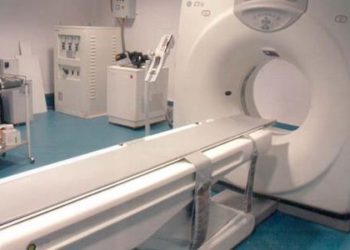
CT scans are pictures taken by a specialized x-ray machine. The machine circles your body and scans an area from every angle within that circle. The machine measures how much the x-ray beams change as they pass through your body. It then relays that information to a computer, which generates a collection of black-and-white pictures, each showing a slightly different “slice” or cross-section of your internal structures. A CT scan of the back may view one or more of the three areas of the spine: the cervical spine (neck), thoracic spine (middle back), and lumbar spine (lower back).

Doctors can use a CT scan of the spine to examine the vertebrae in the spine for fractures, arthritis, or pinching of the nerves or spinal cord (spinal stenosis). Occasionally, doctors x-ray the pelvis to help diagnose the cause of back pain.

A CT scan of the spine can be combined with a test called a “myelogram” (discussed separately) to give a clear view of the spinal cord and places where the vertebral bones might be pinching it.

How do I prepare for the test?

If you will be receiving contrast dye during your study, it is appropriate for you to have a blood test to check your kidney function before the test. (A test that was done during the past six months may be adequate.) People who are taking the diabetes medication metformin (Glucophage) should discontinue this treatment for several days before a CT scan that includes contrast. If your doctor has special concerns about the health of your kidneys, you may be asked to take a protective medicine named n-acetylcysteine (Mucomyst) before the test.

Tell your doctor if you’re allergic to x-ray contrast dyes or if you may be pregnant.

RELATED REPORTS

AI scans detect pancreatic cancer years before clinical diagnosis

2MM: AI Roundup – Pancreatic Cancer Prediction Breakthrough, Retinal Stroke Risk Maps, Microsoft’s MAI‑DxO Diagnostic Upset, and Kenya’s AI Consult Real‑World Win [July 28th, 2025]

What happens when the test is performed?

The test is done in the radiology department of a hospital or in a diagnostic clinic. You wear a hospital gown and lie on your back on a table that can slide back and forth through the donut-shaped CT machine. If your test requires contrast dye, a technician or other health care professional will insert an IV and inject contrast dye through it. This dye outlines blood vessels and soft tissue to help them show up clearly on the pictures.

The technologist moves the table with a remote control to enable the CT machine to scan your body from all of the desired angles. You will be asked to hold your breath for a few seconds each time a new level is scanned. The technologist usually works the controls from an adjoining room, watching through a window and sometimes speaking to you through a microphone. A CT scan takes about 30–45 minutes. Although it’s not painful, you might find it uncomfortable if you don’t like to lie still for extended periods.

What risks are there from the test?

There are a few small risks. The contrast dye that is sometimes used in the test can damage your kidneys, especially if they are already impaired by disease. If kidney damage does occur, this is usually temporary. If you are allergic to the dye used in the procedure, you may get a rash or your blood pressure may drop enough to make you feel faint until you get treatment. As with x-rays, there is a small exposure to radiation. The amount of radiation from a CT scan is greater than that from regular x-rays, but it’s still too small to be likely to cause harm unless you’re pregnant.

Must I do anything special after the test is over?

Your doctor might recommend a follow-up test of your kidney function if you have received contrast and have a history of kidney function problems.

How long is it before the result of the test is known?

The radiologist can probably give you preliminary results within a day. The formal reading of your CT scan might take another day.
Tags: CT scan
Previous Post

Patient Basics: Colposcopy and Cervical Biopsy

Next Post

Patient Basics: Cystourethrogram

RelatedReports

Half of parents aware of CT radiation cancer risk
AI Roundup

AI scans detect pancreatic cancer years before clinical diagnosis

July 30, 2025
2 Minute Medicine AI Roundup editorial illustration
AI Roundup

2MM: AI Roundup – Pancreatic Cancer Prediction Breakthrough, Retinal Stroke Risk Maps, Microsoft’s MAI‑DxO Diagnostic Upset, and Kenya’s AI Consult Real‑World Win [July 28th, 2025]

July 28, 2025
ABCD2 Score: Predicting Early Stroke Risk After Transient Ischemic Attack (TIA) [Classics Series]
Critical, Emergent and Pulmonary Care Classics

PECARN Prediction rules for children at a low risk of clinically-important traumatic brain injury [Classics Series]

September 22, 2022
ABCD2 Score: Predicting Early Stroke Risk After Transient Ischemic Attack (TIA) [Classics Series]
Critical, Emergent and Pulmonary Care Classics

Thrombolysis harmful in acute ischemic strokes with large area of parenchymal hypoattenuation [Classics Series]

September 7, 2022
Next Post

Patient Basics: Carotid Ultrasound (Carotid Doppler)

Patient Basics: Chest X-Ray

Patient Basics: Chorionic Villus Sampling

✦ EvidencePulse™ by 2 Minute Medicine 2026 evidence scan 3 reports You asked top stroke trials 2026 Synthesizing medical evidence... Top 2026 stroke trial results: OCEANIC — ischemic stroke: 6.2% vs 8.4% OPTION* — mRS 0–1: 43.6% vs 34.2% ORIENTAL* — mRS 0–2: 58.6% vs 46.6% *Higher sICH in intervention arms Participants randomizedN OCEANIC 12,327 OPTION 570 ORIENTAL 564 Ask about guidelines or landmark trials... Try EvidencePulse™ Get the signal. Try it now → Physician-trained medical AI by 2 Minute Medicine

2MM+ All Access

Full details →
$4.99 /month

3-day free trial · cancel anytime

  • ✓100+ physician-written reports
  • ✓EvidencePulse™ + HypeCheck™
  • ✓Ad-free reading + newsletters
Start 3-day free trial

Then $4.99/month. Manage renewal in your account.

NPI Lookup · Free

Look up any US clinician

Search by name or NPI number, live from the CMS NPI Registry.

  • OIG exclusion check
  • Licenses and specialties
  • No account needed
Open NPI Lookup →

2 Minute Medicine® is an award winning, physician-run, expert medical media company. Our content is curated, written and edited by practicing health professionals who have clinical and scientific expertise in their field of reporting. Our editorial management team is comprised of highly-trained MD physicians. Join numerous brands, companies, and hospitals who trust our licensed content.

Recent Reports

  • 2 Minute Medicine Rewind October 19, 2026
  • Deep learning model demonstrates potential to generate an interpretable brain health biomarker from sleep electroencephalography
  • Low-pressure pneumoperitoneum does not reduce pain after laporoscopic cholecystectomy
License Content
Terms of Use | Disclaimer
Cookie Policy
2MM+ All Access Full details →

The medical literature, distilled daily.

Monthly plan selected: $4.99 /month.

$4.99/month

3-day free trial · cancel anytime

Start 3-day free trial

Then $4.99/month. Manage renewal in your account.

Yearly plan selected: $49.90 /year.

$49.90/year

2 months free

Start 3-day free trial

Then $49.90/year.

Membership benefits

  • ✓100+ physician-written reports
  • ✓AI EvidencePulse™ + HypeCheck™
  • ✓Ad-free reading + newsletters
  • ✓NPI watchlist + bulk NPI verification

Already a member? Sign in

  • About
  • Specialties
    • All Specialties, All Recent Reports
    • Cardiology
    • Chronic Disease
    • Dermatology
    • Emergency
    • Endocrinology
    • Gastroenterology
    • Imaging and Intervention
    • Infectious Disease
    • Nephrology
    • Neurology
    • Obstetrics
    • Oncology
    • Ophthalmology
    • Pediatrics
    • Pharma
    • Preclinical
    • Psychiatry
    • Public Health
    • Pulmonology
    • Rheumatology
    • Surgery
  • Tools
    • EvidencePulse™
    • HypeCheck™
    • NPI Registry Lookup
    • RVU Search
  • Pharma
  • AI Roundup
  • The Scan
  • Classics™
    • 2MM+ Online Access
    • Paperback and Ebook
  • Rewinds
  • Partners
    • License Content
    • Advertise with Us
No Result
View All Result

© 2026 2 Minute Medicine, Inc. - Physician-written medical news.