

Patient Basics: Hiatal Hernia
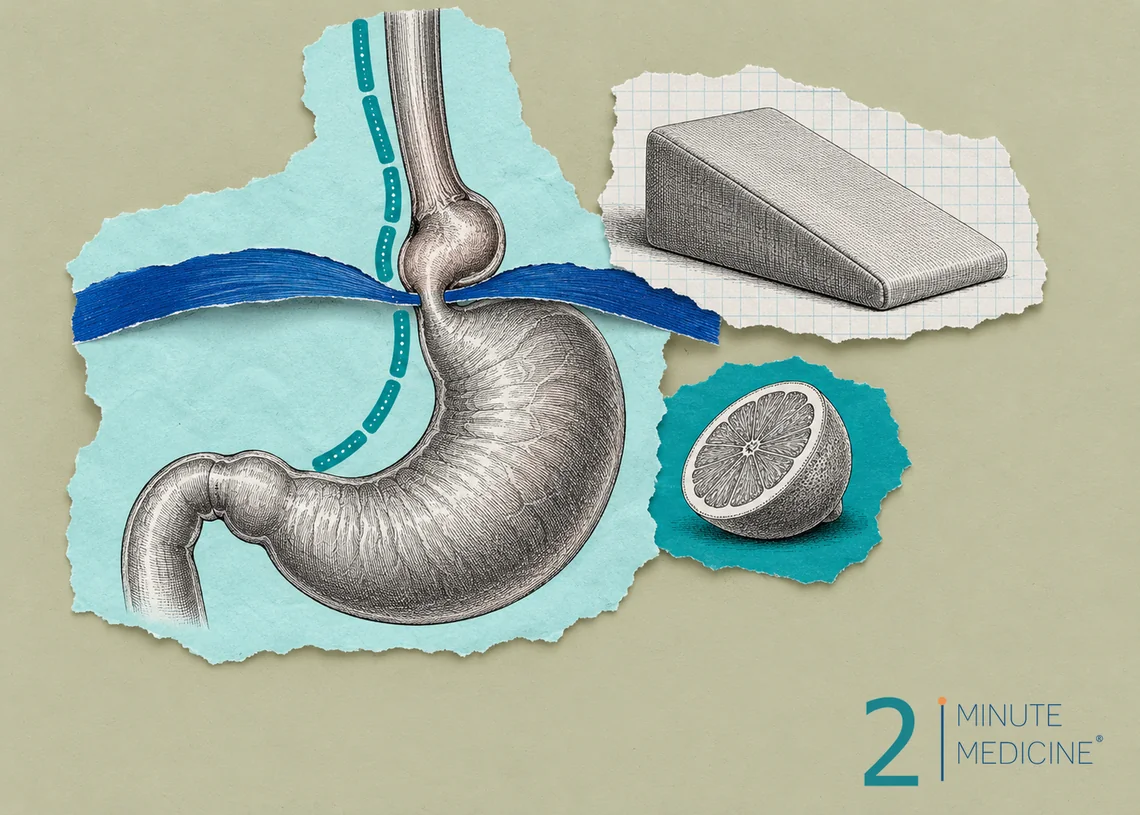
A hiatal hernia (also called a hiatus hernia) happens when the top of the stomach bulges up through a gap in the diaphragm, the dome-shaped muscle between the chest and belly. Small ones are common, particularly after age 50, and many cause no trouble at all. When they do cause symptoms, it’s usually heartburn and acid reflux, which lifestyle changes and medicine can often control.
Key points
- Most hiatal hernias are small “sliding” hernias that need no treatment unless they cause reflux.
- Heartburn, sour liquid coming up into the throat, and burping are the most common symptoms.
- Smaller meals, not lying down after eating, and raising the head of the bed can ease reflux.
- Acid-reducing medicines work well for most people. Surgery is for large hernias or symptoms that medicine can’t control.
- Severe chest pain, vomiting, or being unable to swallow needs emergency care.
What happens in a hiatal hernia
On its way down from the throat, the food pipe (esophagus) passes through a small gap in the diaphragm (the hiatus) to join the stomach. Normally the stomach sits below the diaphragm, and a ring of muscle at the bottom of the esophagus helps keep acid where it belongs. If the gap widens, part of the stomach can bulge up into the chest. People sometimes call this a stomach hernia or esophageal hernia.
- Sliding hiatal hernia. The place where the esophagus meets the stomach slides up into the chest, sometimes moving back and forth. This is by far the most common type. It weakens the barrier against acid, so reflux is common.
- Paraesophageal hernia. Part of the stomach squeezes up next to the esophagus. This type is less common. Over time it can grow large, and rarely it gets trapped or twisted, which is an emergency.
What causes a hiatal hernia
Often there’s no clear cause. Things that raise the risk include:
- Getting older, as the diaphragm’s tissues weaken
- Obesity
- Pregnancy
- Long-lasting cough, vomiting, or straining on the toilet
- Heavy lifting
- Past surgery near the stomach or esophagus
- Being born with a larger-than-usual gap
Hiatal hernia symptoms
- Heartburn, a burning feeling behind the breastbone, often after meals or when lying down
- Sour or bitter liquid coming up into the throat or mouth
- Burping, bloating or a feeling of fullness after small meals
- Chest pain or pressure
- Trouble swallowing, or food feeling stuck
- Hoarseness or a cough, especially at night
Large hernias can press on the lungs and cause shortness of breath after eating. They can also cause slow bleeding in the stomach lining, leading to low iron and tiredness.
Chest pain can come from the heart, too. Don’t assume chest pain is from a hernia, especially if it comes with exercise, shortness of breath or sweating.
How to tell if you have a hiatal hernia
Symptoms alone can’t confirm one, because reflux and chest pain have many causes. Hiatal hernias are often found by chance during tests for something else. To look for one, your doctor may order:
- Upper endoscopy. A thin, flexible scope passed through the mouth while you’re sedated shows the esophagus and stomach. It can also check for damage from acid.
- Barium swallow. You drink a chalky liquid, and X-rays show its path into the stomach.
- CT scan, which can show a large hernia in the chest
- Tests of the esophagus, which measure its squeezing and how much acid backs up. These are usually done before surgery.
Treatment
Daily habits
- Eat smaller meals, and don’t lie down for about 3 hours after eating.
- Raise the head of your bed 6 to 8 inches with blocks under the bedposts or a foam wedge. Extra pillows alone don’t work as well.
- Lose weight if you have extra weight around your middle.
- Stop smoking.
- Notice which foods and drinks trigger symptoms. Common ones are fatty or fried foods, chocolate, peppermint, coffee, alcohol, citrus, tomato and spicy food.
- Wear clothes that are loose around the waist.
Medicines
- Antacids give quick, short relief.
- H2 blockers such as famotidine reduce acid for several hours.
- Proton pump inhibitors (PPIs) such as omeprazole and pantoprazole are the strongest common acid reducers. They work best taken 30 to 60 minutes before a meal.
- Newer acid blockers such as vonoprazan may be an option when others don’t help enough.
If you need acid medicine for a long time, review it with your doctor now and then to make sure you’re on the lowest dose that works.
Surgery
Surgery may be advised for a large paraesophageal hernia that causes symptoms, for reflux that medicine doesn’t control, or for complications such as bleeding or trouble swallowing. Most operations are done through small cuts in the belly (laparoscopy). The surgeon pulls the stomach back down, tightens the gap in the diaphragm with stitches, and often wraps the top of the stomach around the lower esophagus to stop reflux. This wrap is called a fundoplication.
Most people stay in the hospital for a night or two. For a few weeks afterward, you’ll eat soft foods, as swallowing may feel tight while the area heals. Some people have bloating or find it hard to burp. Hernias can come back years later, especially large ones.
Lowering your risk
- Keep a healthy weight.
- Prevent constipation so you don’t strain.
- Lift with your legs and avoid very heavy loads.
- Don’t smoke.
When to see a doctor
- Heartburn more than twice a week, or heartburn that doesn’t ease with store-bought medicine
- Trouble swallowing, or food that feels stuck
- Weight loss you can’t explain
- Tiredness or signs of low iron
- Symptoms that come back as soon as you stop medicine
Get emergency care for sudden, severe chest or belly pain, retching or vomiting without being able to bring anything up, being unable to swallow even liquids, vomiting blood or material that looks like coffee grounds, or black, tarry stools. Call 911 for chest pain that could be a heart attack.
Common questions about hiatal hernias
Can a hiatal hernia kill you?
Very rarely. Small sliding hernias aren’t dangerous. A large paraesophageal hernia can, in rare cases, trap or twist the stomach and cut off its blood supply, which needs emergency surgery. Get emergency care for severe chest or belly pain with retching that brings nothing up.
Is a small hiatal hernia a problem?
Usually not. Many people with a small hiatal hernia have no symptoms and need no treatment. If it causes heartburn, the usual steps for reflux, such as smaller meals and acid-reducing medicine, generally control it. Small hernias rarely need surgery.
Why is a hiatal hernia worse when lying down?
Lying flat lets stomach acid flow up into the esophagus more easily, because gravity no longer holds it down. That’s why heartburn, coughing and a sour taste often get worse at night. Raising the head of the bed and not eating for about 3 hours before bed usually help.
Questions to ask your doctor
- What type of hiatal hernia do I have, and how large is it?
- Are my symptoms coming from the hernia or from something else?
- Which medicine should I take, and for how long?
- Would surgery help me?
- Which symptoms should make me go to the emergency department?
Learn more
- Hiatal hernia (MedlinePlus, U.S. National Library of Medicine)
- Hiatus hernia (NHS)
This guide is general information and doesn’t replace advice from your own doctor. Last updated October 2026.






 Get the app