

Patient Basics: Radionuclide Scanning
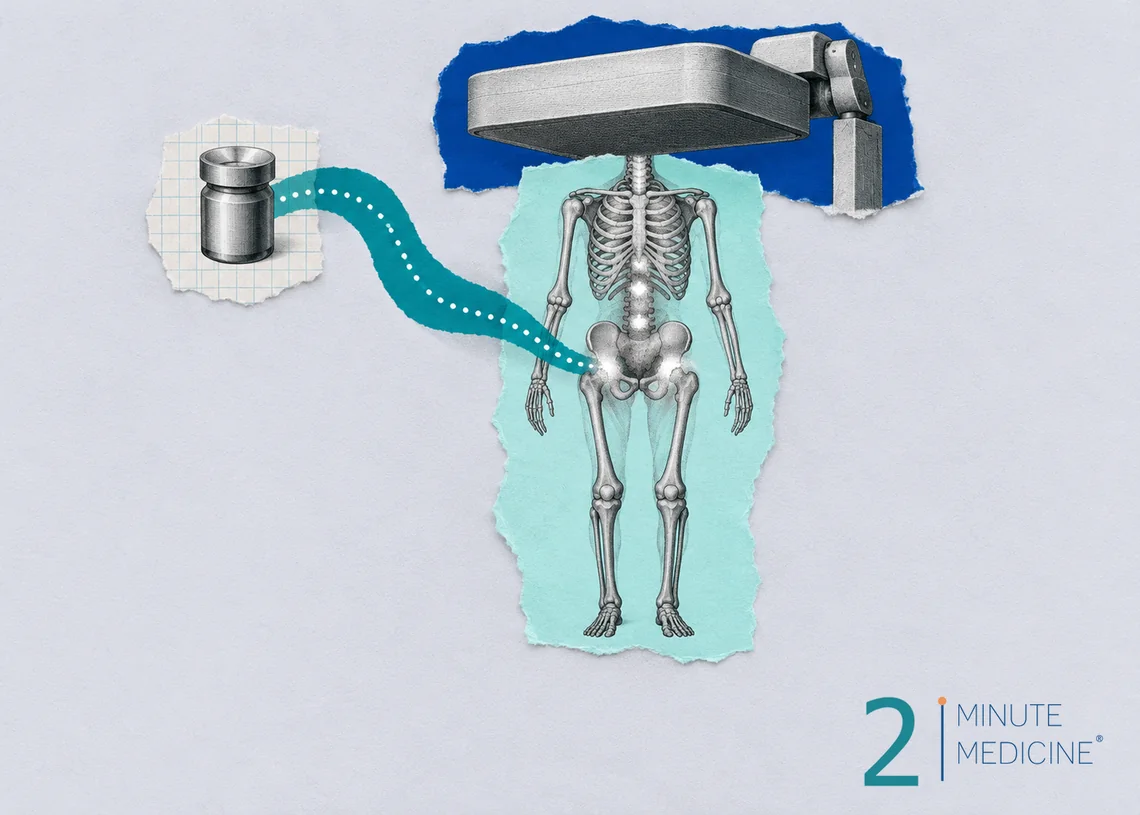
A radionuclide scan, also called a nuclear medicine scan or radioisotope scan, uses a tiny amount of a radioactive substance (a tracer) to show how an organ or tissue is working. The tracer goes into your body through a vein, by mouth or as a gas you breathe in, and a special camera picks up the energy it gives off. Most scans are painless, and the radiation dose is small.
Key points
- These scans show how a body part works, such as blood flow to the heart or how fast the stomach empties, as well as its shape.
- Common types include bone scans, heart stress scans, thyroid scans, lung scans, gallbladder (HIDA) scans and PET scans.
- Getting ready depends on the scan. Some need fasting, no caffeine, or a pause in certain medicines.
- Some scans need a wait of an hour or more between getting the tracer and taking the pictures.
- Tell the staff if you are pregnant, might be pregnant or are breastfeeding.
How a radionuclide scan works
Each tracer is made of a radioactive atom joined to a carrier that travels to a certain part of the body. Some carriers collect where bone is being rebuilt. Others follow blood flow, or are taken up by the thyroid or the liver. The most common tracer atom, technetium-99m, loses most of its radioactivity within a day.
A gamma camera then takes pictures as the tracer collects. It can rotate around you to build 3-D images (SPECT). A PET scan uses a different kind of tracer, often a sugar-like one called FDG, which builds up in very active cells such as many cancers. Many scanners combine these pictures with a CT scan, so doctors can see where the tracer is and what the tissue looks like at the same time.
Why a radionuclide scan is done
- Bone scan. Looks for cancer that has spread to bone, small fractures that don’t show on X-rays, bone infection, or the cause of unexplained bone pain.
- Heart scan (nuclear stress test). Compares blood flow to the heart muscle at rest and during exercise to look for blocked arteries.
- Thyroid scan. Helps find the cause of an overactive thyroid and checks lumps (nodules) in the gland.
- Lung scan (V/Q scan). Looks for blood clots in the lungs. It’s often used during pregnancy or when someone can’t have CT dye.
- HIDA scan. Shows how well the gallbladder fills and empties, and whether bile flows freely.
- Kidney scan. Measures how much work each kidney does and whether urine drains well.
- Gastric emptying study. Times how fast food leaves the stomach, for example in gastroparesis (a slow stomach).
- PET scan. Finds and stages many cancers and checks how well treatment is working. It’s also used for some heart, memory and seizure problems.
- DaT scan. Shows the dopamine nerve endings in the brain, to help tell Parkinson’s disease apart from other causes of tremor. Pictures are taken a few hours after the tracer.
Larger doses can also treat disease, such as radioactive iodine for an overactive thyroid.
Getting ready for a radionuclide scan
- Tell the staff if you are pregnant or might be. Most scans are put off until after pregnancy unless they are truly needed.
- If you are breastfeeding, ask whether to pump and store milk ahead of time. For some tracers, you will need to pause nursing for a while.
- For a heart stress scan, you will usually avoid caffeine (coffee, tea, soda, chocolate and some pain pills) for 12 to 24 hours. Caffeine blocks the medicine that may be used to stress the heart.
- For PET, HIDA and stomach scans, you will be asked not to eat for several hours. If you have diabetes, ask how to handle your insulin or pills.
- For a thyroid scan, you may need to stop thyroid medicine and avoid iodine for days or weeks. A CT scan with dye in the past month or two can affect the results, so mention it.
- Bring a list of your medicines, and wear clothes without metal.
During the test
First you get the tracer. Most often it goes into a vein in your arm. For a thyroid scan you may swallow a capsule. For a stomach study you eat a small meal, often eggs, with the tracer mixed in. For a lung scan you breathe in a mist or gas.
Next comes the wait, which depends on the scan. A HIDA scan starts right away. For a bone scan, you may wait 2 to 4 hours and can usually leave and come back.
For the pictures, you lie on a padded table while the camera moves close to your body. It doesn’t touch you or make loud noises. You need to lie still, often for 20 to 60 minutes.
For a heart scan, you walk on a treadmill, or receive a medicine such as regadenoson that acts like exercise on the heart. The medicine can cause brief flushing, headache or shortness of breath. Pictures are taken at rest and after the stress, sometimes on two different days.
Afterward
- Drink extra fluids and empty your bladder often for the rest of the day. This helps the tracer leave your body.
- After some scans, you may be asked to keep some distance from babies and pregnant people for a few hours.
- Small amounts of tracer can set off radiation detectors at airports or borders for a few days. Ask for a letter if you plan to travel.
Possible risks
These tests are very safe. The radiation from most scans is in the same range as many CT scans, and the tracer fades quickly. Allergic reactions to tracers are very rare. You may get a small bruise where the needle went in. The stress medicine for heart scans can cause short-lived side effects and, rarely, wheezing or an irregular heartbeat, which the staff watch for.
Your results
A doctor trained in nuclear medicine or radiology reads the images. Areas that take up more tracer than normal are often called hot spots. Areas that take up less are called cold spots. What these mean depends on the scan. On a bone scan, for example, a hot spot can come from arthritis, a healing fracture or cancer, so you may need more tests. Results usually reach your doctor within a day or two.
When to call your doctor
- Redness, swelling or pain where the needle went in that gets worse
- A rash or itching after the scan
Call 911 for chest pain, trouble breathing or fainting during or after a heart stress test.
Common questions about radionuclide scans
How long does a radionuclide scan take?
Plan for anywhere from about an hour to most of a day. Taking the pictures usually lasts 20 to 60 minutes, but some scans need a wait of a few hours after the tracer goes in. A heart scan may need two sessions, and a thyroid uptake test often means coming back the next day.
Will I be radioactive after a nuclear scan?
Only slightly, and only for a short time. Most of the tracer leaves your body in your urine within a day, and the rest loses its radioactivity on its own. You can usually be around other adults right away. Ask whether you need to take extra care around babies or pregnant people.
How is a nuclear scan different from a CT scan or MRI?
A nuclear scan shows how an organ is working, while CT and MRI mainly show its shape and structure. CT sends X-rays through the body, and MRI uses magnets and radio waves. In a nuclear scan, the radiation comes from a tracer inside you. Many scanners now combine nuclear and CT pictures in one visit.
Questions to ask your doctor
- Which scan am I having, and what are you looking for?
- How should I get ready, and should I stop any medicines?
- How long will the whole visit take?
- Do I need to take any steps around other people afterward?
- When will I get my results, and who will explain them?
Learn more
- Nuclear scans (MedlinePlus, U.S. National Library of Medicine)
- Nuclear medicine (National Institute of Biomedical Imaging and Bioengineering)
This guide is general information and doesn’t replace advice from your own doctor. Last updated October 2026.






 Get the app