

• About
  • Masthead
  • License Content
  • Advertise
  • RSS/Email List
  • 2MM Podcast
  • Write for us
  • Contact Us
2 Minute Medicine
No Result
View All Result

No products in the cart.

Sign in
SUBSCRIBE
  • About
  • Specialties
    • All Specialties, All Recent Reports
    • Cardiology
    • Chronic Disease
    • Dermatology
    • Emergency
    • Endocrinology
    • Gastroenterology
    • Imaging and Intervention
    • Infectious Disease
    • Nephrology
    • Neurology
    • Obstetrics
    • Oncology
    • Ophthalmology
    • Pediatrics
    • Pharma
    • Preclinical
    • Psychiatry
    • Public Health
    • Pulmonology
    • Rheumatology
    • Surgery
  • Tools+
    • EvidencePulse™
    • HypeCheck™
    • NPI Registry Lookup
    • RVU Search
  • Pharma
  • AI Roundup
  • The Scan+
  • Classics™+
    • 2MM+ Online Access
    • Paperback and Ebook
  • Rewinds
  • Partners
    • License Content
    • Advertise with Us
2 Minute Medicine
  • About
  • Specialties
    • All Specialties, All Recent Reports
    • Cardiology
    • Chronic Disease
    • Dermatology
    • Emergency
    • Endocrinology
    • Gastroenterology
    • Imaging and Intervention
    • Infectious Disease
    • Nephrology
    • Neurology
    • Obstetrics
    • Oncology
    • Ophthalmology
    • Pediatrics
    • Pharma
    • Preclinical
    • Psychiatry
    • Public Health
    • Pulmonology
    • Rheumatology
    • Surgery
  • Tools+
    • EvidencePulse™
    • HypeCheck™
    • NPI Registry Lookup
    • RVU Search
  • Pharma
  • AI Roundup
  • The Scan+
  • Classics™+
    • 2MM+ Online Access
    • Paperback and Ebook
  • Rewinds
  • Partners
    • License Content
    • Advertise with Us
Sign in
SUBSCRIBE
2 Minute Medicine
Sign in
Subscribe
EvidencePulse™ by 2 Minute Medicine 2026 evidence scan 3 reports You asked top stroke trials 2026 Synthesizing medical evidence... Top 2026 stroke trial results: OCEANIC — ischemic stroke: 6.2% vs 8.4% OPTION* — mRS 0–1: 43.6% vs 34.2% ORIENTAL* — mRS 0–2: 58.6% vs 46.6% *Higher sICH in intervention arms Participants randomizedN OCEANIC 12,327 OPTION 570 ORIENTAL 564 Ask about guidelines or landmark trials... ↑ Try EvidencePulse™ Ask the evidence.
Get the signal.
Try it now → Physician-trained medical AI by 2 Minute Medicine
Home All Specialties Public Health

Web-based decision aid fails to improve communication between clinicians and surrogates for patients with prolonged mechanical ventilation

byKathleen W. HigginsandDeepti Shroff
January 30, 2019
in Public Health
Reading Time: 3 mins read
Web-based decision aid fails to improve communication between clinicians and surrogates for patients with prolonged mechanical ventilation
Share on FacebookShare on TwitterShare on LinkedIn

1. A web-based decision aid was developed to help improve communication between clinicians and patient-surrogates for patients with prolonged mechanical ventilation.

2. Physicians and families had very different expectations about patients’ prognoses, and this did not improve with the decision aid. Forty three percent of surrogates reported that the program underestimated how aggressively they wanted to pursue treatment.

Evidence Rating Level: 1 (Excellent)

Study Rundown: When a patient is placed on prolonged mechanical ventilation, their families and physicians participate in a complex shared decision-making process to determine ongoing care. This study evaluated one tool which was designed to improve physician-surrogate communication.  A web-based tool was used to introduce different end-of-life care strategies, evaluate family values, and predict the preferred care plan.  This process was meant to inform and guide a more conventional “family meeting” between physicians and patient-surrogates.  However, this study failed to demonstrate statistically significant improvements in metrics for surrogate comprehension, clinician-surrogate concordance, or surrogate mental health.  Only about half of surrogates believed that the value prediction software accurately represented their views, and many felt that it underestimated how aggressively they wanted to pursue treatment.  The authors discussed many possible explanations for these results, including surrogate’s skepticism for the tool, the late stage at which the tool was introduced, and poor integration of the tool into the subsequent family meeting.  It is also possible that this strategy was overly reliant on the cognitive aspects of end-of-life healthcare decision-making, while undervaluing the emotional and psychological aspects.  Though these results are not intrinsically promising, this trial represents the first multicenter randomized clinical trial for the application of a decision-making aid in an acute care setting.

Click to read the study in Annals of Internal Medicine

Click to read an accompanying editorial in Annals of Internal Medicine

RELATED REPORTS

Pantoprazole prophylaxis for individuals on mechanical ventilation with stress ulcers

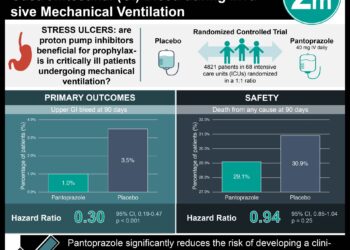
#VisualAbstract: Stress Ulcer Prophylaxis Lowers Risk of Gastrointestinal (GI) Bleed during Invasive Mechanical Ventilation

Relevant Reading: A Randomized Trial of a Family-Support Intervention in Intensive Care Units

In-Depth [randomized controlled trial]: This study evaluated the effectiveness of a web-based decision-making aid for improving communication between the families of patients on prolonged mechanical ventilation and their families.  Patient-surrogates were randomized into “intervention” and “treatment” conditions, where the “treatment” condition was to complete an electronic decision-making program on the day before the standard family meeting between physicians and families.  This tool described three main treatment strategies balancing the goals of survival and comfort.  The surrogate was shown information about the patient’s prognosis, and they were asked a number of questions about the patient’s values.  Based on these results, an algorithm predicted which of the three models the surrogate would prefer, and the surrogate had a chance to respond.  This was expected to help families prepare for the family meeting, allowing for more effective communication.  However, there was no significant difference in the primary outcome of clinician-surrogate concordance (CSCS).  Surrogates continued to substantially overestimate patient prognoses relative to physicians’ estimates and clinical models, and the gap only improved about 1.7%.  Furthermore, only 53.1% of surrogates agreed with the predicted model, and 43% of surrogates favored more aggressive treatment than expected.  At later time points, there was no evidence for improved surrogate mental health, measured symptoms of depression, anxiety, and posttraumatic stress.  However, there was a modest but statistically significant reduction in “decisional conflict,” defined as surrogate uncertainty about the decision making process (p = 0.041).

Image: PD

©2019 2 Minute Medicine, Inc. All rights reserved. No works may be reproduced without expressed written consent from 2 Minute Medicine, Inc. Inquire about licensing here. No article should be construed as medical advice and is not intended as such by the authors or by 2 Minute Medicine, Inc.

 

Tags: end-of-lifemechanical ventilation
Previous Post

Decreased and disordered sleep associated with subclinical atherosclerosis

Next Post

Quick Take: Accelerated hypofractionated radiation therapy for elderly frail bladder cancer patients unfit for surgery or chemotherapy

RelatedReports

Emergency

Pantoprazole prophylaxis for individuals on mechanical ventilation with stress ulcers

July 16, 2024
#VisualAbstract: Stress Ulcer Prophylaxis Lowers Risk of Gastrointestinal (GI) Bleed during Invasive Mechanical Ventilation
StudyGraphics

#VisualAbstract: Stress Ulcer Prophylaxis Lowers Risk of Gastrointestinal (GI) Bleed during Invasive Mechanical Ventilation

June 25, 2024
Downward trend in mortality rate for antineutrophil cytoplasmic autoantibody-associated vasculitis
Chronic Disease

Palliative care services are underutilized at end of life in Ontario, Canada

March 7, 2024
Infectious Disease

Vitamin D supplementation reduced the rates of ICU admissions and mechanical ventilation associated with SARS-CoV-2 Infection

November 17, 2023
Next Post
Non-antimuscarinics show promise for overactive bladder

Quick Take: Accelerated hypofractionated radiation therapy for elderly frail bladder cancer patients unfit for surgery or chemotherapy

#VisualAbstract: Single-Dose Tafenoquine to Prevent Relapse of Plasmodium vivax Malaria

#VisualAbstract: Single-Dose Tafenoquine to Prevent Relapse of Plasmodium vivax Malaria

Intrauterine Zika virus infection associated with significant fetal brain abnormalities

Quick Take: Prior dengue virus infection and risk of Zika: a pediatric cohort in Nicaragua

EvidencePulse™ by 2 Minute Medicine 2026 evidence scan 3 reports You asked top stroke trials 2026 Synthesizing medical evidence... Top 2026 stroke trial results: OCEANIC — ischemic stroke: 6.2% vs 8.4% OPTION* — mRS 0–1: 43.6% vs 34.2% ORIENTAL* — mRS 0–2: 58.6% vs 46.6% *Higher sICH in intervention arms Participants randomizedN OCEANIC 12,327 OPTION 570 ORIENTAL 564 Ask about guidelines or landmark trials... ↑ Try EvidencePulse™ Get the signal. Try it now → Physician-trained medical AI by 2 Minute Medicine

2MM+ All Access

Full details →
$4.99 /month

3-day free trial · cancel anytime

  • ✓100+ physician-written reports
  • ✓EvidencePulse™ + HypeCheck™
  • ✓Ad-free reading + newsletters
Start 3-day free trial

Then $4.99/month. Manage renewal in your account.

NPI Lookup · Free

Look up any US clinician

Search by name or NPI number, live from the CMS NPI Registry.

  • OIG exclusion check
  • Licenses and specialties
  • No account needed
Open NPI Lookup →

2 Minute Medicine® is an award winning, physician-run, expert medical media company. Our content is curated, written and edited by practicing health professionals who have clinical and scientific expertise in their field of reporting. Our editorial management team is comprised of highly-trained MD physicians. Join numerous brands, companies, and hospitals who trust our licensed content.

Recent Reports

  • Deep learning model demonstrates potential to generate an interpretable brain health biomarker from sleep electroencephalography
  • Low-pressure pneumoperitoneum does not reduce pain after laporoscopic cholecystectomy
  • A reduced length protocol for peripheral magnetic stimulation may be as effective compared to standard length protocol for upper trapezius myofascial pain syndrome
License Content
Terms of Use | Disclaimer
Cookie Policy
2MM+ All Access Full details →

The medical literature, distilled daily.

Monthly plan selected: $4.99 /month.

$4.99/month

3-day free trial · cancel anytime

Start 3-day free trial

Then $4.99/month. Manage renewal in your account.

Yearly plan selected: $49.90 /year.

$49.90/year

2 months free

Start 3-day free trial

Then $49.90/year.

Membership benefits

  • ✓100+ physician-written reports
  • ✓AI EvidencePulse™ + HypeCheck™
  • ✓Ad-free reading + newsletters
  • ✓NPI watchlist + bulk NPI verification

Already a member? Sign in

  • About
  • Specialties
    • All Specialties, All Recent Reports
    • Cardiology
    • Chronic Disease
    • Dermatology
    • Emergency
    • Endocrinology
    • Gastroenterology
    • Imaging and Intervention
    • Infectious Disease
    • Nephrology
    • Neurology
    • Obstetrics
    • Oncology
    • Ophthalmology
    • Pediatrics
    • Pharma
    • Preclinical
    • Psychiatry
    • Public Health
    • Pulmonology
    • Rheumatology
    • Surgery
  • Tools
    • EvidencePulse™
    • HypeCheck™
    • NPI Registry Lookup
    • RVU Search
  • Pharma
  • AI Roundup
  • The Scan
  • Classics™
    • 2MM+ Online Access
    • Paperback and Ebook
  • Rewinds
  • Partners
    • License Content
    • Advertise with Us
No Result
View All Result

© 2026 2 Minute Medicine, Inc. - Physician-written medical news.