• About
  • Masthead
  • License Content
  • Advertise
  • Submit Press Release
  • RSS/Email List
  • 2MM Podcast
  • Write for us
  • Contact Us
2 Minute Medicine
No Result
View All Result

No products in the cart.

SUBSCRIBE
  • Specialties
    • All Specialties, All Recent Reports
    • Cardiology
    • Chronic Disease
    • Dermatology
    • Emergency
    • Endocrinology
    • Gastroenterology
    • Imaging and Intervention
    • Infectious Disease
    • Nephrology
    • Neurology
    • Obstetrics
    • Oncology
    • Ophthalmology
    • Pediatrics
    • Pharma
    • Preclinical
    • Psychiatry
    • Public Health
    • Pulmonology
    • Rheumatology
    • Surgery
  • Tools
    • EvidencePulse™
    • RVU Search
    • NPI Registry Lookup
  • Pharma
  • AI News
  • The Scan+
  • Classics™+
    • 2MM+ Online Access
    • Paperback and Ebook
  • Rewinds
  • Partners
    • License Content
    • Submit Press Release
    • Advertise with Us
  • Account
    • Subscribe
    • Sign-in
    • My account
2 Minute Medicine
  • Specialties
    • All Specialties, All Recent Reports
    • Cardiology
    • Chronic Disease
    • Dermatology
    • Emergency
    • Endocrinology
    • Gastroenterology
    • Imaging and Intervention
    • Infectious Disease
    • Nephrology
    • Neurology
    • Obstetrics
    • Oncology
    • Ophthalmology
    • Pediatrics
    • Pharma
    • Preclinical
    • Psychiatry
    • Public Health
    • Pulmonology
    • Rheumatology
    • Surgery
  • Tools
    • EvidencePulse™
    • RVU Search
    • NPI Registry Lookup
  • Pharma
  • AI News
  • The Scan+
  • Classics™+
    • 2MM+ Online Access
    • Paperback and Ebook
  • Rewinds
  • Partners
    • License Content
    • Submit Press Release
    • Advertise with Us
  • Account
    • Subscribe
    • Sign-in
    • My account
SUBSCRIBE
2 Minute Medicine
Subscribe
Home All Specialties Cardiology

Quick Take: Optimal Combination of Compression Rate and Depth During Cardiopulmonary Resuscitation for Functionally Favorable Survival

byDonna LeetandAliya Ramjaun
August 31, 2019
in Cardiology, Emergency
Reading Time: 2 mins read
0
Share on FacebookShare on Twitter

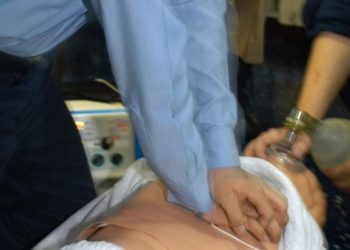
While it is known that suboptimal chest compressions are associated with worse outcomes after cardiac arrest, the optimal combination of chest compression rate (CCR) and chest compression depth (CCD), and whether this should be applied to all patients despite differences in age, sex, and presenting cardiac rhythm is unknown. In this cohort study, 3,643 patients who had an out-of-hospital cardiac arrest and for whom CCR and CCD had been simultaneously recorded during the first 5 minutes of CPR were studied to determine the optimal combination of CCR-CCD associated with functionally favorable survival (defined as modified Rankin scale of 3 or less at the time of hospital discharge). Data was obtained from the National Institutes of Health (NIH) Resuscitation Outcomes Consortium Prehospital Resuscitation Impedance Valve and Early Versus Delayed Analysis (ROC PRIMED) multicenter trial, in which patients were assigned to receive conventional CPR using either an inactive impedance threshold device (ITD) or an active-ITD, with CCR and CCD measurements collected electronically using sensors linked to electrocardiographic monitor defibrillators. At baseline, 64.4% of the 3,643 patients were men, and the mean (SD) age was 67.5 (15.7) years. CPR was performed by bystanders in 41.9% of patients, and 91.1% of patients received at least one prehospital dose of epinephrine. The first cardiac rhythm recorded was asystole in 47.8%, ventricular fibrillation or ventricular tachycardia in 24.5%, and pulseless electrical activity (PEA) in 23.7%. Researchers found that the optimal combination of CCR-CCD associated with the greatest probability of favorable functional outcome was 107 compressions per minute (cpm) and 4.7 cm, with little difference across subgroups (age, sex, or cardiac rhythm). Survival probability was significantly higher with CPR performed within 20% of this combination (86 to 128 cpm, 3.8 to 5.6 cm) than outside of this range (6.0% vs. 4.3%, respectively, OR 1.44, 95% CI 1.07 to 1.94, p=0.02). Finally, survival probability with the identified optimal CCR-CCD was higher with active-ITD use than with sham-ITD use (9.6% vs. 5.3%, respectively, OR 1.90, 95% CI 1.06 to 3.38, p=0.03), and device effectiveness was dependent on being near the optimal CCR-CCD combination. In summary, this study suggests that a chest compression rate of 107 cpm and a depth of 4.7 cm improves outcomes in out-of-hospital cardiac arrests, especially with the use of an ITD, though further investigation and prospective validation is warranted.

Click to read the study in JAMA Cardiology

Image: PD

©2019 2 Minute Medicine, Inc. All rights reserved. No works may be reproduced without expressed written consent from 2 Minute Medicine, Inc. Inquire about licensing here. No article should be construed as medical advice and is not intended as such by the authors or by 2 Minute Medicine, Inc.
RELATED REPORTS

Television CPR scripts undercut bystander response in real emergencies

Late ventricular fibrillation following myocardial infarction is associated with increased risk of 1-year mortality

2 Minute Medicine Rewind January 5, 2026

Tags: asystolecardiac arrestcardiopulmonary resuscitation (CPR)pulseless electrical activity (PEA)ventricular fibrillation
Previous Post

Quick Take: T-Cell Receptor Gene Therapy for Human Papillomavirus–Associated Epithelial Cancers: A First-in-Human, Phase I/II Study

Next Post

Quick Take: Pregnancy duration and endometrial cancer risk

RelatedReports

Bystander CPR positively associated with cardiac arrest survival
Cardiology

Television CPR scripts undercut bystander response in real emergencies

February 3, 2026
Using HEART score to risk stratify patients with chest pain is safe but underutilized in the ED
Cardiology

Late ventricular fibrillation following myocardial infarction is associated with increased risk of 1-year mortality

January 12, 2026
Using HEART score to risk stratify patients with chest pain is safe but underutilized in the ED
Weekly Rewinds

2 Minute Medicine Rewind January 5, 2026

January 13, 2026
Socioeconomically disadvantaged neighborhoods linked to increased rehospitalization rates
Cardiology

Intraosseous and intravenous vascular access are equally effective for ROSC following out-of-hospital cardiac arrest

March 7, 2025
Next Post
Risk of autism in offspring linked to maternal pregestational diabetes and severe obesity

Quick Take: Pregnancy duration and endometrial cancer risk

Anti-TNF therapy for inflammatory bowel disease may induce skin lesions

Quick Take: Small Bowel Healing Detected by Endoscopy in Patients With Crohn’s Disease After Treatment With Antibodies Against Tumor Necrosis Factor

Delays in surgical intervention do not increase odds of appendiceal perforation

2 Minute Medicine Rewind September 2, 2019

2 Minute Medicine® is an award winning, physician-run, expert medical media company. Our content is curated, written and edited by practicing health professionals who have clinical and scientific expertise in their field of reporting. Our editorial management team is comprised of highly-trained MD physicians. Join numerous brands, companies, and hospitals who trust our licensed content.

Recent Reports

  • A telephone-based intervention reduced loneliness and improved well-being among older adults
  • Propofol is associated with lower mortality in sepsis-associated encephalopathy
  • The Scan by 2 Minute Medicine®: Daily caffeine intake linked to lower dementia risk, AAP sues over federal vaccine schedule overhaul, Catherine O’Hara passes away after short illness, and GLP-1 receptor agonists reduce endometrial cancer risk
License Content
Terms of Use | Disclaimer
Cookie Policy
Privacy Statement (EU)
Disclaimer

© 2025 2 Minute Medicine, Inc. - Physician-written medical news.

  • Specialties
    • All Specialties, All Recent Reports
    • Cardiology
    • Chronic Disease
    • Dermatology
    • Emergency
    • Endocrinology
    • Gastroenterology
    • Imaging and Intervention
    • Infectious Disease
    • Nephrology
    • Neurology
    • Obstetrics
    • Oncology
    • Ophthalmology
    • Pediatrics
    • Pharma
    • Preclinical
    • Psychiatry
    • Public Health
    • Pulmonology
    • Rheumatology
    • Surgery
  • Tools
    • EvidencePulse™
    • RVU Search
    • NPI Registry Lookup
  • Pharma
  • AI News
  • The Scan
  • Classics™
    • 2MM+ Online Access
    • Paperback and Ebook
  • Rewinds
  • Partners
    • License Content
    • Submit Press Release
    • Advertise with Us
  • Account
    • Subscribe
    • Sign-in
    • My account
No Result
View All Result

© 2025 2 Minute Medicine, Inc. - Physician-written medical news.