• About
  • Masthead
  • License Content
  • Advertise
  • Press Releases
  • Newsroom
  • RSS/Email List
  • 2MM Podcast
  • Write for us
  • Contact Us
2 Minute Medicine
No Result
View All Result

No products in the cart.

Sign in
SUBSCRIBE
  • About
  • Specialties
    • All Specialties, All Recent Reports
    • Cardiology
    • Chronic Disease
    • Dermatology
    • Emergency
    • Endocrinology
    • Gastroenterology
    • Imaging and Intervention
    • Infectious Disease
    • Nephrology
    • Neurology
    • Obstetrics
    • Oncology
    • Ophthalmology
    • Pediatrics
    • Pharma
    • Preclinical
    • Psychiatry
    • Public Health
    • Pulmonology
    • Rheumatology
    • Surgery
    • Rewinds
    • The Scan
  • EvidencePulse™
  • HypeCheck™
  • AI News
  • Classics™
    • 2MM+ Online Access
    • Paperback and Ebook
  • Tools
    • NPI Registry Lookup
    • RVU Search
    • Physician Pay by Specialty
    • ICD-10 Code Lookup
    • FDA Drug Approvals
    • Drug Safety for Breastfeeding/Pregnancy
    • Clinical Guidelines
    • Medical Calculators
    • ECG Reference
      • QTc Calculator
      • Sgarbossa Criteria
      • ECG Axis Calculator
      • AV Block Helper
  • Rankings
    • Medical School Rankings
    • Residency Rankings
  • Partners
    • License Content
    • Advertise with Us
2 Minute Medicine
  • About
  • Specialties
    • All Specialties, All Recent Reports
    • Cardiology
    • Chronic Disease
    • Dermatology
    • Emergency
    • Endocrinology
    • Gastroenterology
    • Imaging and Intervention
    • Infectious Disease
    • Nephrology
    • Neurology
    • Obstetrics
    • Oncology
    • Ophthalmology
    • Pediatrics
    • Pharma
    • Preclinical
    • Psychiatry
    • Public Health
    • Pulmonology
    • Rheumatology
    • Surgery
    • Rewinds
    • The Scan
  • EvidencePulse™
  • HypeCheck™
  • AI News
  • Classics™
    • 2MM+ Online Access
    • Paperback and Ebook
  • Tools
    • NPI Registry Lookup
    • RVU Search
    • Physician Pay by Specialty
    • ICD-10 Code Lookup
    • FDA Drug Approvals
    • Drug Safety for Breastfeeding/Pregnancy
    • Clinical Guidelines
    • Medical Calculators
    • ECG Reference
      • QTc Calculator
      • Sgarbossa Criteria
      • ECG Axis Calculator
      • AV Block Helper
  • Rankings
    • Medical School Rankings
    • Residency Rankings
  • Partners
    • License Content
    • Advertise with Us
Sign in
SUBSCRIBE
2 Minute Medicine
Sign in
Subscribe
2 Minute MedicineFree on Google PlayGet
✦EvidencePulse™by 2 Minute Medicine3 reportsYou askedtop stroke trials 2026Synthesizing medical evidence...Top 2026 stroke trial results:OCEANIC — ischemic stroke: 6.2% vs 8.4%OPTION* — mRS 0–1: 43.6% vs 34.2%ORIENTAL* — mRS 0–2: 58.6% vs 46.6%*Higher sICH in intervention armsParticipants randomizedNOCEANIC12,327OPTION570ORIENTAL564Ask about guidelines or landmark trials...↑Try EvidencePulse™Ask the evidence. Get the signal.Try it now →
Home All Specialties Oncology

Integrated Clinical-Molecular Classification of Colorectal Liver Metastases

byDaniel GoldshteinandSze Wah Samuel Chan
August 7, 2023
in Chronic Disease, Oncology
Reading Time: 3 mins read
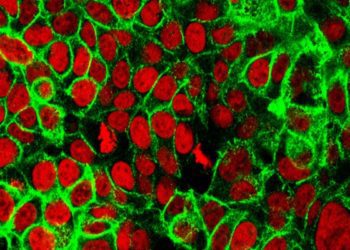
CD45 T cell and macrophage infiltration characteristic of COVID-19 related lung injury
Share on FacebookShare on TwitterShare on LinkedIn

1. The immune subtype demonstrated an improved progression-free survival (HR 0.37) and overall survival (HR 0.56) compared with the canonical subtype.

2. The low-risk integrated group demonstrated improved progression-free survival (HR 0.38) and overall survival (HR 0.26) compared to the high-risk group.

Evidence Rating Level: 2 (Good)

Study Rundown: Approximately 25% of colorectal cancer patients develop liver metastases, and oligometastatic colorectal cancer can exhibit a wide clinical spectrum that is often difficult to precisely treat. While existing clinical risk assessments lack consideration of underlying biological factors affecting metastasis and survival, distinct molecular subtypes of liver metastases have been identified (canonical, immune, stromal) and are independently predictive of outcomes. This prognostic study built on this knowledge with a newly validated 31-gene classifier that integrated clinical-molecular risk groups effectively and was able to prognosticate survival. The primary endpoints of this study were progression-free survival (PFS) and overall survival (OS). The 5-year PFS was 43%, 14%, and 26% for immune, canonical, and stromal subtypes, respectively. The 5-year OS was 63%, 43%, and 49% for immune, canonical, and stromal subtypes, respectively. It was found that only the liver metastasis molecular subtypes, and not the primary tumour expression nor subtype, were prognostic. An integrated clinical-molecular risk group also was designated for each patient which combined the computed molecular subtypes with a high or low clinical risk score, and 5-year PFS was 44%, 40%, and 16% for the low, intermediate, and high-risk groups, respectively. The 5-year OS was 78%, 56%, and 43% for the low, intermediate, and high-risk groups, respectively. It was found that the immune subtype demonstrated greater PFS (HR 0.37) and OS (HR 0.56) compared with canonical. This was similar to the integrated clinical-molecular risk group, which found that relative to the high-risk group, the low-risk group had an HR 0.38 for PFS and HR 0.26 for OS. The strengths of this study included using a validation cohort and the limitations included only investigating patients undergoing surgery. Overall, this study found that colorectal liver metastasis subtypes, when combined with clinical risk assessment, were associated with long-term survival after resection.

Click to read the study in JAMA Oncology

Relevant Reading: Integrated molecular subtyping defines a curable oligometastatic state in colorectal liver metastasis

RELATED REPORTS

Liver transplantation plus chemotherapy improves survival in patients with unresectable colorectal liver metastases

Induction Therapy for Patients with Metastatic Colorectal Cancer and Liver Metastases

In-Depth [retrospective cohort]: A neural network molecular classifier was trained from a retrospective discovery cohort which had 93 patients undergoing surgery with perioperative systemic therapy for limited colorectal cancer liver metastases to classify liver metastasis into the three molecular subtypes (canonical, immune, stromal). A later independent validation cohort who underwent molecular profiling consisted of 147 patients, and was similar to the previous cohort used a fusion clustering algorithm with previously defined molecular subtypes to create the final classifier which contained 31 features (24 mRNAs and 7 miRNAs). Specimen processing was done through whole transcriptome RNA sequencing and miRNA profiling in the discovery cohort vs the validation cohort used mRNA and miRNA profiling with microarray. The 5-year PFS was 43% (95%CI, 25-60), 14% (95%CI, 7-23), and 26% (95%CI, 14-39) for immune, canonical, and stromal subtypes, respectively, (p = .004). The 5-year OS was 63% (95%CI, 40-79), 43% (95%CI, 32-55), and 49% (95%CI, 34-63) for immune, canonical, and stromal subtypes, respectively, (p = .08), and the difference between immune vs canonical/stromal subtypes was p = .045. It was found that only the liver metastasis molecular subtypes, and not the primary tumour expression nor subtype, were prognostic. An integrated clinical-molecular risk group also was designated for each patient which combined the computed molecular subtypes with a high or low clinical risk score, and 5-year PFS was 44% (95%CI, 20-66), 40% (95%CI, 21-58), and 16% (95%CI, 10-24) for the low, intermediate, and high-risk groups, respectively (p = .002). The 5-year OS was 78% (95%CI, 44-93), 56% (95%CI, 34-74), and 43% (95%CI, 32-52) for the low, intermediate, and high-risk groups, respectively. It was found that the immune subtype demonstrated greater PFS (HR 0.37, 95%CI, 0.20-0.68, p=.001) and OS (HR 0.56 (95%CI, 0.36-0.89, p =.01) compared with canonical. This was similar to the integrated clinical-molecular risk group, which found that relative to the high-risk group, the low-risk group had an HR 0.38 (95%CI, 0.19-0.76, p = .006) for PFS and HR 0.26 (95%CI, 0.08-0.84, p = .02) for OS. Overall, this study found that colorectal liver metastasis subtypes, when combined with clinical risk assessment, were associated with long-term survival after resection.

Image: PD

©2023 2 Minute Medicine, Inc. All rights reserved. No works may be reproduced without expressed written consent from 2 Minute Medicine, Inc. Inquire about licensing here. No article should be construed as medical advice and is not intended as such by the authors or by 2 Minute Medicine, Inc.

Tags: advanced colorectal cancerliver metastasismolecular profile
Previous Post

Reducing the screening age for colorectal cancer in Canada to 40 or 45 may result in fewer cases, less mortality, and reduced healthcare spending costs

Next Post

Insulin icodec is more effective than insulin glargine for glycemic control

RelatedReports

Chronic Disease

Liver transplantation plus chemotherapy improves survival in patients with unresectable colorectal liver metastases

October 8, 2024
Oncology

Induction Therapy for Patients with Metastatic Colorectal Cancer and Liver Metastases

July 3, 2023
Racial differences in colorectal cancer survival linked to health at initial diagnosis
Oncology

Trifluridine–Tipiracil and Bevacizumab Improves Survival in Metastatic Pretreated Colorectal Cancer

May 15, 2023
Quick Take: Diagnostic Yield of One-Time Colonoscopy vs One-Time Flexible Sigmoidoscopy vs Multiple Rounds of Mailed Fecal Immunohistochemical Tests in Colorectal Cancer Screening
Oncology

Adagrasib provides antitumour activity against KRAS G12C mutant metastatic colorectal cancer both as monotherapy and in combination with cetuximab

January 16, 2023
Next Post

Insulin icodec is more effective than insulin glargine for glycemic control

Across several countries, nursing knowledge of palliative care may be insufficient

The Scan by 2 Minute Medicine®:  Ultra-Trail du Mont-Blanc, Taylor Swift, NBA rookie Chet Holmgren and Magic Mushrooms!

The Scan by 2 Minute Medicine®: Battling Alzheimer's, Bariatric Complications, Heat Wave Woes, and Not-So-Prime Energy Drinks

✦ EvidencePulse™ by 2 Minute Medicine 3 reports You asked top stroke trials 2026 Synthesizing medical evidence... Top 2026 stroke trial results: OCEANIC — ischemic stroke: 6.2% vs 8.4% OPTION* — mRS 0–1: 43.6% vs 34.2% ORIENTAL* — mRS 0–2: 58.6% vs 46.6% *Higher sICH in intervention arms Participants randomizedN OCEANIC 12,327 OPTION 570 ORIENTAL 564 Ask about guidelines or landmark trials... Try EvidencePulse™ Get the signal. Try it now → Physician-trained medical AI by 2 Minute Medicine

2MM+ All Access

Full details →
$4.99 /month

3-day free trial · cancel anytime

  • ✓100+ physician-written reports
  • ✓EvidencePulse™ + HypeCheck™
  • ✓Ad-free reading + newsletters
Start 3-day free trial

Then $4.99/month. Manage renewal in your account.

NPI Lookup · Free

Look up any US clinician

Search by name or NPI number, live from the CMS NPI Registry.

  • OIG exclusion check
  • Licenses and specialties
  • No account needed
Open NPI Lookup →

2 Minute Medicine® is an award winning, physician-run, expert medical media company. Our content is curated, written and edited by practicing health professionals who have clinical and scientific expertise in their field of reporting. Our editorial management team is comprised of highly-trained MD physicians. Join numerous brands, companies, and hospitals who trust our licensed content.

Recent Reports

  • Docosahexaenoic acid supplementation does not reduce risk of necrotizing enterocolitis among preterm infants
  • AI-drafted responses to patient messages linked to faster reply times but no drop in after-hours work for clinicians
  • FDA identifies safety concerns for compounded peptide injections, including reports of death
License Content
Terms of Use | Disclaimer
Cookie Policy

Get the app

Read 2 Minute Medicine on iPhone, iPad and Android.

Download on the App StoreGet it on Google Play
QR code for www.2minutemedicine.com/app
On a computer? Scan this with your phone’s camera.
2MM+ All Access Full details →

The medical literature, distilled daily.

Monthly plan selected: $4.99 /month.

$4.99/month

3-day free trial · cancel anytime

Start 3-day free trial

Then $4.99/month. Manage renewal in your account.

Yearly plan selected: $49.90 /year.

$49.90/year

2 months free

Start 3-day free trial

Then $49.90/year.

Membership benefits

  • ✓100+ physician-written reports
  • ✓AI EvidencePulse™ + HypeCheck™
  • ✓Ad-free reading + newsletters
  • ✓FDA drug approvals + clinical calculators

Already a member? Sign in

  • Get the app
  • About
  • Specialties
    • All Specialties, All Recent Reports
    • Cardiology
    • Chronic Disease
    • Dermatology
    • Emergency
    • Endocrinology
    • Gastroenterology
    • Imaging and Intervention
    • Infectious Disease
    • Nephrology
    • Neurology
    • Obstetrics
    • Oncology
    • Ophthalmology
    • Pediatrics
    • Pharma
    • Preclinical
    • Psychiatry
    • Public Health
    • Pulmonology
    • Rheumatology
    • Surgery
    • Rewinds
    • The Scan
  • EvidencePulse™
  • HypeCheck™
  • AI News
  • Classics™
    • 2MM+ Online Access
    • Paperback and Ebook
  • Tools
    • NPI Registry Lookup
    • RVU Search
    • Physician Pay by Specialty
    • ICD-10 Code Lookup
    • FDA Drug Approvals
    • Drug Safety for Breastfeeding/Pregnancy
    • Clinical Guidelines
    • Medical Calculators
    • ECG Reference
      • QTc Calculator
      • Sgarbossa Criteria
      • ECG Axis Calculator
      • AV Block Helper
  • Rankings
    • Medical School Rankings
    • Residency Rankings
  • Partners
    • License Content
    • Advertise with Us
No Result
View All Result

© 2026 2 Minute Medicine, Inc. - Physician-written medical news.