Combined gastric electrical stimulation and pyloroplasty may be superior to pyloroplasty alone in refractory gastroparesis

1. Combined gastric electrical stimulation and pyloroplasty was superior to pyloroplasty alone, resulting in greater improvements in symptoms and reduced hospitalization time among patients with refractory gastroparesis.
Evidence Rating Level: 1 (Excellent)
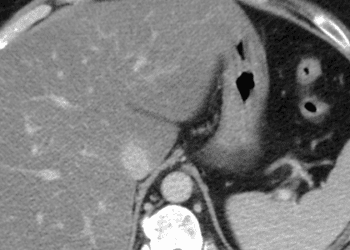
Gastroparesis is a condition characterized by delayed gastric emptying (GE) in the absence of mechanical obstruction. Patients with gastroparesis who do not respond to medical therapy may require surgical intervention such as pyloroplasty (PP) alone or with implantation of a gastric electrical stimulation (GES) device. Although some evidence suggests that GES combined with PP may be superior to PP alone in improving clinical outcomes, this combination has not been examined in a double-blind randomized clinical trial. This double-blind randomized clinical trial thus examined whether combining GES with PP better improves clinical outcomes than PP alone in refractory gastroparesis. Patients with diabetic or idiopathic gastroparesis who failed medical therapy were recruited from a health sciences center in El Paso, Texas, USA, from January 10, 2017, to September 20, 2023. Patients underwent implantation of GES with PP and were randomized 1:1 into PP + GES-ON and PP + GES-OFF (placebo) groups. In the PP + GES-ON group, the GES was turned immediately after surgery. In the PP + GES-OFF group, the GES was kept off for 3 months and then turned on for 3 months. Primary outcomes included total symptom score (TSS) and the Gastroparesis Cardinal Symptom Index (GCSI), with greater score reductions indicating improvement. In total, 38 patients were randomized (mean [SD] age, 46.7 [13.2] years; 24 females [63.2%]), with 19 participants in each group and all included in the intention-to-treat analysis. From baseline to 3 months, greater improvement was found in the PP + GES-ON group compared with PP + GES-OFF group in the GCSI (median [IQR] ON: −2.2 [−2.6 to −1.5] vs median [IQR] OFF: −0.9 [−1.8 to −0.4]; median difference, −1.33 [95% CI, −2.34 to −0.33]) and the TSS (median [IQR] ON: −15.0 [−16.0 to −8.0] vs median [IQR] OFF: −3.0 [−10.0 to −1.0]; median difference, −12.00 [95% CI, −17.49 to −6.51]). When the PP + GES-OFF group had GES activated at 3 months, symptoms improved by 6 months (median [IQR] GCSI at 6 months: 1.2 [0.4-2.5] vs at baseline: 3.3 [2.8-4.1]; median [IQR] TSS at 6 months: 8.0 [2.0-10.0] vs at baseline: 18 [14.0-21.0]). These results were comparable with the PP + GES-ON group that had their GES device on continuously for 6 months. At 6 months, the PP + GES-OFF group also showed a reduction in hospital length of stay (median [IQR] at 6 months: 0 [0-2.0] vs at baseline: 4.1 [0-10.1]). No major adverse events were observed in either group. Overall, this study found that combining GES and PP was superior to PP alone, resulting in greater improvements in symptoms and reduced hospitalization time among patients with refractory gastroparesis. Future studies with larger sample sizes are needed to confirm this study’s findings.
Click here to read this study in JAMA Network Open
Image: PD
©2025 2 Minute Medicine, Inc. All rights reserved. No works may be reproduced without expressed written consent from 2 Minute Medicine, Inc. Inquire about licensing here. No article should be construed as medical advice and is not intended as such by the authors or by 2 Minute Medicine, Inc.