• About
  • Masthead
  • License Content
  • Advertise
  • Submit Press Release
  • RSS/Email List
  • 2MM Podcast
  • Write for us
  • Contact Us
2 Minute Medicine
No Result
View All Result

No products in the cart.

SUBSCRIBE
  • Specialties
    • All Specialties, All Recent Reports
    • Cardiology
    • Chronic Disease
    • Dermatology
    • Emergency
    • Endocrinology
    • Gastroenterology
    • Imaging and Intervention
    • Infectious Disease
    • Nephrology
    • Neurology
    • Obstetrics
    • Oncology
    • Ophthalmology
    • Pediatrics
    • Pharma
    • Preclinical
    • Psychiatry
    • Public Health
    • Pulmonology
    • Rheumatology
    • Surgery
  • Tools
    • EvidencePulse™
    • RVU Search
    • NPI Registry Lookup
  • Pharma
  • AI News
  • The Scan+
  • Classics™+
    • 2MM+ Online Access
    • Paperback and Ebook
  • Rewinds
  • Partners
    • License Content
    • Submit Press Release
    • Advertise with Us
  • Account
    • Subscribe
    • Sign-in
    • My account
2 Minute Medicine
  • Specialties
    • All Specialties, All Recent Reports
    • Cardiology
    • Chronic Disease
    • Dermatology
    • Emergency
    • Endocrinology
    • Gastroenterology
    • Imaging and Intervention
    • Infectious Disease
    • Nephrology
    • Neurology
    • Obstetrics
    • Oncology
    • Ophthalmology
    • Pediatrics
    • Pharma
    • Preclinical
    • Psychiatry
    • Public Health
    • Pulmonology
    • Rheumatology
    • Surgery
  • Tools
    • EvidencePulse™
    • RVU Search
    • NPI Registry Lookup
  • Pharma
  • AI News
  • The Scan+
  • Classics™+
    • 2MM+ Online Access
    • Paperback and Ebook
  • Rewinds
  • Partners
    • License Content
    • Submit Press Release
    • Advertise with Us
  • Account
    • Subscribe
    • Sign-in
    • My account
SUBSCRIBE
2 Minute Medicine
Subscribe
Home All Specialties Chronic Disease

The incidence of hypertension and infections may increase with age among patients with ulcerative colitis treated with ozanimod
byAlex XiangandSimon Pan
January 13, 2026
in Chronic Disease, Gastroenterology, Infectious Disease
Reading Time: 2 mins read
0
Share on FacebookShare on Twitter

1. Incidence rates of hypertension and opportunistic and serious infections increase with age in patients receiving ozanimod for ulcerative colitis (UC).

Evidence Rating Level: 1 (Excellent)

Treating older patients with UC is difficult due to an overreliance on corticosteroids and hesitancy in using more advanced therapies due to the increased risk of adverse events such as infection, major adverse cardiovascular events, thromboembolic complications, and malignancies. Ozanimod is a selective sphingosine 1-phosphate (S1P) receptor 1 and 5 modulator approved for the treatment of moderately to severely active UC. This article uses data from the True North study, a randomized, placebo-controlled phase 3 trial. In the 10-week induction period, patients in cohort 1 were assigned to receive ozanimod 0.92 mg or placebo, and patients in cohort 2 received open-label ozanimod at the same daily dose. At 10 weeks, patients with a clinical response to ozanimod in either cohort underwent randomization again to receive double-blind ozanimod or placebo for the maintenance period (through week 52). 1012 total patients were stratified by age: < 40 (n = 492; mean [range] age: 30.0 [18-39]; 56.3% male), 40-60 ((n = 404; mean [range] age: 49.4 [40-60]; 64.4% male), and > 60 (n = 116; mean [range] age: 65.2 [61-74]; 56.0%). Rates of treatment-emergent adverse events (TEAEs) were higher in patients receiving continuous ozanimod (47.7%-53.6%) than in those who switched to placebo (34.3%-39.2%) in all age groups. Exposure-adjusted incidence rates (EAIRs) of opportunistic infection (eg, herpes zoster), COVID-19, and serious infection increased with age. Patients ≥ 40 years of age had higher hypertension EAIRs than those < 40 years of age. These results suggest a need for greater monitoring of side effects in older patients receiving ozanimod for IBD. This may include herpes zoster vaccinations and increased monitoring of cardiac adverse reactions.

Click here to read the study in Inflammatory Bowel Diseases

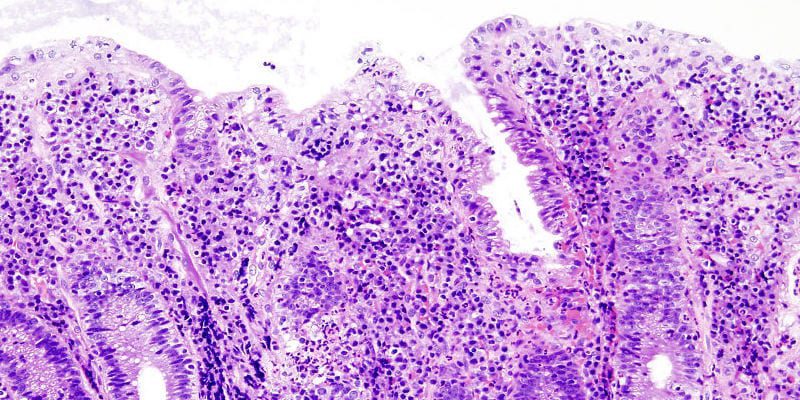
Image: PD

©2025 2 Minute Medicine, Inc. All rights reserved. No works may be reproduced without expressed written consent from 2 Minute Medicine, Inc. Inquire about licensing here. No article should be construed as medical advice and is not intended as such by the authors or by 2 Minute Medicine, Inc.
RELATED REPORTS

Male sex and hispanic ethnicity are associated with increased risk of early-onset colorectal cancer

Telehealth yields modest improvements in diabetes outcomes 

High intake of sugar-sweetened beverages is associated with increased risk of hepatocellular carcinoma

Tags: Gastroenterologyhypertensionopportunistic infectionOzanimods1p inhibitorUlcerative Colitis
Previous Post

Low bicarbonate replacement fluid may lead to a more stable acid-base profile compared with high bicarbonate replacement fluid during continuous veno-venous hemofiltration

Next Post

2 Minute Medicine Rewind December 1st, 2025

RelatedReports

Quick Take: Diagnostic Yield of One-Time Colonoscopy vs One-Time Flexible Sigmoidoscopy vs Multiple Rounds of Mailed Fecal Immunohistochemical Tests in Colorectal Cancer Screening
Chronic Disease

Male sex and hispanic ethnicity are associated with increased risk of early-onset colorectal cancer

June 29, 2026
Chronic Disease

Telehealth yields modest improvements in diabetes outcomes 

June 22, 2026
Quick Take: Influence of HIV Infection on the Natural History of Hepatocellular Carcinoma: Results From a Global Multicohort Study
All Specialties

High intake of sugar-sweetened beverages is associated with increased risk of hepatocellular carcinoma

June 19, 2026
Endoscopic screening for esophageal cancer may reduce long-term mortality
Gastroenterology

A lower volume of polyethylene glycol with ascorbate (MoviPrep) may improve bowel cleansing prior to colonoscopy

May 26, 2026
Next Post
Lariat device for left atrial appendage exclusion associated with adverse events

2 Minute Medicine Rewind December 1st, 2025

2 Minute Medicine Rewind January 28, 2019

C-reactive protein measurements may be misleading due to large within-person variability

Pulmonary MRI with ultrashort echo time is comparable to pulmonary CT

Adjunct corticosteroids likely reduce short-term mortality in severe non-COVID-19 pneumonia

2 Minute Medicine® is an award winning, physician-run, expert medical media company. Our content is curated, written and edited by practicing health professionals who have clinical and scientific expertise in their field of reporting. Our editorial management team is comprised of highly-trained MD physicians. Join numerous brands, companies, and hospitals who trust our licensed content.

Recent Reports

  • Hematologic inflammatory indices may predict prognosis in younger patients with COVID-19 but not older patients
  • Younger age and systemic metastases may independently predict survival among patients with choroidal metastases
  • 2 Minute Medicine Rewind August 3rd, 2026
License Content
Terms of Use | Disclaimer
Cookie Policy
Privacy Statement (EU)
Disclaimer
  • Specialties
    • All Specialties, All Recent Reports
    • Cardiology
    • Chronic Disease
    • Dermatology
    • Emergency
    • Endocrinology
    • Gastroenterology
    • Imaging and Intervention
    • Infectious Disease
    • Nephrology
    • Neurology
    • Obstetrics
    • Oncology
    • Ophthalmology
    • Pediatrics
    • Pharma
    • Preclinical
    • Psychiatry
    • Public Health
    • Pulmonology
    • Rheumatology
    • Surgery
  • Tools
    • EvidencePulse™
    • RVU Search
    • NPI Registry Lookup
  • Pharma
  • AI News
  • The Scan
  • Classics™
    • 2MM+ Online Access
    • Paperback and Ebook
  • Rewinds
  • Partners
    • License Content
    • Submit Press Release
    • Advertise with Us
  • Account
    • Subscribe
    • Sign-in
    • My account
No Result
View All Result

© 2026 2 Minute Medicine, Inc. - Physician-written medical news.