• About
  • Masthead
  • License Content
  • Advertise
  • Submit Press Release
  • RSS/Email List
  • 2MM Podcast
  • Write for us
  • Contact Us
2 Minute Medicine
No Result
View All Result

No products in the cart.

SUBSCRIBE
  • Specialties
    • All Specialties, All Recent Reports
    • Cardiology
    • Chronic Disease
    • Dermatology
    • Emergency
    • Endocrinology
    • Gastroenterology
    • Imaging and Intervention
    • Infectious Disease
    • Nephrology
    • Neurology
    • Obstetrics
    • Oncology
    • Ophthalmology
    • Pediatrics
    • Pharma
    • Preclinical
    • Psychiatry
    • Public Health
    • Pulmonology
    • Rheumatology
    • Surgery
  • Tools
    • EvidencePulse™
    • RVU Search
    • NPI Registry Lookup
  • Pharma
  • AI News
  • The Scan+
  • Classics™+
    • 2MM+ Online Access
    • Paperback and Ebook
  • Rewinds
  • Partners
    • License Content
    • Submit Press Release
    • Advertise with Us
  • Account
    • Subscribe
    • Sign-in
    • My account
2 Minute Medicine
  • Specialties
    • All Specialties, All Recent Reports
    • Cardiology
    • Chronic Disease
    • Dermatology
    • Emergency
    • Endocrinology
    • Gastroenterology
    • Imaging and Intervention
    • Infectious Disease
    • Nephrology
    • Neurology
    • Obstetrics
    • Oncology
    • Ophthalmology
    • Pediatrics
    • Pharma
    • Preclinical
    • Psychiatry
    • Public Health
    • Pulmonology
    • Rheumatology
    • Surgery
  • Tools
    • EvidencePulse™
    • RVU Search
    • NPI Registry Lookup
  • Pharma
  • AI News
  • The Scan+
  • Classics™+
    • 2MM+ Online Access
    • Paperback and Ebook
  • Rewinds
  • Partners
    • License Content
    • Submit Press Release
    • Advertise with Us
  • Account
    • Subscribe
    • Sign-in
    • My account
SUBSCRIBE
2 Minute Medicine
Subscribe
Home All Specialties Cardiology

Adaptive resynchronization shows no benefit over conventional biventricular resynchronization in patients with heart failure
byNeel MistryandTeddy Guo
October 17, 2023
in Cardiology, Chronic Disease
Reading Time: 2 mins read
0
Share on FacebookShare on Twitter

1. All-cause mortality after 5 years was similar for patients in the adaptive and conventional CRT groups.

2. System-related adverse events exhibited no significant disparity between groups.

Evidence Rating Level: 1 (Excellent)

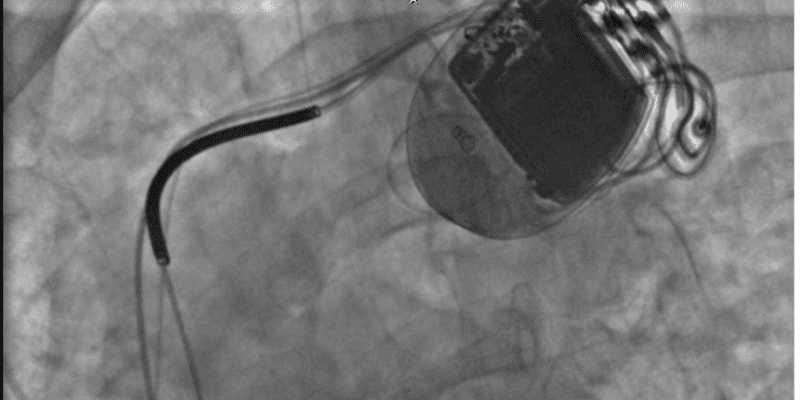
Study Rundown: Cardiac resynchronization therapy (CRT) is the standard of care among patients with decompensated heart failure and left bundle branch block. However, a large proportion of patients may be non-responders. Compared to conventional biventricular CRT, adaptive CRT aims to stimulate the left ventricle in synchronization with intrinsic right ventricular conduction. This randomized controlled trial aimed to assess the clinical outcomes of adaptive CRT versus conventional CRT in patients with heart failure. The primary outcome was a composite of all-cause mortality or intervention for heart failure decompensation. According to study results, adaptive CRT did not significantly reduce the incidence of all-cause mortality or intervention for heart failure decompensation. Although this study was well done, it was limited by early termination due to reaching the futility boundary, thus impacting the overall assessment of the intervention’s effectiveness.

Click to read the study in The Lancet

Relevant Reading: Cardiac-Resynchronization Therapy for the Prevention of Heart-Failure Events

RELATED REPORTS

A medical care at home program following hospitalization with acute decompensated heart failure may offer a safe and effective alternative to continued hospitalization

Catheter ablation within 1 year of atrial fibrillation diagnosis is associated with reduced risk of recurrence

2 Minute Medicine Rewind July 20, 2026

In-depth [randomized-controlled trial]: Between Aug 5, 2014, and Jan 31, 2019, 3797 patients were assessed for eligibility at 227 hospitals in 27 countries. Included were patients aged ≥ 18 years old with class 2-4 heart failure, ejection fraction ≤ 35%, and left bundle branch block meeting QRS duration criteria. Altogether, 3617 patients (1810 in adaptive CRT and 1807 in conventional CRT) were included in the final analysis. The primary outcome of all-cause death or intervention for heart failure decompensation showed no significant difference between the adaptive CRT (Kaplan-Meier occurrence rate 23.5% at 60 months) and conventional CRT groups (Kaplan-Meier occurrence rate 25.7% at 60 months; hazard ratio [HR] 0.89, p=0.077). This was also the case for system-related adverse events (25.0% vs. 24.3%). Overall, findings from this study suggest that adaptive CRT did not significantly reduce all-cause death or heart failure interventions when compared to conventional CRT for patients with decompensated heart failure, left bundle branch block, and intact atrioventricular conduction.

Image: PD

©2023 2 Minute Medicine, Inc. All rights reserved. No works may be reproduced without expressed written consent from 2 Minute Medicine, Inc. Inquire about licensing here. No article should be construed as medical advice and is not intended as such by the authors or by 2 Minute Medicine, Inc.

Tags: adaptive cardiac resynchronization therapycardiac resynchronizationcardiac resynchronization therapycardiologycongestive heart failureconventional cardiac resynchronization therapyDecompensated heart failureheart failure
Previous Post

#VisualAbstract: Adjunctive Dexamethasone for Tuberculous Meningitis in HIV-Positive Adults

Next Post

Intraventricular lavage associated with higher risk of serious adverse events

RelatedReports

Remote patient monitoring did not reduce heart failure readmissions: The BEAT-HF trial
Cardiology

A medical care at home program following hospitalization with acute decompensated heart failure may offer a safe and effective alternative to continued hospitalization

July 24, 2026
Rivaroxaban likely reduces risk of recurrent stroke in specific subgroup of patients with embolic stroke of undetermined source
Cardiology

Catheter ablation within 1 year of atrial fibrillation diagnosis is associated with reduced risk of recurrence

July 24, 2026
Remote patient monitoring did not reduce heart failure readmissions: The BEAT-HF trial
Weekly Rewinds

2 Minute Medicine Rewind July 20, 2026

July 20, 2026
Computed tomography improves diagnostic certainty in the emergency department
Cardiology

Two scores for risk stratification of adults presenting with syncope may be effective at identifying those with low risk

May 29, 2026
Next Post

Intraventricular lavage associated with higher risk of serious adverse events

Compliance-linked incentives increase infant immunizations rates in rural India

Live viral vaccines safe for pediatric solid organ transplant recipients

The Scan by 2 Minute Medicine®:  Ultra-Trail du Mont-Blanc, Taylor Swift, NBA rookie Chet Holmgren and Magic Mushrooms!

The Scan by 2 Minute Medicine®: The Crisis in Gaza, Abortion, Pregnancy and Infant Loss and More, ADHD and Dementia, is there a Link? 

2 Minute Medicine® is an award winning, physician-run, expert medical media company. Our content is curated, written and edited by practicing health professionals who have clinical and scientific expertise in their field of reporting. Our editorial management team is comprised of highly-trained MD physicians. Join numerous brands, companies, and hospitals who trust our licensed content.

Recent Reports

  • Perioperative toripalimab improves event-free survival in non-small cell lung cancer
  • Antithrombotic agents may be effective in preventing migraine in patients with patent foramen ovale
  • Active surveillance is cost-effective compared with standard surgery among esophageal cancer patients with complete clinical response after neoadjuvant chemoradiotherapy
License Content
Terms of Use | Disclaimer
Cookie Policy
Privacy Statement (EU)
Disclaimer
  • Specialties
    • All Specialties, All Recent Reports
    • Cardiology
    • Chronic Disease
    • Dermatology
    • Emergency
    • Endocrinology
    • Gastroenterology
    • Imaging and Intervention
    • Infectious Disease
    • Nephrology
    • Neurology
    • Obstetrics
    • Oncology
    • Ophthalmology
    • Pediatrics
    • Pharma
    • Preclinical
    • Psychiatry
    • Public Health
    • Pulmonology
    • Rheumatology
    • Surgery
  • Tools
    • EvidencePulse™
    • RVU Search
    • NPI Registry Lookup
  • Pharma
  • AI News
  • The Scan
  • Classics™
    • 2MM+ Online Access
    • Paperback and Ebook
  • Rewinds
  • Partners
    • License Content
    • Submit Press Release
    • Advertise with Us
  • Account
    • Subscribe
    • Sign-in
    • My account
No Result
View All Result

© 2026 2 Minute Medicine, Inc. - Physician-written medical news.