• About
  • Masthead
  • License Content
  • Advertise
  • Submit Press Release
  • RSS/Email List
  • 2MM Podcast
  • Write for us
  • Contact Us
2 Minute Medicine
No Result
View All Result

No products in the cart.

SUBSCRIBE
  • About
  • Specialties
    • All Specialties, All Recent Reports
    • Cardiology
    • Chronic Disease
    • Dermatology
    • Emergency
    • Endocrinology
    • Gastroenterology
    • Imaging and Intervention
    • Infectious Disease
    • Nephrology
    • Neurology
    • Obstetrics
    • Oncology
    • Ophthalmology
    • Pediatrics
    • Pharma
    • Preclinical
    • Psychiatry
    • Public Health
    • Pulmonology
    • Rheumatology
    • Surgery
  • Tools+
    • EvidencePulse™
    • HypeCheck™
    • NPI Registry Lookup
    • RVU Search
  • Pharma
  • AI News
  • The Scan+
  • Classics™+
    • 2MM+ Online Access
    • Paperback and Ebook
  • Rewinds
  • Partners
    • License Content
    • Submit Press Release
    • Advertise with Us
  • Account
    • Subscribe
    • My account
    • Cart
    • Sign-in
2 Minute Medicine
  • About
  • Specialties
    • All Specialties, All Recent Reports
    • Cardiology
    • Chronic Disease
    • Dermatology
    • Emergency
    • Endocrinology
    • Gastroenterology
    • Imaging and Intervention
    • Infectious Disease
    • Nephrology
    • Neurology
    • Obstetrics
    • Oncology
    • Ophthalmology
    • Pediatrics
    • Pharma
    • Preclinical
    • Psychiatry
    • Public Health
    • Pulmonology
    • Rheumatology
    • Surgery
  • Tools+
    • EvidencePulse™
    • HypeCheck™
    • NPI Registry Lookup
    • RVU Search
  • Pharma
  • AI News
  • The Scan+
  • Classics™+
    • 2MM+ Online Access
    • Paperback and Ebook
  • Rewinds
  • Partners
    • License Content
    • Submit Press Release
    • Advertise with Us
  • Account
    • Subscribe
    • My account
    • Cart
    • Sign-in
SUBSCRIBE
2 Minute Medicine
Subscribe
Home All Specialties Hematology

Azacitidine–venetoclax improved event-free survival in induction-eligible AML
byZhenyu LiandThomas Su
September 4, 2026
in Hematology, Oncology
Reading Time: 3 mins read
0
Share on FacebookShare on Twitter

1. In this randomized phase 2 trial involving previously untreated adults with acute myeloid leukemia, azacitidine–venetoclax improved event-free survival compared with intensive induction chemotherapy.

2. Azacitidine–venetoclax was also associated with higher response rates, more frequent transition to hematopoietic-cell transplantation, fewer severe infectious and bleeding events, and substantially fewer inpatient days.

Evidence Rating Level: 1 (Excellent) 

Study Rundown: For decades, intensive cytarabine- and anthracycline-based induction chemotherapy has been the standard initial treatment for functionally fit patients with AML. However, intensive treatment commonly causes prolonged marrow suppression, resulting in suboptimal long-term outcomes for many patients. Azacitidine–venetoclax became a standard first-line option for patients considered unfit for intensive chemotherapy after prior trials demonstrated favorable efficacy and tolerability, but whether this lower-intensity regimen could replace induction chemotherapy in fit patients remained uncertain. In this multicenter, randomized phase 2 trial, previously untreated adults with AML who were eligible for intensive induction were assigned to azacitidine–venetoclax or standard induction chemotherapy. Azacitidine–venetoclax prolonged event-free survival and produced more overall and composite complete responses. Patients receiving the combination also transitioned to hematopoietic-cell transplantation more frequently and experienced fewer serious infectious and hemorrhagic complications as well as reduced hospitalization. No clear overall-survival advantage was demonstrated, although the trial was not powered to formally assess this outcome. Strengths included randomized allocation, intention-to-treat analysis, multicenter enrollment, and assessment of clinically meaningful outcomes extending beyond remission. Important limitations included the open-label phase 2 design, modest trial size, and exclusion of patients with core-binding-factor fusions or specific gene mutations. Overall, these findings suggest that azacitidine–venetoclax may represent an effective, less resource-intensive frontline alternative to induction chemotherapy for selected patients with AML.

Click to read the study in NEJM

Relevant Reading: Venetoclax and azacitidine for younger acute myeloid leukemia patients independent of fitness for intensive chemotherapy

RELATED REPORTS

All-oral chemotherapy regimen tolerable and efficacious for newly diagnosed acute myeloid leukemia

Venetoclax (Venclyxto) expands treatment options as chronic lymphocytic leukemia care moves further from chemotherapy

2 Minute Medicine Rewind September 1, 2025

In-Depth [randomized controlled trial]: This investigator-initiated, open-label, multicenter phase 2 randomized controlled trial enrolled 172 adults with previously untreated AML who were considered eligible for induction chemotherapy. Participants were randomized 1:1 to azacitidine–venetoclax or intensive induction chemotherapy. Patients assigned to azacitidine–venetoclax received azacitidine 75 mg/m² on days 1 through 7 plus venetoclax 400 mg daily in repeating 28-day cycles, with modifications permitted for cytopenias and drug interactions. The induction group received either conventional 7+3 chemotherapy or CPX-351, selected before randomization. At a median follow-up of 21.9 months, median event-free survival was 14.5 months with azacitidine–venetoclax versus 6.2 months with induction chemotherapy (hazard ratio [HR], 0.57; 95% confidence interval [CI], 0.39 to 0.84; P=0.002). One-year event-free survival was 53% versus 36%, respectively. Overall response occurred in 88% versus 62% of patients, while composite complete remission occurred in 78% versus 53% of patients. Hematopoietic-cell transplantation was subsequently performed in 60% of the azacitidine–venetoclax group compared with 40% of the induction group. Median overall survival was 21.5 versus 18.0 months, with no apparent between-group difference. Severe infectious adverse events occurred less frequently with azacitidine–venetoclax than with induction chemotherapy, as did severe hemorrhagic events. During the first 30 days, patients receiving azacitidine–venetoclax spent a mean of 12.5 inpatient days compared with 27.3 days in the induction group, and no azacitidine–venetoclax recipients required ICU admission during this period compared with 10% of patients receiving induction chemotherapy. These findings suggest that low-intensity therapy may be a viable treatment option in select fit patients with AML.

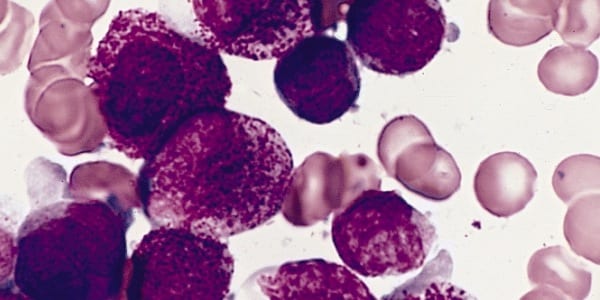
Image: PD

©2026 2 Minute Medicine, Inc. All rights reserved. No works may be reproduced without expressed written consent from 2 Minute Medicine, Inc. Inquire about licensing here. No article should be construed as medical advice and is not intended as such by the authors or by 2 Minute Medicine, Inc. 

Tags: acute myeloid leukemia (AML)azacitidineinduction chemotherapyvenetoclax
Previous Post

Bundibugyo Ebola outbreak surpasses 5,700 cases without a validated vaccine

RelatedReports

No significant increased risk of bladder cancer with pioglitazone use
Oncology

All-oral chemotherapy regimen tolerable and efficacious for newly diagnosed acute myeloid leukemia

July 23, 2026
Combined lenalidomide and rituximab dose escalation found to be safe for CLL
All Specialties

Venetoclax (Venclyxto) expands treatment options as chronic lymphocytic leukemia care moves further from chemotherapy

June 8, 2026
Imatinib safe and effective as long-term treatment for chronic myeloid leukemia: The IRIS trial
Weekly Rewinds

2 Minute Medicine Rewind September 1, 2025

January 13, 2026
Cervical cancer screening practices less cost-effective than suggested guidelines
Chronic Disease

Induction chemotherapy followed by chemoradiotherapy improves survival in advanced cervical cancer

November 1, 2024
EvidencePulse™ by 2 Minute Medicine 2026 evidence scan 3 reports You asked top stroke trials 2026 Synthesizing medical evidence... Top 2026 stroke trial results: OCEANIC — ischemic stroke: 6.2% vs 8.4% OPTION* — mRS 0–1: 43.6% vs 34.2% ORIENTAL* — mRS 0–2: 58.6% vs 46.6% *Higher sICH in intervention arms Participants randomizedN OCEANIC 12,327 OPTION 570 ORIENTAL 564 Ask about guidelines or landmark trials... ↑ Try EvidencePulse™ Ask the evidence.
Get the signal.
Try it now → Physician-trained medical AI by 2 Minute Medicine

2MM+ All Access

Full details →
$4.99 /month

5-day free trial · cancel anytime

  • ✓100+ physician-written reports
  • ✓EvidencePulse™ + HypeCheck™
  • ✓Ad-free reading + newsletters
Start 5-day free trial

Then $4.99/month. Manage renewal in your account.

2 Minute Medicine® is an award winning, physician-run, expert medical media company. Our content is curated, written and edited by practicing health professionals who have clinical and scientific expertise in their field of reporting. Our editorial management team is comprised of highly-trained MD physicians. Join numerous brands, companies, and hospitals who trust our licensed content.

Recent Reports

  • Azacitidine–venetoclax improved event-free survival in induction-eligible AML
  • Bundibugyo Ebola outbreak surpasses 5,700 cases without a validated vaccine
  • Cognitive behaviour therapy may be superior to bright light therapy for insomnia in women with breast cancer undergoing chemotherapy
License Content
Terms of Use | Disclaimer
Cookie Policy
Cleantalk Pixel
  • About
  • Specialties
    • All Specialties, All Recent Reports
    • Cardiology
    • Chronic Disease
    • Dermatology
    • Emergency
    • Endocrinology
    • Gastroenterology
    • Imaging and Intervention
    • Infectious Disease
    • Nephrology
    • Neurology
    • Obstetrics
    • Oncology
    • Ophthalmology
    • Pediatrics
    • Pharma
    • Preclinical
    • Psychiatry
    • Public Health
    • Pulmonology
    • Rheumatology
    • Surgery
  • Tools
    • EvidencePulse™
    • HypeCheck™
    • NPI Registry Lookup
    • RVU Search
  • Pharma
  • AI News
  • The Scan
  • Classics™
    • 2MM+ Online Access
    • Paperback and Ebook
  • Rewinds
  • Partners
    • License Content
    • Submit Press Release
    • Advertise with Us
  • Account
    • Subscribe
    • My account
    • Cart
    • Sign-in
No Result
View All Result

© 2026 2 Minute Medicine, Inc. - Physician-written medical news.

2MM+ All Access Full details →

The medical literature, distilled daily.

Monthly plan selected: $4.99 /month.

$4.99/month

5-day free trial · cancel anytime

Start 5-day free trial

Then $4.99/month. Manage renewal in your account.

Yearly plan selected: $49.90 /year.

$49.90/year

2 months free · only $4.16/month

Start 5-day free trial

Then $49.90/year. Manage renewal in your account.

Membership benefits

  • ✓100+ physician-written reports
  • ✓AI EvidencePulse™ + HypeCheck™
  • ✓Ad-free reading + newsletters

Already a member? Sign in