



• About
  • Masthead
  • License Content
  • Advertise
  • Submit Press Release
  • RSS/Email List
  • 2MM Podcast
  • Write for us
  • Contact Us
2 Minute Medicine
No Result
View All Result

No products in the cart.

SUBSCRIBE
  • Specialties
    • All Specialties, All Recent Reports
    • Cardiology
    • Chronic Disease
    • Dermatology
    • Emergency
    • Endocrinology
    • Gastroenterology
    • Imaging and Intervention
    • Infectious Disease
    • Nephrology
    • Neurology
    • Obstetrics
    • Oncology
    • Ophthalmology
    • Pediatrics
    • Pharma
    • Preclinical
    • Psychiatry
    • Public Health
    • Pulmonology
    • Rheumatology
    • Surgery
  • AI EvidencePulse™
  • Pharma
  • AI News
  • The Scan+
  • Classics™+
    • 2MM+ Online Access
    • Paperback and Ebook
  • Rewinds
  • Podcasts
  • Partners
    • License Content
    • Submit Press Release
    • Advertise with Us
  • Account
    • Subscribe
    • Sign-in
    • My account
2 Minute Medicine
  • Specialties
    • All Specialties, All Recent Reports
    • Cardiology
    • Chronic Disease
    • Dermatology
    • Emergency
    • Endocrinology
    • Gastroenterology
    • Imaging and Intervention
    • Infectious Disease
    • Nephrology
    • Neurology
    • Obstetrics
    • Oncology
    • Ophthalmology
    • Pediatrics
    • Pharma
    • Preclinical
    • Psychiatry
    • Public Health
    • Pulmonology
    • Rheumatology
    • Surgery
  • AI EvidencePulse™
  • Pharma
  • AI News
  • The Scan+
  • Classics™+
    • 2MM+ Online Access
    • Paperback and Ebook
  • Rewinds
  • Podcasts
  • Partners
    • License Content
    • Submit Press Release
    • Advertise with Us
  • Account
    • Subscribe
    • Sign-in
    • My account
SUBSCRIBE
2 Minute Medicine
Subscribe
Home All Specialties Cardiology

Being born small for gestational age associated with reduced exercise capacity among young adults

byYuchen DaiandMichael Pratte
August 3, 2021
in Cardiology, Obstetrics, Pediatrics
Reading Time: 3 mins read
0
Share on FacebookShare on Twitter

1. The study found that young adults born small for gestational age had reduced exercise capacity, with reduced maximal workload, oxygen consumption, and minor differences in cardiac morphology compared to individuals born within standard reference weights.

2. Additional long-term studies employing larger sample sizes and older participants are needed to confirm and better characterize the findings of this cohort study.

Evidence Rating Level: 2 (Good)

Study Rundown: Small for gestational age (SGA) births occur in approximately 10% of all births and is defined as birth weight below the 10th percentile. Over the past decades, several studies have established a consistent association between SGA and increased cardiovascular mortality and hypertension in adulthood via epidemiological methods, however, the precise mechanistic pathway underlying this association is not fully understood. Furthermore, the downstream effects of cardiac remodeling and dysfunction that occurs during the perinatal period on childhood, adolescence, and adulthood is unclear. This cohort study sought to evaluate baseline cardiac function and structure as well as exercise capacity in young adults born SGA, where it was hypothesized that minute cardiac changes at rest along with considerable reduction in exercise capacity would be observed in individuals born SGA. To test this hypothesis, cardiac structure and function was assessed via cardiac magnetic resonance imaging (CMRI), including biventricular end-diastolic shape analysis and exercise capacity. Among 158 young adults enrolled in the study, individuals born SGA displayed limited exercise capacity, with reduced maximal workload and oxygen consumption, and small differences in right ventricular geometry at rest when compared to participants in the control group with birth weights within standard reference ranges. Thus, these results suggest that being born SGA may limit overall exercise capacity in adulthood with minor cardiac changes observed in this short-term study. Furthermore, it is important to consider SGA as a clinical risk factor that may benefit from preventive strategies including lifestyle interventions. Additional long-term studies employing larger sample sizes and older participants are needed to confirm and better characterize the findings of this cohort study. A limitation of this study was the use of a relatively young SGA exposure cohort which was chosen to avoid confounding from other common cardiovascular comorbidities present later in life. However, this prevented the study from forming any long-term associations with the disease.

Click to read the study in JAMA Cardiology

Relevant Reading: Cardiovascular function in adulthood following intrauterine growth restriction with abnormal fetal blood flow

RELATED REPORTS

2 Minute Medicine Rewind November 17, 2025

Risk of cardiovascular mortality in patients with gastric cancer

Longer bouts of exercise may be associated with decreased mortality and cardiovascular disease

In-Depth [prospective cohort]: This cohort study conducted between January 2015 and January 2018 assessed 158 randomly selected participants born at a tertiary university hospital in Spain between 1975 and 1995. Inclusion criteria included young adults aged 20 to 40 years born SGA or with intrauterine growth within standard reference ranges. Clinical data was collected via medical history, vitals and lab work (blood pressure, glucose level, lipid profile), questionnaires regarding smoking and physical activity habits, physical examination, cardiopulmonary exercise stress testing, and CMRI. Among 158 total participants, 81 were born SGA (median age, 34.4 years [IQR, 30.8-36.7 years]; 43 women [53%]) and 77 were control participants (median age, 33.7 years [IQR, 31.0-37.1 years]; 33 women [43%]), where all participants were of White race/ethnicity. All participants received imaging studies whereas only 127 (80%) underwent exercise testing (66 from control, 61 born SGA). On CMRI analysis, minor changes in cardiac shape at rest in right ventricular geometry with preserved cardiac function were observed in individuals born SGA (DeLong test z, 2.2098; P = .02). However, when compared to controls on exercise testing, adults born SGA had lower exercise capacity with decreased maximal workload (mean [SD], 180 [62] W vs 214 [60] W; P = .006) and oxygen consumption (median, 26.0 mL/min/kg [IQR, 21.5-33.5 mL/min/kg] vs 29.5 mL/min/kg [IQR, 24.0-36.0 mL/min/kg]; P = .02). Finally, exercise capacity was found to be significantly correlated with left ventricular mass (ρ = 0.7934; P < .001).

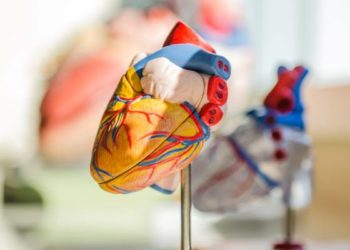
Image: PD

©2021 2 Minute Medicine, Inc. All rights reserved. No works may be reproduced without expressed written consent from 2 Minute Medicine, Inc. Inquire about licensing here. No article should be construed as medical advice and is not intended as such by the authors or by 2 Minute Medicine, Inc.

Tags: cardiovascular diseaseexercisepretermpreterm birthpreterm infant
Previous Post

Adjuvant metronomic capecitabine improves survival in patients with locoregionally advanced nasopharyngeal carcinoma

Next Post

Active workstations may improve daily standing and step counts

RelatedReports

Lariat device for left atrial appendage exclusion associated with adverse events
Weekly Rewinds

2 Minute Medicine Rewind November 17, 2025

November 17, 2025
Cardiology

Risk of cardiovascular mortality in patients with gastric cancer

November 10, 2025
Home-based walking program an effective treatment for peripheral artery disease
Cardiology

Longer bouts of exercise may be associated with decreased mortality and cardiovascular disease

October 27, 2025
Reduced gestational weight gain with lifestyle intervention
Chronic Disease

Investigating the long-term impact of a programme of mindfulness combined with exercise delivered online (MOVE) on individuals living with chronic pain-an exploratory one-year follow-up of a feasibility randomised control trial

October 7, 2025
Next Post
High-intensity treadmill exercise may slow progression of motor symptoms in early Parkinson’s disease

Active workstations may improve daily standing and step counts

Computer-extracted MRI features help distinguish benign from malignant prostate lesions

Magnetic resonance imaging-targeted biopsy noninferior to standard biopsy for prostate cancer screening

#VisualAbstract: Vitamin D3 supplementation may reduce disease recurrence in patients with stage II melanoma and low Breslow scores

#VisualAbstract: Vitamin D3 supplementation may reduce disease recurrence in patients with stage II melanoma and low Breslow scores

2 Minute Medicine® is an award winning, physician-run, expert medical media company. Our content is curated, written and edited by practicing health professionals who have clinical and scientific expertise in their field of reporting. Our editorial management team is comprised of highly-trained MD physicians. Join numerous brands, companies, and hospitals who trust our licensed content.

Recent Reports

  • Adjunct corticosteroids likely reduce short-term mortality in severe non-COVID-19 pneumonia
  • Within-individual variation of C-reactive protein (CRP) measurements in primary care: A retrospective cohort study
  • 2 Minute Medicine Rewind December 1st, 2025
License Content
Terms of Use | Disclaimer
Cookie Policy
Privacy Statement (EU)
Disclaimer

© 2025 2 Minute Medicine, Inc. - Physician-written medical news.

  • Specialties
    • All Specialties, All Recent Reports
    • Cardiology
    • Chronic Disease
    • Dermatology
    • Emergency
    • Endocrinology
    • Gastroenterology
    • Imaging and Intervention
    • Infectious Disease
    • Nephrology
    • Neurology
    • Obstetrics
    • Oncology
    • Ophthalmology
    • Pediatrics
    • Pharma
    • Preclinical
    • Psychiatry
    • Public Health
    • Pulmonology
    • Rheumatology
    • Surgery
  • AI EvidencePulse™
  • Pharma
  • AI News
  • The Scan
  • Classics™
    • 2MM+ Online Access
    • Paperback and Ebook
  • Rewinds
  • Podcasts
  • Partners
    • License Content
    • Submit Press Release
    • Advertise with Us
  • Account
    • Subscribe
    • Sign-in
    • My account
No Result
View All Result

© 2025 2 Minute Medicine, Inc. - Physician-written medical news.