• About
  • Masthead
  • License Content
  • Advertise
  • Submit Press Release
  • RSS/Email List
  • 2MM Podcast
  • Write for us
  • Contact Us
2 Minute Medicine
No Result
View All Result

No products in the cart.

SUBSCRIBE
  • Specialties
    • All Specialties, All Recent Reports
    • Cardiology
    • Chronic Disease
    • Dermatology
    • Emergency
    • Endocrinology
    • Gastroenterology
    • Imaging and Intervention
    • Infectious Disease
    • Nephrology
    • Neurology
    • Obstetrics
    • Oncology
    • Ophthalmology
    • Pediatrics
    • Pharma
    • Preclinical
    • Psychiatry
    • Public Health
    • Pulmonology
    • Rheumatology
    • Surgery
  • Tools
    • EvidencePulse™
    • RVU Search
    • NPI Registry Lookup
  • Pharma
  • AI News
  • The Scan+
  • Classics™+
    • 2MM+ Online Access
    • Paperback and Ebook
  • Rewinds
  • Partners
    • License Content
    • Submit Press Release
    • Advertise with Us
  • Account
    • Subscribe
    • Sign-in
    • My account
2 Minute Medicine
  • Specialties
    • All Specialties, All Recent Reports
    • Cardiology
    • Chronic Disease
    • Dermatology
    • Emergency
    • Endocrinology
    • Gastroenterology
    • Imaging and Intervention
    • Infectious Disease
    • Nephrology
    • Neurology
    • Obstetrics
    • Oncology
    • Ophthalmology
    • Pediatrics
    • Pharma
    • Preclinical
    • Psychiatry
    • Public Health
    • Pulmonology
    • Rheumatology
    • Surgery
  • Tools
    • EvidencePulse™
    • RVU Search
    • NPI Registry Lookup
  • Pharma
  • AI News
  • The Scan+
  • Classics™+
    • 2MM+ Online Access
    • Paperback and Ebook
  • Rewinds
  • Partners
    • License Content
    • Submit Press Release
    • Advertise with Us
  • Account
    • Subscribe
    • Sign-in
    • My account
SUBSCRIBE
2 Minute Medicine
Subscribe
Home All Specialties Chronic Disease

Cancer cell mechanical behavior a target for drug treatment [PreClinical]
byJessica LauandSarah Stapleton
January 28, 2015
in Chronic Disease, Oncology, Preclinical
Reading Time: 3 mins read
0
Share on FacebookShare on Twitter

1. Following a chemical library screen, the compound 4-hydroxyacetophenone (4-HAP) was found to target mechanical changes in cell shape important for cell division.

2. When treated with 4-HAP, deformable pancreatic cancer cells became stiffer and exhibited decreased metastatic behavior.

Evidence Rating Level: 3 (Average)

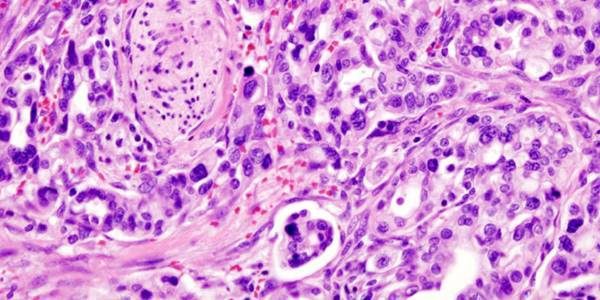
Study Rundown: Current chemotherapy drugs generally target biochemical molecules that play a role in cancer cells’ aberrant behavior, such as uncontrolled division. However in addition to biochemical processes, cancer cells also exhibit distinct mechanical properties; for example, the increased deformability of cancer cells is believed to contribute to metastasis. In this study, a high throughput screen was performed on a library of chemical compounds to identify potential drugs that alter cell mechanics. Specifically, image analysis was used to evaluate whether the compounds inhibited cytokinesis, the stage of cell division where one cell is physically divided into two. The screen led to the identification of the small molecule 4-HAP. 4-HAP was found to target the protein myosin II, which generates the mechanical forces necessary for cell shape and movement. When pancreatic cancer cells were treated with 4-HAP, they became stiffer. Notably, the treated cells showed decreased invasion and migration behaviors that are characteristic of metastatic cancer cells. While this study demonstrated the potential of 4-HAP in improving the mechanical properties of cancer cells, because this proof of concept study was performed in vitro, additional evaluation of 4-HAP in animal models of cancer will be necessary. Overall, the study highlights the potential for drug discovery in the area of cell mechanics.

Click to read the study in PNAS

Relevant Reading: Biomechanics and biophysics of cancer cells

RELATED REPORTS

GLP-1 receptor agonists show little effect on obesity-related cancer risk

mFOLFIRINOX may have a limited role in pancreatic cancer in Phase II/III trial

Artificial Intelligence and Real World Data Speed Up Drug Development

In-Depth [in vitro study]: Over 22,000 compounds in the commercially available ChemBridge DIVERSet chemical library were screened for activity in cell mechanical processes. As measured by image analysis, inhibition of cytokinesis was used as the readout for the high throughput screen. Because cytokinesis is a well-understood process that involves mechanical changes in cell shape, it was selected as a representative cell mechanical property. After the library compound carbamate-7 was identified to have an inhibitory effect on cytokinesis, further analysis showed that its degradation product 4-HAP was responsible for the activity of interest.

In cells treated with 4-HAP, the accumulation of the mechanoenzyme myosin II resulted in increased cortical tension (p=0.01), the force that maintains cell shape. To determine the potential of 4-HAP in improving cancer cell mechanics, the patient-derived pancreatic ductal adenocarcinoma metastatic cell line ASPC-1 was used. Compared to normal pancreatic cells, ASPC-1 cells were significantly less stiff. Following treatment with 4-HAP, ASPC-1 cell stiffness increased. Furthermore, treated ASPC-1 cells showed decreased invasion and migration behavior in a dose-dependent fashion. At the highest tested 4-HAP concentration of 50µM, ASPC-1 cells exhibited significantly less invasion and migration behavior than the control of no drug treatment (p<0.0001).

More from this author: Teixobactin appears to avoid bacteria resistance, Novel system rapidly detects low levels of bacteria in blood, Cell-loaded scaffold implant may improve cell therapy, Vaccines for predicted influenza strains may provide wide protection, Key gut bacteria may prevent Clostridium difficile infection

Image: PD

©2015 2 Minute Medicine, Inc. All rights reserved. No works may be reproduced without expressed written consent from 2 Minute Medicine, Inc. No article should be construed as medical advice and is not intended as such by the authors, editors, staff or by 2 Minute Medicine, Inc.
Tags: pancreatic cancer
Previous Post

2 Minute Medicine Rewind January 19 – January 25, 2015

Next Post

Increased detection of high-risk prostate cancer with targeted biopsy technique

RelatedReports

Many new pediatric asthma cases attributable to obesity
Chronic Disease

GLP-1 receptor agonists show little effect on obesity-related cancer risk

December 8, 2025
Rectal indomethacin dose escalation for prevention of pancreatitis after endoscopic retrograde cholangiopancreatography in high-risk patients
Gastroenterology

mFOLFIRINOX may have a limited role in pancreatic cancer in Phase II/III trial

August 7, 2025
AI Roundup

Artificial Intelligence and Real World Data Speed Up Drug Development

May 27, 2025
#VisualAbstract: Perioperative Durvalumab with Neoadju-vant Chemotherapy Improved Survival in Operable Bladder Cancer
StudyGraphics

#VisualAbstract: Cabozantinib Improved Progression-Free Survival in Advanced Neuroendocrine 2m -m Tumors

October 1, 2024
Next Post
Long-term active surveillance may be safe in low-risk prostate cancer

Increased detection of high-risk prostate cancer with targeted biopsy technique

Age may not impact residential status after abdominal surgery

Age may not impact residential status after abdominal surgery

High incidence of bilateral lower extremity inflammatory lymphedema in air force trainees

High incidence of bilateral lower extremity inflammatory lymphedema in air force trainees

2 Minute Medicine® is an award winning, physician-run, expert medical media company. Our content is curated, written and edited by practicing health professionals who have clinical and scientific expertise in their field of reporting. Our editorial management team is comprised of highly-trained MD physicians. Join numerous brands, companies, and hospitals who trust our licensed content.

Recent Reports

  • Segment 4b/5 resection offers no survival advantage over wedge resection in gallbladder cancer
  • Simvastatin (Zocor) in combination with paclitaxel (Taxol) may provide treatment benefit compared to paclitaxel alone for small cell lung cancer
  • Adjunctive prednisolone does not reduce coronary artery lesions in Kawasaki disease
License Content
Terms of Use | Disclaimer
Cookie Policy
Privacy Statement (EU)
Disclaimer

The Classics in Medicine Paperback Released!

Over the past 30 years, the transition from print to digital media has contributed to an exponential increase in medical literature. In response, 2 Minute Medicine presents 160+ authoritative, physician-written summaries of the most cited landmark trials in medicine.

amazon-logo_blackGet-it-on-iBooks-badge

Click anywhere to close this announcement

  • Specialties
    • All Specialties, All Recent Reports
    • Cardiology
    • Chronic Disease
    • Dermatology
    • Emergency
    • Endocrinology
    • Gastroenterology
    • Imaging and Intervention
    • Infectious Disease
    • Nephrology
    • Neurology
    • Obstetrics
    • Oncology
    • Ophthalmology
    • Pediatrics
    • Pharma
    • Preclinical
    • Psychiatry
    • Public Health
    • Pulmonology
    • Rheumatology
    • Surgery
  • Tools
    • EvidencePulse™
    • RVU Search
    • NPI Registry Lookup
  • Pharma
  • AI News
  • The Scan
  • Classics™
    • 2MM+ Online Access
    • Paperback and Ebook
  • Rewinds
  • Partners
    • License Content
    • Submit Press Release
    • Advertise with Us
  • Account
    • Subscribe
    • Sign-in
    • My account
No Result
View All Result

© 2026 2 Minute Medicine, Inc. - Physician-written medical news.