• About
  • Masthead
  • License Content
  • Advertise
  • Press Releases
  • Newsroom
  • RSS/Email List
  • 2MM Podcast
  • Write for us
  • Contact Us
2 Minute Medicine
No Result
View All Result

No products in the cart.

Sign in
SUBSCRIBE
  • About
  • Specialties
    • All Specialties, All Recent Reports
    • Cardiology
    • Chronic Disease
    • Dermatology
    • Emergency
    • Endocrinology
    • Gastroenterology
    • Imaging and Intervention
    • Infectious Disease
    • Nephrology
    • Neurology
    • Obstetrics
    • Oncology
    • Ophthalmology
    • Pediatrics
    • Pharma
    • Preclinical
    • Psychiatry
    • Public Health
    • Pulmonology
    • Rheumatology
    • Surgery
    • Rewinds
    • The Scan
  • EvidencePulse™
  • HypeCheck™
  • AI News
  • Classics™
    • 2MM+ Online Access
    • Paperback and Ebook
  • Tools
    • NPI Registry Lookup
    • RVU Search
  • Partners
    • License Content
    • Advertise with Us
2 Minute Medicine
  • About
  • Specialties
    • All Specialties, All Recent Reports
    • Cardiology
    • Chronic Disease
    • Dermatology
    • Emergency
    • Endocrinology
    • Gastroenterology
    • Imaging and Intervention
    • Infectious Disease
    • Nephrology
    • Neurology
    • Obstetrics
    • Oncology
    • Ophthalmology
    • Pediatrics
    • Pharma
    • Preclinical
    • Psychiatry
    • Public Health
    • Pulmonology
    • Rheumatology
    • Surgery
    • Rewinds
    • The Scan
  • EvidencePulse™
  • HypeCheck™
  • AI News
  • Classics™
    • 2MM+ Online Access
    • Paperback and Ebook
  • Tools
    • NPI Registry Lookup
    • RVU Search
  • Partners
    • License Content
    • Advertise with Us
Sign in
SUBSCRIBE
2 Minute Medicine
Sign in
Subscribe
2 Minute MedicineFree on Google PlayGet
✦ EvidencePulse™ by 2 Minute Medicine 2026 evidence scan 3 reports You asked top stroke trials 2026 Synthesizing medical evidence... Top 2026 stroke trial results: OCEANIC — ischemic stroke: 6.2% vs 8.4% OPTION* — mRS 0–1: 43.6% vs 34.2% ORIENTAL* — mRS 0–2: 58.6% vs 46.6% *Higher sICH in intervention arms Participants randomizedN OCEANIC 12,327 OPTION 570 ORIENTAL 564 Ask about guidelines or landmark trials... ↑ Try EvidencePulse™ Ask the evidence.
Get the signal.
Try it now → Physician-trained medical AI by 2 Minute Medicine
Home All Specialties Cardiology

Declining blood pressure in elderly associated with subcortical microinfarcts

byAngela ZhangandAnees Daud
December 11, 2017
in Cardiology, Chronic Disease, Imaging and Intervention, Neurology, Public Health
Reading Time: 2 mins read
Declining blood pressure in elderly associated with subcortical microinfarcts
Share on FacebookShare on TwitterShare on LinkedIn

1. By comparing the baseline blood pressures and BP trends of elderly individuals with or without subcortical or cortical microinfarcts at autopsy, the authors identified an association between a steeper BP decline and the presence of subcortical microinfarcts.

2. Cortical microinfarcts were associated with the presence of the apolipoprotein E (APOE) ε4 allele, associated with Alzheimer’s disease and amyloid angiopathy.

Evidence Rating Level: 3 (Average)

Study Rundown: Hypotension has been shown to be associated with cognitive impairment and dementia in the elderly, potentially due to microinfarcts and macroinfarcts as a result of cerebral hypoperfusion. Prior studies have assessed cross-sectional BP measurements and the presence of microinfarcts independent of anatomic location. In this study, however, the authors analyze both baseline BP and BP trends over time, and their association with cortical or subcortical infarcts. They used participants from the Mayo Clinic Study of Aging (MCSA) who received serial antemortem BP measurements and obtained data about the presence or absence of microinfarcts at autopsy. No significant differences in baseline systolic or diastolic BP were observed between patients with any, cortical, or subcortical microinfarcts and those without microinfarcts. However, patients with subcortical infarcts at autopsy had steeper annual decline in both systolic and diastolic BP. Additionally, patients with cortical microinfarcts had a greater proportion of APOE ε4 carriers. Mechanistically, declining BP leading to microinfarction may reflect impairment of cerebral autoregulation with age.

This study may have implications for BP targets in the treatment of hypertension in the elderly. However, given that this study is only able to draw associations rather than causations, and also excluded patients with dementia, further studies are warranted to elucidate a potentially causative relationship between BP and microinfarction, and to better understand the role of antihypertensive medications in this phenomenon.

Click to read the study, published in JAMA Neurology

RELATED REPORTS

Earlier menopause is associated with faster cognitive decline and greater late-life brain changes

Older married couples demonstrate domain-specific cognitive concordance 

Relevant Reading: Blood pressure and dementia – a comprehensive review.

In-Depth [case-control study]: In this study, the authors used a study cohort of 3395 patients, aged 70 years and older, from the Mayo Clinic Study of Aging (MCSA). Patients participated in antemortem brachial BP measurements and, on autopsy, were evaluated for the presence of microinfarcts, identified as cortical or subcortical, on histologic sections (autopsy cohort, n = 303). Participants with any, cortical, or subcortical microinfarcts did not differ significantly from those without microinfarcts on baseline systolic and diastolic BP. However, participants with subcortical microinfarcts had greater BP decline for both systolic BP (p = 0.04) and diastolic BP (p = 0.02). The group with cortical microinfarcts had a higher proportion carrying the APOE ε4 allele (p = 0.05) compared to the group without microinfarcts. A logistic regression model predicted that for each 1 unit increase in systolic or diastolic slope, the ORs for subcortical microinfarction were 0.94 and 0.90, respectively. Conversely, for each 1 unit decrease in systolic or diastolic slope, the ORs were 1.06 and 1.1, respectively.

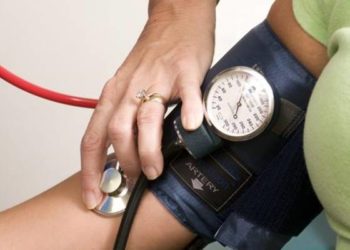
Image: PD

©2017 2 Minute Medicine, Inc. All rights reserved. No works may be reproduced without expressed written consent from 2 Minute Medicine, Inc. Inquire about licensing here. No article should be construed as medical advice and is not intended as such by the authors or by 2 Minute Medicine, Inc.

Tags: blood pressurecognitive declinecognitive impairment
Previous Post

Recombinant viral vector treatment sustains endogenous factor IX activity in patients with hemophilia B

Next Post

Individualized glycemic control for type 2 diabetes may save the U.S. billions annually

RelatedReports

An illustration showing a brain scan alongside a human brain, symbolizing brain health and cognitive decline.
Longevity

Earlier menopause is associated with faster cognitive decline and greater late-life brain changes

October 5, 2026
Neurology

Older married couples demonstrate domain-specific cognitive concordance 

August 28, 2026
Prevalence of hypertension among adolescents varies by race and BMI
Cardiology

A health coaching intervention may improve blood pressure control in postpartum women

August 12, 2026
Sleep duration, sleepiness, chronotype have variable associations with teen self-regulation
Weekly Rewinds

2 Minute Medicine Rewind August 10, 2026

August 10, 2026
Next Post
Pediatric DKA associated with recent acute care visits

Individualized glycemic control for type 2 diabetes may save the U.S. billions annually

No long-term outcome differences between stenting versus surgery for carotid stenosis

Use of carotid artery stenting increased amongst older patients in the US despite results from CREST trial

Antidepressant use associated with increased risk of subsequent mania

Paternal SSRI usage correlates with increased ADHD rate in offspring

✦ EvidencePulse™ by 2 Minute Medicine 2026 evidence scan 3 reports You asked top stroke trials 2026 Synthesizing medical evidence... Top 2026 stroke trial results: OCEANIC — ischemic stroke: 6.2% vs 8.4% OPTION* — mRS 0–1: 43.6% vs 34.2% ORIENTAL* — mRS 0–2: 58.6% vs 46.6% *Higher sICH in intervention arms Participants randomizedN OCEANIC 12,327 OPTION 570 ORIENTAL 564 Ask about guidelines or landmark trials... Try EvidencePulse™ Get the signal. Try it now → Physician-trained medical AI by 2 Minute Medicine

2MM+ All Access

Full details →
$4.99 /month

3-day free trial · cancel anytime

  • ✓100+ physician-written reports
  • ✓EvidencePulse™ + HypeCheck™
  • ✓Ad-free reading + newsletters
Start 3-day free trial

Then $4.99/month. Manage renewal in your account.

NPI Lookup · Free

Look up any US clinician

Search by name or NPI number, live from the CMS NPI Registry.

  • OIG exclusion check
  • Licenses and specialties
  • No account needed
Open NPI Lookup →

2 Minute Medicine® is an award winning, physician-run, expert medical media company. Our content is curated, written and edited by practicing health professionals who have clinical and scientific expertise in their field of reporting. Our editorial management team is comprised of highly-trained MD physicians. Join numerous brands, companies, and hospitals who trust our licensed content.

Recent Reports

  • An artificial intelligence system for human papillomavirus-positive dual stain cervical cancer screening reads p16-Ki67 slides
  • Elevated low-density lipoprotein cholesterol is a risk factor for atherosclerotic disease irrespective of familial hypercholesterolemia status
  • Children with autism spectrum disorder may have reduced fecal microbial diversity
License Content
Terms of Use | Disclaimer
Cookie Policy

Get the app

Read 2 Minute Medicine on iPhone, iPad and Android.

Download on the App StoreGet it on Google Play
QR code for www.2minutemedicine.com/app
On a computer? Scan this with your phone’s camera.
2MM+ All Access Full details →

The medical literature, distilled daily.

Monthly plan selected: $4.99 /month.

$4.99/month

3-day free trial · cancel anytime

Start 3-day free trial

Then $4.99/month. Manage renewal in your account.

Yearly plan selected: $49.90 /year.

$49.90/year

2 months free

Start 3-day free trial

Then $49.90/year.

Membership benefits

  • ✓100+ physician-written reports
  • ✓AI EvidencePulse™ + HypeCheck™
  • ✓Ad-free reading + newsletters
  • ✓NPI watchlist + bulk NPI verification

Already a member? Sign in

  • About
  • Specialties
    • All Specialties, All Recent Reports
    • Cardiology
    • Chronic Disease
    • Dermatology
    • Emergency
    • Endocrinology
    • Gastroenterology
    • Imaging and Intervention
    • Infectious Disease
    • Nephrology
    • Neurology
    • Obstetrics
    • Oncology
    • Ophthalmology
    • Pediatrics
    • Pharma
    • Preclinical
    • Psychiatry
    • Public Health
    • Pulmonology
    • Rheumatology
    • Surgery
    • Rewinds
    • The Scan
  • EvidencePulse™
  • HypeCheck™
  • AI News
  • Classics™
    • 2MM+ Online Access
    • Paperback and Ebook
  • Tools
    • NPI Registry Lookup
    • RVU Search
  • Partners
    • License Content
    • Advertise with Us
No Result
View All Result

© 2026 2 Minute Medicine, Inc. - Physician-written medical news.