• About
  • Masthead
  • License Content
  • Advertise
  • Submit Press Release
  • RSS/Email List
  • 2MM Podcast
  • Write for us
  • Contact Us
2 Minute Medicine
No Result
View All Result

No products in the cart.

SUBSCRIBE
  • About
  • Specialties
    • All Specialties, All Recent Reports
    • Cardiology
    • Chronic Disease
    • Dermatology
    • Emergency
    • Endocrinology
    • Gastroenterology
    • Imaging and Intervention
    • Infectious Disease
    • Nephrology
    • Neurology
    • Obstetrics
    • Oncology
    • Ophthalmology
    • Pediatrics
    • Pharma
    • Preclinical
    • Psychiatry
    • Public Health
    • Pulmonology
    • Rheumatology
    • Surgery
  • Tools+
    • EvidencePulse™
    • HypeCheck™
    • NPI Registry Lookup
    • RVU Search
  • Pharma
  • AI Roundup
  • The Scan+
  • Classics™+
    • 2MM+ Online Access
    • Paperback and Ebook
  • Rewinds
  • Partners
    • License Content
    • Submit Press Release
    • Advertise with Us
  • Account
    • Subscribe
    • My account
    • Cart
    • Sign in
2 Minute Medicine
  • About
  • Specialties
    • All Specialties, All Recent Reports
    • Cardiology
    • Chronic Disease
    • Dermatology
    • Emergency
    • Endocrinology
    • Gastroenterology
    • Imaging and Intervention
    • Infectious Disease
    • Nephrology
    • Neurology
    • Obstetrics
    • Oncology
    • Ophthalmology
    • Pediatrics
    • Pharma
    • Preclinical
    • Psychiatry
    • Public Health
    • Pulmonology
    • Rheumatology
    • Surgery
  • Tools+
    • EvidencePulse™
    • HypeCheck™
    • NPI Registry Lookup
    • RVU Search
  • Pharma
  • AI Roundup
  • The Scan+
  • Classics™+
    • 2MM+ Online Access
    • Paperback and Ebook
  • Rewinds
  • Partners
    • License Content
    • Submit Press Release
    • Advertise with Us
  • Account
    • Subscribe
    • My account
    • Cart
    • Sign in
SUBSCRIBE
2 Minute Medicine
Subscribe
EvidencePulse™ by 2 Minute Medicine 2026 evidence scan 3 reports You asked top stroke trials 2026 Synthesizing medical evidence... Top 2026 stroke trial results: OCEANIC — ischemic stroke: 6.2% vs 8.4% OPTION* — mRS 0–1: 43.6% vs 34.2% ORIENTAL* — mRS 0–2: 58.6% vs 46.6% *Higher sICH in intervention arms Participants randomizedN OCEANIC 12,327 OPTION 570 ORIENTAL 564 Ask about guidelines or landmark trials... ↑ Try EvidencePulse™ Ask the evidence.
Get the signal.
Try it now → Physician-trained medical AI by 2 Minute Medicine
Home All Specialties Neurology

Inebilizumab improves outcome in patients generalized myasthenia gravis
byNhat Hung (Benjamin) LamandKiera Liblik
July 10, 2025
in Neurology, Rheumatology
Reading Time: 3 mins read
Age and number of islet autoantibodies associated with diabetes risk
Share on FacebookShare on Twitter

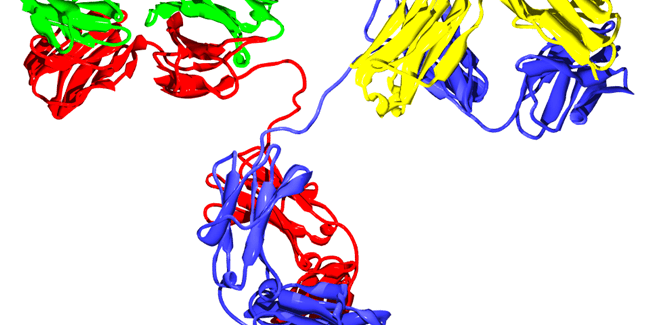
1. In patients with myasthenia gravis (MG) who had anti-acetylcholine receptor antibodies or anti-muscle-specific kinase antibodies, intravenous inebilizumab reduced disease severity and improved function compared to placebo.

2. Inebilizumab had an acceptable safety profile consistent with trials in conditions other than MG and was not associated with increased severe adverse events. 

Evidence Rating Level: 1 (Excellent)

Study Rundown: MG is an autoimmune disorder where auto-antibodies affecting post-synaptic neuromuscular transmission, including acetylcholine receptors (AchR) and muscle-specific kinase (MSK), are produced by CD19+ B-cells, resulting in fluctuating muscle weakness. Current therapies include glucocorticoids, cholinesterase inhibitors, thymectomy, and long-term immunosuppression. Rituximab, a CD20 B-cell depletion therapy, has shown variable efficacy in trials, possibly because CD19+/CD20- B-cells are involved in MG pathophysiology. Inebilizumab is a novel CD19+ B cell-depleting monoclonal antibody. This trial investigated inebilizumab in treating MG patients with positive anti-AchR and anti-MSK antibodies, with all patients undergoing glucocorticoid taper concurrently. By week 26, inebilizumab resulted in a greater reduction in disease activity scores from baseline compared to placebo in the combined antibody population. These results were also seen within patient subpopulations separated by anti-AchR and anti-MSK antibody status, respectively. Inebilizumab was associated with headache, cough, nasopharyngitis, and urinary tract infections, but not higher risk of serious adverse events. Although this trial was limited in its length, it demonstrated the promise of inebilizumab in reducing disease activity and improving activities of daily living in patients with MG with anti-AchR and anti-MSK antibodies.

Click here to read the study in NEJM

In-Depth [randomized controlled trial]: This was a placebo-controlled trial assessing the efficacy and safety of inebilizumab in the treatment of MG. Patients 18 years of age or older, who were diagnosed with generalized MG, tested positive for either anti-AchR or anti-MSK antibodies, had a MG Activities of Daily Living score (MG-ADL) ≥11 or between 6-10 (with >50% attributed to non-ocular items), a Quantitative Myasthenia Gravis score ≥11, and had been receiving a stable dose of glucocorticoids or non-steroidal immunosuppression were eligible for inclusion. In total, 238 patients were randomized 1:1 to receive either intravenous inebilizumab 300mg on days 1 and 15 (for all patients in the inebilizumab group) or placebo. The primary outcome was the change from baseline in the score on the MG-ADL at week 26 in the combined anti-AchR and anti-MSK antibody population. By week 26, patients in the inebilizumab group had a greater reduction in the MG-ADL score than those who received placebo at week 26: least-squares mean change -4.2 for inebilizumab vs. -2.2 for placebo (Adjusted Difference [AD], -1.9; 95% Confidence Interval [CI], -2.9 to -1.0, p<0.001). Similar findings were noted in the 26-week QMG score, where the least-squares mean change from baseline was -4.8 for inebilizumab and -2.3 for placebo (AD, -2.5; 95% CI, -3.8 to -1.2; p<0.001). These trends were also observed for the 26-week MG-ADL score in the anti-AchR (AD, -1.8; 95% CI, -2.9 to -0.7; p<0.002) and anti-MSK (AD, -2.2; 95% CI, -4.2 to -0.2; p=0.03) subpopulations, as well as QMG score. The most common adverse events with inebilizumab were headache, cough, nasopharyngitis, infusion-related reactions, and urinary tract infections. Inebilizumab was not associated with a higher incidence of serious adverse events. Immune complex disease, cytopenia, and serious and opportunistic infections occurred in a small number of inebilizumab recipients. In summary, these results showed that inebilizumab improved daily activity and reduced disease severity in patients with generalized MG, while maintaining a tolerable safety profile.

RELATED REPORTS

One in four National Football League (NFL) players who died between 2016-2021 had evidence of chronic traumatic encephalopathy

Brain-predicted age difference may reliably predict dementia progression

Diffusion-weighted imaging may aid in prognostication for intracerebral hemorrhage

Image: PD

©2025 2 Minute Medicine, Inc. All rights reserved. No works may be reproduced without expressed written consent from 2 Minute Medicine, Inc. Inquire about licensing here. No article should be construed as medical advice and is not intended as such by the authors or by 2 Minute Medicine, Inc.


Tags: generalized myasthenia gravisInebilizumabMyasthenia Gravisneurologyrheumatology
Previous Post

Medbridge turns any phone into a motion-capture coach for at-home rehab

Next Post

Oral vancomycin may be effective for pouchitis in inflammatory bowel disease

RelatedReports

Chronic Disease

One in four National Football League (NFL) players who died between 2016-2021 had evidence of chronic traumatic encephalopathy

August 27, 2026
Chronic Disease

Brain-predicted age difference may reliably predict dementia progression

August 19, 2026
No difference in mortality for intensive versus standard reduction in blood pressure in intracerebral hemorrhage: The ATACH-2 trial
Emergency

Diffusion-weighted imaging may aid in prognostication for intracerebral hemorrhage

August 18, 2026
Low free sugar diet reduces hepatic steatosis in nonalcoholic fatty liver disease in adolescent males
Weekly Rewinds

2 Minute Medicine Rewind August 17, 2026

August 17, 2026
Next Post
Biosimilar to infliximab shows equivalent safety and efficacy for treating Crohn’s disease

Oral vancomycin may be effective for pouchitis in inflammatory bowel disease

Increasing maternal BMI linked to higher risk of cerebral palsy

Mazdutide significantly reduces weight in adults with overweight or obesity

Multiple-electrode switching radiofrequency ablation may successfully treat lung tumors

Nerandomilast slows decline in FVC in idiopathic pulmonary fibrosis

EvidencePulse™ by 2 Minute Medicine 2026 evidence scan 3 reports You asked top stroke trials 2026 Synthesizing medical evidence... Top 2026 stroke trial results: OCEANIC — ischemic stroke: 6.2% vs 8.4% OPTION* — mRS 0–1: 43.6% vs 34.2% ORIENTAL* — mRS 0–2: 58.6% vs 46.6% *Higher sICH in intervention arms Participants randomizedN OCEANIC 12,327 OPTION 570 ORIENTAL 564 Ask about guidelines or landmark trials... ↑ Try EvidencePulse™ Get the signal. Try it now → Physician-trained medical AI by 2 Minute Medicine

2MM+ All Access

Full details →
$4.99 /month

3-day free trial · cancel anytime

  • ✓100+ physician-written reports
  • ✓EvidencePulse™ + HypeCheck™
  • ✓Ad-free reading + newsletters
Start 3-day free trial

Then $4.99/month. Manage renewal in your account.

2 Minute Medicine® is an award winning, physician-run, expert medical media company. Our content is curated, written and edited by practicing health professionals who have clinical and scientific expertise in their field of reporting. Our editorial management team is comprised of highly-trained MD physicians. Join numerous brands, companies, and hospitals who trust our licensed content.

Recent Reports

  • Robotic cholecystectomy benefits high-risk and higher-BMI patients but costs more
  • Antibiotics after appendectomy were not associated with reduced postoperative infections
  • Probiotic supplementation is associated with reduced risk of death and necrotizing enterocolitis among preterm infants
License Content
Terms of Use | Disclaimer
Cookie Policy
2MM+ All Access Full details →

The medical literature, distilled daily.

Monthly plan selected: $4.99 /month.

$4.99/month

3-day free trial · cancel anytime

Start 3-day free trial

Then $4.99/month. Manage renewal in your account.

Yearly plan selected: $49.90 /year.

$49.90/year

2 months free

Start 3-day free trial

Then $49.90/year.

Membership benefits

  • ✓100+ physician-written reports
  • ✓AI EvidencePulse™ + HypeCheck™
  • ✓Ad-free reading + newsletters

Already a member? Sign in

  • About
  • Specialties
    • All Specialties, All Recent Reports
    • Cardiology
    • Chronic Disease
    • Dermatology
    • Emergency
    • Endocrinology
    • Gastroenterology
    • Imaging and Intervention
    • Infectious Disease
    • Nephrology
    • Neurology
    • Obstetrics
    • Oncology
    • Ophthalmology
    • Pediatrics
    • Pharma
    • Preclinical
    • Psychiatry
    • Public Health
    • Pulmonology
    • Rheumatology
    • Surgery
  • Tools
    • EvidencePulse™
    • HypeCheck™
    • NPI Registry Lookup
    • RVU Search
  • Pharma
  • AI Roundup
  • The Scan
  • Classics™
    • 2MM+ Online Access
    • Paperback and Ebook
  • Rewinds
  • Partners
    • License Content
    • Submit Press Release
    • Advertise with Us
  • Account
    • Subscribe
    • My account
    • Cart
    • Sign in
No Result
View All Result

© 2026 2 Minute Medicine, Inc. - Physician-written medical news.