• About
  • Masthead
  • License Content
  • Advertise
  • Submit Press Release
  • RSS/Email List
  • 2MM Podcast
  • Write for us
  • Contact Us
2 Minute Medicine
No Result
View All Result

No products in the cart.

SUBSCRIBE
  • About
  • Specialties
    • All Specialties, All Recent Reports
    • Cardiology
    • Chronic Disease
    • Dermatology
    • Emergency
    • Endocrinology
    • Gastroenterology
    • Imaging and Intervention
    • Infectious Disease
    • Nephrology
    • Neurology
    • Obstetrics
    • Oncology
    • Ophthalmology
    • Pediatrics
    • Pharma
    • Preclinical
    • Psychiatry
    • Public Health
    • Pulmonology
    • Rheumatology
    • Surgery
  • Tools+
    • EvidencePulse™
    • HypeCheck™
    • NPI Registry Lookup
    • RVU Search
  • Pharma
  • AI Roundup
  • The Scan+
  • Classics™+
    • 2MM+ Online Access
    • Paperback and Ebook
  • Rewinds
  • Partners
    • License Content
    • Submit Press Release
    • Advertise with Us
  • Account
    • Subscribe
    • My account
    • Cart
    • Sign-in
2 Minute Medicine
  • About
  • Specialties
    • All Specialties, All Recent Reports
    • Cardiology
    • Chronic Disease
    • Dermatology
    • Emergency
    • Endocrinology
    • Gastroenterology
    • Imaging and Intervention
    • Infectious Disease
    • Nephrology
    • Neurology
    • Obstetrics
    • Oncology
    • Ophthalmology
    • Pediatrics
    • Pharma
    • Preclinical
    • Psychiatry
    • Public Health
    • Pulmonology
    • Rheumatology
    • Surgery
  • Tools+
    • EvidencePulse™
    • HypeCheck™
    • NPI Registry Lookup
    • RVU Search
  • Pharma
  • AI Roundup
  • The Scan+
  • Classics™+
    • 2MM+ Online Access
    • Paperback and Ebook
  • Rewinds
  • Partners
    • License Content
    • Submit Press Release
    • Advertise with Us
  • Account
    • Subscribe
    • My account
    • Cart
    • Sign-in
SUBSCRIBE
2 Minute Medicine
Subscribe
EvidencePulse™ by 2 Minute Medicine 2026 evidence scan 3 reports You asked top stroke trials 2026 Synthesizing medical evidence... Top 2026 stroke trial results: OCEANIC — ischemic stroke: 6.2% vs 8.4% OPTION* — mRS 0–1: 43.6% vs 34.2% ORIENTAL* — mRS 0–2: 58.6% vs 46.6% *Higher sICH in intervention arms Participants randomizedN OCEANIC 12,327 OPTION 570 ORIENTAL 564 Ask about guidelines or landmark trials... ↑ Try EvidencePulse™ Ask the evidence.
Get the signal.
Try it now → Physician-trained medical AI by 2 Minute Medicine
Home All Specialties Cardiology

Direct oral anticoagulants more effective in patients with valvular atrial fibrillation
byThomas SuandHarsh Shah
April 12, 2021
in Cardiology, Neurology
Reading Time: 3 mins read
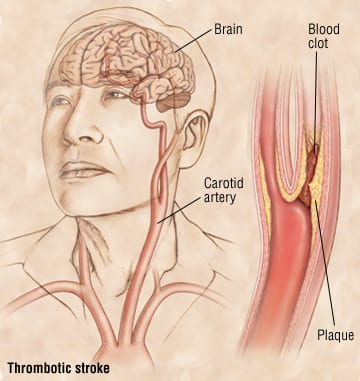
Patient Basics: Thrombotic Stroke
Share on FacebookShare on Twitter

1. Patients who received a direct oral anticoagulant had a lower risk of thromboembolic events and major bleeds compared to patients who received warfarin.

2. The between-group differences were consistent across all prespecified clinically relevant subgroups.

Evidence Rating Level: 2 (Good)

Study Rundown: It is recommended for patients with atrial fibrillation to receive prophylactic anticoagulant therapy to guard against an increased risk of stroke and other thromboembolic events. Numerous studies have demonstrated direct oral anticoagulants (DOACs) have greater antithrombotic effects and lower bleeding risk compared to warfarin in patients with nonvalvular atrial fibrillation. However, little direct evidence exists to confirm the efficacy and safety of DOACs in patients with both atrial fibrillation and valvular heart disease. In this new-user study involving over 55,000 patients with valvular atrial fibrillation, those who received a DOAC had a significantly lower risk for both major bleeding (gastrointestinal or intracranial) and the composite of ischemic stroke or systemic embolism (SE). These findings were robust in sensitivity analyses, consistent across demographic and clinical variables, and largely independent of the specific DOAC used (apixaban, rivaroxaban, dabigatran, or edoxaban). The study was limited by the lack of data regarding the concomitant use of over-the-counter drugs and the severity of valvular disease. Overall, these results contribute to the pool of observational evidence that supports the consideration of DOACs as a treatment option for patients with valvular atrial fibrillation.

Click here to read the study in Annals of Internal Medicine

Relevant Reading: Prevalence, Characteristics, and Outcomes of Valvular Heart Disease in Patients With Atrial Fibrillation: Insights From the ORBIT‐AF (Outcomes Registry for Better Informed Treatment for Atrial Fibrillation)

RELATED REPORTS

Apixaban (Eliquis) is associated with reduced rates of ischemic stroke and bleeding in patients with atrial fibrillation and advanced chronic kidney disease compared with warfarin (Coumadin)

2 Minute Medicine Rewind September 7, 2026

2 Minute Medicine Rewind August 31, 2026

In-Depth [retrospective cohort]: This study identified 46,276 new users of DOACs and 34,967 new users of warfarin. Patients who were 18 years or older and had a valvular heart disease diagnosis were included in the study. The study exclusion criteria included end-stage renal failure, history of stroke or systemic embolism, and heart valve replacement. The primary effectiveness outcome was a composite of ischemic stroke or SE, while the primary safety outcome was a composite of intracranial or gastrointestinal bleeding. At the end of the study, 787 DOAC users had stroke or SE after a median follow-up of 134 days (3.9 events per 100 person-years) compared to 1,211 warfarin users after a median follow-up of 124 days (6.0 events per 100 person-years). This corresponded to a hazard ratio of 0.64 (95% confidence interval [CI], 0.59 to 0.70) and an absolute reduction in the probability of stroke or SE with DOACs compared with warfarin of 0.015 within 6 months and 0.026 within 1 year. For the risk of major bleeding, 1,465 DOAC users had an event (7.1 events per 100 person-years) compared to 2,155 warfarin users (10.6 events per 100 person-years). This corresponded to a hazard ratio of 0.67 (95% CI, 0.63 to 0.72) and an absolute reduction in the probability of major bleeding of 0.019 within 6 months and 0.035 within 1 year. These differences persisted across subgroups defined by age, sex, cancer, abnormal coagulation, and type of valvular heart disease. Overall, the study determined DOAC lowered the risk of ischemic stroke SE in patients with valvular atrial fibrillation.

Image: PD

 ©2021 2 Minute Medicine, Inc. All rights reserved. No works may be reproduced without expressed written consent from 2 Minute Medicine, Inc. Inquire about licensing here. No article should be construed as medical advice and is not intended as such by the authors or by 2 Minute Medicine, Inc.
Tags: atrial fibrillationdirect oral anticoagulant (DOAC)ischemic strokevalvular disease
Previous Post

Sutimlimab improved hemoglobin and patient symptoms in cold agglutinin disease

Next Post

Lenvatinib plus pembrolizumab for advanced renal cell carcinoma treatment

RelatedReports

Nephrology

Apixaban (Eliquis) is associated with reduced rates of ischemic stroke and bleeding in patients with atrial fibrillation and advanced chronic kidney disease compared with warfarin (Coumadin)

September 9, 2026
Long-term outcomes for off-pump and on-pump CABG are similar
Weekly Rewinds

2 Minute Medicine Rewind September 7, 2026

September 7, 2026
Rivaroxaban likely reduces risk of recurrent stroke in specific subgroup of patients with embolic stroke of undetermined source
Weekly Rewinds

2 Minute Medicine Rewind August 31, 2026

August 31, 2026
Rivaroxaban likely reduces risk of recurrent stroke in specific subgroup of patients with embolic stroke of undetermined source
Cardiology

Catheter ablation within 1 year of atrial fibrillation diagnosis is associated with reduced risk of recurrence

July 24, 2026
Next Post
Pediatric renal and thyroid cancer rates increase

Lenvatinib plus pembrolizumab for advanced renal cell carcinoma treatment

Variability in interpretation of breast biopsy slides associated with low verification of atypia and ductal carcinoma in situ

Clinicopathological heterogeneity in triple-negative breast cancers associated with variable prognosis and therapeutic outcomes

Time-limited trials may decrease the length of stay of critically ill patients in the intensive care unit

EvidencePulse™ by 2 Minute Medicine 2026 evidence scan 3 reports You asked top stroke trials 2026 Synthesizing medical evidence... Top 2026 stroke trial results: OCEANIC — ischemic stroke: 6.2% vs 8.4% OPTION* — mRS 0–1: 43.6% vs 34.2% ORIENTAL* — mRS 0–2: 58.6% vs 46.6% *Higher sICH in intervention arms Participants randomizedN OCEANIC 12,327 OPTION 570 ORIENTAL 564 Ask about guidelines or landmark trials... ↑ Try EvidencePulse™ Ask the evidence.
Get the signal.
Try it now → Physician-trained medical AI by 2 Minute Medicine

2MM+ All Access

Full details →
$4.99 /month

5-day free trial · cancel anytime

  • ✓100+ physician-written reports
  • ✓EvidencePulse™ + HypeCheck™
  • ✓Ad-free reading + newsletters
Start 5-day free trial

Then $4.99/month. Manage renewal in your account.

2 Minute Medicine® is an award winning, physician-run, expert medical media company. Our content is curated, written and edited by practicing health professionals who have clinical and scientific expertise in their field of reporting. Our editorial management team is comprised of highly-trained MD physicians. Join numerous brands, companies, and hospitals who trust our licensed content.

Recent Reports

  • Choice of bicarbonate-buffered solution versus compound sodium lactate as the intraoperative crystalloid solution during abdominal surgery remains unclear
  • Artificial intelligence (AI)-based coronary calcium quantification successfully identified patients who could benefit from lipid-lowering therapy
  • First messenger RNA influenza vaccine outperforms standard-dose vaccination
License Content
Terms of Use | Disclaimer
Cookie Policy
Cleantalk Pixel
2MM+ All Access Full details →

The medical literature, distilled daily.

Monthly plan selected: $4.99 /month.

$4.99/month

5-day free trial · cancel anytime

Start 5-day free trial

Then $4.99/month. Manage renewal in your account.

Yearly plan selected: $49.90 /year.

$49.90/year

2 months free · only $4.16/month

Start 5-day free trial

Then $49.90/year. Manage renewal in your account.

Membership benefits

  • ✓100+ physician-written reports
  • ✓AI EvidencePulse™ + HypeCheck™
  • ✓Ad-free reading + newsletters

Already a member? Sign in

  • About
  • Specialties
    • All Specialties, All Recent Reports
    • Cardiology
    • Chronic Disease
    • Dermatology
    • Emergency
    • Endocrinology
    • Gastroenterology
    • Imaging and Intervention
    • Infectious Disease
    • Nephrology
    • Neurology
    • Obstetrics
    • Oncology
    • Ophthalmology
    • Pediatrics
    • Pharma
    • Preclinical
    • Psychiatry
    • Public Health
    • Pulmonology
    • Rheumatology
    • Surgery
  • Tools
    • EvidencePulse™
    • HypeCheck™
    • NPI Registry Lookup
    • RVU Search
  • Pharma
  • AI Roundup
  • The Scan
  • Classics™
    • 2MM+ Online Access
    • Paperback and Ebook
  • Rewinds
  • Partners
    • License Content
    • Submit Press Release
    • Advertise with Us
  • Account
    • Subscribe
    • My account
    • Cart
    • Sign-in
No Result
View All Result

© 2026 2 Minute Medicine, Inc. - Physician-written medical news.