• About
  • Masthead
  • License Content
  • Advertise
  • Submit Press Release
  • RSS/Email List
  • 2MM Podcast
  • Write for us
  • Contact Us
2 Minute Medicine
No Result
View All Result

No products in the cart.

SUBSCRIBE
  • About
  • Specialties
    • All Specialties, All Recent Reports
    • Cardiology
    • Chronic Disease
    • Dermatology
    • Emergency
    • Endocrinology
    • Gastroenterology
    • Imaging and Intervention
    • Infectious Disease
    • Nephrology
    • Neurology
    • Obstetrics
    • Oncology
    • Ophthalmology
    • Pediatrics
    • Pharma
    • Preclinical
    • Psychiatry
    • Public Health
    • Pulmonology
    • Rheumatology
    • Surgery
  • Tools+
    • EvidencePulse™
    • HypeCheck™
    • NPI Registry Lookup
    • RVU Search
  • Pharma
  • AI Roundup
  • The Scan+
  • Classics™+
    • 2MM+ Online Access
    • Paperback and Ebook
  • Rewinds
  • Partners
    • License Content
    • Submit Press Release
    • Advertise with Us
  • Account
    • Subscribe
    • My account
    • Cart
    • Sign-in
2 Minute Medicine
  • About
  • Specialties
    • All Specialties, All Recent Reports
    • Cardiology
    • Chronic Disease
    • Dermatology
    • Emergency
    • Endocrinology
    • Gastroenterology
    • Imaging and Intervention
    • Infectious Disease
    • Nephrology
    • Neurology
    • Obstetrics
    • Oncology
    • Ophthalmology
    • Pediatrics
    • Pharma
    • Preclinical
    • Psychiatry
    • Public Health
    • Pulmonology
    • Rheumatology
    • Surgery
  • Tools+
    • EvidencePulse™
    • HypeCheck™
    • NPI Registry Lookup
    • RVU Search
  • Pharma
  • AI Roundup
  • The Scan+
  • Classics™+
    • 2MM+ Online Access
    • Paperback and Ebook
  • Rewinds
  • Partners
    • License Content
    • Submit Press Release
    • Advertise with Us
  • Account
    • Subscribe
    • My account
    • Cart
    • Sign-in
SUBSCRIBE
2 Minute Medicine
Subscribe
EvidencePulse™ by 2 Minute Medicine 2026 evidence scan 3 reports You asked top stroke trials 2026 Synthesizing medical evidence... Top 2026 stroke trial results: OCEANIC — ischemic stroke: 6.2% vs 8.4% OPTION* — mRS 0–1: 43.6% vs 34.2% ORIENTAL* — mRS 0–2: 58.6% vs 46.6% *Higher sICH in intervention arms Participants randomizedN OCEANIC 12,327 OPTION 570 ORIENTAL 564 Ask about guidelines or landmark trials... ↑ Try EvidencePulse™ Ask the evidence.
Get the signal.
Try it now → Physician-trained medical AI by 2 Minute Medicine
Home All Specialties Cardiology

Double sequential external defibrillation and vector-change defibrillation improve outcomes in patients with refractory ventricular fibrillation
byDavid XiangandKiera Liblik
November 30, 2022
in Cardiology, Emergency
Reading Time: 2 mins read
Cardiac mortality paradoxically lower during times of national cardiology conferences
Share on FacebookShare on Twitter

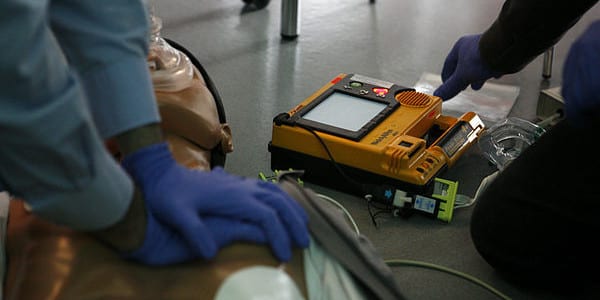
1. Compared to standard defibrillation, patients with refractory ventricular fibrillation who received double sequential external defibrillation (DSED) and vector-change defibrillation (VC) had better survival to hospital discharge.

2. DSED was associated with a higher percentage of patients having a good neurologic outcome as compared to standard defibrillation.  

Evidence Rating Level: 1 (Excellent)

Study Rundown: There are over 350,000 unexpected deaths each year in North America due to out-of-hospital cardiac arrest, with 100,000 of these cases attributed to ventricular fibrillation or pulseless ventricular tachycardia. Almost half of these patients may remain in refractory ventricular fibrillation despite multiple defibrillation attempts. DSED and VC have been proposed to provide potential benefits in defibrillating a portion of the ventricle that may not be completely defibrillated by pads in the standard anterior-lateral position. However, there is a gap in knowledge regarding the effectiveness of DSED and VC defibrillation compared with standard defibrillation in patients who remain in refractory ventricular fibrillation during out-of-hospital cardiac arrest. Overall, this study found that survival to hospital discharge was higher with DSED and VC defibrillation as compared to standard defibrillation in patients with refractory ventricular fibrillation. This study was limited by not specifying a fixed follow-up time, and the length of stay distributions across the trial centers is unknown. Nevertheless, the study’s findings are significant, as they demonstrate that DSED and VC defibrillation provide a higher survival to hospital discharge among patients with refractory ventricular fibrillation during out-of-hospital cardiac arrest.

Click to read the study in NEJM

Relevant Reading: Long-Term Outcomes of Out-of-Hospital Cardiac Arrest after Successful Early Defibrillation

RELATED REPORTS

Emergency department triaging decisions supported by artificial intelligence (AI) led to improved triaging accuracy and patient flow

A lower threshold for referral to the emergency department for outpatient hyperkalemia may reduce mortality

Chronic exposure to particulate matter is associated with increased cardiovascular risk

In-Depth [cluster randomized trial]: This three-group, cluster-randomized, controlled trial with crossover was conducted in six paramedic services in Canada from March 2018 to May 2022. Patients who were at least 18 years of age and had an out-of-hospital cardiac arrest and refractory ventricular fibrillation of presumed cardiac cause were eligible for the study. Patients who had a traumatic cardiac arrest, do-not-resuscitate medical directives, or cardiac arrest due to drowning, hypothermia, hanging, or suspected drug overdose were excluded from the study. The primary outcome measure was survival to hospital discharge. Outcomes in the primary analysis were assessed via adjusted relative risks with generalized linear models with log link and binomial distribution. Based on the primary analysis, survival to hospital discharge was more common in the DSED group than in the standard group (30.4% vs. 13.3%; Relative Risk [RR], 2.21; 95% Confidence Interval [CI], 1.33 to 3.67) and more common in the VC group than in the standard group (21.7% vs. 13.3%; RR, 1.71; 95% CI, 1.01 to 2.88). DSED defibrillation was associated with a higher percentage of patients having a good neurologic outcome than standard defibrillation (RR, 2.21; 95% CI, 1.26 to 3.88). Overall, this study demonstrated that for patients with refractory ventricular fibrillation, survival to hospital discharge occurred more frequently in those who received DSED or VC defibrillation than those who received standard defibrillation.

Image: PD

©2022 2 Minute Medicine, Inc. All rights reserved. No works may be reproduced without expressed written consent from 2 Minute Medicine, Inc. Inquire about licensing here. No article should be construed as medical advice and is not intended as such by the authors or by 2 Minute Medicine, Inc.


Tags: cardiologydouble sequential external defibrillationemergencyout-of-hospital cardiac arrestpulseless ventricular tachycardiarefractory ventricular fibrillationvector change defibrillationventricular fibrillation
Previous Post

Monoclonal antibody treatment does not improve outcomes in COVID-19-positive pregnant patients

Next Post

SGLT2 inhibitors reduce the risk of kidney disease in patients with and without diabetes

RelatedReports

Artificial Intelligence

Emergency department triaging decisions supported by artificial intelligence (AI) led to improved triaging accuracy and patient flow

September 21, 2026
Emergency

A lower threshold for referral to the emergency department for outpatient hyperkalemia may reduce mortality

September 16, 2026
Cardiology

Chronic exposure to particulate matter is associated with increased cardiovascular risk

September 10, 2026
Rivaroxaban likely reduces risk of recurrent stroke in specific subgroup of patients with embolic stroke of undetermined source
Cardiology

The mortality in-hospital for patients undergoing elective catheter ablation for atrial fibrillation is low

September 4, 2026
Next Post
Tenofovir disoprovil fumarate HIV prophylaxis linked with minimal kidney impact

SGLT2 inhibitors reduce the risk of kidney disease in patients with and without diabetes

#VisualAbstract: Early mobilization after ICU mechanical ventilation does not improve survival

#VisualAbstract: Early mobilization after ICU mechanical ventilation does not improve survival

The Scan by 2 Minute Medicine®:  Ultra-Trail du Mont-Blanc, Taylor Swift, NBA rookie Chet Holmgren and Magic Mushrooms!

Wellness Check: Spirituality

EvidencePulse™ by 2 Minute Medicine 2026 evidence scan 3 reports You asked top stroke trials 2026 Synthesizing medical evidence... Top 2026 stroke trial results: OCEANIC — ischemic stroke: 6.2% vs 8.4% OPTION* — mRS 0–1: 43.6% vs 34.2% ORIENTAL* — mRS 0–2: 58.6% vs 46.6% *Higher sICH in intervention arms Participants randomizedN OCEANIC 12,327 OPTION 570 ORIENTAL 564 Ask about guidelines or landmark trials... ↑ Try EvidencePulse™ Ask the evidence.
Get the signal.
Try it now → Physician-trained medical AI by 2 Minute Medicine

2MM+ All Access

Full details →
$4.99 /month

5-day free trial · cancel anytime

  • ✓100+ physician-written reports
  • ✓EvidencePulse™ + HypeCheck™
  • ✓Ad-free reading + newsletters
Start 5-day free trial

Then $4.99/month. Manage renewal in your account.

2 Minute Medicine® is an award winning, physician-run, expert medical media company. Our content is curated, written and edited by practicing health professionals who have clinical and scientific expertise in their field of reporting. Our editorial management team is comprised of highly-trained MD physicians. Join numerous brands, companies, and hospitals who trust our licensed content.

Recent Reports

  • Nirsevimab (Beyfortus) may reduce severe respiratory syncytial virus infections among infants
  • An artificial intelligence (AI) tool achieved high diagnostic accuracy for the identification and prediction of sepsis
  • Use of long-acting broadly neutralizing antibodies may delay human immunodeficiency virus (HIV) rebound following discontinuation of antiretroviral therapy
License Content
Terms of Use | Disclaimer
Cookie Policy
Cleantalk Pixel
2MM+ All Access Full details →

The medical literature, distilled daily.

Monthly plan selected: $4.99 /month.

$4.99/month

5-day free trial · cancel anytime

Start 5-day free trial

Then $4.99/month. Manage renewal in your account.

Yearly plan selected: $49.90 /year.

$49.90/year

2 months free · only $4.16/month

Start 5-day free trial

Then $49.90/year. Manage renewal in your account.

Membership benefits

  • ✓100+ physician-written reports
  • ✓AI EvidencePulse™ + HypeCheck™
  • ✓Ad-free reading + newsletters

Already a member? Sign in

  • About
  • Specialties
    • All Specialties, All Recent Reports
    • Cardiology
    • Chronic Disease
    • Dermatology
    • Emergency
    • Endocrinology
    • Gastroenterology
    • Imaging and Intervention
    • Infectious Disease
    • Nephrology
    • Neurology
    • Obstetrics
    • Oncology
    • Ophthalmology
    • Pediatrics
    • Pharma
    • Preclinical
    • Psychiatry
    • Public Health
    • Pulmonology
    • Rheumatology
    • Surgery
  • Tools
    • EvidencePulse™
    • HypeCheck™
    • NPI Registry Lookup
    • RVU Search
  • Pharma
  • AI Roundup
  • The Scan
  • Classics™
    • 2MM+ Online Access
    • Paperback and Ebook
  • Rewinds
  • Partners
    • License Content
    • Submit Press Release
    • Advertise with Us
  • Account
    • Subscribe
    • My account
    • Cart
    • Sign-in
No Result
View All Result

© 2026 2 Minute Medicine, Inc. - Physician-written medical news.