• About
  • Masthead
  • License Content
  • Advertise
  • Submit Press Release
  • RSS/Email List
  • 2MM Podcast
  • Write for us
  • Contact Us
2 Minute Medicine
No Result
View All Result

No products in the cart.

SUBSCRIBE
  • About
  • Specialties
    • All Specialties, All Recent Reports
    • Cardiology
    • Chronic Disease
    • Dermatology
    • Emergency
    • Endocrinology
    • Gastroenterology
    • Imaging and Intervention
    • Infectious Disease
    • Nephrology
    • Neurology
    • Obstetrics
    • Oncology
    • Ophthalmology
    • Pediatrics
    • Pharma
    • Preclinical
    • Psychiatry
    • Public Health
    • Pulmonology
    • Rheumatology
    • Surgery
  • Tools+
    • EvidencePulse™
    • HypeCheck™
    • NPI Registry Lookup
    • RVU Search
  • Pharma
  • AI Roundup
  • The Scan+
  • Classics™+
    • 2MM+ Online Access
    • Paperback and Ebook
  • Rewinds
  • Partners
    • License Content
    • Submit Press Release
    • Advertise with Us
  • Account
    • Subscribe
    • My account
    • Cart
    • Sign-in
2 Minute Medicine
  • About
  • Specialties
    • All Specialties, All Recent Reports
    • Cardiology
    • Chronic Disease
    • Dermatology
    • Emergency
    • Endocrinology
    • Gastroenterology
    • Imaging and Intervention
    • Infectious Disease
    • Nephrology
    • Neurology
    • Obstetrics
    • Oncology
    • Ophthalmology
    • Pediatrics
    • Pharma
    • Preclinical
    • Psychiatry
    • Public Health
    • Pulmonology
    • Rheumatology
    • Surgery
  • Tools+
    • EvidencePulse™
    • HypeCheck™
    • NPI Registry Lookup
    • RVU Search
  • Pharma
  • AI Roundup
  • The Scan+
  • Classics™+
    • 2MM+ Online Access
    • Paperback and Ebook
  • Rewinds
  • Partners
    • License Content
    • Submit Press Release
    • Advertise with Us
  • Account
    • Subscribe
    • My account
    • Cart
    • Sign-in
SUBSCRIBE
2 Minute Medicine
Subscribe
Home All Specialties Chronic Disease

Enzyme replacement therapy shows promise for rare lysosomal storage disease: The ARISE study
byTomi JunandShaidah Deghan, MSc. MD
September 10, 2015
in Chronic Disease, Endocrinology
Reading Time: 3 mins read
Share on FacebookShare on Twitter

1. Sebelipase alfa treatment significantly improved liver function tests among 31% of patients with lysosomal acid lipase deficiency receiving the drug compared to 7% of patients receiving placebo.

2. A predominantly pediatric outcome limits the generalizability of the study.

Evidence Rating Level: 2 (Good)

Study Rundown: In lysosomal acid lipase deficiency there is a defect in the fat and cholesterol metabolism pathway which leads to accumulation of byproducts in the liver. This autosomal recessive disease can lead to liver damage and cirrhosis. Since it is caused by the absence of a particular enzyme, it is hypothesized that replacing the missing enzyme will help treat the disease.

In this trial, 36 out of the 66 patients with lysosomal acid lipase deficiency were treated with sebelipase alfa, a molecule designed to replace the missing lysosomal acid lipase enzyme intravenously every 2 weeks. The remaining were the placebo group. A significantly larger proportion of the patients treated with sebelipase alfa had normalization of their liver function tests compared to those who received placebo. There were also significant improvements in a number of secondary outcomes, indicating that the treatment also helped to correct other aspects of fat and cholesterol metabolism which are affected by the disease.

These results demonstrate that enzyme replacement is associated with improving many of the liver enzyme changes seen in lysosomal acid lipase deficiency. However, definitive data on outcomes such as progression to cirrhosis are still needed from longer-term follow-up studies.

RELATED REPORTS

Molecularly guided therapy may improve outcomes in patients with unfavourable cancer of unknown primary compared with standard chemotherapy

Methadone initiation linked to lower mortality compared to buprenorphine-naloxone after opioid overdose

Continuous femoral nerve block is not superior to continuous adductor canal block for postoperative pain following ACL reconstruction

Click to read the study published today, in NEJM

Relevant Reading: Sebelipase alfa over 52 weeks reduces serum transaminases, liver volume and improves serum lipids in patients with lysosomal acid lipase deficiency

In-Depth [randomized controlled trial]: This was a multicenter, randomized, double-blind, placebo-controlled study which included sixty-six patients. The participants were randomized to either the sebelipase alfa or the placebo group for 20 weeks. Subsequently, all patients received the drug in the open-label period.

Patients had to be at least 4 years old, with the diagnosis confirmed by enzyme-activity assays and an ALT level at least 1.5 times the upper limit of normal. Patients who had undergone liver transplants or who had severe liver dysfunction (Child-Pugh C) were excluded. The primary endpoint was normalization of the ALT level. Over a third of the participants were less than 12 years of age. There was an equal proportion of males and females. Most patients were Caucasian. At baseline, all patients had fibrosis, and about a third already had cirrhosis.

Sebelipase alfa treatment was associated with a greater rate of normalization of the ALT than placebo during the double-blind period (31% vs. 7%, p=0.03; mean reduction from baseline: -58 U/L vs. -7 U/L, p<0.001). The decrease from baseline in the mean ALT level was significantly greater in the sebelipase alfa group than the placebo group. Similar results were seen in AST levels (42% vs 3%, p<0.001; mean reduction, -42U/L vs. -6U/L; p<0.001). Other secondary end points which improved with sebelipase alfa treatment included: a decrease in LDL (-28.4% vs. 62.%, p<0.001), a decrease in triglycerides (-25.5% vs.-11.1%, p=0.04), an increase in HDL (19.6% vs. -0.3%, p<0.001) and a decrease in hepatic fat content (-32.0% vs. -4.2%, p<0.001).

The most common adverse events were headache (28%) and fever (19%), though there was no significant difference in the frequency of any of these adverse events between the treatment and placebo groups. As a recombinant human enzyme, sebelipase alfa did lead to anti-drug antibodies in 5 of 35 patients, but these antibodies did not affect either safety or efficacy of the drug.

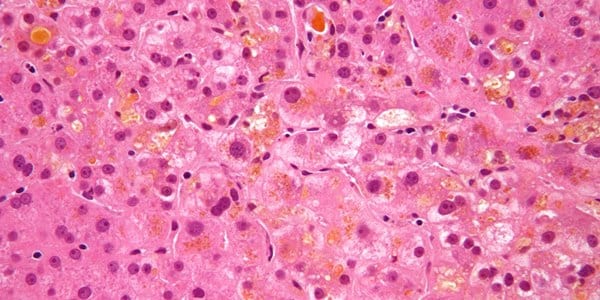
Image: PD

©2015 2 Minute Medicine, Inc. All rights reserved. No works may be reproduced without expressed written consent from 2 Minute Medicine, Inc. Inquire about licensing here. No article should be construed as medical advice and is not intended as such by the authors or by 2 Minute Medicine, Inc.

Previous Post

Prevalence of type II diabetes on the rise since 1980s

Next Post

Targeted autologous transfusion may aid advanced refractory multiple myeloma

RelatedReports

Quick Take: Diagnostic Yield of One-Time Colonoscopy vs One-Time Flexible Sigmoidoscopy vs Multiple Rounds of Mailed Fecal Immunohistochemical Tests in Colorectal Cancer Screening
Chronic Disease

Molecularly guided therapy may improve outcomes in patients with unfavourable cancer of unknown primary compared with standard chemotherapy

September 7, 2026
Chronic Disease

Methadone initiation linked to lower mortality compared to buprenorphine-naloxone after opioid overdose

September 7, 2026
Social networks play key roles in parental vaccination decisions
Imaging and Intervention

Continuous femoral nerve block is not superior to continuous adductor canal block for postoperative pain following ACL reconstruction

September 7, 2026
Long-term outcomes for off-pump and on-pump CABG are similar
Weekly Rewinds

2 Minute Medicine Rewind September 7, 2026

September 7, 2026
Next Post
Targeted autologous transfusion may aid advanced refractory multiple myeloma

Targeted autologous transfusion may aid advanced refractory multiple myeloma

Pre-exposure prophylaxis (PrEP) effective in preventing HIV infection in high-risk gay men

Pre-exposure prophylaxis (PrEP) effective in preventing HIV infection in high-risk gay men

PET/MRI is viable for tracking small lung nodules in cancer patients

PET/MRI is viable for tracking small lung nodules in cancer patients

EvidencePulse™ by 2 Minute Medicine 2026 evidence scan 3 reports You asked top stroke trials 2026 Synthesizing medical evidence... Top 2026 stroke trial results: OCEANIC — ischemic stroke: 6.2% vs 8.4% OPTION* — mRS 0–1: 43.6% vs 34.2% ORIENTAL* — mRS 0–2: 58.6% vs 46.6% *Higher sICH in intervention arms Participants randomizedN OCEANIC 12,327 OPTION 570 ORIENTAL 564 Ask about guidelines or landmark trials... ↑ Try EvidencePulse™ Ask the evidence.
Get the signal.
Try it now → Physician-trained medical AI by 2 Minute Medicine

2MM+ All Access

Full details →
$4.99 /month

5-day free trial · cancel anytime

  • ✓100+ physician-written reports
  • ✓EvidencePulse™ + HypeCheck™
  • ✓Ad-free reading + newsletters
Start 5-day free trial

Then $4.99/month. Manage renewal in your account.

2 Minute Medicine® is an award winning, physician-run, expert medical media company. Our content is curated, written and edited by practicing health professionals who have clinical and scientific expertise in their field of reporting. Our editorial management team is comprised of highly-trained MD physicians. Join numerous brands, companies, and hospitals who trust our licensed content.

Recent Reports

  • Molecularly guided therapy may improve outcomes in patients with unfavourable cancer of unknown primary compared with standard chemotherapy
  • Methadone initiation linked to lower mortality compared to buprenorphine-naloxone after opioid overdose
  • Continuous femoral nerve block is not superior to continuous adductor canal block for postoperative pain following ACL reconstruction
License Content
Terms of Use | Disclaimer
Cookie Policy
Cleantalk Pixel
  • About
  • Specialties
    • All Specialties, All Recent Reports
    • Cardiology
    • Chronic Disease
    • Dermatology
    • Emergency
    • Endocrinology
    • Gastroenterology
    • Imaging and Intervention
    • Infectious Disease
    • Nephrology
    • Neurology
    • Obstetrics
    • Oncology
    • Ophthalmology
    • Pediatrics
    • Pharma
    • Preclinical
    • Psychiatry
    • Public Health
    • Pulmonology
    • Rheumatology
    • Surgery
  • Tools
    • EvidencePulse™
    • HypeCheck™
    • NPI Registry Lookup
    • RVU Search
  • Pharma
  • AI Roundup
  • The Scan
  • Classics™
    • 2MM+ Online Access
    • Paperback and Ebook
  • Rewinds
  • Partners
    • License Content
    • Submit Press Release
    • Advertise with Us
  • Account
    • Subscribe
    • My account
    • Cart
    • Sign-in
No Result
View All Result

© 2026 2 Minute Medicine, Inc. - Physician-written medical news.

2MM+ All Access Full details →

The medical literature, distilled daily.

Monthly plan selected: $4.99 /month.

$4.99/month

5-day free trial · cancel anytime

Start 5-day free trial

Then $4.99/month. Manage renewal in your account.

Yearly plan selected: $49.90 /year.

$49.90/year

2 months free · only $4.16/month

Start 5-day free trial

Then $49.90/year. Manage renewal in your account.

Membership benefits

  • ✓100+ physician-written reports
  • ✓AI EvidencePulse™ + HypeCheck™
  • ✓Ad-free reading + newsletters

Already a member? Sign in