• About
  • Masthead
  • License Content
  • Advertise
  • Press Releases
  • Newsroom
  • RSS/Email List
  • 2MM Podcast
  • Write for us
  • Contact Us
2 Minute Medicine
No Result
View All Result

No products in the cart.

Sign in
SUBSCRIBE
  • About
  • Specialties
    • All Specialties, All Recent Reports
    • Cardiology
    • Chronic Disease
    • Dermatology
    • Emergency
    • Endocrinology
    • Gastroenterology
    • Imaging and Intervention
    • Infectious Disease
    • Nephrology
    • Neurology
    • Obstetrics
    • Oncology
    • Ophthalmology
    • Pediatrics
    • Pharma
    • Preclinical
    • Psychiatry
    • Public Health
    • Pulmonology
    • Rheumatology
    • Surgery
    • Rewinds
    • The Scan
  • EvidencePulse™
  • HypeCheck™
  • AI News
  • Classics™
    • 2MM+ Online Access
    • Paperback and Ebook
  • Tools
    • NPI Registry Lookup
    • RVU Search
    • Physician Pay by Specialty
    • ICD-10 Code Lookup
    • FDA Drug Approvals
    • Drug Safety for Breastfeeding/Pregnancy
    • Clinical Guidelines
    • Medical Calculators
    • ECG Reference
      • QTc Calculator
      • Sgarbossa Criteria
      • ECG Axis Calculator
      • AV Block Helper
  • Rankings
    • Medical School Rankings
    • Residency Rankings
  • Partners
    • License Content
    • Advertise with Us
2 Minute Medicine
  • About
  • Specialties
    • All Specialties, All Recent Reports
    • Cardiology
    • Chronic Disease
    • Dermatology
    • Emergency
    • Endocrinology
    • Gastroenterology
    • Imaging and Intervention
    • Infectious Disease
    • Nephrology
    • Neurology
    • Obstetrics
    • Oncology
    • Ophthalmology
    • Pediatrics
    • Pharma
    • Preclinical
    • Psychiatry
    • Public Health
    • Pulmonology
    • Rheumatology
    • Surgery
    • Rewinds
    • The Scan
  • EvidencePulse™
  • HypeCheck™
  • AI News
  • Classics™
    • 2MM+ Online Access
    • Paperback and Ebook
  • Tools
    • NPI Registry Lookup
    • RVU Search
    • Physician Pay by Specialty
    • ICD-10 Code Lookup
    • FDA Drug Approvals
    • Drug Safety for Breastfeeding/Pregnancy
    • Clinical Guidelines
    • Medical Calculators
    • ECG Reference
      • QTc Calculator
      • Sgarbossa Criteria
      • ECG Axis Calculator
      • AV Block Helper
  • Rankings
    • Medical School Rankings
    • Residency Rankings
  • Partners
    • License Content
    • Advertise with Us
Sign in
SUBSCRIBE
2 Minute Medicine
Sign in
Subscribe
2 Minute MedicineFree on Google PlayGet
✦EvidencePulse™by 2 Minute Medicine3 reportsYou askedtop stroke trials 2026Synthesizing medical evidence...Top 2026 stroke trial results:OCEANIC — ischemic stroke: 6.2% vs 8.4%OPTION* — mRS 0–1: 43.6% vs 34.2%ORIENTAL* — mRS 0–2: 58.6% vs 46.6%*Higher sICH in intervention armsParticipants randomizedNOCEANIC12,327OPTION570ORIENTAL564Ask about guidelines or landmark trials...↑Try EvidencePulse™Ask the evidence. Get the signal.Try it now →
Home All Specialties Imaging and Intervention

PET/MRI is viable for tracking small lung nodules in cancer patients

byBenjamin Laguna, MDandDylan Wolman
October 22, 2015
in Imaging and Intervention, Oncology
Reading Time: 3 mins read
Share on FacebookShare on TwitterShare on LinkedIn

1. Positron emission tomography and magnetic resonance imaging (PET/MRI) was not as sensitive as PET and computed tomography (PET/CT) for the detection of small pulmonary nodules.

2. The majority of nodules that were missed when using PET/MRI either resolved or remained stable over time, suggestive of benignity, and did not affect the clinical management of the patient.

Evidence Rating: 4 (Below-Average)

Study Rundown:  Positron emission tomography combined with computed tomography (PET/CT) has served as the gold standard for the staging and restaging of a variety of cancers. However, PET combined with magnetic resonance imaging (PET/MRI) allows for greater contrast resolution of MR without radiation exposure and the metabolic information of PET to help determine the tumor burden in patients, but concerns exist regarding the ability of MRI to detect lung nodules that are less than 1cm in diameter, which is below the resolution of PET imaging. MRI is notoriously limited in its ability to image the lung parenchyma due to low proton density, air-tissue interfaces and motion degradation, however newer fast-imaging sequences have overcome some of these issues. This study evaluated patients with full body PET/MRI with known primary malignancy who were already undergoing PET/CT for staging purposes, specifically looking at small pulmonary nodules. There were 43 patients who had 89 non-FDG avid small lung nodules detected on PET/CT that were not detected on PET/MRI. Only 84 of the 89 nodules had subsequent imaging with PET/CT or chest CT, while the last five had remote imaging available for evaluation. Of these 84 nodules, three nodules (3%) in one patient progressed, 10 (12%) nodules had some or complete resolution, and 71 (85%) remained stable. The five nodules lost to follow up were stable at 21 months. The mean size of the 89 small lung nodules was 0.4±0.19 cm (range 0.2-1 cm). Overall, 97% of small nodules missed on PET/MRI were stable or resolved on follow-up imaging. This study establishes that while PET/MRI may not be as sensitive as PET/CT, the majority of missed nodules were benign, and therefore this imaging modality may represent a viable strategy for follow up in oncology patients, particularly for those in whom radiation exposure must be limited. The primary limitation of this study was the relatively small size and the heterogeneity of patient demographics and primary malignancy types, which may limit overall generalizability. Future studies should determine if PET/MRI is capable of detecting which of these nodules are more likely to progress, and how confidently PET/MRI can identify nodules that will remain stable.

Click to read the study in Journal of Magnetic Resonance Imaging

Relevant reading: Pulmonary lesion assessment: comparison of whole-body hybrid MR/PET and PET/CT imaging—pilot study

RELATED REPORTS

Positron emission tomography-guided treatment strategy may reduce need for chemotherapy for patients with HER2+ breast cancer

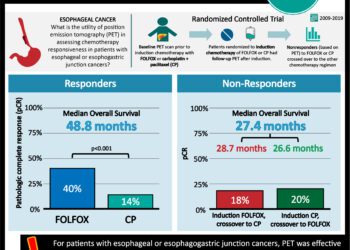
#VisualAbstract: Positron emission tomography effective at assessing early tumor response to induction chemotherapy in esophageal or esophagogastric junction cancers

In-Depth [case series]: A total of 208 patients (66% female, mean age 73 years) with a known primary malignancy were enrolled over a 10 month period to undergo whole body PET/MRI immediately after undergoing PET/CT. Patients received oral and intravenous contrast agents, in addition to (18F) fluorodeoxyglucose (FDG), and underwent MR examination with a 3 tesla magnet. There was a mean of 174.8 minute delay from tracer injection to initiation of PET/MR scanning. MR sequences used included T1-weighted gradient echo imaging with radial stack-of-stars trajectory (STAR VIBE), diffusion weighted imaging with a spin echo single-shot echo-planar imaging sequence. Image interpretation for PET/CT was performed by 2 independent readers (radiologist and nuclear medicine physician) and compared to the results of PET/CT imaging, which were used as the reference standard after a delay of 2 weeks prior to the evaluation of the PET/MR images. There were 45 patients who had non-FDG lung nodules that measured 1cm or less that were detected by PET/CT but not PT/MRI, but two were excluded due to loss of follow up. Of the 71 nodules that remained stable, 62/71 were also stable since older studies over a period of 11-78 months (mean 36.6 months). In a review of the electronic charts, patient management did not change in lieu of these missed nodules. Interreader agreement kappa values were 0.375 for PET/CT (fair) and 0.68 for PET/MR (substantial).

Image: PD

©2015 2 Minute Medicine, Inc. All rights reserved. No works may be reproduced without expressed written consent from 2 Minute Medicine, Inc. Inquire about licensing here. No article should be construed as medical advice and is not intended as such by the authors or by 2 Minute Medicine, Inc.


Tags: Positron Emission Tomography (PET Scan)
Previous Post

Pre-exposure prophylaxis (PrEP) effective in preventing HIV infection in high-risk gay men

Next Post

Addressing non-obesity related barriers may improve bariatric surgery effectiveness

RelatedReports

Comorbidities of head and neck cancer may drive malnutrition
Chronic Disease

Positron emission tomography-guided treatment strategy may reduce need for chemotherapy for patients with HER2+ breast cancer

May 14, 2024
#VisualAbstract: Positron emission tomography effective at assessing early tumor response to induction chemotherapy in esophageal or esophagogastric junction cancers
StudyGraphics

#VisualAbstract: Positron emission tomography effective at assessing early tumor response to induction chemotherapy in esophageal or esophagogastric junction cancers

December 12, 2021
Computer-extracted MRI features help distinguish benign from malignant prostate lesions
Imaging and Intervention

Prostate-Specific Membrane Antigen Positron Emission Tomography can be used to detect pelvic lymph nodes in prostate cancer

October 3, 2021
Chronic Disease

Tau positron emission tomography is a promising prognostic device in preclinical and prodromal Alzheimer’s disease

June 29, 2021
Next Post

Addressing non-obesity related barriers may improve bariatric surgery effectiveness

Non-invasive prenatal testing linked to decreased diagnostic testing

Low revision rates after vaginal mesh

✦ EvidencePulse™ by 2 Minute Medicine 3 reports You asked top stroke trials 2026 Synthesizing medical evidence... Top 2026 stroke trial results: OCEANIC — ischemic stroke: 6.2% vs 8.4% OPTION* — mRS 0–1: 43.6% vs 34.2% ORIENTAL* — mRS 0–2: 58.6% vs 46.6% *Higher sICH in intervention arms Participants randomizedN OCEANIC 12,327 OPTION 570 ORIENTAL 564 Ask about guidelines or landmark trials... Try EvidencePulse™ Get the signal. Try it now → Physician-trained medical AI by 2 Minute Medicine

2MM+ All Access

Full details →
$4.99 /month

3-day free trial · cancel anytime

  • ✓100+ physician-written reports
  • ✓EvidencePulse™ + HypeCheck™
  • ✓Ad-free reading + newsletters
Start 3-day free trial

Then $4.99/month. Manage renewal in your account.

2 Minute Medicine® is an award winning, physician-run, expert medical media company. Our content is curated, written and edited by practicing health professionals who have clinical and scientific expertise in their field of reporting. Our editorial management team is comprised of highly-trained MD physicians. Join numerous brands, companies, and hospitals who trust our licensed content.

Recent Reports

  • Medicaid status, race and ethnicity are independently associated with increased odds of severe maternal morbidity
  • Artificial intelligence-generated pre-visit summaries improved communication outcomes in neurosurgical consultations
  • Midline catheters may reduce catheter-related bloodstream infections compared with peripherally inserted central catheters in intensive care unit patients
License Content
Terms of Use | Disclaimer
Cookie Policy

Get the app

Read 2 Minute Medicine on iPhone, iPad and Android.

Download on the App StoreGet it on Google Play
QR code for www.2minutemedicine.com/app
On a computer? Scan this with your phone’s camera.
2MM+ All Access Full details →

The medical literature, distilled daily.

Monthly plan selected: $4.99 /month.

$4.99/month

3-day free trial · cancel anytime

Start 3-day free trial

Then $4.99/month. Manage renewal in your account.

Yearly plan selected: $49.90 /year.

$49.90/year

2 months free

Start 3-day free trial

Then $49.90/year.

Membership benefits

  • ✓100+ physician-written reports
  • ✓AI EvidencePulse™ + HypeCheck™
  • ✓Ad-free reading + newsletters
  • ✓FDA drug approvals + clinical calculators

Already a member? Sign in

  • Get the app
  • About
  • Specialties
    • All Specialties, All Recent Reports
    • Cardiology
    • Chronic Disease
    • Dermatology
    • Emergency
    • Endocrinology
    • Gastroenterology
    • Imaging and Intervention
    • Infectious Disease
    • Nephrology
    • Neurology
    • Obstetrics
    • Oncology
    • Ophthalmology
    • Pediatrics
    • Pharma
    • Preclinical
    • Psychiatry
    • Public Health
    • Pulmonology
    • Rheumatology
    • Surgery
    • Rewinds
    • The Scan
  • EvidencePulse™
  • HypeCheck™
  • AI News
  • Classics™
    • 2MM+ Online Access
    • Paperback and Ebook
  • Tools
    • NPI Registry Lookup
    • RVU Search
    • Physician Pay by Specialty
    • ICD-10 Code Lookup
    • FDA Drug Approvals
    • Drug Safety for Breastfeeding/Pregnancy
    • Clinical Guidelines
    • Medical Calculators
    • ECG Reference
      • QTc Calculator
      • Sgarbossa Criteria
      • ECG Axis Calculator
      • AV Block Helper
  • Rankings
    • Medical School Rankings
    • Residency Rankings
  • Partners
    • License Content
    • Advertise with Us
No Result
View All Result

© 2026 2 Minute Medicine, Inc. - Physician-written medical news.