

• About
  • Masthead
  • License Content
  • Advertise
  • Submit Press Release
  • RSS/Email List
  • 2MM Podcast
  • Write for us
  • Contact Us
2 Minute Medicine
No Result
View All Result

No products in the cart.

SUBSCRIBE
  • About
  • Specialties
    • All Specialties, All Recent Reports
    • Cardiology
    • Chronic Disease
    • Dermatology
    • Emergency
    • Endocrinology
    • Gastroenterology
    • Imaging and Intervention
    • Infectious Disease
    • Nephrology
    • Neurology
    • Obstetrics
    • Oncology
    • Ophthalmology
    • Pediatrics
    • Pharma
    • Preclinical
    • Psychiatry
    • Public Health
    • Pulmonology
    • Rheumatology
    • Surgery
  • Tools+
    • EvidencePulse™
    • HypeCheck™
    • NPI Registry Lookup
    • RVU Search
  • Pharma
  • AI Roundup
  • The Scan+
  • Classics™+
    • 2MM+ Online Access
    • Paperback and Ebook
  • Rewinds
  • Partners
    • License Content
    • Submit Press Release
    • Advertise with Us
  • Account
    • Subscribe
    • My account
    • Cart
    • Sign-in
2 Minute Medicine
  • About
  • Specialties
    • All Specialties, All Recent Reports
    • Cardiology
    • Chronic Disease
    • Dermatology
    • Emergency
    • Endocrinology
    • Gastroenterology
    • Imaging and Intervention
    • Infectious Disease
    • Nephrology
    • Neurology
    • Obstetrics
    • Oncology
    • Ophthalmology
    • Pediatrics
    • Pharma
    • Preclinical
    • Psychiatry
    • Public Health
    • Pulmonology
    • Rheumatology
    • Surgery
  • Tools+
    • EvidencePulse™
    • HypeCheck™
    • NPI Registry Lookup
    • RVU Search
  • Pharma
  • AI Roundup
  • The Scan+
  • Classics™+
    • 2MM+ Online Access
    • Paperback and Ebook
  • Rewinds
  • Partners
    • License Content
    • Submit Press Release
    • Advertise with Us
  • Account
    • Subscribe
    • My account
    • Cart
    • Sign-in
SUBSCRIBE
2 Minute Medicine
Subscribe
EvidencePulse™ by 2 Minute Medicine 2026 evidence scan 3 reports You asked top stroke trials 2026 Synthesizing medical evidence... Top 2026 stroke trial results: OCEANIC — ischemic stroke: 6.2% vs 8.4% OPTION* — mRS 0–1: 43.6% vs 34.2% ORIENTAL* — mRS 0–2: 58.6% vs 46.6% *Higher sICH in intervention arms Participants randomizedN OCEANIC 12,327 OPTION 570 ORIENTAL 564 Ask about guidelines or landmark trials... ↑ Try EvidencePulse™ Ask the evidence.
Get the signal.
Try it now → Physician-trained medical AI by 2 Minute Medicine
Home All Specialties Infectious Disease

Healthcare workers at higher risk of COVID-19 compared to the general population
byVineeth BhogadiandArnav Agarwal, MD
September 17, 2020
in Infectious Disease, Public Health
Reading Time: 3 mins read
SARS-CoV-2 detected on various surroundings of asymptomatic COVID-19 positive infant
Share on FacebookShare on Twitter

1. Seroprevalence of SARS-CoV-2 antibodies was generally low in healthcare workers but higher than the general population.

2. Loss of taste or smell was most strongly associated with seropositivity in healthcare workers.

Evidence Rating Level: 2 (Good)

Study Rundown: Healthcare workers comprised a significant proportion of individuals who tested positive for SARS-CoV-2 in European countries severely hit by COVID-19, including Italy and Spain. Surveillance of the burden of seropositive disease among healthcare workers compared to the general population was unclear, as was which groups were at highest risk of seropositivity.

This observational cohort study included 28,972 health-care workers and 4672 blood donors from the Capital Region of Denmark who were tested for SARS-CoV-2 IgG and IgM antibodies using a point-of-care test. Results suggested that while the seroprevalence was generally low in both groups, there was significantly a significantly higher burden of seropositivity among healthcare workers compared with blood donors, who served as a proxy for the general population. Among healthcare workers, frontline workers in hospitals had a significantly higher seroprevalence of infection than their non hospital-based counterparts. Loss of taste or smell was the symptom most strongly associated with seropositivity, with fever also strongly associated.

This study was limited by the fact that healthcare workers were not blinded to the test result when filling out symptom questionnaires, introducing bias in symptom reporting. Additionally, blood donors were healthy individuals screened for travelling abroad or having a fever, and may have a different seropositivity than the general population. Nonetheless, this study represents the largest effort to date to determine SARS-CoV-2 seropositivity comparing healthcare providers and the general population.

RELATED REPORTS

Ensitrelvir associated with reduced risk of Covid-19 among household contacts

The Scan by 2 Minute Medicine®: Fall boosters, mosquitoes, skin awareness, and Hollywood healing

Worsening kidney function observed following SARS-CoV-2 infection in children

Click to read the study in The Lancet Infectious Diseases

Relevant Reading: SARS-CoV-2 seroprevalence in COVID-19 hotspots

In-Depth [retrospective cohort]: This study included 28,972 health-care workers (mean age 44.4 years, 78.9% female) employed in the Capital Region of Denmark who considered themselves to have any work-related patient contact. SARS-CoV-2 IgG and IgM antibodies were tested in whole blood via a lateral flow assay point-of-care test administered independently in each clinical department. After test results were received, participants completed an online survey regarding demographics, type of work, symptoms of COVID-19 and SARS-CoV-2 screening results. 4,672 blood donors (mean age 40.7 years, 53.55% female) in the same region were screened with the same point-of-care test for comparative purposes; the group represented a proxy for the general population.

Overall, seroprevalence was estimated at 4.04% (95% CI 3.82 to 4.27) amongst healthcare workers. Of these, 2.81% (95% CI 2.63 to 3.00) developed IgM antibodies, 2.67% (95% CI 2.49 to 2.86) developed IgG antibodies and 1.43% (95% CI 1.30 to 1.58) developed both IgM and IgG antibodies. Among the blood donors, seroprevalence of either IgG or IgM antibodies was 3.04% (95% CI 2.58 to 3.57),  significantly lower than healthcare workers (relative risk (RR) [healthcare workers versus blood donors] 1.13, 95% CI 1.12 to 1.58, p=0.0008). Frontline healthcare workers in hospital settings had higher seroprevalence compared to healthcare workers in other settings (4.55% vs 3.29%; RR 1.38, 95% CI 1.22 to 1.56, p<0.001). Having any symptom of COVID-19 in healthcare workers was associated with greater seroprevalence compared to asymptomatic workers (5.86% vs 1.92%; RR 3.05, 95% CI 2.88 to 3.50, p<0.001). Of these symptoms, loss of smell or taste was the symptom most associated with seropositivity (32.39% vs 2.84%, RR 11.38, 95% CI 10.22 to 12.68).

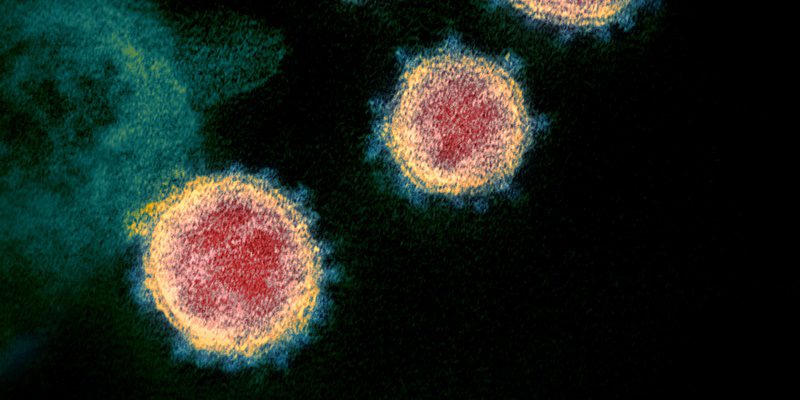
Image: PD

©2020 2 Minute Medicine, Inc. All rights reserved. No works may be reproduced without expressed written consent from 2 Minute Medicine, Inc. Inquire about licensing here. No article should be construed as medical advice and is not intended as such by the authors or by 2 Minute Medicine, Inc.
Tags: Coronavirushealthcare workersSARS-CoV-2
Previous Post

Association between Aspirin and other NSAIDs with depression, anxiety, and stress-related disorders following a cancer diagnosis

Next Post

Anemia associated with increased risk of developing Crohn’s disease, but not ulcerative colitis

RelatedReports

Novel coronavirus identified from patients with pneumonia in Wuhan, China
Infectious Disease

Ensitrelvir associated with reduced risk of Covid-19 among household contacts

May 26, 2026
The Scan by 2 Minute Medicine®:  Ultra-Trail du Mont-Blanc, Taylor Swift, NBA rookie Chet Holmgren and Magic Mushrooms!
The Scan by 2 Minute Medicine®

The Scan by 2 Minute Medicine®: Fall boosters, mosquitoes, skin awareness, and Hollywood healing

August 28, 2025
Being overweight and obese associated with increased incidence of chronic kidney disease
Chronic Disease

Worsening kidney function observed following SARS-CoV-2 infection in children

May 23, 2025
Novel coronavirus identified from patients with pneumonia in Wuhan, China
Hematology

Increased blood–urea–nitrogen-to-albumin ratio associated with increased mortality in coronavirus disease

February 10, 2025
Next Post
Elective colectomy associated with improved survival in ulcerative colitis

Anemia associated with increased risk of developing Crohn's disease, but not ulcerative colitis

Initial data on the viability of SARS-CoV-2 in aerosol and on surfaces

Presence of rheumatic and musculoskeletal comorbidities were not associated with significant alterations in COVID-19 pneumonia-related clinical outcomes

Decreased expression of nasal ACE2 may be correlated with lower prevalence of COVID-19 in children

2 Minute Medicine Rewind September 21, 2020

EvidencePulse™ by 2 Minute Medicine 2026 evidence scan 3 reports You asked top stroke trials 2026 Synthesizing medical evidence... Top 2026 stroke trial results: OCEANIC — ischemic stroke: 6.2% vs 8.4% OPTION* — mRS 0–1: 43.6% vs 34.2% ORIENTAL* — mRS 0–2: 58.6% vs 46.6% *Higher sICH in intervention arms Participants randomizedN OCEANIC 12,327 OPTION 570 ORIENTAL 564 Ask about guidelines or landmark trials... ↑ Try EvidencePulse™ Ask the evidence.
Get the signal.
Try it now → Physician-trained medical AI by 2 Minute Medicine

2MM+ All Access

Full details →
$4.99 /month

5-day free trial · cancel anytime

  • ✓100+ physician-written reports
  • ✓EvidencePulse™ + HypeCheck™
  • ✓Ad-free reading + newsletters
Start 5-day free trial

Then $4.99/month. Manage renewal in your account.

2 Minute Medicine® is an award winning, physician-run, expert medical media company. Our content is curated, written and edited by practicing health professionals who have clinical and scientific expertise in their field of reporting. Our editorial management team is comprised of highly-trained MD physicians. Join numerous brands, companies, and hospitals who trust our licensed content.

Recent Reports

  • Adjuvant chemotherapy not linked to improved outcomes in localized appendiceal adenocarcinoma
  • Deep learning model improved cancer recurrence prediction for pediatric glioma using serial imaging
  • Brepocitinib becomes first oral therapy approved for adult dermatomyositis
License Content
Terms of Use | Disclaimer
Cookie Policy
Cleantalk Pixel
2MM+ All Access Full details →

The medical literature, distilled daily.

Monthly plan selected: $4.99 /month.

$4.99/month

5-day free trial · cancel anytime

Start 5-day free trial

Then $4.99/month. Manage renewal in your account.

Yearly plan selected: $49.90 /year.

$49.90/year

2 months free · only $4.16/month

Start 5-day free trial

Then $49.90/year. Manage renewal in your account.

Membership benefits

  • ✓100+ physician-written reports
  • ✓AI EvidencePulse™ + HypeCheck™
  • ✓Ad-free reading + newsletters

Already a member? Sign in

  • About
  • Specialties
    • All Specialties, All Recent Reports
    • Cardiology
    • Chronic Disease
    • Dermatology
    • Emergency
    • Endocrinology
    • Gastroenterology
    • Imaging and Intervention
    • Infectious Disease
    • Nephrology
    • Neurology
    • Obstetrics
    • Oncology
    • Ophthalmology
    • Pediatrics
    • Pharma
    • Preclinical
    • Psychiatry
    • Public Health
    • Pulmonology
    • Rheumatology
    • Surgery
  • Tools
    • EvidencePulse™
    • HypeCheck™
    • NPI Registry Lookup
    • RVU Search
  • Pharma
  • AI Roundup
  • The Scan
  • Classics™
    • 2MM+ Online Access
    • Paperback and Ebook
  • Rewinds
  • Partners
    • License Content
    • Submit Press Release
    • Advertise with Us
  • Account
    • Subscribe
    • My account
    • Cart
    • Sign-in
No Result
View All Result

© 2026 2 Minute Medicine, Inc. - Physician-written medical news.