• About
  • Masthead
  • License Content
  • Advertise
  • Press Releases
  • Newsroom
  • RSS/Email List
  • 2MM Podcast
  • Write for us
  • Contact Us
2 Minute Medicine
No Result
View All Result

No products in the cart.

Sign in
SUBSCRIBE
  • About
  • Specialties
    • All Specialties, All Recent Reports
    • Cardiology
    • Chronic Disease
    • Dermatology
    • Emergency
    • Endocrinology
    • Gastroenterology
    • Imaging and Intervention
    • Infectious Disease
    • Nephrology
    • Neurology
    • Obstetrics
    • Oncology
    • Ophthalmology
    • Pediatrics
    • Pharma
    • Preclinical
    • Psychiatry
    • Public Health
    • Pulmonology
    • Rheumatology
    • Surgery
    • Rewinds
    • The Scan
  • EvidencePulse™
  • HypeCheck™
  • AI News
  • Classics™
    • 2MM+ Online Access
    • Paperback and Ebook
  • Tools
    • NPI Registry Lookup
    • RVU Search
  • Partners
    • License Content
    • Advertise with Us
2 Minute Medicine
  • About
  • Specialties
    • All Specialties, All Recent Reports
    • Cardiology
    • Chronic Disease
    • Dermatology
    • Emergency
    • Endocrinology
    • Gastroenterology
    • Imaging and Intervention
    • Infectious Disease
    • Nephrology
    • Neurology
    • Obstetrics
    • Oncology
    • Ophthalmology
    • Pediatrics
    • Pharma
    • Preclinical
    • Psychiatry
    • Public Health
    • Pulmonology
    • Rheumatology
    • Surgery
    • Rewinds
    • The Scan
  • EvidencePulse™
  • HypeCheck™
  • AI News
  • Classics™
    • 2MM+ Online Access
    • Paperback and Ebook
  • Tools
    • NPI Registry Lookup
    • RVU Search
  • Partners
    • License Content
    • Advertise with Us
Sign in
SUBSCRIBE
2 Minute Medicine
Sign in
Subscribe
2 Minute MedicineFree on Google PlayGet
✦ EvidencePulse™ by 2 Minute Medicine 2026 evidence scan 3 reports You asked top stroke trials 2026 Synthesizing medical evidence... Top 2026 stroke trial results: OCEANIC — ischemic stroke: 6.2% vs 8.4% OPTION* — mRS 0–1: 43.6% vs 34.2% ORIENTAL* — mRS 0–2: 58.6% vs 46.6% *Higher sICH in intervention arms Participants randomizedN OCEANIC 12,327 OPTION 570 ORIENTAL 564 Ask about guidelines or landmark trials... ↑ Try EvidencePulse™ Ask the evidence.
Get the signal.
Try it now → Physician-trained medical AI by 2 Minute Medicine
Home All Specialties Chronic Disease

Minimal survival benefit from contralateral prophylactic mastectomy

byMaren ShapiroandLeah Hawkins Bressler, MD, MPH
July 21, 2014
in Chronic Disease, Obstetrics, Oncology
Reading Time: 3 mins read
Share on FacebookShare on TwitterShare on LinkedIn

1. In women with newly diagnosed breast cancer, contralateral prophylactic mastectomy conferred a minimal increase in projected life expectancy, between 1 and 7 months. 

2. The survival benefit was slightly greater in younger women with stage I, ER-negative breast cancer, however the 20-year overall survival difference was still <1%. 

Evidence Rating Level: 1 (Excellent)       

Study Rundown: In the United States, women with unilateral breast cancer are increasingly commonly opting to receive contralateral prophylactic mastectomies. The main reason women cite is fear of cancer recurrence in the contralateral breast. However, some experts believe this risk is grossly overestimated. While prior retrospective studies have attempted to evaluate the survival benefit of a contralateral prophylactic mastectomy, they were limited by short follow-up time and selection bias. A recent Cochrane review concluded that there was insufficient evidence to recommend for or against the procedure. Since prospective randomized trials on this subject are ethically difficult, researchers in the present work used a simulated decision-analytic model to project long-term survival outcomes. Results demonstrate minimal survival benefit, an average life expectancy gain ranging from 1 to 7 months. While benefits were greater in younger women with stage I, ER-negative breast cancer, the survival difference after 20 years was still less than 1 percent for all groups of women.

A major strength of this study is that because it was not retrospective, like all prior survival analyses on the topic, results are not limited by selection bias. Limitations include lack of input on quality of life or cost, which play a significant role in not only a woman’s decision to undergo surgery, but also the societal benefit. Additionally, the model only focused on the average woman with breast cancer, and did not take into account other risk factors that may increase a woman’s risk of developing contralateral breast cancer, such as family history and lifestyle factors. Future studies might try to develop a decision analysis model that incorporates not only survival, but also quality of life and cost factors.

Click to read the study in JNCI

RELATED REPORTS

Giredestrant plus everolimus improves progression-free survival in treatment-resistant breast cancer

Earlier genetic testing predicts bilateral mastectomy in young BRCA carriers

Click to read an accompanying editorial in JNCI

Relevant Reading: Perceptions of contralateral breast cancer: an overestimation of risk

In-Depth [simulated decision-analysis]: Researchers used a combination of data from large meta-analyses and the Surveillance, Epidemiology, and End Results (SEER) registry to develop a Markov model that simulated survival outcomes of non-BRCA positive women with newly diagnosed Stage I or II breast cancer. The model, a recursive decision tree, compared women who did and did not undergo contralateral prophylactic mastectomy. Outcomes of life expectancy gain, 20-year survival, and disease-fee survival were stratified by age, cancer stage, and estrogen receptor status.

The average life expectancy gain from contralateral prophylactic mastectomy ranged from 0.13 to 0.59 years for Stage I cancer and 0.08 to 0.29 years for Stage II. For those with Stage I cancer, the absolute 20-year survival difference ranged from 0.56% to 0.94%, while for Stage II the difference ranged from 0.36% to 0.61%. Benefit was greater among younger women, with Stage I, ER-negative breast cancer.

More from this author: SSRI use during pregnancy not associated with fetal, neonatal or infant mortality, IUD contraception equally effective in teenagers as in older women, More US women using emergency contraception, Updated USPSTF guidelines favor treatment of mild gestational diabetes

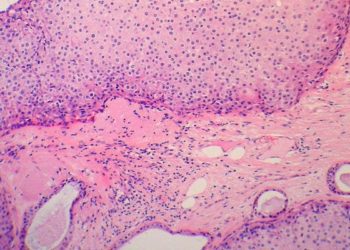
Image: PD 

©2012-2014 2minutemedicine.com. All rights reserved. No works may be reproduced without expressed written consent from 2minutemedicine.com. Disclaimer: We present factual information directly from peer reviewed medical journals. No post should be construed as medical advice and is not intended as such by the authors, editors, staff or by 2minutemedicine.com. PLEASE SEE A HEALTHCARE PROVIDER IN YOUR AREA IF YOU SEEK MEDICAL ADVICE OF ANY SORT.  

Tags: Breast Cancermastectomy
Previous Post

Peer-mentored therapy reduces distress in mothers of children with disabilities

Next Post

Weight loss intervention concurrently targeting parent and child benefits both parties

RelatedReports

A middle-aged woman looks thoughtfully at an abstract representation of cells and a statin pill, symbolizing breast cancer and medication usage.
Oncology

Giredestrant plus everolimus improves progression-free survival in treatment-resistant breast cancer

October 5, 2026
USPSTF recommends chemoprevention for women at high risk for breast cancer
Surgery

Earlier genetic testing predicts bilateral mastectomy in young BRCA carriers

September 11, 2026
Sleep duration, sleepiness, chronotype have variable associations with teen self-regulation
Chronic Disease

Cognitive behaviour therapy may be superior to bright light therapy for insomnia in women with breast cancer undergoing chemotherapy

September 3, 2026
Variability in interpretation of breast biopsy slides associated with low verification of atypia and ductal carcinoma in situ
Chronic Disease

Tumour microenvironment factors may influence cancer progression and response to tamoxifen (Nolvadex) in patients with estrogen receptor-positive and human epidermal growth factor receptor 2 breast cancer

August 13, 2026
Next Post
Gestational weight loss may improve outcomes for obese women

Weight loss intervention concurrently targeting parent and child benefits both parties

Low circulating cholesterol in neonates linked with pyloric stenosis

2 Minute Medicine Rewind July 15 – July 21, 2014

New pathogenic dimorphic fungal species suggested in HIV-positive patients

HIV rebound observed after therapeutic stem cell transplant

✦ EvidencePulse™ by 2 Minute Medicine 2026 evidence scan 3 reports You asked top stroke trials 2026 Synthesizing medical evidence... Top 2026 stroke trial results: OCEANIC — ischemic stroke: 6.2% vs 8.4% OPTION* — mRS 0–1: 43.6% vs 34.2% ORIENTAL* — mRS 0–2: 58.6% vs 46.6% *Higher sICH in intervention arms Participants randomizedN OCEANIC 12,327 OPTION 570 ORIENTAL 564 Ask about guidelines or landmark trials... Try EvidencePulse™ Get the signal. Try it now → Physician-trained medical AI by 2 Minute Medicine

2MM+ All Access

Full details →
$4.99 /month

3-day free trial · cancel anytime

  • ✓100+ physician-written reports
  • ✓EvidencePulse™ + HypeCheck™
  • ✓Ad-free reading + newsletters
Start 3-day free trial

Then $4.99/month. Manage renewal in your account.

NPI Lookup · Free

Look up any US clinician

Search by name or NPI number, live from the CMS NPI Registry.

  • OIG exclusion check
  • Licenses and specialties
  • No account needed
Open NPI Lookup →

2 Minute Medicine® is an award winning, physician-run, expert medical media company. Our content is curated, written and edited by practicing health professionals who have clinical and scientific expertise in their field of reporting. Our editorial management team is comprised of highly-trained MD physicians. Join numerous brands, companies, and hospitals who trust our licensed content.

Recent Reports

  • Optogenetic therapy may partially restore vision in retinitis pigmentosa
  • An artificial intelligence system for human papillomavirus-positive dual stain cervical cancer screening reads p16-Ki67 slides
  • Elevated low-density lipoprotein cholesterol is a risk factor for atherosclerotic disease irrespective of familial hypercholesterolemia status
License Content
Terms of Use | Disclaimer
Cookie Policy

Get the app

Read 2 Minute Medicine on iPhone, iPad and Android.

Download on the App StoreGet it on Google Play
QR code for www.2minutemedicine.com/app
On a computer? Scan this with your phone’s camera.
2MM+ All Access Full details →

The medical literature, distilled daily.

Monthly plan selected: $4.99 /month.

$4.99/month

3-day free trial · cancel anytime

Start 3-day free trial

Then $4.99/month. Manage renewal in your account.

Yearly plan selected: $49.90 /year.

$49.90/year

2 months free

Start 3-day free trial

Then $49.90/year.

Membership benefits

  • ✓100+ physician-written reports
  • ✓AI EvidencePulse™ + HypeCheck™
  • ✓Ad-free reading + newsletters
  • ✓NPI watchlist + bulk NPI verification

Already a member? Sign in

  • About
  • Specialties
    • All Specialties, All Recent Reports
    • Cardiology
    • Chronic Disease
    • Dermatology
    • Emergency
    • Endocrinology
    • Gastroenterology
    • Imaging and Intervention
    • Infectious Disease
    • Nephrology
    • Neurology
    • Obstetrics
    • Oncology
    • Ophthalmology
    • Pediatrics
    • Pharma
    • Preclinical
    • Psychiatry
    • Public Health
    • Pulmonology
    • Rheumatology
    • Surgery
    • Rewinds
    • The Scan
  • EvidencePulse™
  • HypeCheck™
  • AI News
  • Classics™
    • 2MM+ Online Access
    • Paperback and Ebook
  • Tools
    • NPI Registry Lookup
    • RVU Search
  • Partners
    • License Content
    • Advertise with Us
No Result
View All Result

© 2026 2 Minute Medicine, Inc. - Physician-written medical news.