

One in three people with cystic fibrosis may experience nephrolithiasis during their life
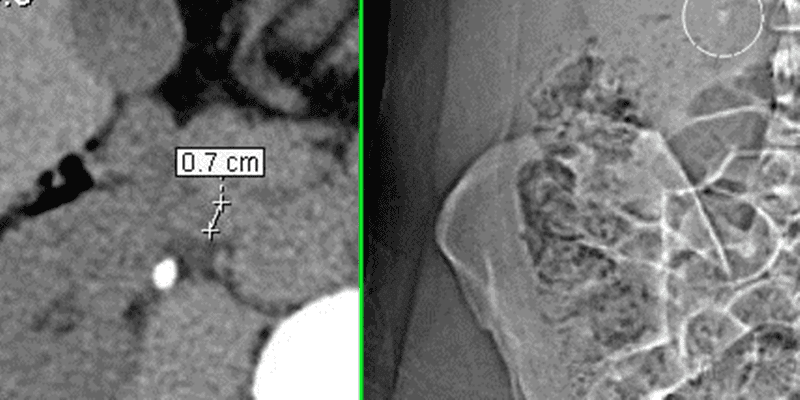
1. Nearly one in three people with cystic fibrosis experienced nephrolithiasis during their lifetime.
2. The degree of exocrine pancreatic insufficiency control was not associated with nephrolithiasis.
3. Potential risk factors for nephrolithiasis include small bowel resection, alcohol use, and low BMI.
Evidence Rating Level: 2 (Good)
People with cystic fibrosis are more likely to develop calcium oxalate nephrolithiasis than the general population. While exocrine pancreatic insufficiency (EPI) is a primary risk factor, the relationship between the degree of EPI control and risk of nephrolithiasis is unclear. This study thus examined the association between the degree of EPI control and incidence and lifetime prevalence of nephrolithiasis in CF. This retrospective cohort study enrolled adults with CF from a medical center in Ohio, USA, between July 1, 2018, and June 30, 2023. The primary outcome was nephrolithiasis events, defined as the occurrence of nephrolithiasis identified on abdominal imaging. Of the 332 patients with cystic fibrosis included in the study, 107 [32%] had at least one nephrolithiasis event during their lifetime (mean [SD] age = 38.8 [13.3], male [%] = 58 [52.4]) and 225 had no history of nephrolithiasis (mean [SD] age = 36.8 [13], male [%] = 112 [49.8]). The overall incidence of any nephrolithiasis event was 34 cases per 1,000 person-years. While the lifetime prevalence was higher in patients with EPI (32%) than without EPI (24%), no significant difference in prevalence was observed according to the degree of EPI control. Small bowel resection (odds ratio [OR] 3.0, 95% confidence interval [CI] 1.0–9.0), alcohol use (OR 1.7, 95% CI 1.0–2.9), and lower BMI (OR 0.9, 95% CI 0.9–1.0) were associated with nephrolithiasis independent of EPI status. Overall, this study found that nearly one in three people with cystic fibrosis experienced nephrolithiasis during their lifetime, and that degree of exocrine pancreatic insufficiency control was not associated with nephrolithiasis. Potential risk factors for nephrolithiasis include small bowel resection, alcohol use, and low BMI. Future prospective studies are needed to confirm the study findings.
Click here to read this study in PLOS One
Image: PD
©2026 2 Minute Medicine, Inc. All rights reserved. No works may be reproduced without expressed written consent from 2 Minute Medicine, Inc. Inquire about licensing here. No article should be construed as medical advice and is not intended as such by the authors or by 2 Minute Medicine, Inc.


![Engineered stem cells mitigate liver damage caused by radiation [PreClinical]](https://www.2minutemedicine.com/wp-content/uploads/2014/12/Human_embryonic_stem_cells-75x75.png)


