

Patient Basics: Breast Cancer
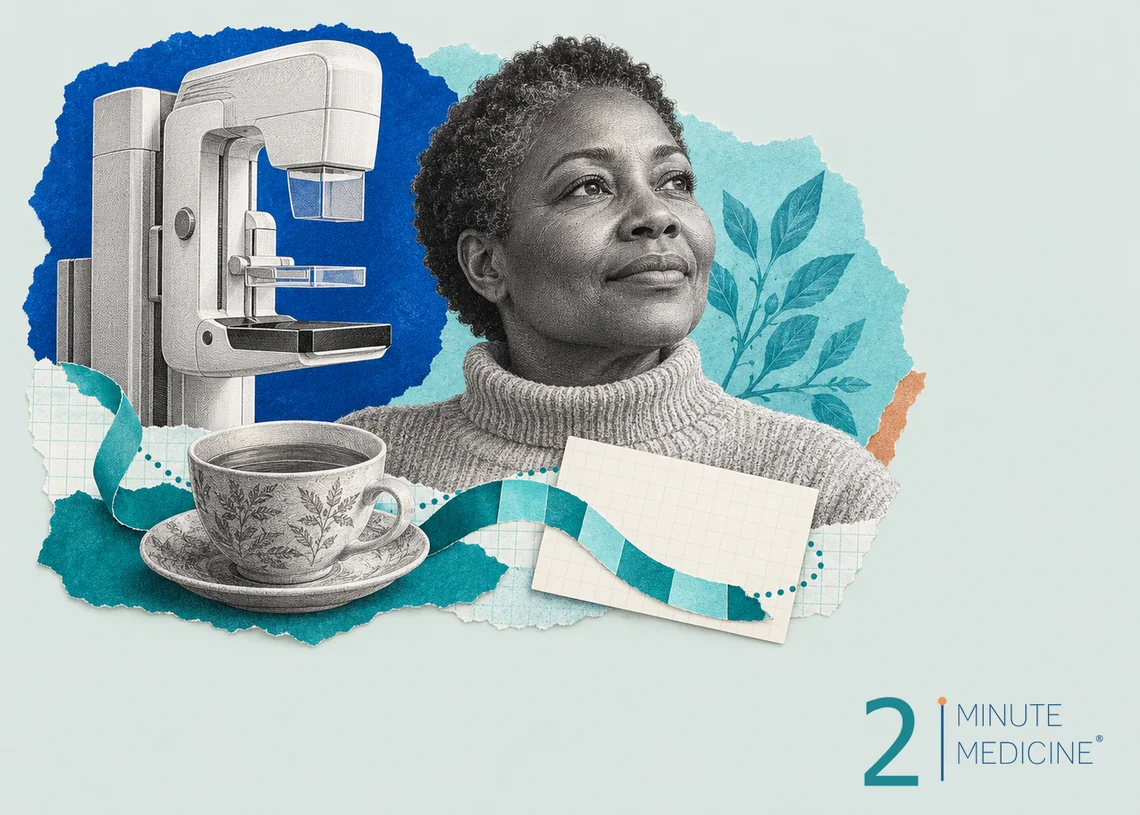
Breast cancer starts when cells in the breast grow out of control. It is the most common cancer in American women after skin cancer, and men can get it too. Cancer found before it spreads beyond the breast can almost always be treated successfully, so screening and quick checks of any change matter.
Key points
- About 1 in 8 women in the US will get breast cancer during their lifetime. Risk rises with age.
- Most women should have a mammogram every 2 years from age 40 to 74. Some need to start earlier or go more often.
- A new lump, dimpled skin or a change in the nipple should be checked, even if a recent mammogram was normal.
- Treatment is planned around the type of cancer, and most people get more than one kind.
- Most breast lumps are not cancer.
Types of breast cancer
The breast is made of milk glands (lobules), thin tubes that carry milk to the nipple (ducts), and fat and supporting tissue. Most breast cancers start in the ducts or lobules.
- Ductal carcinoma in situ (DCIS) means abnormal cells are inside a duct and have not spread. It is called stage 0.
- Invasive ductal carcinoma, also called infiltrating ductal carcinoma, is the most common type. It has grown through the duct wall into nearby tissue.
- Invasive lobular carcinoma (lobular breast cancer) starts in the lobules. It often feels like a thickening instead of a lump and can be harder to see on a mammogram.
- Inflammatory breast cancer is rare and grows fast. The breast turns red, swollen and warm, often without a lump.
The lab also tests the cancer cells in ways that shape treatment:
- Hormone receptor-positive (ER or PR positive). Most breast cancers use estrogen or progesterone to grow.
- HER2-positive. These cancers make too much of a protein called HER2, which helps them grow.
- Triple-negative. These have neither hormone receptors nor extra HER2. They are more common in younger women, Black women and women with a BRCA1 gene change.
What causes breast cancer
Breast cancer begins with changes in a cell’s genes. Most of these changes happen during a person’s life, and doctors usually can’t say why one person gets it and another doesn’t. These things raise the risk:
- Being a woman and getting older
- A mother, sister or daughter with breast cancer, or several relatives with breast or ovarian cancer
- Inherited gene changes, such as in the BRCA1 or BRCA2 genes
- Dense breast tissue on a mammogram
- Early periods, late menopause, a first child after 30, or no children
- Combined hormone therapy after menopause
- Drinking alcohol, extra weight after menopause and not being active
- Radiation to the chest before age 30
Signs of breast cancer
- A new lump or thick area in the breast or armpit
- A change in the size or shape of a breast
- Dimpling or puckering of the skin, sometimes like an orange peel
- A nipple that turns inward when it didn’t before
- Fluid from the nipple, especially if it’s bloody and from one breast
- Red, scaly or thick skin on the breast or nipple
Most early breast cancers cause no pain. Know how your breasts normally look and feel, so you notice changes.
Screening
The U.S. Preventive Services Task Force advises a mammogram every 2 years for women aged 40 to 74 at average risk. Women at high risk, such as those with a BRCA change or strong family history, may start earlier and add a breast MRI. Your mammogram report will say whether your breasts are dense. Dense tissue can hide cancer, so ask whether you need extra imaging.
How it’s diagnosed and staged
- Diagnostic mammogram and ultrasound take a closer look at a lump or other change.
- Biopsy. A doctor removes small pieces of tissue, usually with a hollow needle. This is the only way to know for sure that it’s cancer.
- MRI may be used to see how large the cancer is.
- Scans such as CT, a bone scan or a PET scan look for spread when needed.
If breast cancer isn’t treated, it can grow into nearby tissue and spread through the lymph nodes and blood to the bones, liver, lungs or brain. Stages run from 0 to IV, based on the cancer’s size, whether it has reached lymph nodes or other organs, and the receptor results.
Breast cancer treatment options
Surgery
- Lumpectomy removes the cancer and a rim of normal tissue. It is usually followed by radiation. For many women, survival is the same as with mastectomy.
- Mastectomy removes the whole breast. Breast reconstruction can be done at the same time or later.
- Lymph node surgery. A sentinel node biopsy removes the first few nodes the cancer would reach. More are removed only if needed.
Radiation
High-energy rays kill cancer cells left behind after surgery. Treatment is usually given on weekdays over a few weeks, and sometimes in as little as one week.
Medicines
- Hormone therapy pills block estrogen. They include tamoxifen and the aromatase inhibitors letrozole, anastrozole and exemestane, usually taken for 5 to 10 years.
- Chemotherapy may be given before surgery to shrink the cancer or after it to lower the chance of a return.
- HER2-targeted drugs such as trastuzumab (Herceptin) treat HER2-positive cancers.
- Other targeted pills. CDK4/6 inhibitors (palbociclib, ribociclib and abemaciclib) are added to hormone therapy for some people. PARP inhibitors such as olaparib can help people with a BRCA change.
- Immunotherapy helps the immune system attack the cancer. It is used for some triple-negative cancers.
For some early hormone receptor-positive cancers, a lab test of the tumor’s genes shows whether chemotherapy is likely to help. Many people can safely skip it.
Life during and after treatment
Tiredness, hair loss with some chemotherapy, hot flashes with hormone therapy, and arm swelling after lymph node surgery (lymphedema) are common. Tell your team about side effects, since most can be eased. After treatment, you’ll have regular checkups and yearly mammograms of any remaining breast tissue.
Lowering your risk
- Limit alcohol, stay active and keep a healthy weight.
- Breastfeed if you can.
- Ask your doctor before taking hormone therapy after menopause.
- If breast or ovarian cancer runs in your family, ask about genetic counseling. People at high risk can take medicines or consider surgery to lower their risk.
When to see a doctor
Make an appointment for any of the signs listed above, even if you’re young, a man, or had a normal mammogram recently. A breast that suddenly turns red, swollen and warm needs to be seen within days.
Common questions about breast cancer
Is every lump in the breast cancer?
No. Most breast lumps turn out to be cysts, fibroadenomas or normal lumpy tissue that changes with the menstrual cycle. A hard, painless lump that doesn’t move is more worrying, but you can’t tell by touch alone, so have any new lump checked.
Can men get breast cancer?
Yes. Men have a small amount of breast tissue, and about 1 in 100 breast cancers in the US is found in a man. The most common sign is a painless lump under the nipple, and men with a BRCA2 gene change or a strong family history have a higher risk.
How serious is stage 2 breast cancer?
Stage 2 breast cancer is larger or has reached a few nearby lymph nodes, but it hasn’t spread to distant organs. It is very treatable, and most people treated for it are cured. Treatment usually combines surgery with medicines, radiation or both.
Can breast cancer be cured?
Most breast cancers found before they spread beyond the breast and nearby lymph nodes can be cured. Cancer that has spread to distant organs (stage IV) usually can’t be cured, but treatment can often control it for years. Newer drugs have helped many people live longer with advanced breast cancer.
Questions to ask your doctor
- What type and stage of breast cancer do I have?
- What are my hormone receptor and HER2 results?
- Is lumpectomy with radiation an option for me?
- Should I have genetic testing?
- What side effects should I expect, and how will they be managed?
Learn more
- Breast cancer (National Cancer Institute)
- Breast cancer (MedlinePlus, U.S. National Library of Medicine)
This guide is general information and doesn’t replace advice from your own doctor. Last updated October 2026.
RelatedReports






 Get the app