
• About
  • Masthead
  • License Content
  • Advertise
  • Press Releases
  • Newsroom
  • RSS/Email List
  • 2MM Podcast
  • Write for us
  • Contact Us
2 Minute Medicine
No Result
View All Result

No products in the cart.

Sign in
SUBSCRIBE
  • About
  • Specialties
    • All Specialties, All Recent Reports
    • Cardiology
    • Chronic Disease
    • Dermatology
    • Emergency
    • Endocrinology
    • Gastroenterology
    • Imaging and Intervention
    • Infectious Disease
    • Nephrology
    • Neurology
    • Obstetrics
    • Oncology
    • Ophthalmology
    • Pediatrics
    • Pharma
    • Preclinical
    • Psychiatry
    • Public Health
    • Pulmonology
    • Rheumatology
    • Surgery
    • Rewinds
    • The Scan
  • EvidencePulse™
  • HypeCheck™
  • AI News
  • Classics™
    • 2MM+ Online Access
    • Paperback and Ebook
  • Tools
    • NPI Registry Lookup
    • RVU Search
    • Physician Pay by Specialty
    • ICD-10 Code Lookup
    • FDA Drug Approvals
    • Drug Safety for Breastfeeding/Pregnancy
    • Clinical Guidelines
    • Medical Calculators
    • ECG Reference
      • QTc Calculator
      • Sgarbossa Criteria
      • ECG Axis Calculator
      • AV Block Helper
  • Rankings
    • Medical School Rankings
    • Residency Rankings
  • Partners
    • License Content
    • Advertise with Us
2 Minute Medicine
  • About
  • Specialties
    • All Specialties, All Recent Reports
    • Cardiology
    • Chronic Disease
    • Dermatology
    • Emergency
    • Endocrinology
    • Gastroenterology
    • Imaging and Intervention
    • Infectious Disease
    • Nephrology
    • Neurology
    • Obstetrics
    • Oncology
    • Ophthalmology
    • Pediatrics
    • Pharma
    • Preclinical
    • Psychiatry
    • Public Health
    • Pulmonology
    • Rheumatology
    • Surgery
    • Rewinds
    • The Scan
  • EvidencePulse™
  • HypeCheck™
  • AI News
  • Classics™
    • 2MM+ Online Access
    • Paperback and Ebook
  • Tools
    • NPI Registry Lookup
    • RVU Search
    • Physician Pay by Specialty
    • ICD-10 Code Lookup
    • FDA Drug Approvals
    • Drug Safety for Breastfeeding/Pregnancy
    • Clinical Guidelines
    • Medical Calculators
    • ECG Reference
      • QTc Calculator
      • Sgarbossa Criteria
      • ECG Axis Calculator
      • AV Block Helper
  • Rankings
    • Medical School Rankings
    • Residency Rankings
  • Partners
    • License Content
    • Advertise with Us
Sign in
SUBSCRIBE
2 Minute Medicine
Sign in
Subscribe
2 Minute MedicineFree on Google PlayGet
✦EvidencePulse™by 2 Minute Medicine3 reportsYou askedtop stroke trials 2026Synthesizing medical evidence...Top 2026 stroke trial results:OCEANIC — ischemic stroke: 6.2% vs 8.4%OPTION* — mRS 0–1: 43.6% vs 34.2%ORIENTAL* — mRS 0–2: 58.6% vs 46.6%*Higher sICH in intervention armsParticipants randomizedNOCEANIC12,327OPTION570ORIENTAL564Ask about guidelines or landmark trials...↑Try EvidencePulse™Ask the evidence. Get the signal.Try it now →
Home Health A to Z

Patient Basics: Functional Neurological Disorder (Conversion Disorder)
by2 Minute Medicine
October 30, 2026
in Health A to Z
Reading Time: 5 mins read
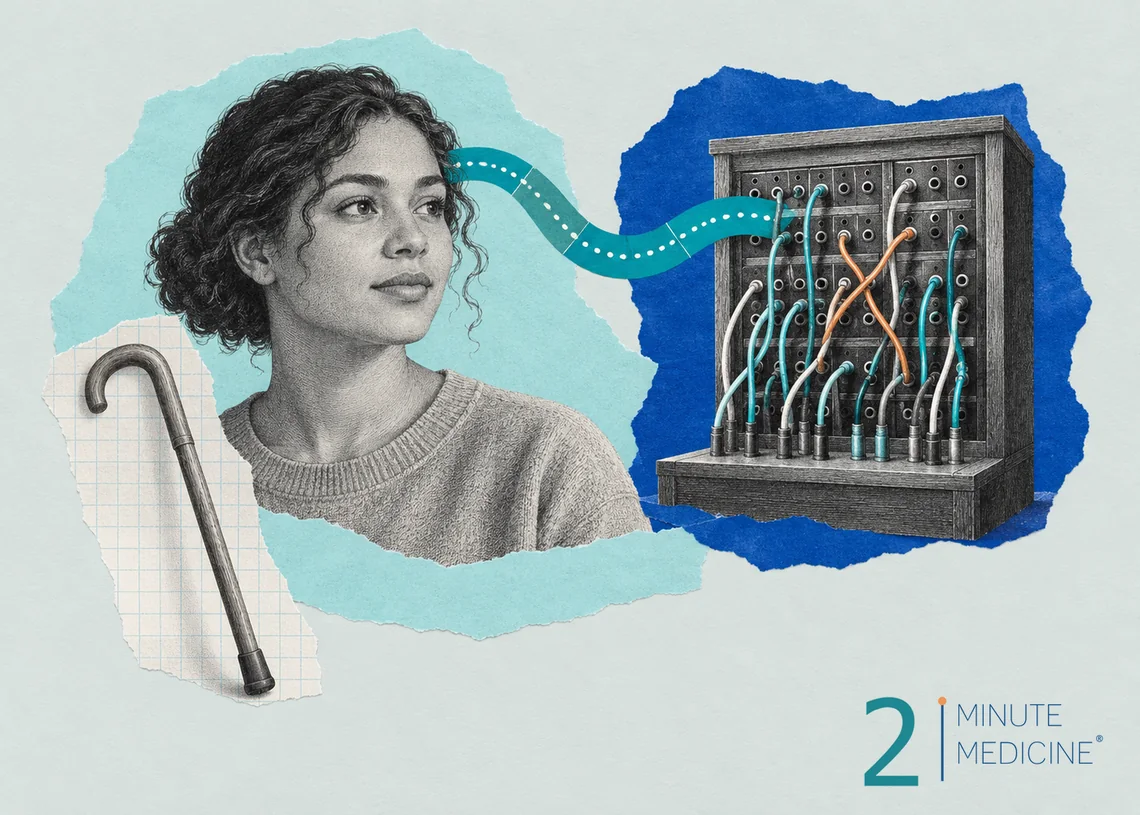
Conversion disorder collage of a young woman beside an old telephone switchboard with crossed cables and a walking cane
Share on FacebookShare on TwitterShare on LinkedIn

Functional neurological disorder (FND), long called conversion disorder, is a condition in which the brain has trouble sending and receiving signals, even though its structure looks normal on scans. It causes real symptoms, such as weakness, shaking, seizures, or trouble walking or talking. Doctors sometimes compare it to a software problem in a computer whose hardware is fine. FND is common and genuine, and many people improve with the right therapy.

Key points

  • FND symptoms are real and not under the person’s control. People with FND are not faking.
  • It is one of the most common reasons people see a neurologist.
  • Doctors diagnose it from specific signs on the exam. Normal test results on their own aren’t enough.
  • Specialized physical therapy and talking therapy are the main treatments.
  • Any new weakness, numbness or trouble speaking needs urgent medical care to rule out a stroke or other illness.

Symptoms of FND (conversion disorder)

Symptoms can start suddenly or slowly, and they often change over time. Common examples include:

  • Weakness or paralysis of an arm, a leg or one side of the body
  • Shaking, jerking, spasms or a twisted posture
  • Trouble walking, such as dragging a leg or sudden falls
  • Episodes that look like epileptic seizures or fainting, called functional or dissociative seizures
  • Numbness or loss of feeling
  • Blurred or lost vision, or double vision
  • Slurred speech, stuttering, or losing your voice
  • A lump-in-the-throat feeling or trouble swallowing
  • Trouble with memory and concentration

Many people also have pain, tiredness, poor sleep, dizziness, anxiety or low mood. These can make the main symptoms worse.

What causes FND (conversion disorder)

Researchers are still learning why FND happens. Brain scans in research studies show changes in how brain areas for movement and attention work together. Movements and feelings that are normally automatic stop working smoothly, often when you focus on them.

Things that can trigger or raise the risk of FND include:

  • A physical injury, illness, surgery or a bout of pain
  • A migraine attack or a panic attack
  • Another nervous system condition, such as epilepsy, multiple sclerosis or migraine
  • Anxiety, depression or long-term stress
  • Past trauma or abuse, for some people

Not everyone with FND has had trauma or a major stress, and the condition can start without any clear trigger. Women are diagnosed with FND more often than men. It can begin at any age, including in teenagers.

RELATED REPORTS

No Content Available

How it’s diagnosed

A neurologist (a doctor who treats brain and nerve conditions) makes the diagnosis by finding signs that are typical of FND during the exam. For example:

  • Hoover’s sign. A weak leg may push down normally when you lift the other leg, which shows the nerve pathways still work.
  • Tremor changes. A functional tremor often changes speed or stops when you tap a rhythm with the other hand.
  • Video EEG. For seizures, a recording of brain waves and video during an episode shows whether the brain activity looks like epilepsy.

Scans and blood tests may be done to check for other conditions, because FND can happen alongside them. A clear explanation of the diagnosis is an important first step in treatment.

Treatment for FND (conversion disorder)

Treatment works best when it fits your symptoms and starts early. Often a team is involved.

  • Physical therapy for FND. Therapists who understand FND help retrain movement, often using distraction, rhythm and gradual practice, instead of focusing on strength alone.
  • Occupational therapy helps with daily tasks, work and getting around.
  • Speech therapy helps with voice, speech and swallowing problems.
  • Psychotherapy, especially cognitive behavioral therapy (CBT), helps many people with functional seizures and with anxiety, depression or past trauma. It teaches ways to spot warning signs and interrupt episodes.
  • Medicines don’t treat FND directly, but antidepressants and other medicines can help with anxiety, depression, pain or poor sleep.
  • Avoiding harm. Tests you don’t need, surgery and long bed rest can make things worse.

Living with FND

Recovery usually comes in steps. Pace yourself, keep a regular sleep routine, stay as active as you can, and learn your triggers. Support from family, school or work, and from FND support groups, makes a difference. Symptoms may flare during illness or stress, and the skills learned in therapy help you manage those times.

If you feel hopeless or have thoughts of harming yourself, call or text 988, the Suicide & Crisis Lifeline, any time.

Common questions about conversion disorder

Is conversion disorder real, or is the person faking?

It is real. People with FND aren’t pretending, and they can’t switch their symptoms off by choice. Research scans show changes in how brain networks for movement and attention work. Faking illness on purpose is a different thing, called factitious disorder or malingering, and doctors can usually tell them apart.

How long does conversion disorder last?

It varies. Some symptoms go away within days or weeks, especially when they start suddenly and are treated early. Others last months or years. Many people improve a lot with the right therapy, and children and teens often recover well, though symptoms can return during stress or illness.

Why was it called conversion disorder?

The name came from an old theory that emotional distress was “converted” into physical symptoms, a kind of defense mechanism. Doctors now know stress is only one possible factor, and many people have no clear emotional trigger. The newer name, functional neurological disorder, describes a problem with how the nervous system functions.

What causes conversion disorder in children?

In children and teens, FND often follows an injury, an illness or a stressful time, such as bullying, family conflict or school pressure, but sometimes no trigger is found. Treatment usually combines physical therapy, psychological support and help returning to school. Most young people improve, often faster than adults.

When to see a doctor

See a doctor for any new or unexplained weakness, shaking, numbness, seizures, or changes in vision, speech or walking. Don’t assume symptoms are FND until a doctor has checked you. Call 911 for sudden weakness or numbness on one side, a drooping face, trouble speaking, sudden vision loss, a first seizure, or a seizure lasting more than five minutes.

Questions to ask your doctor

  • What signs on my exam point to FND?
  • Do I need any more tests to rule out other conditions?
  • Can you refer me to a physical therapist or psychologist who treats FND?
  • What can I do at home to help my recovery?
  • How can my family, school or employer help?

Learn more

  • Functional neurological disorder (MedlinePlus, U.S. National Library of Medicine)

This guide is general information and doesn’t replace advice from your own doctor. Last updated October 2026.

Tags: Conversion Disorder
Previous Post

Patient Basics: Contact Dermatitis

Next Post

Patient Basics: Dandruff

RelatedReports

No Content Available
Next Post
Pink eye collage: an engraved eye with a pink-tinted white, a folded damp washcloth, a dropper bottle and a pillowcase

Patient Basics: Pink Eye (Conjunctivitis)

Collage of an engraved colon with a teal ribbon, prunes for constipation, a glass of water and an older woman smiling softly

Patient Basics: Constipation and Impaction

Collage on viral rhinitis: an older man in a wool scarf, a steaming mug, a jar of honey and an engraved cold virus

Patient Basics: Common Cold (Viral Rhinitis)

✦ EvidencePulse™ by 2 Minute Medicine 3 reports You asked top stroke trials 2026 Synthesizing medical evidence... Top 2026 stroke trial results: OCEANIC — ischemic stroke: 6.2% vs 8.4% OPTION* — mRS 0–1: 43.6% vs 34.2% ORIENTAL* — mRS 0–2: 58.6% vs 46.6% *Higher sICH in intervention arms Participants randomizedN OCEANIC 12,327 OPTION 570 ORIENTAL 564 Ask about guidelines or landmark trials... Try EvidencePulse™ Get the signal. Try it now → Physician-trained medical AI by 2 Minute Medicine

2MM+ All Access

Full details →
$4.99 /month

3-day free trial · cancel anytime

  • ✓100+ physician-written reports
  • ✓EvidencePulse™ + HypeCheck™
  • ✓Ad-free reading + newsletters
Start 3-day free trial

Then $4.99/month. Manage renewal in your account.

2 Minute Medicine® is an award winning, physician-run, expert medical media company. Our content is curated, written and edited by practicing health professionals who have clinical and scientific expertise in their field of reporting. Our editorial management team is comprised of highly-trained MD physicians. Join numerous brands, companies, and hospitals who trust our licensed content.

Recent Reports

  • Pelacarsen lowers lipoprotein(a) but does not reduce major cardiovascular events in patients with established cardiovascular disease
  • Durvalumab plus enfortumab vedotin was approved for perioperative treatment of muscle-invasive bladder cancer
  • CDC reports 5,412 confirmed measles cases in the United States in 2026
License Content
Terms of Use | Disclaimer
Cookie Policy

Get the app

Read 2 Minute Medicine on iPhone, iPad and Android.

Download on the App StoreGet it on Google Play
QR code for www.2minutemedicine.com/app
On a computer? Scan this with your phone’s camera.
2MM+ All Access Full details →

The medical literature, distilled daily.

Monthly plan selected: $4.99 /month.

$4.99/month

3-day free trial · cancel anytime

Start 3-day free trial

Then $4.99/month. Manage renewal in your account.

Yearly plan selected: $49.90 /year.

$49.90/year

2 months free

Start 3-day free trial

Then $49.90/year.

Membership benefits

  • ✓100+ new physician-written study summaries monthly, 12,000+ searchable
  • ✓AI EvidencePulse™ + HypeCheck™
  • ✓Ad-free reading + newsletters
  • ✓FDA drug approvals + clinical calculators

Already a member? Sign in

  • Get the app
  • About
  • Specialties
    • All Specialties, All Recent Reports
    • Cardiology
    • Chronic Disease
    • Dermatology
    • Emergency
    • Endocrinology
    • Gastroenterology
    • Imaging and Intervention
    • Infectious Disease
    • Nephrology
    • Neurology
    • Obstetrics
    • Oncology
    • Ophthalmology
    • Pediatrics
    • Pharma
    • Preclinical
    • Psychiatry
    • Public Health
    • Pulmonology
    • Rheumatology
    • Surgery
    • Rewinds
    • The Scan
  • EvidencePulse™
  • HypeCheck™
  • AI News
  • Classics™
    • 2MM+ Online Access
    • Paperback and Ebook
  • Tools
    • NPI Registry Lookup
    • RVU Search
    • Physician Pay by Specialty
    • ICD-10 Code Lookup
    • FDA Drug Approvals
    • Drug Safety for Breastfeeding/Pregnancy
    • Clinical Guidelines
    • Medical Calculators
    • ECG Reference
      • QTc Calculator
      • Sgarbossa Criteria
      • ECG Axis Calculator
      • AV Block Helper
  • Rankings
    • Medical School Rankings
    • Residency Rankings
  • Partners
    • License Content
    • Advertise with Us
No Result
View All Result

© 2026 2 Minute Medicine, Inc. - Physician-written medical news.


