
• About
  • Masthead
  • License Content
  • Advertise
  • Press Releases
  • Newsroom
  • RSS/Email List
  • 2MM Podcast
  • Write for us
  • Contact Us
2 Minute Medicine
No Result
View All Result

No products in the cart.

Sign in
SUBSCRIBE
  • About
  • Specialties
    • All Specialties, All Recent Reports
    • Cardiology
    • Chronic Disease
    • Dermatology
    • Emergency
    • Endocrinology
    • Gastroenterology
    • Imaging and Intervention
    • Infectious Disease
    • Nephrology
    • Neurology
    • Obstetrics
    • Oncology
    • Ophthalmology
    • Pediatrics
    • Pharma
    • Preclinical
    • Psychiatry
    • Public Health
    • Pulmonology
    • Rheumatology
    • Surgery
    • Rewinds
    • The Scan
  • EvidencePulse™
  • HypeCheck™
  • AI News
  • Classics™
    • 2MM+ Online Access
    • Paperback and Ebook
  • Tools
    • NPI Registry Lookup
    • RVU Search
    • Physician Pay by Specialty
    • ICD-10 Code Lookup
    • FDA Drug Approvals
    • Drug Safety for Breastfeeding/Pregnancy
    • Clinical Guidelines
    • Medical Calculators
    • ECG Reference
      • QTc Calculator
      • Sgarbossa Criteria
      • ECG Axis Calculator
      • AV Block Helper
  • Rankings
    • Medical School Rankings
    • Residency Rankings
  • Partners
    • License Content
    • Advertise with Us
2 Minute Medicine
  • About
  • Specialties
    • All Specialties, All Recent Reports
    • Cardiology
    • Chronic Disease
    • Dermatology
    • Emergency
    • Endocrinology
    • Gastroenterology
    • Imaging and Intervention
    • Infectious Disease
    • Nephrology
    • Neurology
    • Obstetrics
    • Oncology
    • Ophthalmology
    • Pediatrics
    • Pharma
    • Preclinical
    • Psychiatry
    • Public Health
    • Pulmonology
    • Rheumatology
    • Surgery
    • Rewinds
    • The Scan
  • EvidencePulse™
  • HypeCheck™
  • AI News
  • Classics™
    • 2MM+ Online Access
    • Paperback and Ebook
  • Tools
    • NPI Registry Lookup
    • RVU Search
    • Physician Pay by Specialty
    • ICD-10 Code Lookup
    • FDA Drug Approvals
    • Drug Safety for Breastfeeding/Pregnancy
    • Clinical Guidelines
    • Medical Calculators
    • ECG Reference
      • QTc Calculator
      • Sgarbossa Criteria
      • ECG Axis Calculator
      • AV Block Helper
  • Rankings
    • Medical School Rankings
    • Residency Rankings
  • Partners
    • License Content
    • Advertise with Us
Sign in
SUBSCRIBE
2 Minute Medicine
Sign in
Subscribe
2 Minute MedicineFree on Google PlayGet
✦EvidencePulse™by 2 Minute Medicine3 reportsYou askedtop stroke trials 2026Synthesizing medical evidence...Top 2026 stroke trial results:OCEANIC — ischemic stroke: 6.2% vs 8.4%OPTION* — mRS 0–1: 43.6% vs 34.2%ORIENTAL* — mRS 0–2: 58.6% vs 46.6%*Higher sICH in intervention armsParticipants randomizedNOCEANIC12,327OPTION570ORIENTAL564Ask about guidelines or landmark trials...↑Try EvidencePulse™Ask the evidence. Get the signal.Try it now →
Home Health A to Z

Patient Basics: Keratitis
by2 Minute Medicine
October 30, 2026
in Health A to Z
Reading Time: 6 mins read
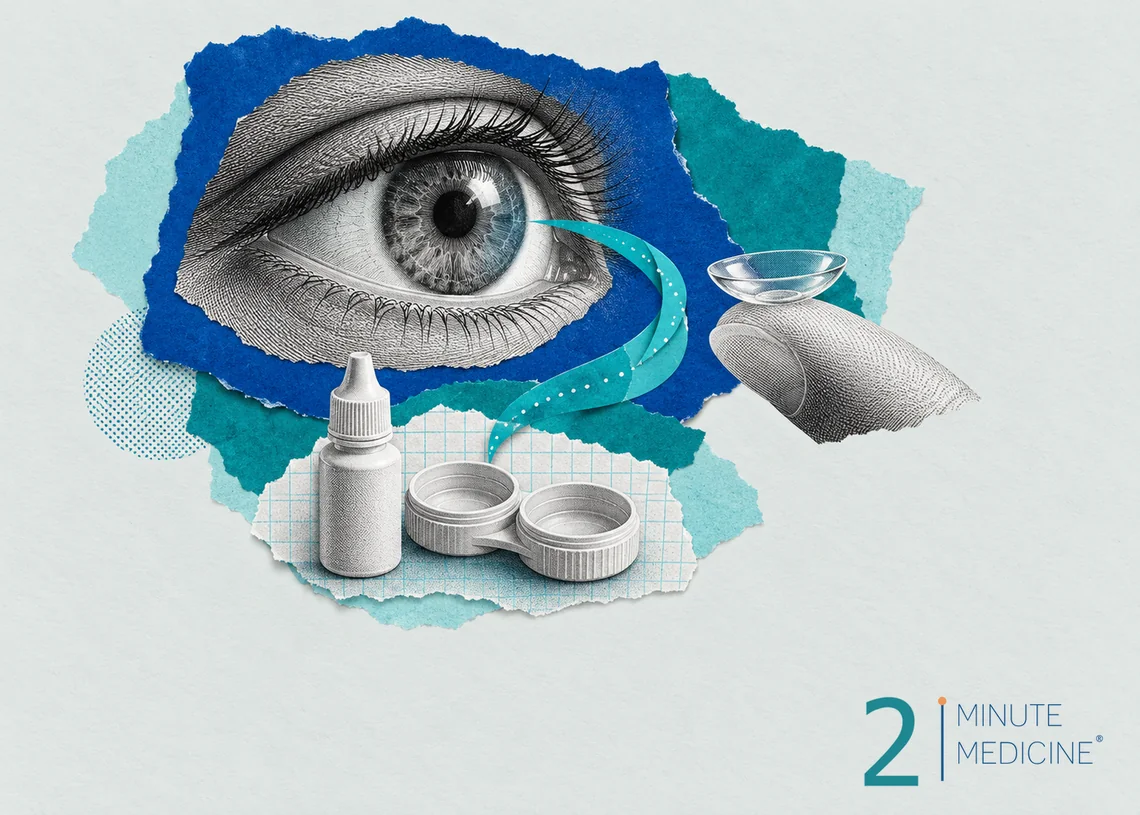
Keratitis collage: a close-up of one open eye with a clear cornea, a contact lens on a fingertip, a lens case and eye drops
Share on FacebookShare on TwitterShare on LinkedIn

Keratitis is inflammation of the cornea, the clear dome at the front of the eye that covers the colored iris and the pupil. It can come from an infection with bacteria, a virus, a fungus or an amoeba, or from dryness, injury or too much sun. It usually makes the eye red, painful and sensitive to light. Infections can scar the cornea and harm vision within days, so see an eye doctor the same day if you have these symptoms, especially if you wear contact lenses.

Key points

  • Contact lenses are the biggest risk factor for infections of the cornea, especially sleeping in them or getting them wet.
  • The herpes simplex virus, the same one that causes cold sores, is a common cause of repeat keratitis.
  • Pain, light sensitivity and blurry vision set keratitis apart from ordinary pink eye.
  • Treatment depends on the cause: antibiotic, antiviral or antifungal eye drops, or lubricating drops.
  • Never use leftover eye drops, and never use steroid drops unless an eye doctor has checked your eye.

What causes keratitis

Infections

  • Bacteria cause most infections in contact lens wearers. A bacterial corneal ulcer, an open sore on the cornea, can get worse within hours.
  • Herpes simplex virus (herpes keratitis or HSV keratitis) can flare up again and again in the same eye. It often affects only one eye.
  • Shingles (herpes zoster) on the forehead, or on the tip or side of the nose, can spread to the eye.
  • Adenovirus, a common cold virus, can cause a very contagious pink eye with tiny spots on the cornea. A sore throat and fever may come with it.
  • Fungi can infect the eye after a scratch from a plant or tree branch, or in contact lens wearers.
  • Acanthamoeba, a tiny organism that lives in tap water, pools, hot tubs and soil, can infect contact lens wearers. It is rare but very painful and hard to treat.

Other causes

  • Severe dry eye, or eyelids that don’t close fully during sleep
  • A scratch or a foreign body in the eye
  • Wearing contact lenses too long
  • Strong sunlight off snow or water, a tanning bed, or welding without eye protection (photokeratitis)
  • Preservatives in some eye drops used often

Types of keratitis

  • Superficial punctate keratitis means tiny dots of damage on the surface of the cornea. Dry eye, lens overwear, UV light and viruses are common causes. It usually heals quickly.
  • Marginal keratitis affects the edge of the cornea. It’s a reaction to bacteria living on the eyelids (blepharitis), rather than an infection of the cornea.
  • Interstitial keratitis is rare inflammation deep in the middle layer of the cornea. Syphilis, tuberculosis, herpes and some autoimmune diseases can cause it.

Keratitis symptoms

  • Eye pain, which can be severe
  • Redness
  • Pain or squinting in bright light
  • Blurry or reduced vision
  • Tearing or discharge
  • Feeling that something is stuck in the eye
  • A white or gray spot on the clear part of the eye

Herpes keratitis often affects one eye and may follow a cold sore or a time of stress or illness. The eye may feel less sensitive to touch than usual. Acanthamoeba causes pain that seems far worse than the eye looks.

Keratitis or conjunctivitis?

Conjunctivitis (pink eye) is inflammation of the thin, clear layer over the white of the eye and inside the eyelids. It feels gritty and may crust, but vision stays clear and light doesn’t hurt much. Keratitis brings real pain, light sensitivity and blurry vision. Some infections, such as adenovirus, affect both layers (keratoconjunctivitis).

How keratitis is diagnosed

An eye doctor looks at your eye with a slit lamp, a microscope with a bright light. A drop of orange dye (fluorescein) glows under blue light and shows any damage to the surface. A herpes infection often shows a branching pattern. If an infection is likely, the doctor may gently scrape the cornea to grow germs in a lab, which helps choose the right drops. Bring your contact lenses and case if you wear them.

Keratitis treatment

  • Bacterial keratitis: strong antibiotic eye drops, often every hour at first, including overnight. Steroid drops are sometimes added later to limit scarring.
  • Herpes keratitis: antiviral eye gel or drops (ganciclovir or trifluridine), or antiviral pills such as acyclovir or valacyclovir. People with many flare-ups may take antiviral pills long term to prevent them.
  • Adenovirus: cool compresses and lubricating drops while it runs its course. Steroid drops may be used if spots on the cornea blur vision for weeks.
  • Fungal or Acanthamoeba keratitis: special drops used for weeks to months, under close follow-up.
  • Non-infectious keratitis: lubricating drops or ointment, a break from contact lenses, and treating the cause, such as dry eye or eyelid inflammation.

Stop wearing contact lenses until your eye doctor says it’s OK. If scarring is severe, a corneal transplant can restore clear vision.

Lowering your risk

  • Don’t sleep or nap in contact lenses unless your eye doctor has approved it.
  • Keep lenses away from water. Take them out before you swim or shower, and never rinse lenses or the case with tap water.
  • Wash and dry your hands before you touch your lenses.
  • Use fresh solution each time, and replace your lens case every 3 months.
  • Replace lenses on schedule, and keep a pair of glasses for when your eyes are irritated.
  • Wear UV-blocking sunglasses on snow and water, and proper eye protection for welding and yard work.
  • Don’t touch your eyes when you have a cold sore.

When to see a doctor

See an eye doctor the same day for a red, painful eye, especially if you wear contact lenses or have light sensitivity, blurry vision or a white spot on the eye. Go to an emergency department if you can’t reach one, if your vision drops suddenly, or if something hit or entered the eye.

RELATED REPORTS

Daily disposable contact lenses may lower risk for Acanthamoeba keratitis

Common questions about keratitis

Can keratitis heal on its own?

Mild keratitis from dryness, a small scratch or too much sun may heal in a day or two once the cause is removed. Infections usually need medicine. A bacterial infection can damage the cornea within a day, so don’t wait to see if it goes away, especially if you wear contact lenses.

Is keratitis contagious?

It depends on the cause. Keratitis from adenovirus or herpes can spread through tears and touch, so wash your hands often and don’t share towels, pillows or eye makeup. Keratitis from bacteria, fungi or Acanthamoeba usually starts with a lens or injury and rarely passes from one person to another.

How long does viral keratitis last?

Herpes keratitis on the surface usually heals in 1 to 2 weeks with antiviral treatment, but it can come back. Adenovirus pink eye usually clears in 1 to 3 weeks. The small spots it leaves on the cornea can blur vision for weeks or even months before they fade.

Can you fly with pink eye or keratitis?

Usually yes. Air pressure in the cabin won’t harm the eye, though dry cabin air can make it feel worse, so bring lubricating drops. If it’s contagious, wash your hands often and avoid touching your eyes. Wear glasses, not contacts, and keep your treatment schedule while you travel.

Questions to ask your doctor

  • What is causing my keratitis?
  • How often should I use my drops, and for how long?
  • When can I wear contact lenses again?
  • Is it contagious, and when can I go back to work or school?
  • Will this leave a scar or affect my vision?

Learn more

  • Corneal ulcers and infections (MedlinePlus, U.S. National Library of Medicine)
  • Healthy contact lens wear and care (Centers for Disease Control and Prevention)

This guide is general information and doesn’t replace advice from your own doctor. Last updated October 2026.

Tags: Keratitis
Previous Post

Patient Basics: Lead Poisoning

Next Post

Patient Basics: Kidney Stones

RelatedReports

2 Minute Medicine

Daily disposable contact lenses may lower risk for Acanthamoeba keratitis

August 12, 2022
Next Post
Tinea cruris collage: magnified branching fungal threads, running shoes, a shaker of powder and folded athletic shorts

Patient Basics: Jock Itch (Tinea Cruris)

Juvenile arthritis collage: a calm girl beside a drawing of a knee joint, a school backpack and a rolled exercise band

Patient Basics: Juvenile Arthritis

Kawasaki disease collage: a calm young girl, a heart with its coronary arteries, a strawberry and a glass thermometer

Patient Basics: Kawasaki Disease

✦ EvidencePulse™ by 2 Minute Medicine 3 reports You asked top stroke trials 2026 Synthesizing medical evidence... Top 2026 stroke trial results: OCEANIC — ischemic stroke: 6.2% vs 8.4% OPTION* — mRS 0–1: 43.6% vs 34.2% ORIENTAL* — mRS 0–2: 58.6% vs 46.6% *Higher sICH in intervention arms Participants randomizedN OCEANIC 12,327 OPTION 570 ORIENTAL 564 Ask about guidelines or landmark trials... Try EvidencePulse™ Get the signal. Try it now → Physician-trained medical AI by 2 Minute Medicine

2MM+ All Access

Full details →
$4.99 /month

3-day free trial · cancel anytime

  • ✓100+ physician-written reports
  • ✓EvidencePulse™ + HypeCheck™
  • ✓Ad-free reading + newsletters
Start 3-day free trial

Then $4.99/month. Manage renewal in your account.

2 Minute Medicine® is an award winning, physician-run, expert medical media company. Our content is curated, written and edited by practicing health professionals who have clinical and scientific expertise in their field of reporting. Our editorial management team is comprised of highly-trained MD physicians. Join numerous brands, companies, and hospitals who trust our licensed content.

Recent Reports

  • Nipocalimab patient interviews identify mouth dryness as the most important symptom to improve in phase 2 Sjögren’s disease data
  • CDC reports 5,182 confirmed measles cases in the United States in 2026
  • In selected patients with anterior-circulation large-vessel stroke 24-72 hours after onset, thrombectomy improved 90-day function but increased hemorrhage and death
License Content
Terms of Use | Disclaimer
Cookie Policy

Get the app

Read 2 Minute Medicine on iPhone, iPad and Android.

Download on the App StoreGet it on Google Play
QR code for www.2minutemedicine.com/app
On a computer? Scan this with your phone’s camera.
2MM+ All Access Full details →

The medical literature, distilled daily.

Monthly plan selected: $4.99 /month.

$4.99/month

3-day free trial · cancel anytime

Start 3-day free trial

Then $4.99/month. Manage renewal in your account.

Yearly plan selected: $49.90 /year.

$49.90/year

2 months free

Start 3-day free trial

Then $49.90/year.

Membership benefits

  • ✓100+ physician-written reports
  • ✓AI EvidencePulse™ + HypeCheck™
  • ✓Ad-free reading + newsletters
  • ✓FDA drug approvals + clinical calculators

Already a member? Sign in

  • Get the app
  • About
  • Specialties
    • All Specialties, All Recent Reports
    • Cardiology
    • Chronic Disease
    • Dermatology
    • Emergency
    • Endocrinology
    • Gastroenterology
    • Imaging and Intervention
    • Infectious Disease
    • Nephrology
    • Neurology
    • Obstetrics
    • Oncology
    • Ophthalmology
    • Pediatrics
    • Pharma
    • Preclinical
    • Psychiatry
    • Public Health
    • Pulmonology
    • Rheumatology
    • Surgery
    • Rewinds
    • The Scan
  • EvidencePulse™
  • HypeCheck™
  • AI News
  • Classics™
    • 2MM+ Online Access
    • Paperback and Ebook
  • Tools
    • NPI Registry Lookup
    • RVU Search
    • Physician Pay by Specialty
    • ICD-10 Code Lookup
    • FDA Drug Approvals
    • Drug Safety for Breastfeeding/Pregnancy
    • Clinical Guidelines
    • Medical Calculators
    • ECG Reference
      • QTc Calculator
      • Sgarbossa Criteria
      • ECG Axis Calculator
      • AV Block Helper
  • Rankings
    • Medical School Rankings
    • Residency Rankings
  • Partners
    • License Content
    • Advertise with Us
No Result
View All Result

© 2026 2 Minute Medicine, Inc. - Physician-written medical news.


