• About
  • Masthead
  • License Content
  • Advertise
  • Press Releases
  • Newsroom
  • RSS/Email List
  • 2MM Podcast
  • Write for us
  • Contact Us
2 Minute Medicine
No Result
View All Result

No products in the cart.

Sign in
SUBSCRIBE
  • About
  • Specialties
    • All Specialties, All Recent Reports
    • Cardiology
    • Chronic Disease
    • Dermatology
    • Emergency
    • Endocrinology
    • Gastroenterology
    • Imaging and Intervention
    • Infectious Disease
    • Nephrology
    • Neurology
    • Obstetrics
    • Oncology
    • Ophthalmology
    • Pediatrics
    • Pharma
    • Preclinical
    • Psychiatry
    • Public Health
    • Pulmonology
    • Rheumatology
    • Surgery
    • Rewinds
    • The Scan
  • EvidencePulse™
  • HypeCheck™
  • AI News
  • Classics™
    • 2MM+ Online Access
    • Paperback and Ebook
  • Tools
    • NPI Registry Lookup
    • RVU Search
    • Physician Pay by Specialty
    • ICD-10 Code Lookup
    • FDA Drug Approvals
    • Drug Safety for Breastfeeding/Pregnancy
    • Clinical Guidelines
    • Medical Calculators
    • ECG Reference
      • QTc Calculator
      • Sgarbossa Criteria
      • ECG Axis Calculator
      • AV Block Helper
  • Rankings
    • Medical School Rankings
    • Residency Rankings
  • Partners
    • License Content
    • Advertise with Us
2 Minute Medicine
  • About
  • Specialties
    • All Specialties, All Recent Reports
    • Cardiology
    • Chronic Disease
    • Dermatology
    • Emergency
    • Endocrinology
    • Gastroenterology
    • Imaging and Intervention
    • Infectious Disease
    • Nephrology
    • Neurology
    • Obstetrics
    • Oncology
    • Ophthalmology
    • Pediatrics
    • Pharma
    • Preclinical
    • Psychiatry
    • Public Health
    • Pulmonology
    • Rheumatology
    • Surgery
    • Rewinds
    • The Scan
  • EvidencePulse™
  • HypeCheck™
  • AI News
  • Classics™
    • 2MM+ Online Access
    • Paperback and Ebook
  • Tools
    • NPI Registry Lookup
    • RVU Search
    • Physician Pay by Specialty
    • ICD-10 Code Lookup
    • FDA Drug Approvals
    • Drug Safety for Breastfeeding/Pregnancy
    • Clinical Guidelines
    • Medical Calculators
    • ECG Reference
      • QTc Calculator
      • Sgarbossa Criteria
      • ECG Axis Calculator
      • AV Block Helper
  • Rankings
    • Medical School Rankings
    • Residency Rankings
  • Partners
    • License Content
    • Advertise with Us
Sign in
SUBSCRIBE
2 Minute Medicine
Sign in
Subscribe
2 Minute MedicineFree on Google PlayGet
✦EvidencePulse™by 2 Minute Medicine3 reportsYou askedtop stroke trials 2026Synthesizing medical evidence...Top 2026 stroke trial results:OCEANIC — ischemic stroke: 6.2% vs 8.4%OPTION* — mRS 0–1: 43.6% vs 34.2%ORIENTAL* — mRS 0–2: 58.6% vs 46.6%*Higher sICH in intervention armsParticipants randomizedNOCEANIC12,327OPTION570ORIENTAL564Ask about guidelines or landmark trials...↑Try EvidencePulse™Ask the evidence. Get the signal.Try it now →
Home Health A to Z

Patient Basics: Kidney Stones
by2 Minute Medicine
October 30, 2026
in Health A to Z
Reading Time: 6 mins read
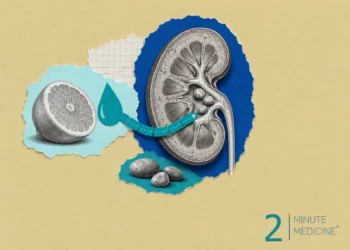
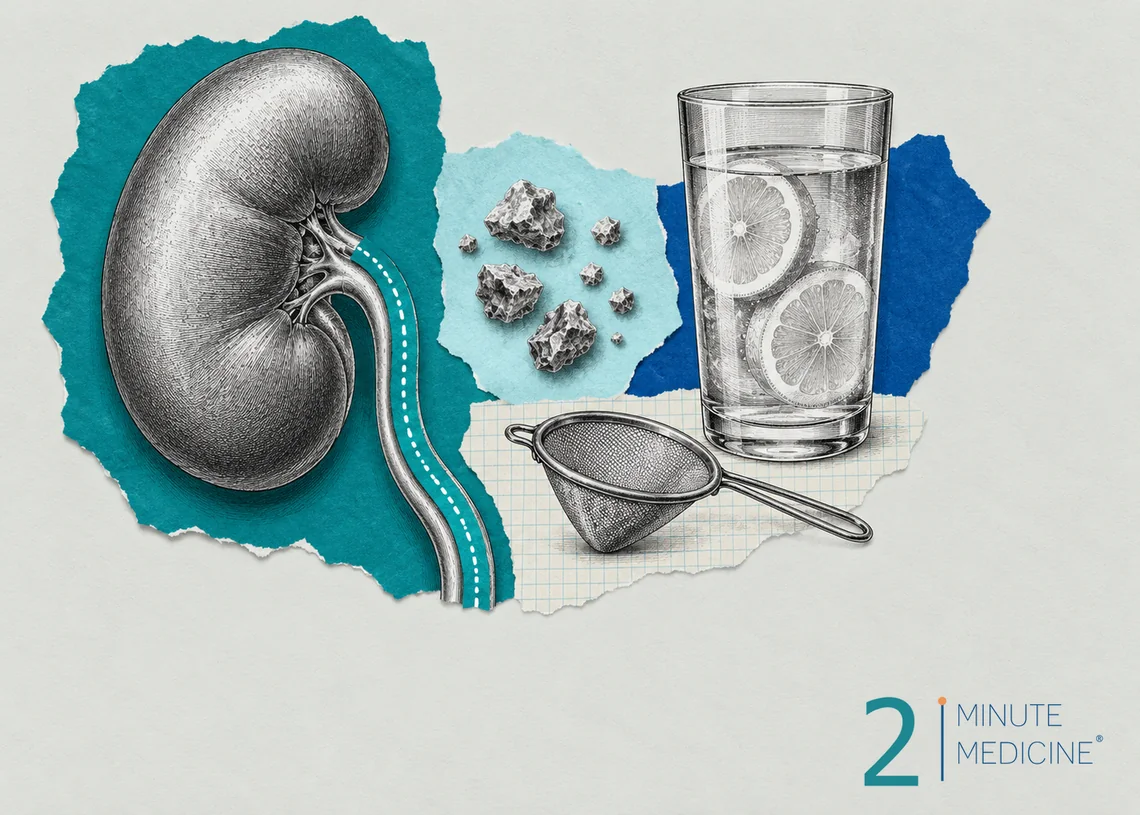
Kidney stones collage: a kidney and ureter, small crystal stones, a glass of water with lemon slices and a mesh strainer
Share on FacebookShare on TwitterShare on LinkedIn

Kidney stones are hard lumps of minerals and salts that form inside the kidney. Small ones can pass out in the urine without your noticing, but a stone that gets stuck in the tube to the bladder (the ureter) causes some of the worst pain people describe. Most stones pass on their own with fluids and pain medicine. Drinking more water and changing a few foods can keep new ones from forming.

Key points

  • The classic symptom is sudden, severe pain in the side or back that comes in waves and may spread to the groin.
  • Stones smaller than about 5 millimeters usually pass on their own within a few weeks.
  • The best prevention is drinking enough fluid to make plenty of pale urine every day.
  • Which foods to limit depends on the type of stone. Cutting calcium from your diet usually raises the risk of calcium stones.
  • A stone with fever and chills is an emergency.

What causes kidney stones

Urine carries dissolved minerals such as calcium, oxalate and uric acid. When there’s too much of them and too little water, they form crystals that clump into stones. About half of people who have one stone get another within 10 years.

Types of stones

  • Calcium oxalate stones are by far the most common.
  • Calcium phosphate stones are linked to some kidney and hormone conditions.
  • Uric acid stones are more likely with gout, diabetes, obesity and diets high in meat.
  • Struvite stones form with some urinary infections and can grow large quickly.
  • Cystine stones come from a rare inherited condition.

Risk factors

  • Not drinking enough, especially in hot weather or with heavy sweating
  • A diet high in salt, animal protein or sugary drinks
  • Obesity, diabetes and gout
  • A family history of stones
  • Bowel diseases or weight-loss surgery that change how you absorb fat and calcium
  • An overactive parathyroid gland, which raises calcium levels
  • Some medicines, such as topiramate and high-dose vitamin C supplements

Kidney stone symptoms

A stone sitting in the kidney often causes no symptoms. Pain starts when it moves into the ureter and blocks the flow of urine.

  • Sharp pain in the side or back, below the ribs, that comes in waves
  • Pain that spreads to the lower belly or groin
  • Being unable to sit still or get comfortable
  • Pink, red or brown urine from blood
  • Nausea and vomiting
  • Needing to pee often and urgently, or burning when you pee, as the stone nears the bladder
  • Cloudy or bad-smelling urine, fever and chills if there’s also an infection

How kidney stones are diagnosed

  • Urine test to look for blood (red blood cells), crystals and infection
  • CT scan, usually low-dose, which shows the stone’s size and where it is
  • Ultrasound, often used during pregnancy and in children
  • Blood tests for kidney function, calcium and uric acid
  • Stone analysis, to learn what a passed stone is made of
  • 24-hour urine test for people who’ve had more than one stone, to guide prevention

Passing a kidney stone

If the stone is small, the pain is controlled and there’s no infection, you can often pass it at home.

  • Pain relief. Anti-inflammatory medicines such as ibuprofen or naproxen work well for stone pain, if they’re OK for your kidneys and stomach. Your doctor may add other medicine.
  • Tamsulosin. This prescription medicine relaxes the ureter and can help larger stones pass.
  • Fluids. Drink enough to keep your urine pale.
  • Strain your urine. Pee through a small mesh strainer or gauze so you can catch the stone and bring it to your doctor for testing.

When a stone needs a procedure

  • Ureteroscopy. A thin scope is passed through the bladder into the ureter or kidney. The stone is broken with a laser or pulled out. A soft tube (stent) may be left in for a few days.
  • Shock wave lithotripsy. Sound waves from outside the body break the stone into pieces that can pass.
  • Percutaneous nephrolithotomy. For large stones, the surgeon removes them through a small cut in the back.

Foods to avoid with kidney stones

The right diet depends on what your stones are made of, so it helps to get a stone tested. For the most common type, calcium oxalate:

  • Cut back on salt. Salty foods such as chips, canned soups, deli meats, fast food and frozen meals raise calcium in the urine.
  • Limit high-oxalate foods, such as spinach, rhubarb, beets, almonds and other nuts, wheat bran and lots of chocolate. You don’t need to avoid them completely.
  • Eat less animal protein, such as red meat, poultry and seafood.
  • Skip sodas and sugary drinks, especially those high in fructose.
  • Avoid high-dose vitamin C supplements, which the body turns into oxalate.
  • Don’t cut out calcium. Eating normal amounts of calcium-rich foods such as milk, yogurt and cheese with meals binds oxalate in the gut, so less reaches the kidneys.

For uric acid stones, limit red meat, organ meats such as liver, shellfish, anchovies, sardines, beer and sugary drinks.

RELATED REPORTS

An elevated Apolipoprotein B to Apolipoprotein A ratio may be associated with increased kidney stone recurrence

2 Minute Medicine Rewind December 15, 2025

Foods that help include plenty of fruits and vegetables, and citrus such as lemons and oranges, which raise citrate, a natural stone blocker. Water is the most important drink. Most people who’ve had stones need about 10 to 12 cups of fluid a day, more in hot weather.

If diet isn’t enough, your doctor may prescribe medicine to prevent stones, such as a thiazide water pill, potassium citrate or allopurinol.

When to see a doctor

  • Pain in your side or back that doesn’t settle with pain medicine
  • Blood in your urine
  • You’ve passed a stone, so it can be tested
  • You’ve had stones before and want to prevent more

Get emergency care for stone pain with fever or chills, pain so bad you can’t sit still or get comfortable, vomiting that stops you from keeping fluids down, or being unable to pee.

Common questions about kidney stones

Are kidney stones actual stones?

They’re not rocks, but they are truly hard. Kidney stones are clumps of crystals made from minerals in urine. They can be smooth or jagged, from the size of a grain of sand to a golf ball. They’re often yellow or brown and can look nearly black. Only a lab test shows the type.

Will a 2 mm kidney stone pass on its own?

Very likely, yes. Most stones under 4 to 5 millimeters pass without a procedure, usually within days to a few weeks. It may still hurt on the way. See a doctor if pain is severe, you have a fever, or the stone hasn’t passed after a few weeks.

Can you die from kidney stones?

It’s rare, but a stone that blocks the kidney while there’s an infection behind it can lead to a dangerous blood infection. That’s why fever with stone pain needs emergency care. Doctors drain the kidney with a stent or tube and give antibiotics.

Why are my kidneys hurting?

Kidney pain is felt in the back or side, just below the ribs. Stones and kidney infections are common causes, and both often come with changes in urine or a fever. Pain that changes when you move or press on the area is more likely to come from a muscle.

Questions to ask your doctor

  • How big is my stone, and is it likely to pass on its own?
  • What is my stone made of?
  • Which foods should I limit for my type of stone?
  • Do I need a 24-hour urine test or medicine to prevent more stones?
  • When should I go to the emergency room?

Learn more

  • Kidney stones (National Institute of Diabetes and Digestive and Kidney Diseases)
  • Eating, diet and nutrition for kidney stones (National Institute of Diabetes and Digestive and Kidney Diseases)

This guide is general information and doesn’t replace advice from your own doctor. Last updated October 2026.

Tags: Kidney Stones
Previous Post

Patient Basics: Keratitis

Next Post

Patient Basics: Jock Itch (Tinea Cruris)

RelatedReports

Kidney stones collage: a halved kidney holding three small stones, a halved lemon, a teal water drop and smooth pebbles
Chronic Disease

An elevated Apolipoprotein B to Apolipoprotein A ratio may be associated with increased kidney stone recurrence

January 13, 2026
Letrozole (Femara) boosts fertility of women with Polycystic Ovarian Syndrome
Weekly Rewinds

2 Minute Medicine Rewind December 15, 2025

December 15, 2025
#VisualAbstract: Removal of asymptomatic kidney stones reduces risk of relapse
StudyGraphics

#VisualAbstract: Removal of asymptomatic kidney stones reduces risk of relapse

August 24, 2022
ABCD2 Score: Predicting Early Stroke Risk After Transient Ischemic Attack (TIA) [Classics Series]
Imaging Classics

Non-contrast CT sensitive and specific for kidney stones [Classics Series]

August 18, 2022
Next Post
Tinea cruris collage: magnified branching fungal threads, running shoes, a shaker of powder and folded athletic shorts

Patient Basics: Jock Itch (Tinea Cruris)

Juvenile arthritis collage: a calm girl beside a drawing of a knee joint, a school backpack and a rolled exercise band

Patient Basics: Juvenile Arthritis

Kawasaki disease collage: a calm young girl, a heart with its coronary arteries, a strawberry and a glass thermometer

Patient Basics: Kawasaki Disease

✦ EvidencePulse™ by 2 Minute Medicine 3 reports You asked top stroke trials 2026 Synthesizing medical evidence... Top 2026 stroke trial results: OCEANIC — ischemic stroke: 6.2% vs 8.4% OPTION* — mRS 0–1: 43.6% vs 34.2% ORIENTAL* — mRS 0–2: 58.6% vs 46.6% *Higher sICH in intervention arms Participants randomizedN OCEANIC 12,327 OPTION 570 ORIENTAL 564 Ask about guidelines or landmark trials... Try EvidencePulse™ Get the signal. Try it now → Physician-trained medical AI by 2 Minute Medicine

2MM+ All Access

Full details →
$4.99 /month

3-day free trial · cancel anytime

  • ✓100+ physician-written reports
  • ✓EvidencePulse™ + HypeCheck™
  • ✓Ad-free reading + newsletters
Start 3-day free trial

Then $4.99/month. Manage renewal in your account.

2 Minute Medicine® is an award winning, physician-run, expert medical media company. Our content is curated, written and edited by practicing health professionals who have clinical and scientific expertise in their field of reporting. Our editorial management team is comprised of highly-trained MD physicians. Join numerous brands, companies, and hospitals who trust our licensed content.

Recent Reports

  • CDC reports 5,182 confirmed measles cases in the United States in 2026
  • In selected patients with anterior-circulation large-vessel stroke 24-72 hours after onset, thrombectomy improved 90-day function but increased hemorrhage and death
  • Mavacamten reduced left ventricular outflow tract obstruction more than placebo in adolescents with symptomatic obstructive hypertrophic cardiomyopathy
License Content
Terms of Use | Disclaimer
Cookie Policy

Get the app

Read 2 Minute Medicine on iPhone, iPad and Android.

Download on the App StoreGet it on Google Play
QR code for www.2minutemedicine.com/app
On a computer? Scan this with your phone’s camera.
2MM+ All Access Full details →

The medical literature, distilled daily.

Monthly plan selected: $4.99 /month.

$4.99/month

3-day free trial · cancel anytime

Start 3-day free trial

Then $4.99/month. Manage renewal in your account.

Yearly plan selected: $49.90 /year.

$49.90/year

2 months free

Start 3-day free trial

Then $49.90/year.

Membership benefits

  • ✓100+ physician-written reports
  • ✓AI EvidencePulse™ + HypeCheck™
  • ✓Ad-free reading + newsletters
  • ✓FDA drug approvals + clinical calculators

Already a member? Sign in

  • Get the app
  • About
  • Specialties
    • All Specialties, All Recent Reports
    • Cardiology
    • Chronic Disease
    • Dermatology
    • Emergency
    • Endocrinology
    • Gastroenterology
    • Imaging and Intervention
    • Infectious Disease
    • Nephrology
    • Neurology
    • Obstetrics
    • Oncology
    • Ophthalmology
    • Pediatrics
    • Pharma
    • Preclinical
    • Psychiatry
    • Public Health
    • Pulmonology
    • Rheumatology
    • Surgery
    • Rewinds
    • The Scan
  • EvidencePulse™
  • HypeCheck™
  • AI News
  • Classics™
    • 2MM+ Online Access
    • Paperback and Ebook
  • Tools
    • NPI Registry Lookup
    • RVU Search
    • Physician Pay by Specialty
    • ICD-10 Code Lookup
    • FDA Drug Approvals
    • Drug Safety for Breastfeeding/Pregnancy
    • Clinical Guidelines
    • Medical Calculators
    • ECG Reference
      • QTc Calculator
      • Sgarbossa Criteria
      • ECG Axis Calculator
      • AV Block Helper
  • Rankings
    • Medical School Rankings
    • Residency Rankings
  • Partners
    • License Content
    • Advertise with Us
No Result
View All Result

© 2026 2 Minute Medicine, Inc. - Physician-written medical news.