• About
  • Masthead
  • License Content
  • Advertise
  • Press Releases
  • Newsroom
  • RSS/Email List
  • 2MM Podcast
  • Write for us
  • Contact Us
2 Minute Medicine
No Result
View All Result

No products in the cart.

Sign in
SUBSCRIBE
  • About
  • Specialties
    • All Specialties, All Recent Reports
    • Cardiology
    • Chronic Disease
    • Dermatology
    • Emergency
    • Endocrinology
    • Gastroenterology
    • Imaging and Intervention
    • Infectious Disease
    • Nephrology
    • Neurology
    • Obstetrics
    • Oncology
    • Ophthalmology
    • Pediatrics
    • Pharma
    • Preclinical
    • Psychiatry
    • Public Health
    • Pulmonology
    • Rheumatology
    • Surgery
    • Rewinds
    • The Scan
  • EvidencePulse™
  • HypeCheck™
  • AI News
  • Classics™
    • 2MM+ Online Access
    • Paperback and Ebook
  • Tools
    • Medical Calculators
    • Clinical Guidelines
    • Physician Pay by Specialty
    • FDA Drug Approvals
    • RVU Search
    • ICD-10 Code Lookup
    • Drug Safety for Breastfeeding/Pregnancy
    • ECG Reference
      • QTc Calculator
      • Sgarbossa Criteria
      • ECG Axis Calculator
      • AV Block Helper
    • NPI Registry Lookup
  • Rankings
    • Medical School Rankings
    • Residency Rankings
  • Partners
    • License Content
    • Advertise with Us
2 Minute Medicine
  • About
  • Specialties
    • All Specialties, All Recent Reports
    • Cardiology
    • Chronic Disease
    • Dermatology
    • Emergency
    • Endocrinology
    • Gastroenterology
    • Imaging and Intervention
    • Infectious Disease
    • Nephrology
    • Neurology
    • Obstetrics
    • Oncology
    • Ophthalmology
    • Pediatrics
    • Pharma
    • Preclinical
    • Psychiatry
    • Public Health
    • Pulmonology
    • Rheumatology
    • Surgery
    • Rewinds
    • The Scan
  • EvidencePulse™
  • HypeCheck™
  • AI News
  • Classics™
    • 2MM+ Online Access
    • Paperback and Ebook
  • Tools
    • Medical Calculators
    • Clinical Guidelines
    • Physician Pay by Specialty
    • FDA Drug Approvals
    • RVU Search
    • ICD-10 Code Lookup
    • Drug Safety for Breastfeeding/Pregnancy
    • ECG Reference
      • QTc Calculator
      • Sgarbossa Criteria
      • ECG Axis Calculator
      • AV Block Helper
    • NPI Registry Lookup
  • Rankings
    • Medical School Rankings
    • Residency Rankings
  • Partners
    • License Content
    • Advertise with Us
Sign in
SUBSCRIBE
2 Minute Medicine
Sign in
Subscribe
2 Minute MedicineFree on Google PlayGet
✦EvidencePulse™by 2 Minute Medicine3 reportsYou askedtop stroke trials 2026Synthesizing medical evidence...Top 2026 stroke trial results:OCEANIC — ischemic stroke: 6.2% vs 8.4%OPTION* — mRS 0–1: 43.6% vs 34.2%ORIENTAL* — mRS 0–2: 58.6% vs 46.6%*Higher sICH in intervention armsParticipants randomizedNOCEANIC12,327OPTION570ORIENTAL564Ask about guidelines or landmark trials...↑Try EvidencePulse™Ask the evidence. Get the signal.Try it now →
Home 2 Minute Medicine

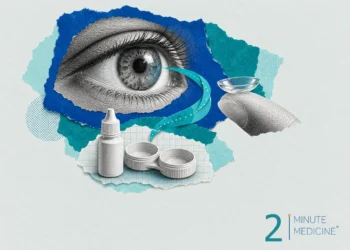
Daily disposable contact lenses may lower risk for Acanthamoeba keratitis

byMolly Munsell
August 12, 2022
in 2 Minute Medicine, Infectious Disease, Ophthalmology
Reading Time: 3 mins read
Share on FacebookShare on TwitterShare on LinkedIn

1. In a small case-control study, patients using reusable contact lenses had a 4.14 times higher risk of Acanthamoeba keratitis than those using daily disposable lenses.

2. Among daily disposable contact lens users, shorter time per day of contact lens wear, showering with contact lenses, reusing contact lenses, and wearing lenses overnight were associated with higher Acanthamoeba keratitis risk.

Evidence Rating Level: 3 (Average)

Study Rundown: Use of contact lenses increases risk for microbial keratitis, or infection of the surface of the eye. Acanthamoeba is a trophozoite that is an uncommon cause of contact lens-associated keratitis but often leads to severe infection and vision loss. This single-center case-control study aimed to identify risk factors for Acanthamoeba keratitis (AK) in contact lens users. About 80 patients diagnosed with AK were compared to about 120 controls. In a model adjusted for contact lens hygiene compliance and interval between contact lens appointments, subjects who used reusable contact lenses were 4.14 times more likely to have AK than those who used daily disposable lenses. Rigid, gas-permeable lenses were also associated with higher AK risk than daily disposable lenses. Within the group of daily disposable contact lens users, risk factors for AK were contact lens wear for less than 12 hours per day as compared to 12 hours or more, showering with contact lenses in, contact lens reuse, and overnight contact lens wear. Interpretation of these findings is limited by the small sample size, case-control study design, and use of a questionnaire subject to reporting bias. Nonetheless, the finding of a significant reduction in risk for Acanthamoeba keratitis with daily disposable contact lens use is consistent with other studies showing a benefit with respect to other keratitis-causing organisms and with research showing that lens cases may be a site for Acanthamoeba colonization. This study thus represents a point in favor of daily disposable lenses for reducing infection risk.

Click to read the study in Ophthalmology

Relevant Reading: Contact lens-related microbial keratitis: How have epidemiology and genetics helped us with pathogenesis and prophylaxis

RELATED REPORTS

A healthy lifestyle may reduce risk of infection in patients with type 2 diabetes

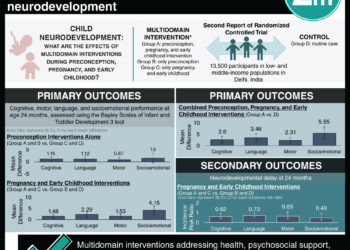
#VisualAbstract: Multidomain interventions from preconception through early childhood improves child neurodevelopment

In-Depth [case-control study]: Patients treated for AK at a single large center in England between 2011 and 2014 were included as cases. AK was diagnosed based on culture data, histopathology, consistent clinical course and treatment response, or polymerase chain reaction. Controls were contact lens users presenting to the same emergency department for unrelated diagnoses between 2014 and 2015. Risk factor assessment was based on a questionnaire. Adjusted odds ratios for daily disposable versus reusable lens use as well as independent risk factors were calculated using least absolute shrinkage and selection operator models. The adjusted odds ratio of 4.14 for reusable versus daily disposable contact lenses in AK patients as compared to controls had a 95% confidence interval of 1.92 to 8.9 (p<0.001). “British white” as compared to “other” ethnicity was identified as an independent risk factor. The median duration of contact lens per wear within the sample was 12 hours.

Image: PD

©2022 2 Minute Medicine, Inc. All rights reserved. No works may be reproduced without expressed written consent from 2 Minute Medicine, Inc. Inquire about licensing here. No article should be construed as medical advice and is not intended as such by the authors or by 2 Minute Medicine, Inc.

Tags: contact lenshygieneinfection riskKeratitis
Previous Post

Vitamin D deficiency may be associated with sleep disorders in children

Next Post

LI-RADS outlines standards for liver imaging studies assessing HCC [Classics Series]

RelatedReports

Physical activity collage: a smiling middle-aged man in a track jacket beside a city bicycle and a teal resistance band
Chronic Disease

A healthy lifestyle may reduce risk of infection in patients with type 2 diabetes

September 2, 2026
#VisualAbstract: Multidomain interventions from preconception through early childhood improves child neurodevelopment
StudyGraphics

#VisualAbstract: Multidomain interventions from preconception through early childhood improves child neurodevelopment

February 14, 2024
Chronic Disease

Failures in using personal protective equipment are commonly observed

June 20, 2018
Keratitis collage: a close-up of one open eye with a clear cornea, a contact lens on a fingertip, a lens case and eye drops
Health A to Z

Patient Basics: Keratitis

October 30, 2026
Next Post
ABCD2 Score: Predicting Early Stroke Risk After Transient Ischemic Attack (TIA) [Classics Series]

LI-RADS outlines standards for liver imaging studies assessing HCC [Classics Series]

#VisualAbstract: Sensorimotor retraining improves pain intensity in patients with chronic lower back pain

#VisualAbstract: Sensorimotor retraining improves pain intensity in patients with chronic lower back pain

ABCD2 Score: Predicting Early Stroke Risk After Transient Ischemic Attack (TIA) [Classics Series]

Ovarian cancer screening does not reduce mortality [Classics Series]

✦ EvidencePulse™ by 2 Minute Medicine 3 reports You asked top stroke trials 2026 Synthesizing medical evidence... Top 2026 stroke trial results: OCEANIC — ischemic stroke: 6.2% vs 8.4% OPTION* — mRS 0–1: 43.6% vs 34.2% ORIENTAL* — mRS 0–2: 58.6% vs 46.6% *Higher sICH in intervention arms Participants randomizedN OCEANIC 12,327 OPTION 570 ORIENTAL 564 Ask about guidelines or landmark trials... Try EvidencePulse™ Get the signal. Try it now → Physician-trained medical AI by 2 Minute Medicine

2MM+ All Access

Full details →
$4.99 /month

3-day free trial · cancel anytime

  • ✓100+ physician-written reports
  • ✓EvidencePulse™ + HypeCheck™
  • ✓Ad-free reading + newsletters
Start 3-day free trial

Then $4.99/month. Manage renewal in your account.

2 Minute Medicine® is an award winning, physician-run, expert medical media company. Our content is curated, written and edited by practicing health professionals who have clinical and scientific expertise in their field of reporting. Our editorial management team is comprised of highly-trained MD physicians. Join numerous brands, companies, and hospitals who trust our licensed content.

Recent Reports

  • Long-term use of mometasone (Asmanex) in adults with sickle cell disease without formal diagnosis of asthma may worsen disease activity
  • Few patients had ED lumbar CT or MRI within 30 days after low-acuity back-pain radiography at urgent care centers
  • A 34-circular RNA blood signature predicted Alzheimer’s disease progression and improved prediction when combined with pTau217
License Content
Terms of Use | Disclaimer
Cookie Policy

Get the app

Read 2 Minute Medicine on iPhone, iPad and Android.

Download on the App StoreGet it on Google Play
QR code for www.2minutemedicine.com/app
On a computer? Scan this with your phone’s camera.
2MM+ All Access Full details →

The medical literature, distilled daily.

Monthly plan selected: $4.99 /month.

$4.99/month

3-day free trial · cancel anytime

Start 3-day free trial

Then $4.99/month. Manage renewal in your account.

Yearly plan selected: $49.90 /year.

$49.90/year

2 months free

Start 3-day free trial

Then $49.90/year.

Membership benefits

  • ✓100+ new physician-written study summaries monthly, 12,000+ searchable
  • ✓AI EvidencePulse™ + HypeCheck™
  • ✓Ad-free reading + newsletters
  • ✓FDA drug approvals + clinical calculators

Already a member? Sign in

  • Get the app
  • About
  • Specialties
    • All Specialties, All Recent Reports
    • Cardiology
    • Chronic Disease
    • Dermatology
    • Emergency
    • Endocrinology
    • Gastroenterology
    • Imaging and Intervention
    • Infectious Disease
    • Nephrology
    • Neurology
    • Obstetrics
    • Oncology
    • Ophthalmology
    • Pediatrics
    • Pharma
    • Preclinical
    • Psychiatry
    • Public Health
    • Pulmonology
    • Rheumatology
    • Surgery
    • Rewinds
    • The Scan
  • EvidencePulse™
  • HypeCheck™
  • AI News
  • Classics™
    • 2MM+ Online Access
    • Paperback and Ebook
  • Tools
    • Medical Calculators
    • Clinical Guidelines
    • Physician Pay by Specialty
    • FDA Drug Approvals
    • RVU Search
    • ICD-10 Code Lookup
    • Drug Safety for Breastfeeding/Pregnancy
    • ECG Reference
      • QTc Calculator
      • Sgarbossa Criteria
      • ECG Axis Calculator
      • AV Block Helper
    • NPI Registry Lookup
  • Rankings
    • Medical School Rankings
    • Residency Rankings
  • Partners
    • License Content
    • Advertise with Us
No Result
View All Result

© 2026 2 Minute Medicine, Inc. - Physician-written medical news.