

Patient Basics: LASIK
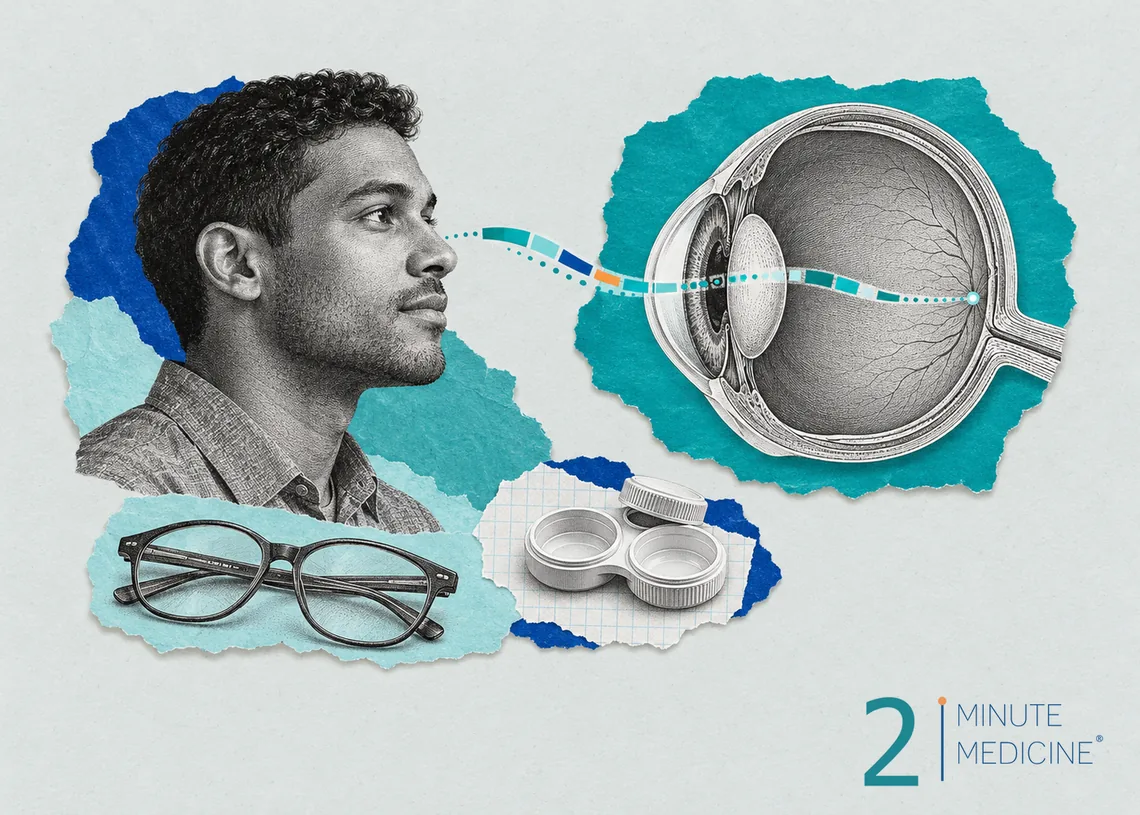
LASIK is a type of laser eye surgery that reshapes the clear front window of the eye (the cornea) so you can see clearly without glasses or contact lenses. It corrects nearsightedness, farsightedness and astigmatism. The laser part takes less than a minute per eye, and most people see well by the next day. It is elective surgery, so it pays to learn the risks and to find out first whether your eyes are a good fit.
Key points
- LASIK stands for laser-assisted in situ keratomileusis.
- Most people end up seeing well enough to drive without glasses, but some still need them for certain tasks.
- It doesn’t prevent the need for reading glasses after about age 45.
- Dry eyes and glare or halos at night are the most common side effects. They usually ease over a few months.
- PRK and SMILE are other laser options for people whose eyes aren’t right for LASIK.
How LASIK eye surgery works
Blurry vision usually happens because the cornea and lens don’t bend light to a sharp point on the retina at the back of the eye. In LASIK, the surgeon changes the curve of the cornea so light focuses correctly.
- One laser (or, less often, a tiny blade) cuts a thin flap in the top layer of the cornea.
- The surgeon folds the flap back.
- A second laser, called an excimer laser, removes a precise amount of tissue underneath to reshape the cornea.
- The flap is laid back down. It seals on its own within hours, with no stitches.
Who is a good candidate for LASIK
- You are at least 18, and many surgeons prefer 21 or older.
- Your glasses or contact prescription hasn’t changed much for at least a year.
- Your corneas are thick enough and have a normal shape.
- Your eyes are otherwise healthy.
LASIK may not be right for you if you have keratoconus (a thin, bulging cornea), severe dry eye, glaucoma or cataracts, or an autoimmune disease that isn’t under control. Pregnancy and breastfeeding can change your prescription, so surgeons usually wait. Jobs or sports with a high risk of eye blows may make PRK a better choice.
Other types of eye surgery to correct vision
- PRK (photorefractive keratectomy) reshapes the surface of the cornea with no flap. Recovery is slower and more painful for the first few days, but the final results are similar. It is often chosen for thin corneas.
- SMILE uses a laser to remove a small disc of tissue through a tiny cut, with no flap.
- Implantable lenses are placed inside the eye for very strong prescriptions.
- Lens replacement swaps the eye’s natural lens for an artificial one, much like cataract surgery.
Before LASIK
- You’ll have a full eye exam, including a map of your cornea’s shape and a measure of its thickness.
- Stop wearing contact lenses beforehand, because they change the shape of the cornea. Soft lenses are usually stopped 1 to 2 weeks ahead, and hard lenses longer.
- Skip eye makeup, lotions and perfume on the day of surgery.
- Arrange a ride home.
- Ask about the total cost. Insurance usually doesn’t cover LASIK.
During the procedure
You’ll be awake. You may get a pill to help you relax. The surgeon puts numbing drops in your eyes and uses a small clip to keep your eyelids open. You’ll feel pressure when a suction ring holds the eye steady, and your vision may dim for a few seconds. You’ll look at a blinking light while the laser works. Both eyes are usually done the same day, and the whole visit takes about an hour or two.
Recovery after LASIK
For the first few hours, your eyes may burn, itch, water and feel gritty, and vision will be hazy. Many people go home and sleep. Vision usually sharpens by the next day and keeps settling for a few weeks to months.
- You’ll use antibiotic drops and steroid drops, such as prednisolone or dexamethasone (Maxidex), for about a week. Steroid drops calm swelling inside the eye.
- Use lubricating eye drops often, even if your eyes feel fine.
- Don’t rub your eyes. Wear the plastic shields at night as told.
- Avoid swimming, hot tubs, contact sports and eye makeup for 1 to 2 weeks or as your surgeon advises.
- You’ll have a checkup the next day and several more over the following months.
LASIK risks and side effects
- Dry eye. Very common in the first months, because nerves in the cornea are cut. It can affect one eye more than the other. A few people have dry eye that lasts.
- Glare, halos and starbursts around lights at night.
- Under- or overcorrection. Some people need a second laser treatment (an enhancement) or still use glasses at times.
- Flap problems. A flap can wrinkle or, rarely, shift after a hard blow to the eye, even years later.
- Infection or inflammation under the flap. These are rare and treatable when found early.
- Ectasia. A rare weakening and bulging of the cornea that blurs vision.
When to call your eye surgeon
Call the same day if you have pain that gets worse instead of better, vision that suddenly gets worse, a red eye with discharge, strong light sensitivity, or any blow to the eye.
Common questions about LASIK
Does LASIK hurt?
The surgery itself shouldn’t hurt because of the numbing drops, though pressure from the suction ring is uncomfortable for a few seconds. Afterward, the eyes often sting and feel gritty for several hours. PRK tends to hurt more, for a few days.
Is eye pain 3 weeks after LASIK normal?
Mild soreness or a gritty, burning feeling a few weeks out is usually dry eye, and lubricating drops help. Sharp pain, new redness, discharge, light sensitivity or blurry vision is not normal. Call your surgeon the same day, because infection or inflammation under the flap needs fast treatment.
Is LASIK permanent?
The change to the cornea is permanent, but your eyes keep aging. Some people’s prescriptions drift over the years, and almost everyone needs reading glasses in their mid-40s or later. Cataracts can still form later in life and can be treated with standard cataract surgery.
Questions to ask your eye surgeon
- Are my eyes a good fit for LASIK, or would PRK or SMILE be better?
- What vision can I realistically expect?
- How many of these procedures have you done, and what are your enhancement rates?
- What does the price include, such as follow-up visits and enhancements?
- How will LASIK affect my reading vision as I get older?
Learn more
- LASIK (U.S. Food and Drug Administration)
- Laser eye surgery (MedlinePlus, U.S. National Library of Medicine)
This guide is general information and doesn’t replace advice from your own doctor. Last updated October 2026.






 Get the app